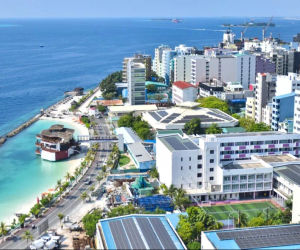

Rise of "baby coral killers" could hold back reef recovery
Population outbreaks of surprising starfish target young, fast-growing species.
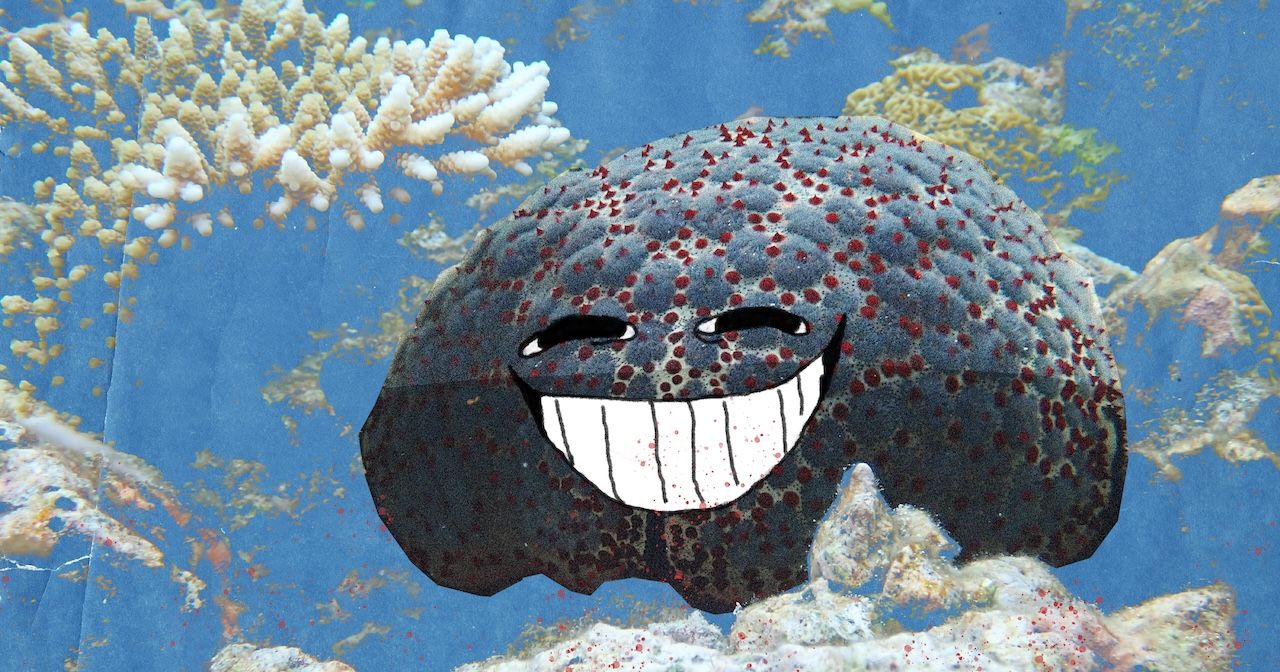
Artwork: Dosain
14 Jun, 13:56
The Maldives’ coral reefs have survived bleaching, warming seas, storms and pollution. But scientists say one unlikely creature may now be sabotaging the reefs’ recovery from within: the cushion starfish.
At first glance, the innocuous cushion starfish (culcita schmideliana) is hardly threatening. It resembles an oversized sea cushion more than a predator – rounded, soft-looking and almost cartoonish.
But looks can be deceiving. Beneath the emoji-like appearance lies a hardened killer, which marine scientists describe as a major threat to young corals.
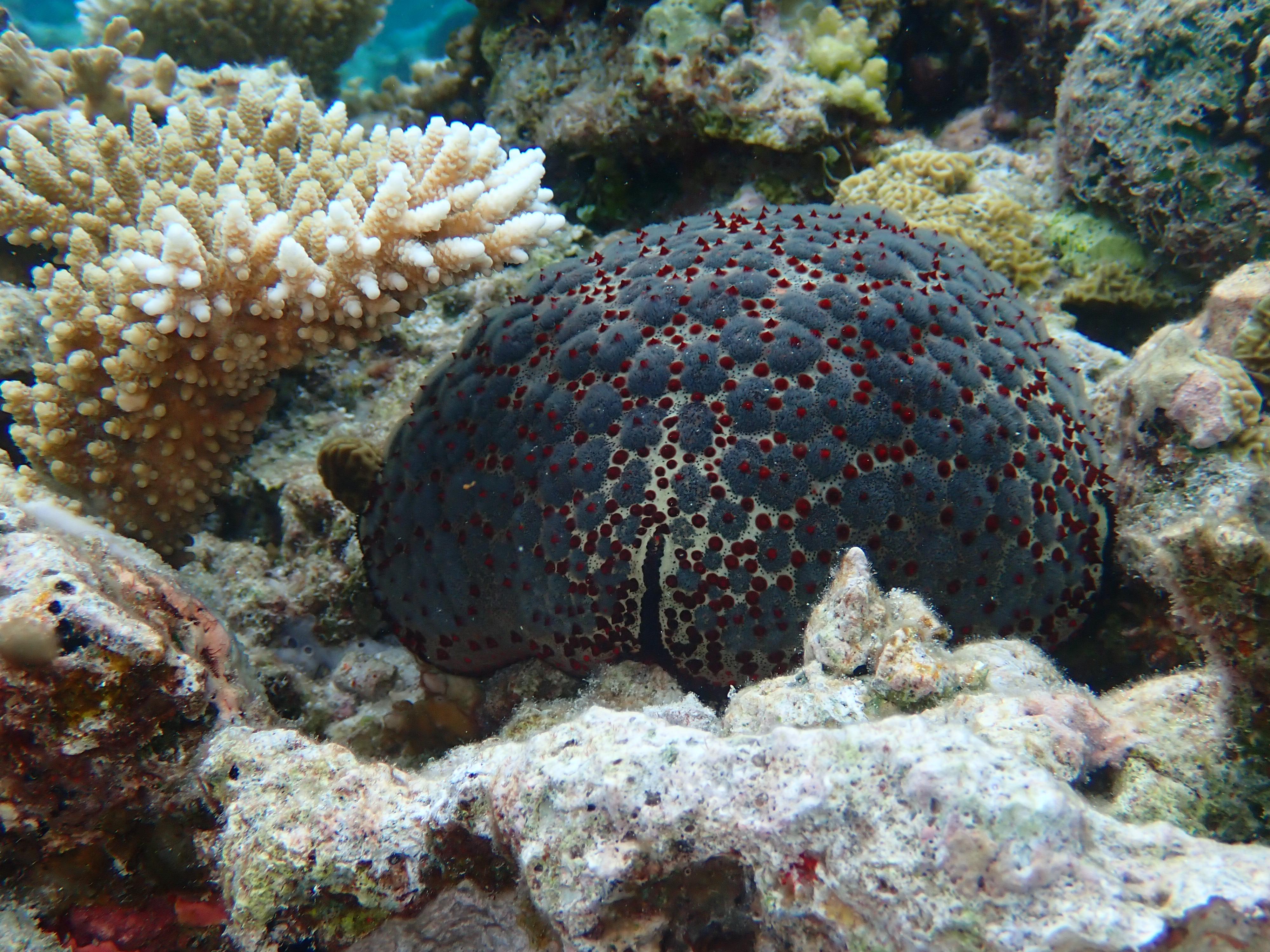
Unlike the infamous crown-of-thorns starfish, which attacks large coral colonies, cushion starfish specialise in hunting baby corals – especially fast-growing species like Acropora and Pocillopora, which are crucial for rebuilding reefs after bleaching events. And they do it in a particularly gruesome way.
The starfish climbs onto a young coral, pushes its stomach out through its body, and digests the coral tissue externally, leaving behind only a white calcium skeleton. The coral can appear bleached, but in reality it is already dead.
Marine researchers say this predation may be one of the hidden reasons why some reefs in the Maldives struggle to recover years after mass bleaching events.
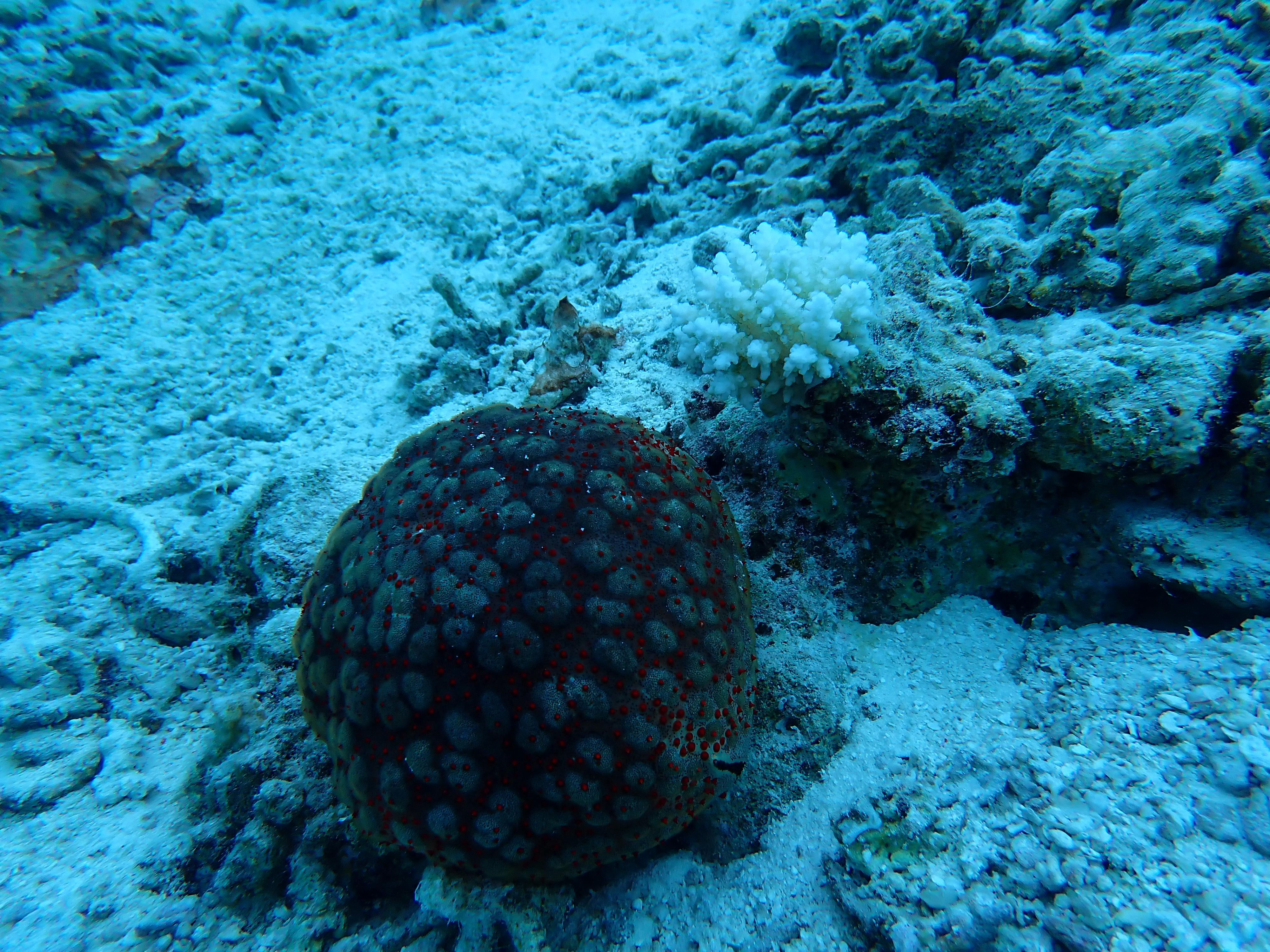
Historically, cushion starfish populations on reefs were considered relatively low, with around 0.5 individuals per 100 square metres seen as normal. But surveys around Raa and Faafu atolls have recorded densities as high as 9.2 individuals per 100 square metres – nearly 20 times higher than expected levels. Some researchers now believe the Maldives may be experiencing localised population outbreaks.
The problem is not simply that cushion starfish eat coral. It is which coral they eat. They target juvenile colonies under ten centimetres wide – effectively wiping out the next generation before it has a chance to grow.
That matters enormously for the Maldives, where shallow reef flats act as natural barriers protecting islands from wave erosion. Fast-growing branching corals such as Acropora are especially important because they help reefs rebuild height and structure quickly. Scientists warn that heavy predation by cushion starfish can slow, or even completely prevent, natural reef recovery after bleaching.
Should the Maldives remove them?
The starfish are found across reef depths, but tend to prefer areas with higher coral cover – often the same shallow zones where restoration projects are concentrated. That has created headaches for marine conservation programmes.
A 2024 study conducted in Baa Atoll (Walker et al., 2024) found that cushion starfish predation was the leading cause of death among coral recruits and fragments used in reef restoration projects.
In simple terms: conservationists were planting corals, and the cushion starfish were eating them.
Cushion starfish are native to Maldivian reefs. They are not invasive. They also eat soft corals, seagrass, and sponges, meaning they play a role in the wider reef ecosystem. But scientists increasingly argue that targeted removal in key restoration zones may be necessary if reefs are to recover quickly enough to keep pace with climate change.
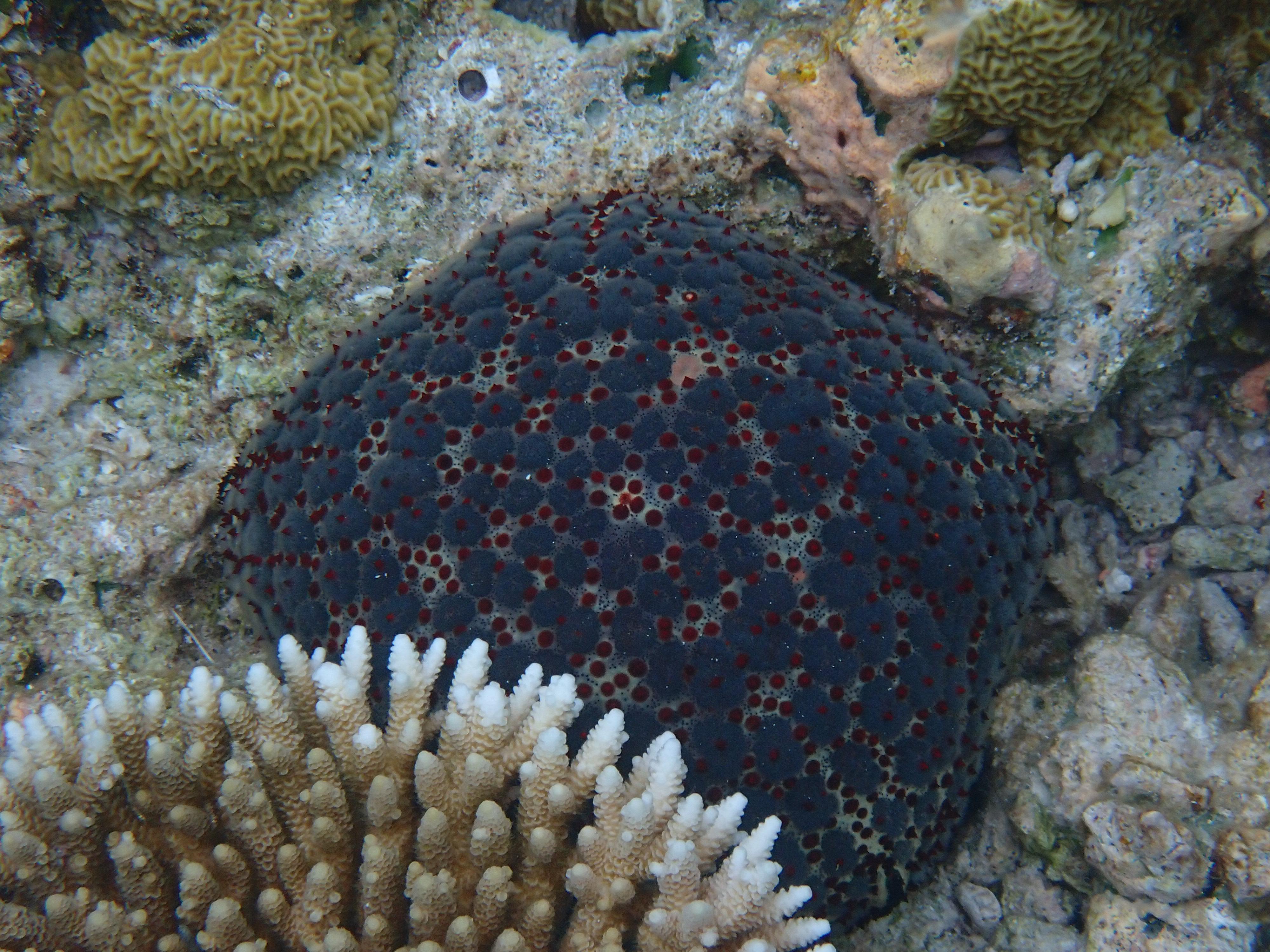
The Maldives Coral Institute is currently examining the impact of cushion starfish on Maldivian reefs by determining how much they eat and how far they travel to forage. Research like this helps scientists understand the effects these predators have on baby corals, and whether they are holding back reef recovery.
With sea temperatures continuing to rise, the problem may become worse. Some studies suggest warmer waters could increase the starfish’s energy demands, potentially causing them to prey even more heavily on juvenile hard corals. For a country whose economy, fisheries, tourism and coastline all depend on healthy reefs, the implications are serious.
The Maldives has spent years focusing on coral planting, reef monitoring and climate advocacy. Scientists now say there may be another, surprisingly simple tool available to help reefs recover: take out the baby coral killers.
The Maldives Coral Institute is a science-led organisation that researches, develops and implements ways to build coral resilience and protect reefs from irreversible loss. Founded in 2019, MCI works with communities, scientists and partners across the Maldives to help coral reefs survive and adapt to a changing climate.
All comment pieces are the sole view of the author and do not necessarily reflect the editorial policy of the Maldives Independent. If you would like to write an opinion piece, please send proposals to editorial@maldivesindependent.com.
Discussion
No comments yet. Be the first to share your thoughts!
No comments yet. Be the first to join the conversation!
Join the Conversation
Sign in to share your thoughts under an alias and take part in the discussion. Independent journalism thrives on open, respectful debate — your voice matters.
Support Independent Journalism
Help us keep the news free and fearless
Give once
$
or
Become a memberfrom $5/month