
My case for the MDP nomination
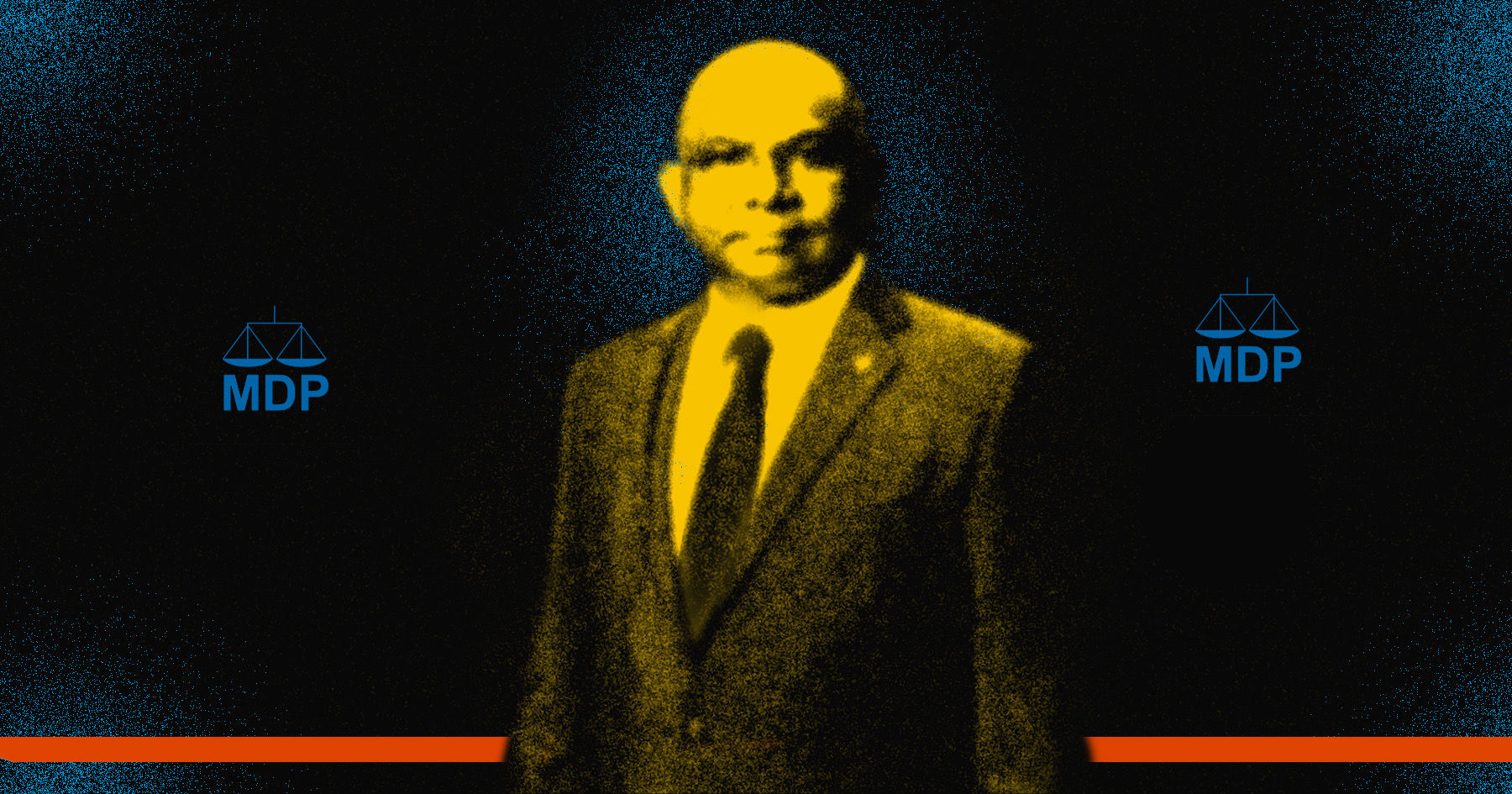
Abdulla Shahid on stepping down as party president to run.
Artwork: Dosain
06 Sep, 15:11
On 14 August 2026, I announced my intention to seek the Maldivian Democratic Party’s nomination for the presidency of the Republic of Maldives.
I did so, after submitting my resignation as the president of MDP on 12 August 2026 – a decision I considered carefully. I believe that anyone asking MDP members for their confidence and trust, should do so, on equal terms. For me, that means stepping aside as party president and entering the primary as a candidate, being accountable to the same members whose support I seek.
MDP belongs to its members. They must be free to weight the candidates before them – their experience, their ideas, and the future they offer our country. I intend to make my case to the party members, and to the wider public, on those terms.
Public service has given me the privilege of seeing our country and its people, from many different perspectives. I have seen the Maldives change enormously, overcome difficult moments, expand its ambitions and prove time and time again the resilience, determination and courage of its people. That experience has also given me a clear sense of the challenges before us and the urgency of meeting them.
Too many Maldivians are carrying a burden that grows heavier each year: the everyday struggle to make ends meet, the responsibility of providing for a family and securing a child’s future. And too many have begun to feel that no matter how hard they work, that it is impossible to get ahead – that the life they imagined for themselves and their children is slipping beyond reach. At the same time, institutions that safeguard our democracy and protect the rights of every citizen are being tested – and public trust in them is eroding fast.
What troubles me most is that none of this is inevitable. We are a nation of immense potential. Our people are talented and determined. We should not be watching that promise waste away. I am convinced that the Maldives can meet these challenges with experienced and responsible leadership, and a clear sense of direction.
After a lifetime serving this country in different capacities, I believe I have a responsibility to put that experience before the Maldivian people, along with my vision of what we can become.
More than three decades ago, I began my career as a young Foreign Service Officer, when the Maldives had far less progress, and a far smaller presence on the international stage, than it does today. Those early years taught me that the size of our country need never determine the strength of our voice, and that careful diplomacy, persistence and strong relationships can carry Maldivian interests far beyond our shores.
Government and parliament taught me different lessons. Serving in the President’s Office showed me the machinery of the state, and the responsibility of making it work for Maldivians. Representing my constituents in the People’s Majlis, and later serving as speaker, deepened my belief that strong institutions, open debate and accountability are essential to a healthy democracy.
My own political journey has shaped me too. I began my public service under a very different political system. In 2013, I made the decision to join MDP, and it has been my political home ever since. I have stood with this party in government and in opposition, through victory and defeat, because I believe deeply in the democratic principles on which it was founded. Serving across different political eras has shown me how our institutions have evolved, how fragile democratic progress can be and why that progress must be protected.
As foreign minister, I led our diplomacy through some of the biggest challenges of our time. Nothing tested us more severely than the Covid-19 pandemic. Borders closed. Tourism stopped. Maldivians were stranded overseas, and those needing medical care beyond our shores were suffering – and even dying – at home. The world was competing for scarce medical supplies and, later, vaccines. Our diplomacy became intensely practical; bringing Maldivians home, securing travel arrangements across closed borders, mobilising medical assistance and medical equipment, and making sure vaccines reached our shores. At a moment when every country was looking inward, the relationships we had built abroad delivered for our people when they needed them most.
The economic shock was just as severe. Our principal source of foreign currency had effectively stopped, yet we worked through it, and set the country on the path to recovery. Today, even as tourism thrives, Maldivians face mounting difficulty accessing dollars and a punishing cost of foreign currency. The contrast should concern us all. Crisis taught me that hard circumstances demand capable and experienced government, sound decisions, and leaders prepared to take responsibility.
Later, as President of the 76th Session of the United Nations General Assembly, I presided over the world’s most representative body at a moment of profound global uncertainty. The world was still emerging from the pandemic. The climate crisis was accelerating, and conflicts across the globe were straining the international system to breaking point. Through my Presidency of Hope, I worked with all 193 Member States to advance vaccine equity and sustainable recovery, advance the interests and perspectives of Small Island Developing States, push for greater climate action, and place gender equality firmly on the agenda.
That experience reinforced something I had learned throughout my career: leadership is usually about finding a way forward among people who begin from very different experiences, positions and perspectives. I saw countries divided by geography, politics, and competing interests, find common ground when they trusted the process and believed that their voices would be heard.
Each of these experiences has shaped how I understand leadership. It requires judgement, patience and the courage and willingness to make difficult decisions. Above all, public service has taught me that leadership means creating the conditions in which people and institutions can thrive.
These same principles matter at home too. The true measure of progress is not what our economy produces, but what that progress means to everyday people. A young person willing to work hard should be able to imagine building a good life here. A small business should have the opportunity to grow. A family should be able to look ahead with confidence, not fear. Growth that does not reach every household is not progress.
When I look at the Maldives today, I see a country creating considerable wealth. Our resorts are busy. Our economy continues to grow. Our people continue to work hard. Yet families are struggling with the cost of living. Access to foreign currency has become a constant worry. Affordable housing remains out of reach for far too many. And many young Maldivians look at the future and see not much reason for hope.
This country cannot become a graveyard of shattered dreams and hopes for a dignified life.
These challenges did not all begin with this government, and serious leadership requires us to be honest about that. But governments are elected to confront difficult problems and improve people's lives. After nearly three years, Maldivians are entitled to ask whether they feel more economically secure, whether opportunities have widened and whether the direction of the country gives them greater confidence in their future.
Economic confidence also depends on confidence in the institutions of the state. An independent judiciary, a strong and responsible parliament, a free media, accountable government, and the right of citizens to speak openly, are the foundations of a stable democracy and a prosperous country. When these institutions are weakened, the consequences reach far beyond politics, and into investments and opportunities. It creates doubt as to whether decisions are being made fairly and in the national interest.
Today, the Maldives needs a clearer sense of direction. People should be able to see how the decisions made today will leave their lives more secure tomorrow. Government must once again earn the confidence of citizens through competence, stable and confident decision making, accountability, and through results.
We have everything we need to build that future: a young and capable population, an incredibly successful tourism industry and communities with extraordinary resilience. Our task is to turn these strengths into better lives and greater opportunities.
I have great confidence in our young people. They are ambitious, creative, and unafraid of hard work. They deserve to know that their effort can lead somewhere. Too often, when young Maldivians struggle to find their place in the economy, their ambitions end up being questioned. Government should instead ask whether the opportunities it is creating match their ambition. Young people should be able to pursue an education, build a business or a career and still see a future for themselves here in the Maldives.
Families should have a realistic path towards a home and lives they can afford. Micro, small and medium enterprises should have the space to grow, create jobs, and compete. Women, persons with disabilities, and the ageing population should find space in our society, our economies and our futures. We are moving towards a rapidly ageing society – policies on social protection, sustainable living, healthcare and productive economies that we make now will determine how we address that demographic challenge. Development should create opportunity across every island, and every and communities. Responsible management of our public finances should protect the current generation and those that follow us.
For an island nation, climate security is inseparable from economic security. We have no greater resource than our ocean, our reefs, and the biodiversity they sustain. Our prosperity and livelihoods rest upon them. Sustainably using and managing them, and building sustainable and resilient communities is an investment in the future of every Maldivian.
Internationally, the Maldives should engage the world with confidence, consistency and maturity. Our friendships are among our greatest national assets, built over decades, across governments and generations. We have seen what happens when foreign policy is driven by short-term politics: relationships are strained and the national interest eventually demands the difficult work of rebuilding what should have been protected in the first place. The Maldives deserves greater consistency than that.
Good diplomacy expands our friendships. It opens doors, creates opportunities, brings investment, protects Maldivians abroad and ensures that when our country needs support, we have partners willing to stand with us. I have spent much of my career doing that work, and I know what Maldivian diplomacy can achieve when conducted with judgement and purpose.
This is the future I want us to work towards: a country capable of turning its true potential and promise into prosperity, security and opportunity for its people.
The presidency I seek is one that respects our sovereignty, and our independence. It is one that respects our constitution and the institutions of our republic, and understands the limits as well as its responsibilities. I will lead by listening. I will bring capable people around the table. I will make decisions with the long-term interests of our country in mind. A president’s strength should be measured by the strength of the country and its institutions when that president leaves office.
The coming months will give our party an opportunity to have an important conversation: about the country we want to build, the values we want to carry forward and how we once again earn the confidence of Maldivians everywhere. I look forward to making my contribution to that conversation and to hearing from our members about the future they want.
But the presidency of the Maldives belongs to every Maldivian. Any candidate seeking that office must be prepared to earn the confidence of people across our islands, communities and political traditions, including those who may never have supported the MDP. I want to be a president who can serve them all.
For more than three decades, I have had the privilege of serving the Maldives in different capacities, at home and around the world. Every experience has deepened my belief in the promise of this country and the resilience of our people.
I now ask for the opportunity to put that experience to work in service of our future.
Abdulla Shahid is a former foreign minister and speaker of parliament. He resigned as MDP president in August to seek the party's ticket for the 2028 presidential election.
All comment pieces are the sole view of the author and do not necessarily reflect the editorial policy of the Maldives Independent. If you would like to write an opinion piece, please send proposals to editorial@maldivesindependent.com.
Discussion
No comments yet. Be the first to share your thoughts!
No comments yet. Be the first to join the conversation!
Join the Conversation
Sign in to share your thoughts under an alias and take part in the discussion. Independent journalism thrives on open, respectful debate — your voice matters.
Support Independent Journalism
Help us keep the news free and fearless
Give once
$
or
Become a memberfrom $5/month

