
‘Hope is not a strategy’: fixing resort security in the Maldives
A former police chief makes the case for licensing private security.
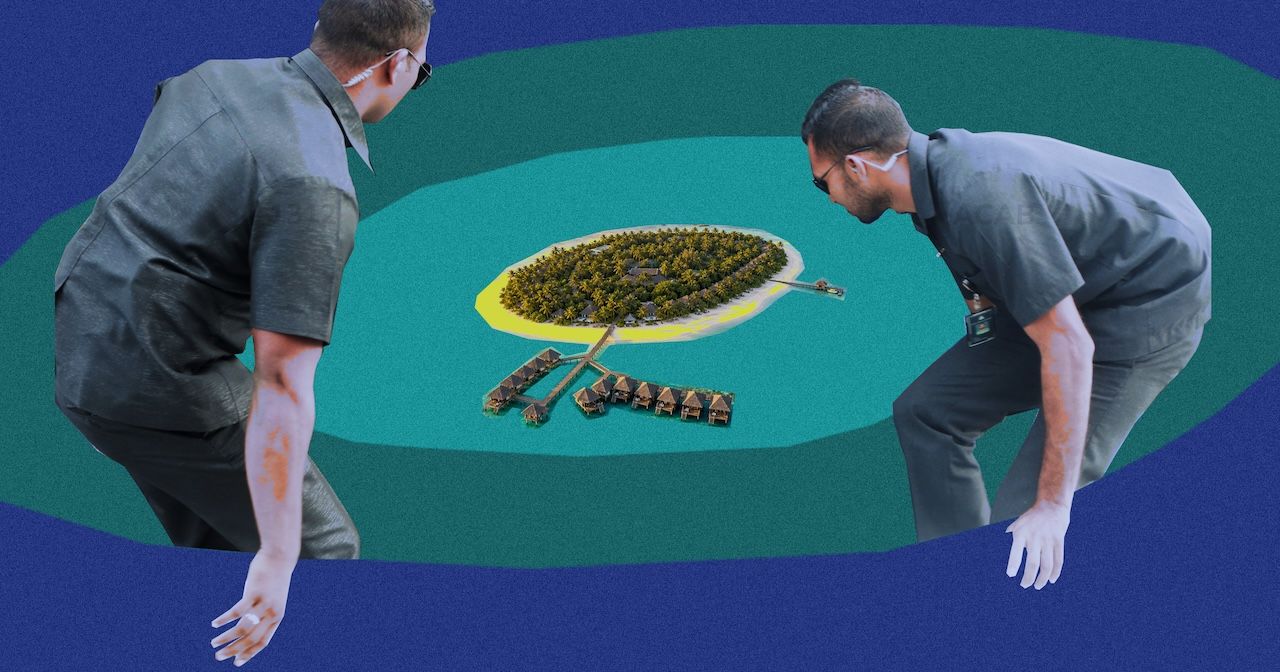
Artwork: Dosain
1 hour ago
On 29 and 30 September the Maldives Association of Fire, Safety and Security Industry (MAFSSI) held its Safety & Security Conference in Malé. The stated idea was to put industry, government and solution providers in one room to talk about compliance, emergency preparedness and resilience in tourism. That does not sound dramatic, but it is rare here, and I think it matters more than most people noticed.
A while back I wrote a piece for a hospitality magazine on guest safety in resorts and never sent it. I expected a poor reception from an industry that does not enjoy being told to spend more. MAFSSI is now making the argument in public, so I will make mine.
The thing we do not say out loud
The Maldives has sold the same promise for fifty years: beauty, privacy, and a sense of being far from everything. Luxury is delivered very well here. Safety and security have not kept up, and I think many of us in the industry know it.
In a lot of resorts security is kept quiet, almost invisible, as if remoteness were itself a guarantee. It is an easy thing to believe when nothing has happened. Under it sits an attitude I have heard often enough to recognise: we are safe, and God willing, nothing will happen. I understand the instinct. But after nearly three decades in security work, I can say hope is not a strategy. Distance does not protect a resort. If anything it works the other way, because when something goes wrong, help is a long way off.
Guests have not missed this. The people who pay Maldivian prices expect privacy, discretion and the feeling that someone competent is looking after them. They do not want guards in their face, and they should not have to see the arrangements. But they expect them to exist. A resort that handles an incident badly loses far more than the incident cost. Safety is not the opposite of luxury. It is part of why people can relax in the first place.
Leaning on the state
The other habit I want to name is leaving it to the State. When I talk to operators, the unspoken plan for a serious incident is often that the police, the fire service or the coastguard will come. They will, and they will try hard. But look at the map. Hundreds of islands, long distances, a limited number of boats and people. Even the best-intentioned response takes time, and the first hour belongs to whoever is on the island.
That hour is the resort’s responsibility. It means trained staff who know what to do, drills that have actually been run, a security manager with real authority, and a relationship with the agencies that exists before the emergency rather than during it. I would also say plainly that State agencies should be doing their part. They need to be well drilled, coordinated with each other, and resourced for a country scattered like this one. Neither side can wait for the other. Right now each seems to assume the other has it covered.
The regulatory gap
Fire is the clearest case. The Ministry of Defence, through the Fire and Rescue Service under MNDF, assesses fire safety systems and carries out inspections. The Tourism Ministry handles drawing approvals and the operating licence. You can at least draw that on a board.
Private security is murkier. I know of no authority with a clear mandate to license or regulate security providers. The Homeland Security ministry’s charter mentions licensing of health and safety practitioners, but the wording is ambiguous enough that I would not say who is covered, or whether anyone is actually being licensed. Guarding companies operate, resorts hire them, and quality ranges from very good to poor. Nothing reliably tells the difference before something goes wrong.
Tourism does have a security regulation. Regulation 2020/R-27 on Safety & Security Standards at Tourist Establishments came into effect in 2020. I was Commissioner of Police then, and the Police Service is named in it as the body that sets the security standards, so I am not writing as an outsider.
It has real content. Properties must submit a security plan when applying for a licence. They need a designated Security Manager, a security control room and a backup one, CCTV, access control, power backup, and written procedures for things like a terror threat, fire and a missing swimmer. The Ministry is meant to inspect and approve security arrangements once every two years, with police help.
But it regulates the establishment, not the people. It says nothing about who the guards are, what training they have, or whether the company employing them meets any standard. Lifeguards must be certified. Security officers face no equivalent requirement that I can find. Fines are capped at MVR 100,000 (roughly USD 6,500), and that is for a third offence. And I do not know how often inspections actually happen. If the Ministry published the numbers, we would all know. I am working from an unofficial English translation, so if I have missed something I would like to be told.
What the UK did
The UK solved this with the Security Industry Authority, set up under the Private Security Industry Act 2001. Anyone doing licensable work, such as door supervision, security guarding, CCTV operation or close protection, needs a licence. You pass identity and criminal record checks and complete approved training. The regulator can refuse, suspend or revoke, and companies can be assessed too, not just individuals.
Nobody should copy it wholesale. The UK has a far larger industry and a different legal system. But the principle travels: one body whose job is to say who may do this work and to what standard, and to take the licence away if they fall short.
What I would want here
I would start small. License the main guarding roles and the companies that supply them. Set a minimum training and vetting standard. Name one authority, whether a new body or an existing agency with a proper mandate, so that “who regulates this?” has a single answer. Publish how many inspections are done and what they find. Fund it from licence fees, and let MAFSSI sit at the table as the industry’s voice.
I should say where this goes wrong. Regulators here are stretched, and a new one could easily turn into a fee-collecting office that issues certificates and checks nothing. That would be worse than the gap we have, because it gives everyone false comfort. If we cannot staff it properly, we should not build it. And resort owners will point to cost. They are right that it adds cost. But guests, insurers and lenders will keep asking harder questions, and it is better to have answers than to be caught saying we assumed it would be fine.
Last thought
MAFSSI deserves credit for starting the conversation. The industry can raise its own standards only so far. Resort leaders need to stop treating security as something that sits quietly in the background and takes care of itself. The State needs to give the sector a clear mandate, standards that are checked, and penalties that mean something.
Until both happen, we are mostly relying on resorts to be careful and on nothing going wrong.
Mohamed Hameed served as the commissioner of police from 2019 to 2023.
All comment pieces are the sole view of the author and do not necessarily reflect the editorial policy of the Maldives Independent. If you would like to write an opinion piece, please send proposals to editorial@maldivesindependent.com.
Discussion
No comments yet. Be the first to share your thoughts!
No comments yet. Be the first to join the conversation!
Join the Conversation
Sign in to share your thoughts under an alias and take part in the discussion. Independent journalism thrives on open, respectful debate — your voice matters.
Support Independent Journalism
Help us keep the news free and fearless
Give once
$
or
Become a memberfrom $5/month