

Comment: Vote "no" in the referendum
War at every doorstep, but the only cost being cut is elections.
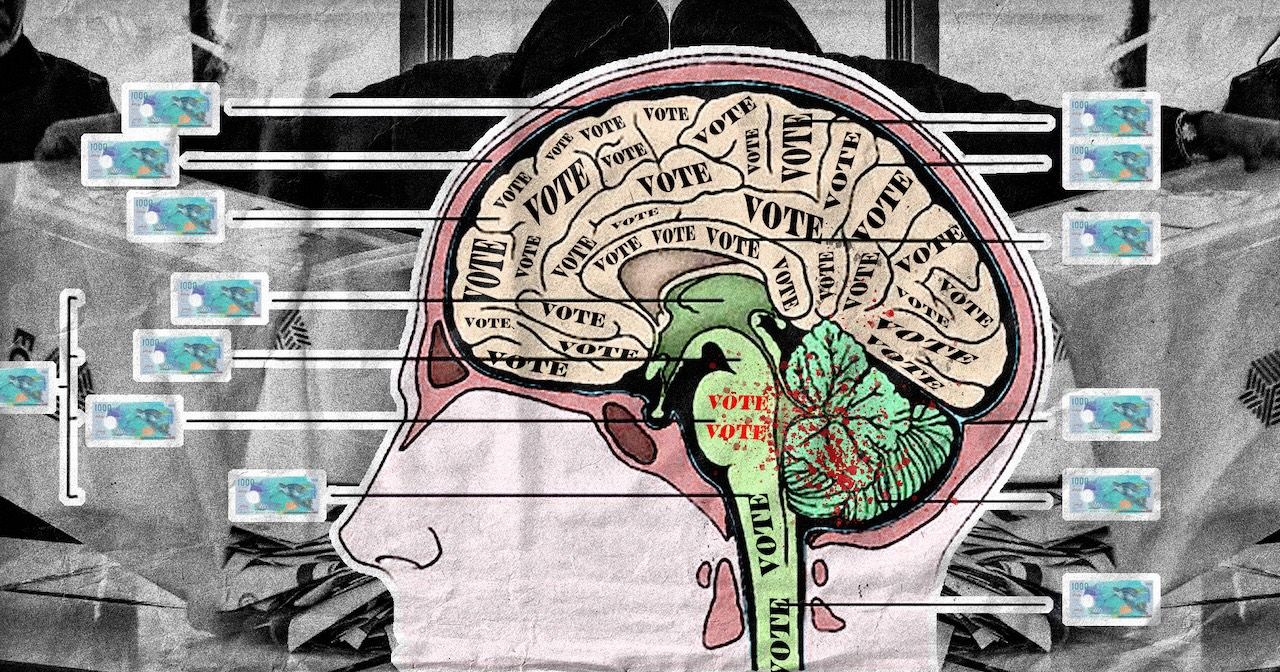
Artwork: Dosain
It makes it easier for the president and the ruling party. One election means one campaign, one mobilisation, one set of resources. All the money, all the jobs, all the contracts, all the patronage, directed at winning everything at once. Making it easier for the ruling party to win and hold power is not the voter’s problem to solve.
It reduces voter deliberation. Presidential elections and parliamentary elections ask two fundamentally different questions. One asks who should govern the nation. The other asks who should hold that government accountable on behalf of my island, my community, my constituency. These are not the same decision and they deserve separate consideration. When forced to make both at once, voters do not weigh each on its merits.
It undermines checks and balances. The Constitution separates these two elections deliberately: elect a president, then, later, give the people an opportunity to assess how that president is governing, and to elect a parliament that can hold that president accountable. The current six-month gap between the two elections is already too short. But at least it exists, and at least voters get a second chance. Combining the two elections eliminates even that narrow window.
It hands the president the parliament. The system already favours the president. Nearly every single time since 2008, the president’s party has swept the Majlis. Parliamentary elections are already held when the president is still in the honeymoon period and the opposition is demoralised. Parliamentary candidates ride in on the president’s popularity rather than being judged on their own merit and constituency work. Combining the two elections only makes this worse, and produces a parliament filled with legislators who owe their seats to the president, not their voters.
It is a permanent change to the democratic system. This is not a minor administrative adjustment. Nor is this a vote for a candidate or a party that can be reversed in five years. It is a fundamental restructuring of how our democracy works.
Discussion
No comments yet. Be the first to share your thoughts!
No comments yet. Be the first to join the conversation!
Join the Conversation
Sign in to share your thoughts under an alias and take part in the discussion. Independent journalism thrives on open, respectful debate — your voice matters.
Support Independent Journalism
Help us keep the news free and fearless
Give once


