
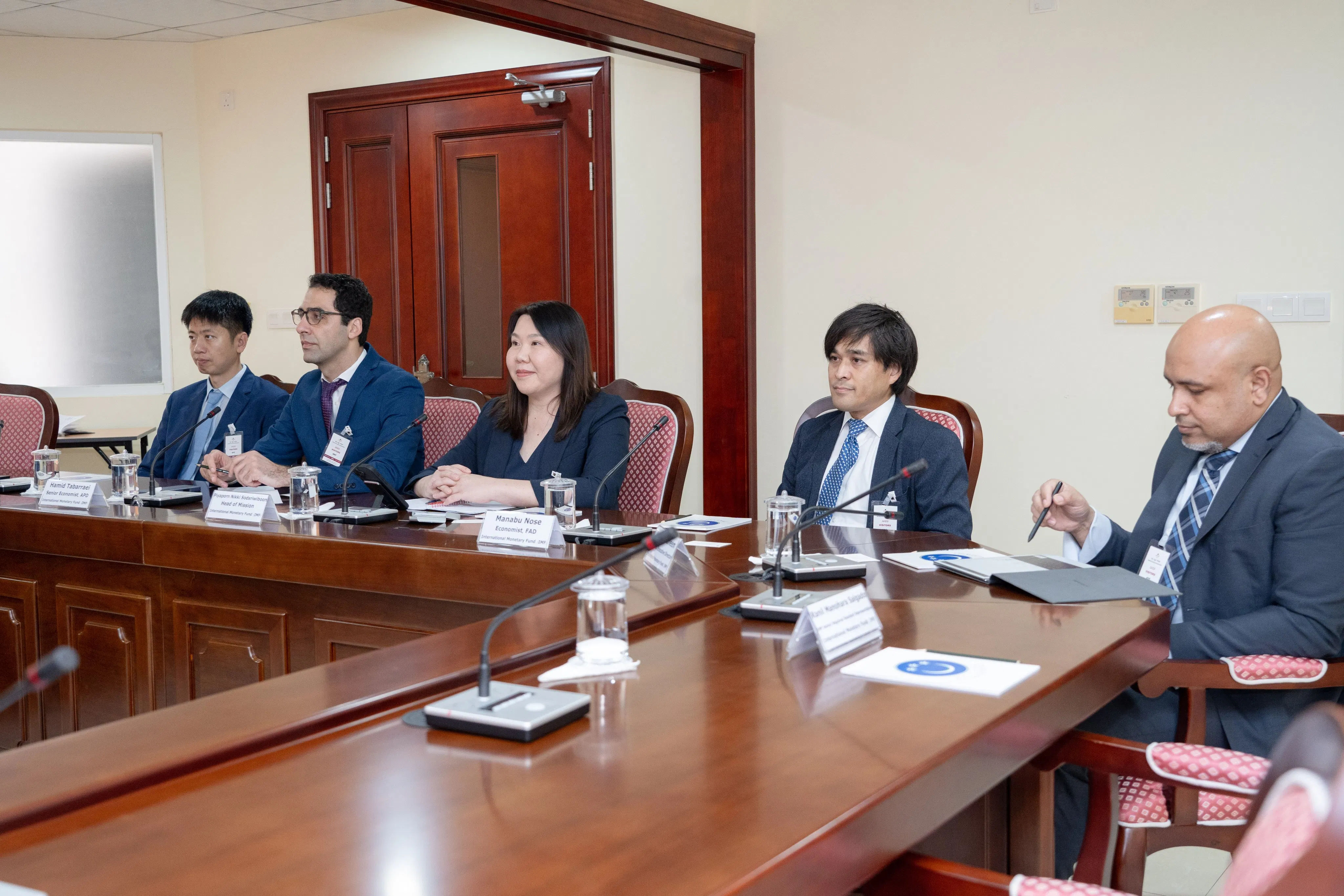
The IMF said Middle East conflict has significantly weighed on the Maldives' near-term outlook, projecting real GDP growth will slow to about one percent in 2026 on weaker tourism and higher energy prices, in a statement at the close of its annual Article IV mission. The delegation, which visited from June 4 to 14, said the economy had navigated a challenging environment with improved resilience, helped by a sizeable fiscal consolidation in 2025 and strong tourism, and that official bilateral support had eased near-term external pressures and lifted reserves. It credited the authorities with continuing to meet debt obligations, including timely sukuk and loan repayments, and said the financial system was stable. But it warned that downside risks dominate: while recent repayments eased immediate solvency concerns, the fiscal deficit and public debt are projected to stay elevated and the risk of debt distress "remains high," with the current account deficit widening further on higher import bills. The IMF urged reform-based spending restraint and stronger revenue, singling out a review of subsidy schemes – targeting the vulnerable through means testing – in light of the oil-price surge, and flagged state-owned enterprises as "a material source of fiscal and governance risk." It welcomed the MMA's resumption of open market operations and said the Foreign Currency Act had helped ease forex pressures and build reserves, but stressed that decisive adjustment was key to preserving the exchange rate peg.
Maldive Gas raised the price of its 45kg and 22kg cylinders. Reports differed on who is affected: Adhadhu reported the 45kg refill rose to MVR 1,345.50 (US$ 87) from MVR 1,170, up MVR 175.50 and the 22kg refill to MVR 500 from MVR 440, up MVR 60. Mihaaru, however, quoted an official from the state-owned company as saying the increase applied only to gas sold to resorts, cafés and hotels, with no change for households: a 25 percent rise for resorts and 15 percent for cafés, restaurants and hotels, taking the 45kg cylinder to MVR 1,314. The official said prices were raised because the Middle East war had made gas harder to source and more costly. The government has not otherwise explained the increase. Maldive Gas temporarily limited cylinder fills in March amid global supply pressure from the war before resuming normal sales, and the government has said the country will not face shortages of staple food, fuel or gas.
Malé City Council voted to cancel two contracts for developing the fish market and hand the land to the construction ministry instead. The council had signed two undisclosed agreements for the project, more than MVR 53 million apart in value, and the previous council had tried to investigate but was blocked by the then PNC majority. The construction ministry, which has launched its own fish market project, had written to the council asking for the land, saying the project was stalled because the land had not been handed over. The council said it wanted the contracts cancelled and the matter handled within the law, and resolved not to transfer the land unless the ministry shares full project details, including detailed drawings, the contractor's information and a copy of the agreement. The original deal, signed when President Muizzu was mayor, was worth US$ 6.1 million. Before Adam Azim was elected mayor it was cancelled and the project reassigned under a US$ 9.5 million agreement, signed by the head of the council's legal section, Ali Naseer Qasim.
The trial of eight people charged over an MDP protest last October began at the Criminal Court. Kendhoo MP Mauroof Zakir, Hulhumalé North councillor Fathimath Zahiyya and six others face charges of deliberately obstructing law enforcement officers, over the October 3 protest that police blocked on Majeedhee Magu. All but Mauroof appeared at Sunday's hearing. Three of them – Ali Naufal, Ali Muawwaz and Hussain Rasheed – asked to enter a plea agreement with the Prosecutor General's Office, but as they had submitted the forms only the night before, the PG's Office had not yet decided. The other four asked for 30 days to appoint a lawyer; presiding judge Ibrahim Zihunee granted the 10 days that defendants not in custody are first entitled to, but said the next hearing would be scheduled to allow a longer period. Police blocked the protest before it had properly begun, and seven other participants were arrested and referred for prosecution over clashes between police and the public, but the PG's Office found insufficient evidence to charge them.
Shaviyani Kanditheem Council urged residents to dress modestly in line with Islamic principles and Maldivian cultural norms while in public spaces, describing the island as a close-knit community built on these values. While councils on islands with local tourism businesses commonly post notices asking tourists to dress according to Maldivian customs, such directives are rarely issued to Maldivians themselves.
MNDF firefighters extinguished a fire that broke out in a water heater in the ground floor kitchen of Flat 141, Hulhumalé Phase 1, early on Wednesday morning, bringing it under control between 4:32am and 4:58am. Six people were treated at Hulhumalé Hospital for smoke inhalation.
A container fell onto a boat while being unloaded by crane at Kulhudhuffushi port, damaging the boat and the container. Maldives Ports Limited told Sun no one was injured. Police said they were notified at around 10.24am that the container had fallen during loading, confirmed the damage and lack of injuries, and said they were looking into the incident.
President Muizzu sent back the organ transplant bill passed by parliament on May 14, asking for it to be reconsidered after MPs removed a provision barring prisoners and individuals in state custody from donating organs, arguing that genuine, coercion-free consent – the core principle of organ donation in democratic societies – cannot be assured for people in detention. The president's letter to the speaker also flagged the bill's lack of procedural safeguards seen even in the few countries that permit prisoner organ donation, noting that its penalties risk conflicting with Islamic shariah's framework for retributive justice (qisas), and that it requires regulations to take effect before the bill itself becomes law. Muizzu said the decision was made in line with Attorney General's advice.
Housing Minister Dr Muththalib asked Malé City Council to communicate in writing rather than meet in person, after declining repeated meeting requests over two years, prompting Mayor Adam Azim to accuse him of dishonesty for previously claiming meetings had taken place. In a letter, the ministry cited the mayor's alleged mischaracterisation of past communications and lack of cooperation with government development plans as reasons for preferring written correspondence. Azim said the council has repeatedly written to the ministry on issues including road development updates, new burial grounds, housing concerns, and market redevelopment agreements, but has received no responses, and called on the minister to engage directly or resign.