
The dry season haze: what you need to know
The air pollution hazard, the health risks, and how to protect yourself.
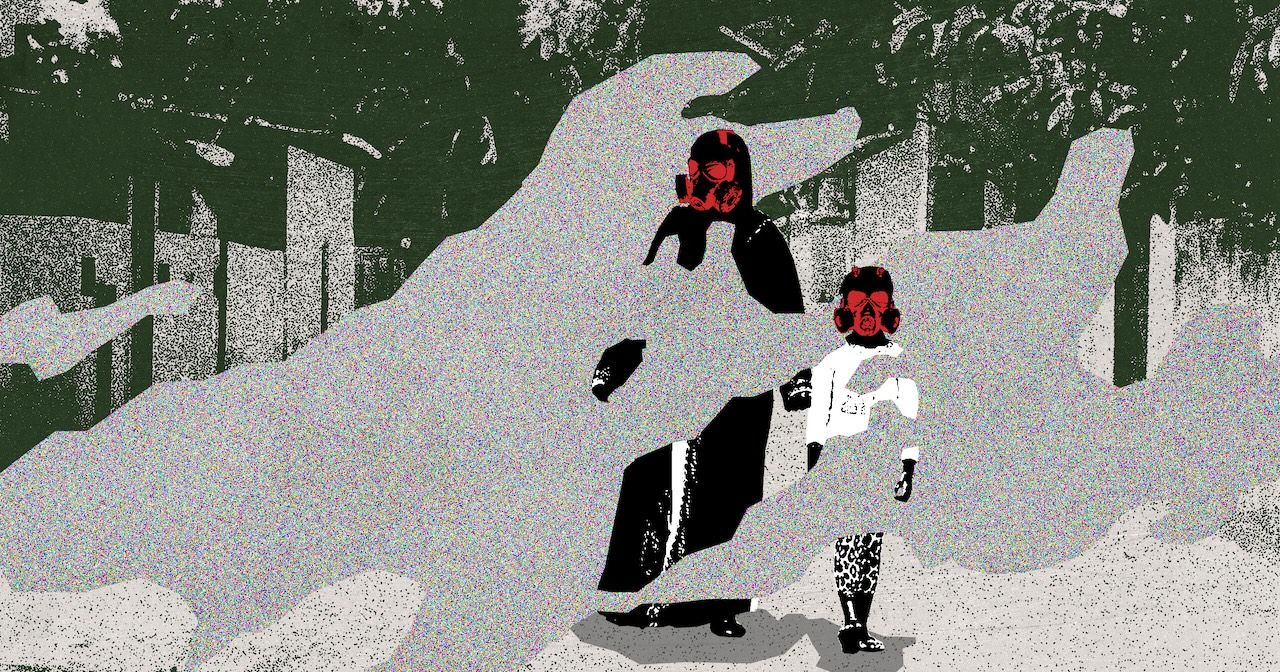
Artwork: Dosain
20 Jan, 16:24
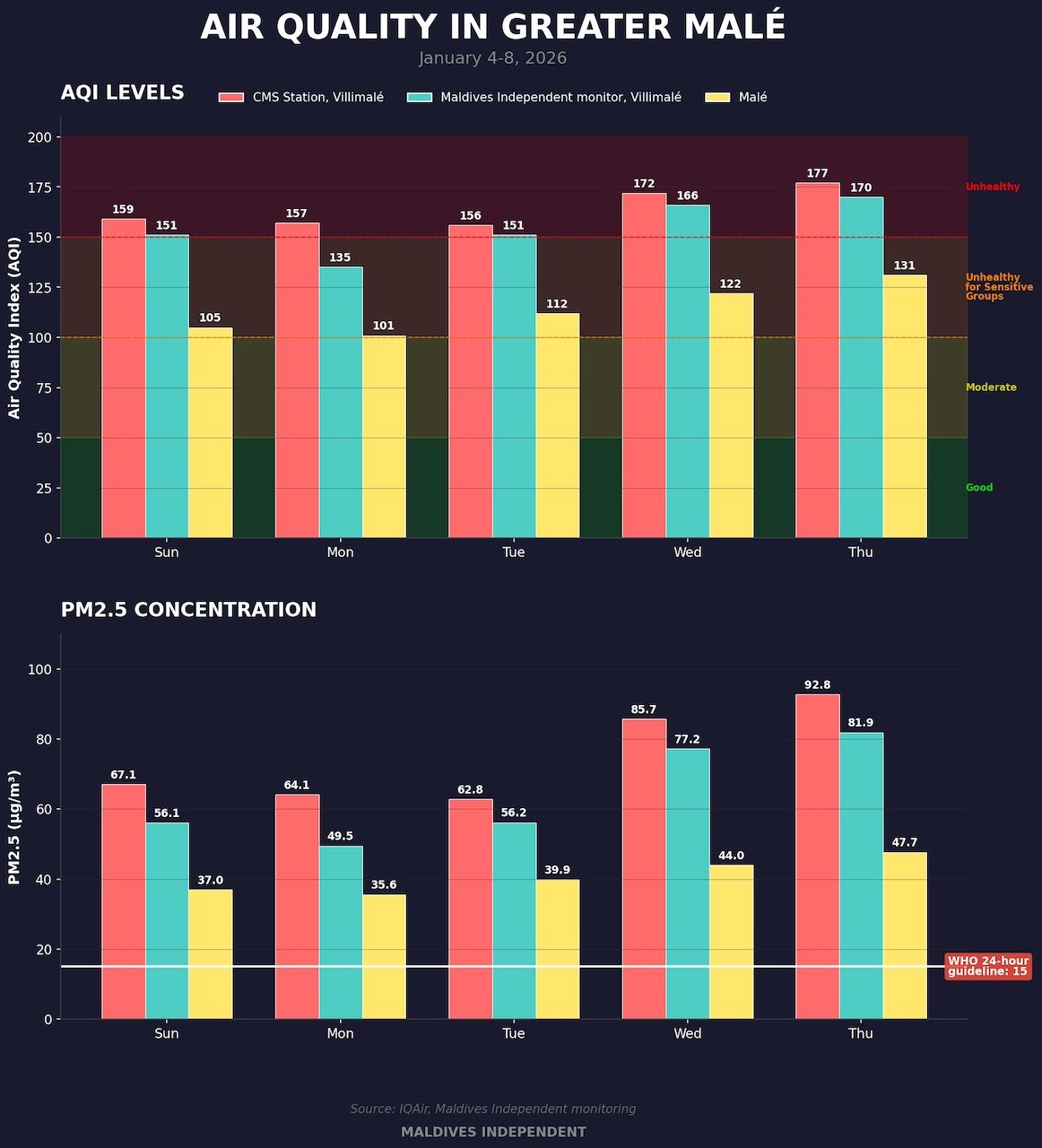
After a brief respite last week, air quality has deteriorated since Saturday. Readings in Malé have exceeded 100 – unhealthy for sensitive groups – while Villimalé has averaged above 150, in the unhealthy category, for the past four days. At noon today, Malé showed an Air Quality Index of 115. The AQI in Villimalé was at 153.
Why does car-free Villimalé consistently show worse readings than congested Malé? That's one of the questions we investigated for a feature on air pollution during the northeast monsoon. Research shows 67 percent of dry season days in the Greater Malé Region exceed World Health Organisation guidelines. We spoke to a doctor about the health hazard and documented an institutional gap: schools not warned, agencies pointing fingers at each other, and the only public air quality monitor in Malé run by a private citizen.
This explainer answers the practical questions: what the science says, who is most at risk, and what you can do to protect yourself and your family.
What is this haze?
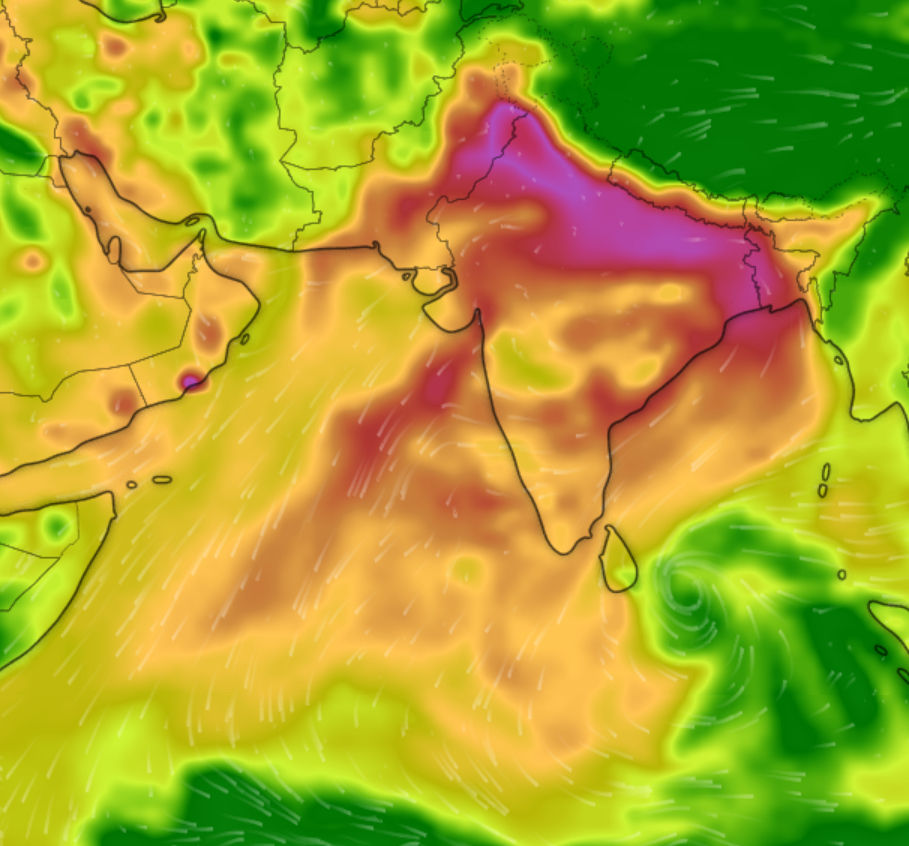
Every dry season, a vast cloud of pollution drifts south from the Indian subcontinent, carried by the northeasterly monsoon winds. Scientists call it the Atmospheric Brown Cloud: a mixture of soot, dust, and fine particles from vehicle emissions, coal-fired power plants, agricultural burning, and cooking fires across South Asia.
About 90 percent of fine particulate matter in Malé during the dry season originates from this long-range transport.
How bad is it in the region?
The Maldives sits downstream of one of the world's most polluted airsheds.
A World Bank report published in December found that air pollution across the Indo-Gangetic Plains and Himalayan Foothills kills around one million people prematurely each year and shortens average life expectancy by more than three years. The economic damage is estimated at 10 percent of regional GDP annually.
In many areas, more than half of PM2.5 pollution originates outside local boundaries, carried by regional winds, the same pattern that brings South Asian emissions to the Maldives.
The report notes that change is possible: China and Mexico City both cut PM2.5 concentrations by half within a decade through sustained action.
When does it start and end for the Maldives?
The haze typically arrives in December with the onset of iruvai and persists through March.
Air quality generally improves only with rain, which is scarce during the dry season. The wet southwest monsoon, hulhangu, brings relief when it arrives in May.
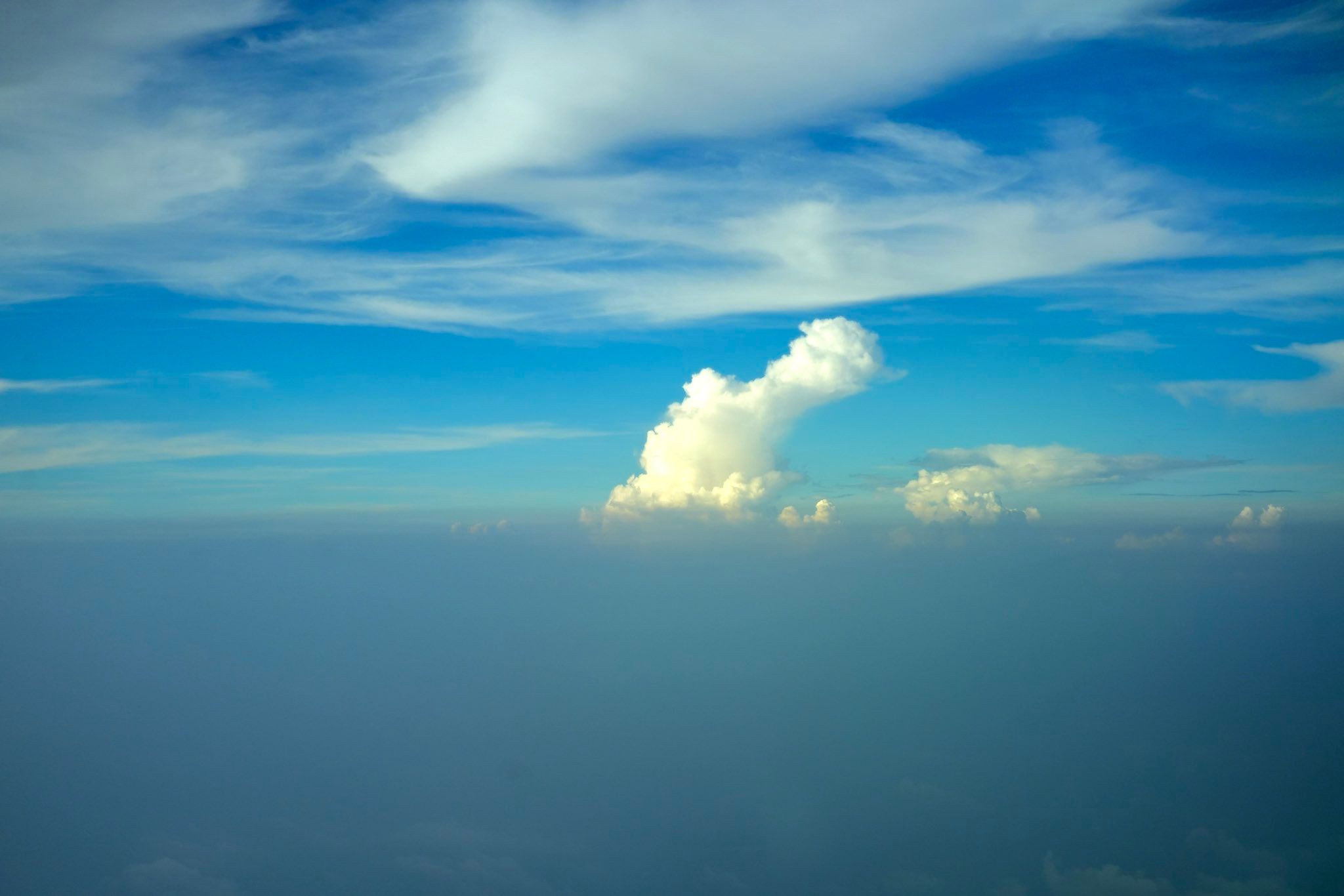
In early December, a Maldivian pilot captured the atmospheric brown cloud, sharing a photo taken from the cockpit that showed a distinct layer blanketing the ocean.
What is PM2.5?
PM2.5 refers to fine particulate matter: solid particles and liquid droplets less than 2.5 micrometres in diameter, about 30 times smaller than a human hair.
These particles are dangerous because they bypass the body's natural defences. Larger particles get trapped by hairlike structures in the nostrils and airways, but PM2.5 penetrates deep into the lungs and can cross into the bloodstream.
"These small, micro particulates are not trapped by this protective mechanism," Dr Mohamed Ali, a pulmonologist at the Indira Gandhi Memorial Hospital, explained to the Maldives Independent. "It enters into our lungs, and it can cross into our bloodstream as well."
How dangerous is it?
The health effects are well documented. Dr Ali cited research showing that a 10 microgram per cubic metre increase in PM2.5 raises all-cause mortality by around 13 percent.
Researchers at Berkeley Earth developed a formula equating PM2.5 exposure to cigarette smoking. At 22 µg/m³ of PM2.5, breathing the air continuously for 24 hours carries roughly the same long-term health risk as smoking one cigarette.
At the levels recorded in Malé in early January – around 45 µg/m³ – the equivalent is roughly two cigarettes per day. In Villimalé, where readings approached 90 µg/m³, the equivalent was closer to four.
However, the comparison is imperfect. It's based on long-term mortality risk, not a precise equivalence. But it makes invisible pollution tangible.
Actual exposure depends on behaviour. Someone in an air-conditioned office with the windows closed breathes cleaner air than someone working outdoors. Most critically, physical activity dramatically increases intake.
Air pollution is now recognised as one of the top five triggers for lung disease, alongside smoking, occupational hazards, infections, and genetics. "I don't think the public understands the gravity of this issue, because we have not been able to talk about it much in the public," Dr Ali said.
How many people die from air pollution in the Maldives?
An estimated 160 premature deaths per year, according to a UN Special Rapporteur who visited the Maldives in 2024.
Dr David Boyd, the UN Special Rapporteur on the human right to a clean, healthy and sustainable environment, noted that despite the country's remoteness and small population, air pollution is "a significant health concern."
Annual average PM2.5 levels in Malé are four times higher than the WHO guideline: 19 µg/m³ compared to the recommended 5 µg/m³. Other parts of the country also exceed WHO levels, though not as severely as the capital.
The 2019 National Action Plan on Air Pollutants outlines measures including expanding solar power, improving energy efficiency, reducing open waste burning, and strengthening emission standards for vehicles and boats. If fully implemented, it projects a 60 percent reduction in direct PM2.5 emissions by 2030.
"However, implementation is the primary challenge," the UN expert observed.
Who is most at risk?
Children, pregnant women, the elderly, and those with pre-existing conditions.
Children are particularly vulnerable for two reasons: they breathe more air relative to their body weight than adults, and their lungs and brains are still developing. PM2.5 can cross the blood-brain barrier, causing inflammation and impairing neuronal development. It can also impair lung growth, reducing development of the alveoli – the part of the lungs where gas exchange occurs – increasing the risk of asthma and COPD later in life.
Pregnant women face risks to their unborn children. "It crosses the placental barrier and enters the brain of the babies," Dr Ali explained. The resulting damage is "associated with impairment of their cognition, IQ reduction, emotional and behavioural issues." PM2.5 exposure is also associated with increased risk of autism spectrum disorders and ADHD.
Those with existing conditions such as asthma, COPD, fibrosis, bronchiectasis, lung scarring, heart disease see their symptoms worsen. "Almost all the patients with lung diseases come with an exacerbation of the illness," Dr Ali said of what he is seeing at his clinic during the current haze.
"Those who do not have lung diseases, they show symptoms of fatigue and tiredness, lethargy, which are not explained by any other reason."
Should I exercise outdoors during the haze?
It depends on the AQI level and your health.
At rest, a person breathes roughly 15 times per minute. During vigorous exercise – running, playing sports, swimming – that can rise to 100 breaths per minute, multiplying the dose of polluted air six or seven times. An hour of outdoor exercise on a bad air day poses far greater risk than an hour sitting indoors.
"If you are running outside for one hour in a very high polluted area, it is almost similar to you sitting in that area for six to seven hours," Dr Mohamed Ali explained.
This doesn't mean you should stop exercising. It means timing and intensity matter.
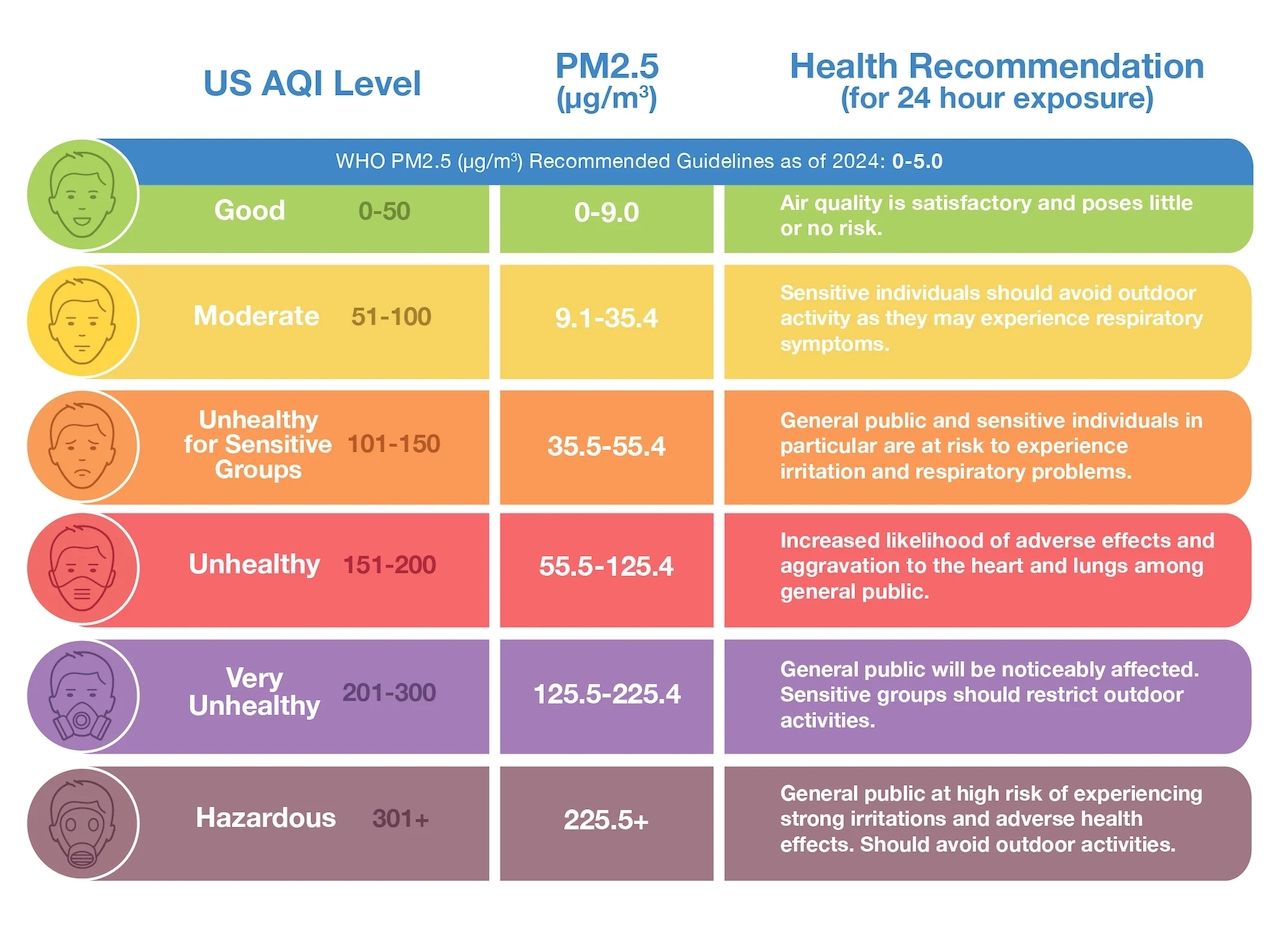
Dr Ali's guidance by AQI level:
Green/Good (0-50): Everyone can exercise outdoors normally.
Yellow/Moderate (51-100): Healthy people can exercise normally. Those with lung disease should avoid prolonged exposure outside.
Orange/Unhealthy for Sensitive Groups (101-150): Healthy people should avoid prolonged or intense exercise, especially if experiencing shortness of breath, coughing, or discomfort. Sensitive groups, including children, pregnant women, elderly, those with respiratory or heart conditions, should avoid prolonged outdoor exposure.
Red/Unhealthy (151-200): Healthy people should avoid prolonged outdoor exposure. Those with lung or heart conditions should avoid going outside entirely. "Completely avoid outside exposure," Dr Ali advised.
Purple/Very Unhealthy (201-300) and Maroon/Hazardous (301+): Everyone should stay indoors and avoid all outdoor exertion.
For those who want to stay active on bad air days, Dr Ali suggested moving exercise indoors to a gym with air conditioning and filtration, or home workouts. If you must be outside, reduce intensity and duration: walk instead of run, take breaks, and stop if you feel symptoms like coughing, wheezing, tightness in the chest, or unusual fatigue.
"Pregnant women should exercise extreme caution during orange to red air quality levels, potentially avoiding prolonged outdoor exposure," he advised.
Why does Villimalé show worse readings than Malé?
It's a puzzle that comes up every time the haze makes news. Villimalé, a small, green island where only electric vehicles are allowed, consistently shows AQI readings 30 to 50 points higher than congested Malé.
If anywhere should have cleaner air, it should be Villimalé. So what's going on?
The answer is the sensors, not the air, according to Aminath Maiha Hameed, an air quality analyst at the environment ministry with a background in urban climatology.
The monitors in Malé and Villimalé use different hardware. Malé's public monitor is an AirGradient sensor. Villimalé's is an IQAir AirVisual. Both are optical sensors, but they process humidity differently.
"Since low-cost sensors don't dry the air, particles absorb moisture in high humidity and the sensor can end up 'seeing' it as extra PM," Maiha explained. Different manufacturers apply different correction algorithms for this effect.
The result: a small difference in actual PM2.5 concentration gets magnified when converted to AQI. "10-15 micrograms per cubic metre could perhaps easily show a 30-50 point AQI gap once converted on the AQI scale," she said.
The dramatic gap reflects sensor behaviour, not an actual pollution difference between two islands separated by a eight-minute ferry ride.
To test this, the Maldives Independent deployed its own IQAir monitor in Villimalé. Our readings were consistently below the environment ministry's monitor at the Centre for Maritime Studies but well above Malé.
Is ocean air fresh air?
No, not during the dry season.
"The air which is coming, which we think is fresh from the ocean, it is not actually," Dr Ali warned. "It will be having a large amount of this particulate matter."
The pollution arrives on the northeast monsoon winds blowing across the Indian Ocean. Standing on a beach does not mean you are breathing clean air. The dramatic sunsets visible during the haze are themselves partly a product of fine particles scattering light.
How can I check air quality?
What can I do to protect myself?
Check the Health Protection Agency and Met office's social media for official advisories.
Make it a habit to check AQI before planning outdoor activities, especially for children. On days above 100, consider shorter sessions and more breaks. On days above 150, consider moving activities indoors.
"Try reducing the opening of windows and exposing your indoors to the outside," Dr Ali advises. This is especially important overnight and in the early morning when pollution can be concentrated.
Wear an N95 mask if you can find one. N95 respirators filter PM2.5 effectively. Surgical masks and cloth masks do not. They filter only 10 to 30 percent of fine particles with poor fit allowing significant leakage.
N95 masks are scarce in Malé. A survey of pharmacies near IGMH found limited stock at about MVR 17 (US$ 1) per mask. For those who can access them: masks can be reused if they maintain shape and fit. Store in a paper bag between uses. Replace when breathing becomes harder, the mask is visibly dirty, or the seal is compromised.
Use an air purifier indoors. HEPA filters effectively remove PM2.5. Run it in the room where you spend the most time, especially bedrooms overnight.
If you can't afford a purifier, Dr Ali recommends a DIY box fan filter: a simple, cheap alternative endorsed by the US Environmental Protection Agency. You need a box fan and furnace filters.
Corsi-Rosenthal Box instructions
Simple box fan filter guide
What about my children?
Children are a sensitive group at any AQI above 100. Consider:
Checking air quality before school sports or outdoor play
Requesting schools move PE indoors on bad air days
Keeping outdoor sessions shorter with more breaks
Avoiding prolonged vigorous activity when AQI exceeds 150
If your child has asthma, ensure they have their inhaler accessible and consider preventive use on high-pollution days.
Schools reopen next week. Aside from the HPA's social media advisories, there is no system in place to notify schools when air quality deteriorates.
I have asthma/COPD. What should I do?
Dr Ali advises those with respiratory conditions to take earlier precautions during poor air quality.
"A person who is having allergies or respiratory illness can take earlier precautions, like using inhalers or medications before the person starts getting sicker," he said.
Why isn't there a national warning system?
The Maldives does not have a national Air Quality Index, defined thresholds that trigger automatic advisories, or guidelines for schools.
The Maldives Meteorological Service hosts a sensor at its Hulhulé headquarters, part of an 18-sensor network established by Maldives National University in partnership with Duke University and funded by the US State Department. It shared readings on December 22 when visibility dropped below 2km.
The Met office monitors air quality primarily for aviation, alerting other agencies when visibility drops below 3km, a navigation threshold, not a health one. The environment ministry operates monitors but only six of 11 are functional. The HPA posts on social media when the haze draws media attention but has not established protocols for direct communication to schools or other institutions.
When the Maldives Independent asked HPA about guidance to schools, the agency said decisions "fall under the operational purview of the education sector." When we asked the education ministry, the information officer said they had checked with HPA and received "no specific special guidance."
Other countries in the region have built functioning systems. Thailand closed over 350 schools when air quality exceeded unhealthy levels. Singapore and Malaysia continuously monitor and report air pollution with established protocols.
Discussion
No comments yet. Be the first to share your thoughts!
No comments yet. Be the first to join the conversation!
Join the Conversation
Sign in to share your thoughts under an alias and take part in the discussion. Independent journalism thrives on open, respectful debate — your voice matters.
Support Independent Journalism
Help us keep the news free and fearless
Give once
$
or
Become a memberfrom $5/month