"A good start, not a solution": MIFCO begins buying yellowfin tuna after protests
But only fish that private exporters turn away.
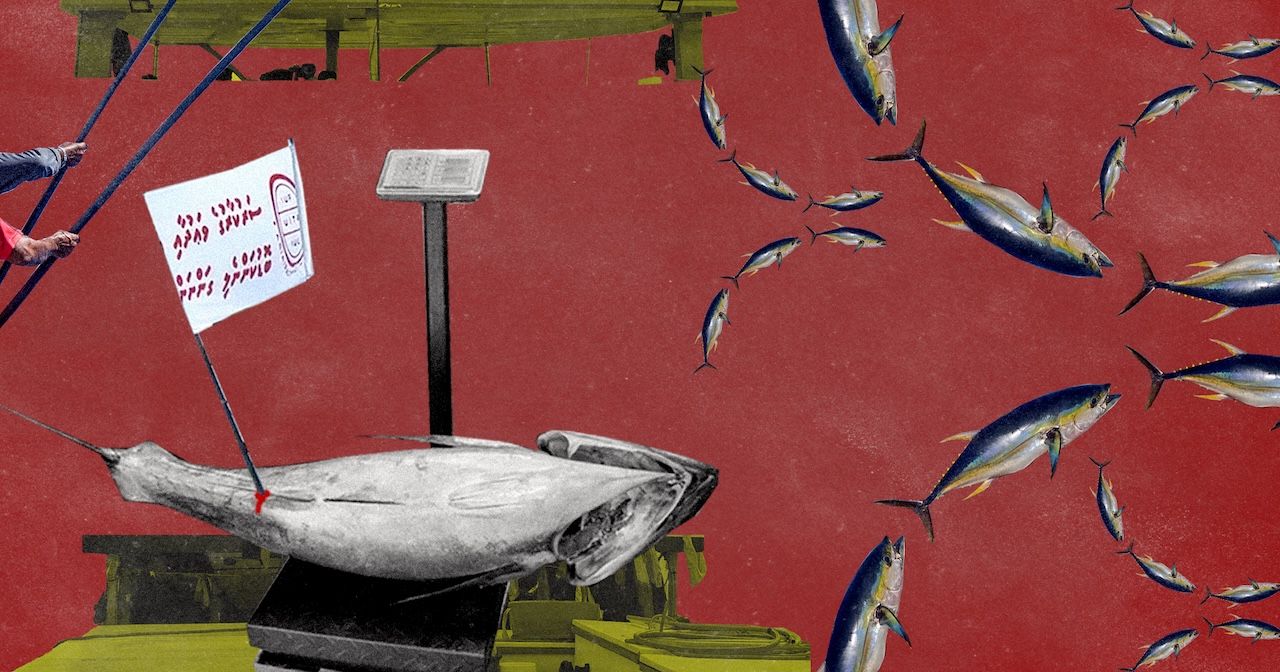
Artwork: Dosain
14 Jan, 17:29
What just happened?
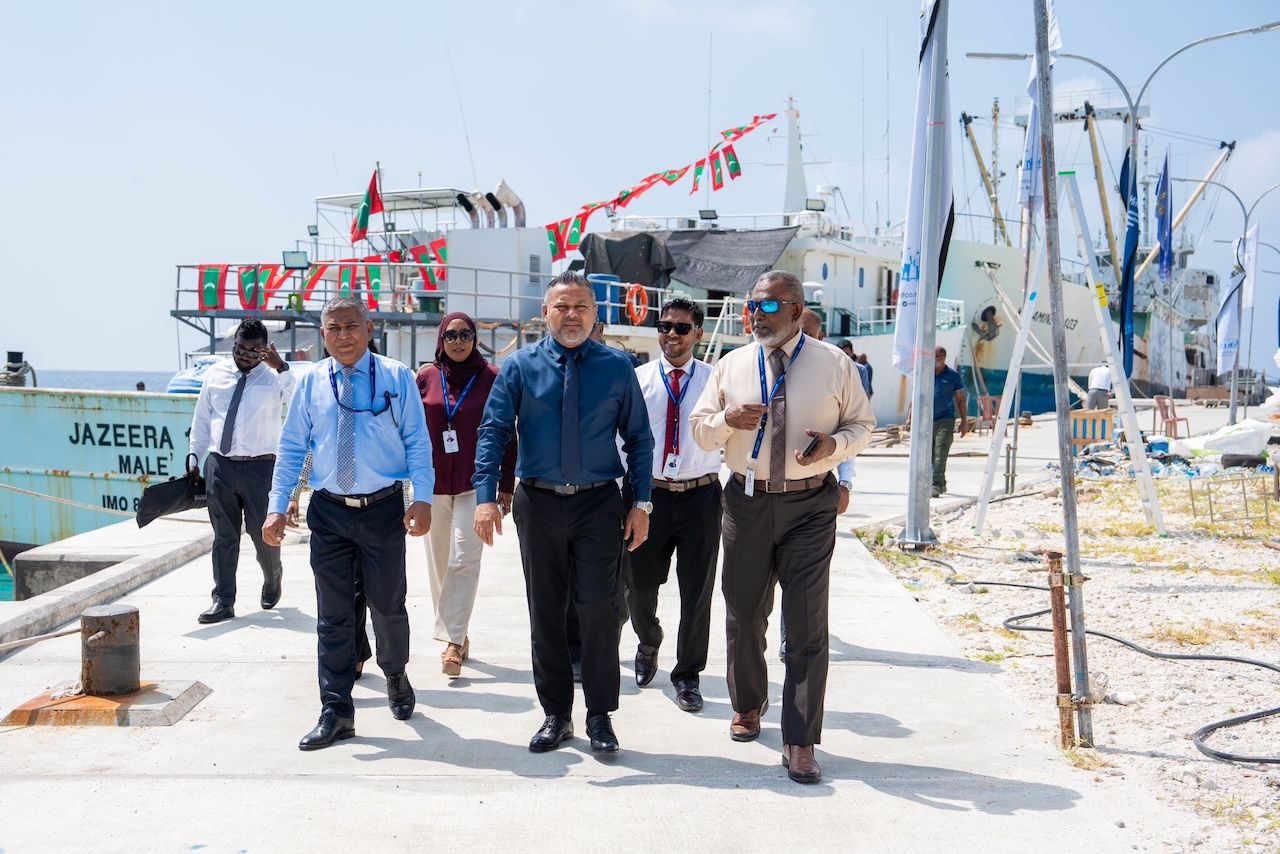
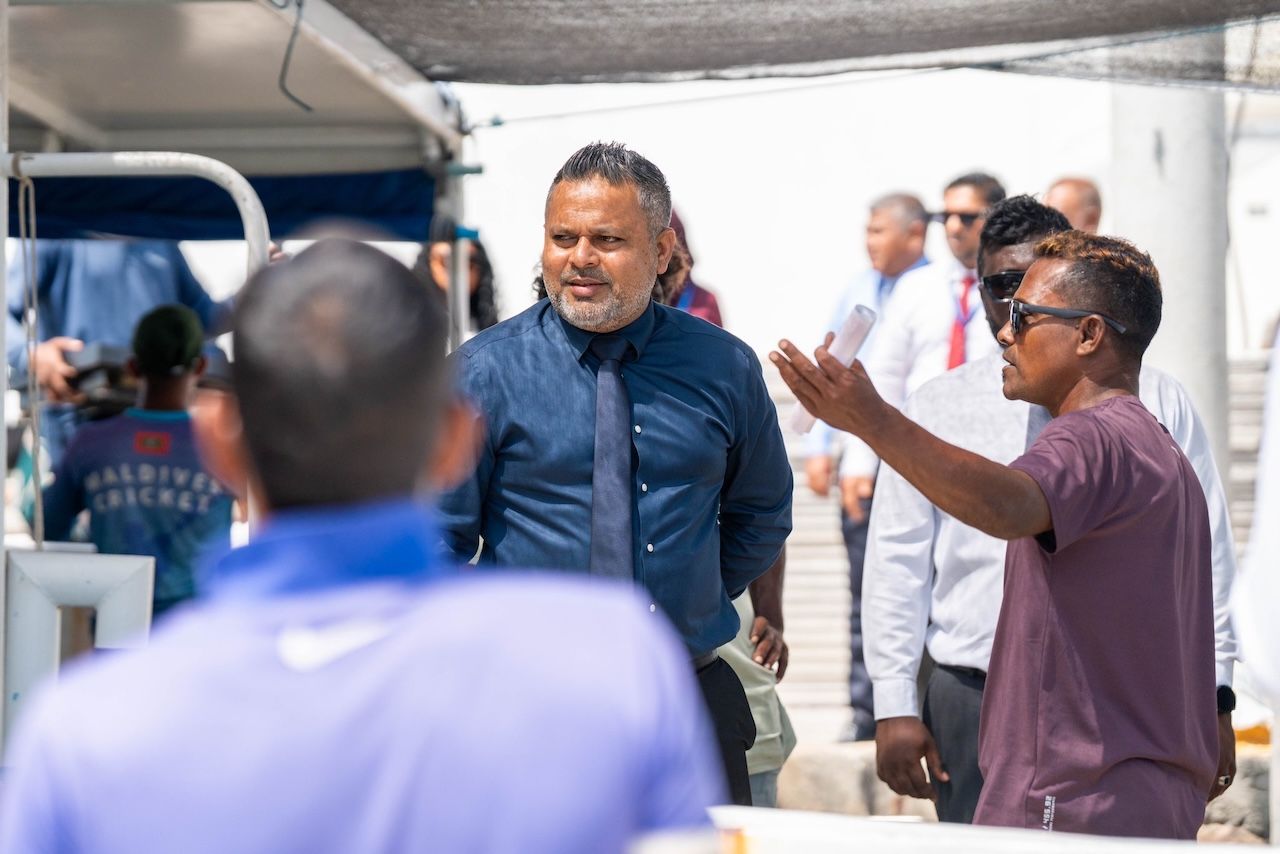
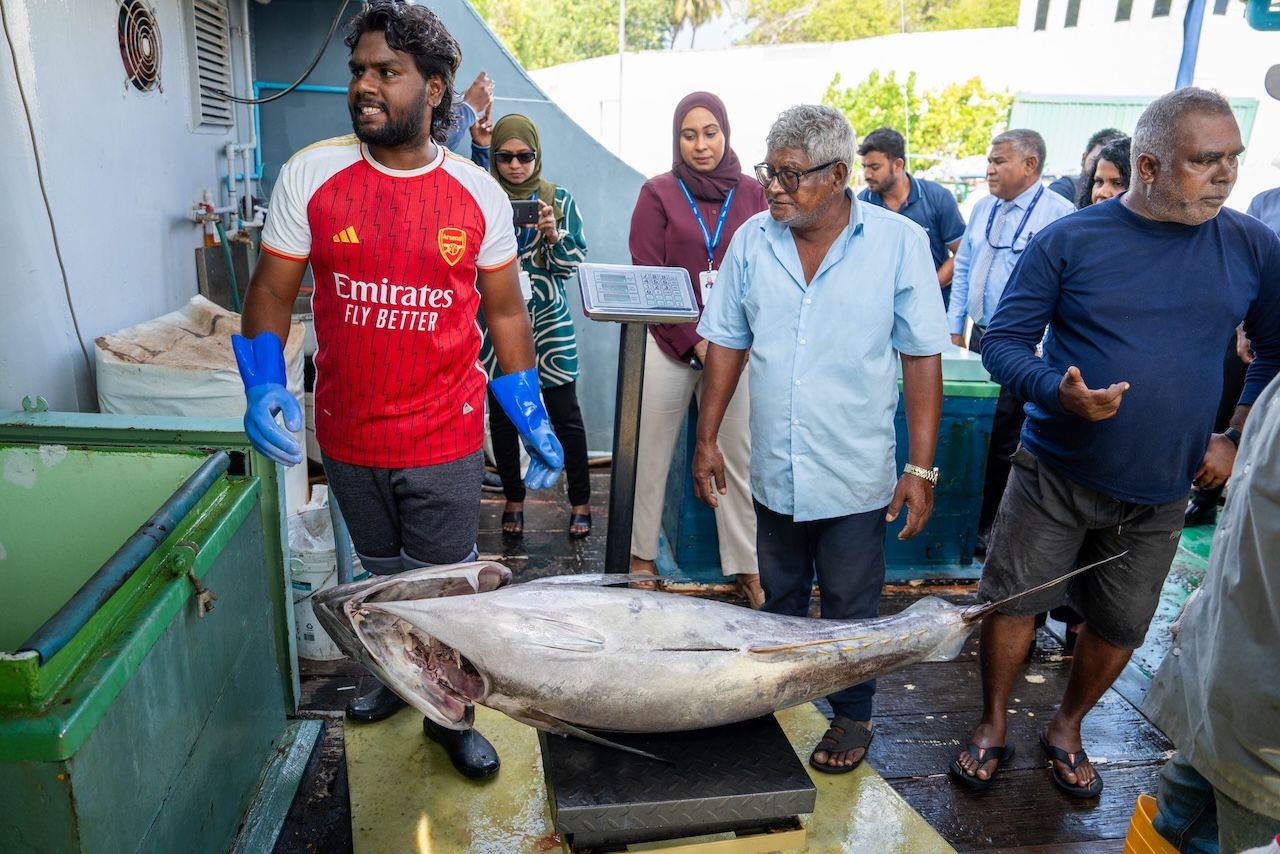
The state-owned Maldives Industrial Fisheries Company started purchasing yellowfin tuna on Saturday. MIFCO began the operation at its Kandu Oiy Giri facility, paying MVR 25 (US$ 1.6) per kilogram for fish weighing over 15kg. Fisheries Minister Ahmed Shiyam, who visited the fish village on Sunday with MIFCO CEO Farhath Shaheer, called it "a very big beginning."
The move fulfils a key demand from yellowfin tuna fishermen who protested at sea outside Malé on Fishermen's Day.
But Mohamed Rasheed 'Galy,' treasurer of the Union of Yellowfin Tuna Fishermen or Bodu Kanneli Masveringe Union (BKMU), which organised the protest, said Shiyam's characterisation was misleading.
"It's not accurate to say that MIFCO has started buying yellowfin tuna," he told the Maldives Independent. "They have started buying reject yellowfin – which are those fish that gets rejected by private buyers because it doesn't meet export quality standards or because the market is flooded."
Private buyers currently purchase only A or B grade yellowfin, Rasheed explained. They accept C grade only when supply is low. What MIFCO is now buying is what these exporters turn away.
But it was "a good initiative," said Galy, despite MIFCO offering rates far below what the union demanded. "We can see them working towards it. They do not have the resources to meet our demands but we are seeing progress. So let us wait and hope it will be done by May or June."
BKMU welcomed MIFCO purchasing small and reject yellowfin as "a good beginning." But the union and called for the government to fulfil President Dr Mohamed Muizzu's original pledge: purchasing all yellowfin at MVR 80 to MVR 100 per kg.
Why is this significant?
MIFCO's infrastructure has historically served only the skipjack tuna fishery. Yellowfin fishermen have been dependent on a handful of private exporters. They say this alleged oligopoly of five or six companies have enough market power to dictate prices. The entry of the state-owned company into the yellowfin market is something fishermen have sought for years.
What led to this?
On Fishermen's Day on December 10, crews from more than 50 yellowfin tuna boats anchored outside Malé harbour in an unprecedented industrial action organised by BKMU. The fishermen issued three demands: MIFCO to start purchasing yellowfin, a minimum price between MVR 80 and MVR 100 per kilogram, and fuel subsidies. All three were campaign pledges by President Muizzu.
A Coast Guard ship and police boats blocked the harbour channel, the main entrance point to the capital. A day later, police officers boarded one vessel and forcibly arrested protest leaders and expatriate crew members working on several boats. They also took control of three boats, and steered the boats and crew to the nearby detention island Dhoonidhoo, where they were held for a few hours before being released.
But more than 20 boats remained anchored near Malé for a week, sacrificing up to MVR 200,000 in potential income by staying idle. The strike was called off after boat captains and union representatives held a five-hour meeting with Fisheries Minister Ahmed Shiyam, who requested two weeks to work on their demands.
What is MIFCO?
The company was incorporated in 1993, born out of the scandal-ridden Fisheries Projects Implementation Department. Its infrastructure – collector vessels, ice plants, facilities at Felivaru and Kooddoo – was built around skipjack.
After the World Bank pushed for liberalisation, MIFCO was broken up in 2000 and some assets auctioned off. But the Bank's recommendation that MIFCO be "further privatised over time" went unheeded. The canneries were reintegrated in 2014. The debt-ridden company returned to the State Trading Organisation's umbrella in 2016.
What is Kandu Oiy Giri?
A small island north of Hulhumalé developed during the previous administration specifically for yellowfin tuna processing. The facility was built to serve as cold storage for MIFCO and provide space for private companies to package and process yellowfin. It was nearly operational when the government changed in November 2023.
But the Muizzu administration handed the island to the military in August 2024. That decision was reversed last September, and the island was returned to MIFCO. It is now operational, purchasing both yellowfin and skipjack tuna.
What's the difference between the two fisheries?
Skipjack tuna is caught pole-and-line, accounts for the bulk of the fleet, and receives the lion's share of state support. Some MVR 500 million was allocated in this year's budget for the system that provides skipjack fishermen with guaranteed purchasing, subsidised fuel, and free ice.
Why did yellowfin develop differently?
The yellowfin fishery grew rapidly after 2009 when the first Maldivian Democratic Party government opened the sector to private investment. Catch soared from under 9,000 metric tonnes in 2008 to 45,000 metric tonnes in 2012. But this happened outside the state system. Private companies like Ensis and Big Fish became the main buyers.
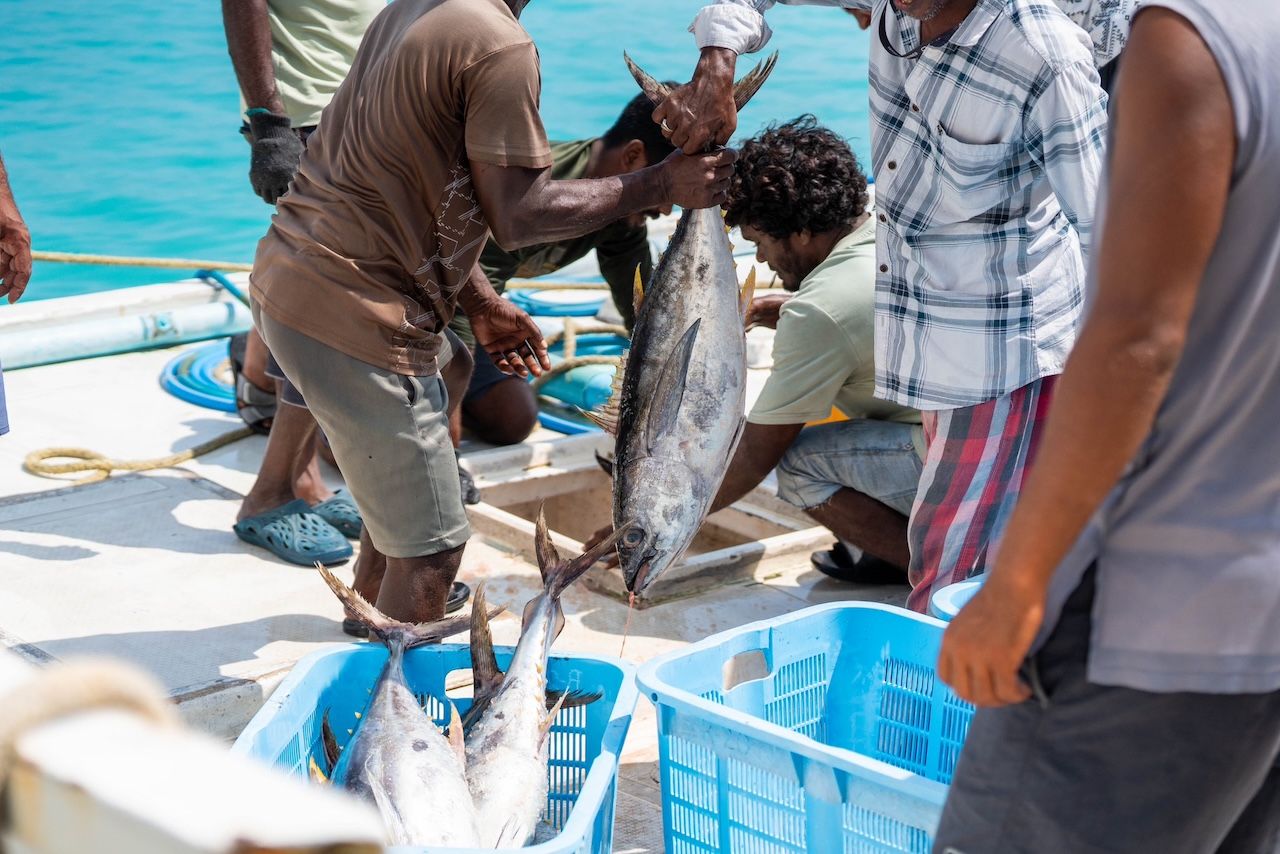
Yellowfin is caught on multi-day hand-line trips targeting larger fish. The fishery has been dependent on the private buyers who, fishermen say, drop prices from MVR 85 to as low as MVR 15 per kilogram. Some companies allegedly owe fishermen more than MVR 12 million in payments pending for months.
Why can't yellowfin fishermen sell elsewhere?
There's nowhere else to go. When fishing is productive, boats queue in Hulhumalé harbour with over 180 tonnes of catch, waiting 15 to 20 days to offload. They reload ice – sometimes more than once – to prevent spoilage. In contrast, skipjack fishermen have multiple landing facilities.
How bad is the situation?
The yellowfin fleet has shrunk from more than 300 boats to 97. Fishermen say they cannot attract local crew when state-owned enterprises offer MVR 15,000 salaries for easier work.
SOEs employed more than 37,000 people as of March 2025, up from 33,284 in early 2024.
What else has the government promised?
A dedicated yellowfin processing facility in Hulhumalé, which is to be developed with funding from the Islamic Development Bank. Fisheries Minister Shiyam has said construction will begin this month. President Muizzu previously said work would start last year, but it did not.
Is the crisis over?
The fishermen are no longer protesting. MIFCO's entry into the market addresses their core demand. Payments are ostensibly being made within 48 hours through Bank of Maldives.
Whether the government moves toward the promised price, and whether the new infrastructure materialises, will determine if this marks a turning point or another chapter of unfulfilled commitments.
Have other solutions been proposed?
The MDP's 2018 manifesto proposed "neighbourhood fish factories" – small-scale processing plants across the country that would add value locally and reduce transport costs. The policy was adopted into the previous government's Strategic Action Plan with a target of 2021. None came into operation.
How important is fishing to the Maldives today?
Less than it used to be. Fisheries now represent less than five percent of GDP, long eclipsed by tourism. Before the pandemic, the Maldives earned US$ 150 million from fish exports in 2019. Tourism receipts that December alone amounted to US$ 330 million.
But fishing remains culturally significant. "Fishing is carried out with complete liberty and everybody can fish where and what he wishes," the French navigator François Pyrard de Laval wrote in 1604. Skipjack tuna was caught, dried over fire, and exported across the Indian Ocean. In 1881, dried fish worth £29,508 was exported to Ceylon alone – equivalent to MVR 69 million today for a population of about 70,000.
Why does the government buy fish at all?
Until the mid-20th century, the Maldivian state did not buy or export fish. That changed during the Second World War, when the government intervened to prevent the starvation experienced during the first war. The Dhivehi Rayyithunge Bodu Store, established in 1942, purchased directly from fishers at MVR 30 per hundredweight when private Borah traders in Malé had slashed prices to MVR 6 or MVR 7.
State involvement deepened in the 1970s when Ceylon abolished its quotas for Maldivian dried fish. The government partnered with Japan's Hoko Fishing Company to buy fresh fish and build the Felivaru cannery. When tuna prices collapsed in the early 1980s, the government purchased the Japanese collector vessels and factory outright. By 2018, government-owned companies accounted for 73 percent of frozen fish exports.
Discussion
No comments yet. Be the first to share your thoughts!
No comments yet. Be the first to join the conversation!
Join the Conversation
Sign in to share your thoughts under an alias and take part in the discussion. Independent journalism thrives on open, respectful debate — your voice matters.
Support Independent Journalism
Help us keep the news free and fearless
Give once
$
or
Become a memberfrom $5/month