

Roots and scars: the man trying to preserve "the Mangrove Island"
Kendhikulhudhoo turns dying forests into tourist draw.

Artwork: Dosain
01 Oct 2025, 14:27
Dead mangrove patches sprawl across the island like scars, remnants of the mass die-off that swept the northern Maldives in recent years. But 41-year-old Ali Ilham is not giving up on this forest – or on the island that depends on it.
While the devastation from the mangrove dieback was less severe in Kendhikulhudhoo compared to other islands in the northern atolls, the contrast between the barren skeletal groves and the surrounding greenery is stark and alarming.
"The changes from climate change are affecting places like this in the Maldives very rapidly. We have to be careful about this," says Ilham, known as Ille, who has a love for the mangroves of his home island that few can match.


Walking along a stretch near the beach, he points to sections of withered trees. Ilham worries about the swells of the southwest monsoon.
"Every year when there's the swell surges season, the seawater washes into the mangrove here. A lot of kandoo trees are dying in this area," he says.


On the far side of the island, he stops near a small lake ringed by mangroves, an area called Tholhifalhu. On one side, beach sand has crept inwards, carried aloft by storm surges. The lake, he explains, is slowly being buried.
"This part is almost entirely gone compared to before. I believe places like this need to be protected. These natural ecosystems can support communities, especially through eco-tourism. Losing them would be a real loss," he warns.
Most species of mangrove thrive in salty conditions. But warmer temperatures, lack of rainfall and saltwater intrusion increases the salt content, causing mass die-back (plants dying from the tip downwards), researchers have found.
Ilham's knowledge of the Kendhikulhudhoo mangrove is both intimate and encyclopaedic. He can walk you through the tangled woods, pointing out the different species and those that are missing, and narrate the traditional uses for each part of the fragile ecosystem whose changes he has witnessed.
Despite the damage, Kendhikulhudhoo's mangroves remain visually stunning. Together with wide roads, lush foliage, and pristine beaches, they form the heart of the island's natural beauty, drawing more visitors, locals and foreign tourists alike, to make the journey north.
"Since we developed the mangrove as a visiting site, most of the people who come here are here to see this," says Ilham. "I'd say about 90 percent of visitors are drawn by the natural beauty."


Kendhikulhudhoo proudly markets itself as "The Mangrove Island." Ilham is the designated tour guide for many of the visitors, taking them around the island – vast by Maldivian standards – in his car or motorbike. It's a job he loves. His fascination with the mangroves is clearly a big part of what makes it special.
"During Covid, when a lot of young people came back from resorts with no jobs, they built a jetty near the hinna jetty area, all voluntarily. I went often. And at that time I also searched around the mangroves for a species called thakafathi that we believed was missing from the island.
"At the time, I created a Facebook page called Explore KK. In the photos I posted, I used the slogan 'The Mangrove Island.' Two years later, the council officially endorsed it and began using it for the island's marketing. I was happy because it's good for us. I still run that page. I don't usually go around advertising (about the origin) but it makes me proud."

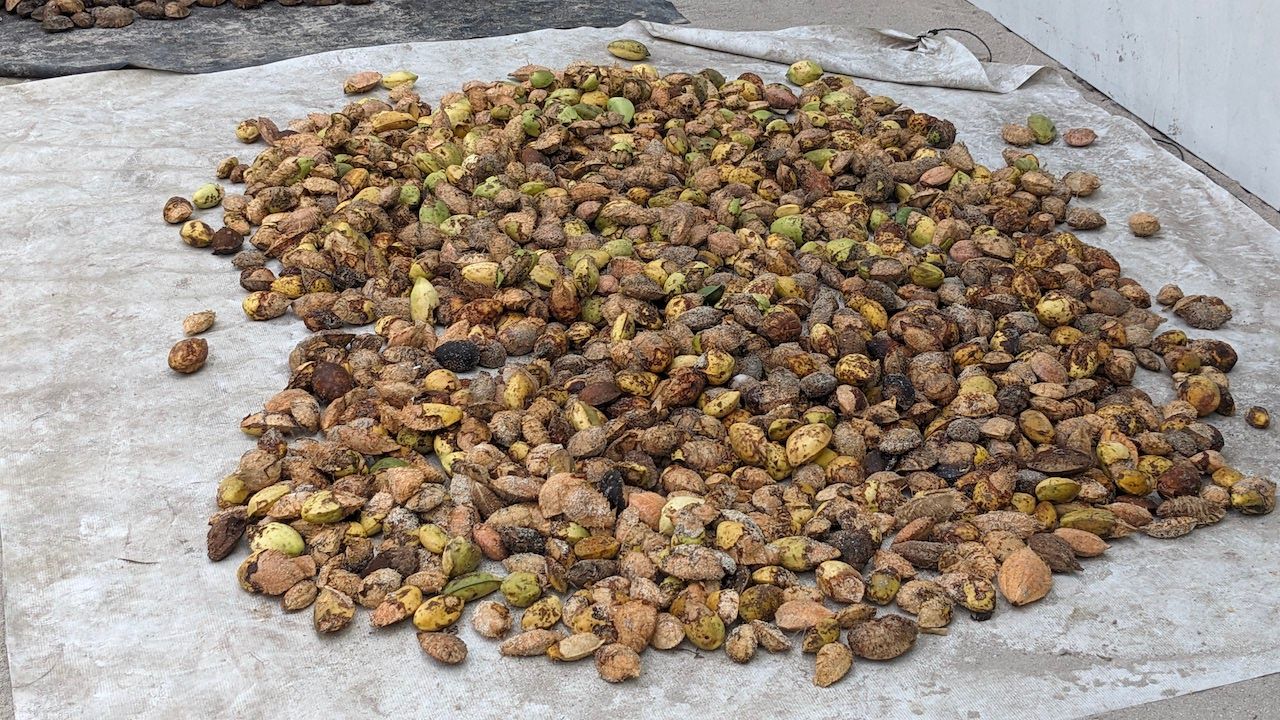
The Kendhikulhudhoo community has relied on the mangroves for generations. Beyond tourism, they collect coconuts, palm leaves, and especially beach almonds (madhu), which the island exports in large quantities. Ilham says Kendhikulhudhoo is the country's largest supplier of beach almonds.
"This island has always depended on the mangrove jungle," he explains. "People collect beach almonds, sell them, and earn a living. They're exported to Malé and even Dubai. Every month a lot goes out. We also have many people weaving thatch, which again we are one of the top exporters in the north."

Women in particular have harnessed the mangrove's resources for centuries, similar to other islands with mangrove lakes. The lake is used to soak coconut husks, which are then beaten into fibres to make rope – a key material in weaving thatch.
"To tie those together you need rope...So you can see flour sacks that's been sunk with rocks placed above them, those sacks have coconut husks," Ilham says.
For Ilham, Kendhikulhudhoo's mangroves are more than a unique ecosystem. They are livelihood, sanctuary, and identity. They hold the stories of his community's past, and perhaps, if protected, its future.
Discussion
No comments yet. Be the first to share your thoughts!
No comments yet. Be the first to join the conversation!
Join the Conversation
Sign in to share your thoughts under an alias and take part in the discussion. Independent journalism thrives on open, respectful debate — your voice matters.
Support Independent Journalism
Help us keep the news free and fearless
Give once
$
or
Become a memberfrom $5/month