Past the last house on Huraa
The only mangrove in Malé Atoll and what lives there.
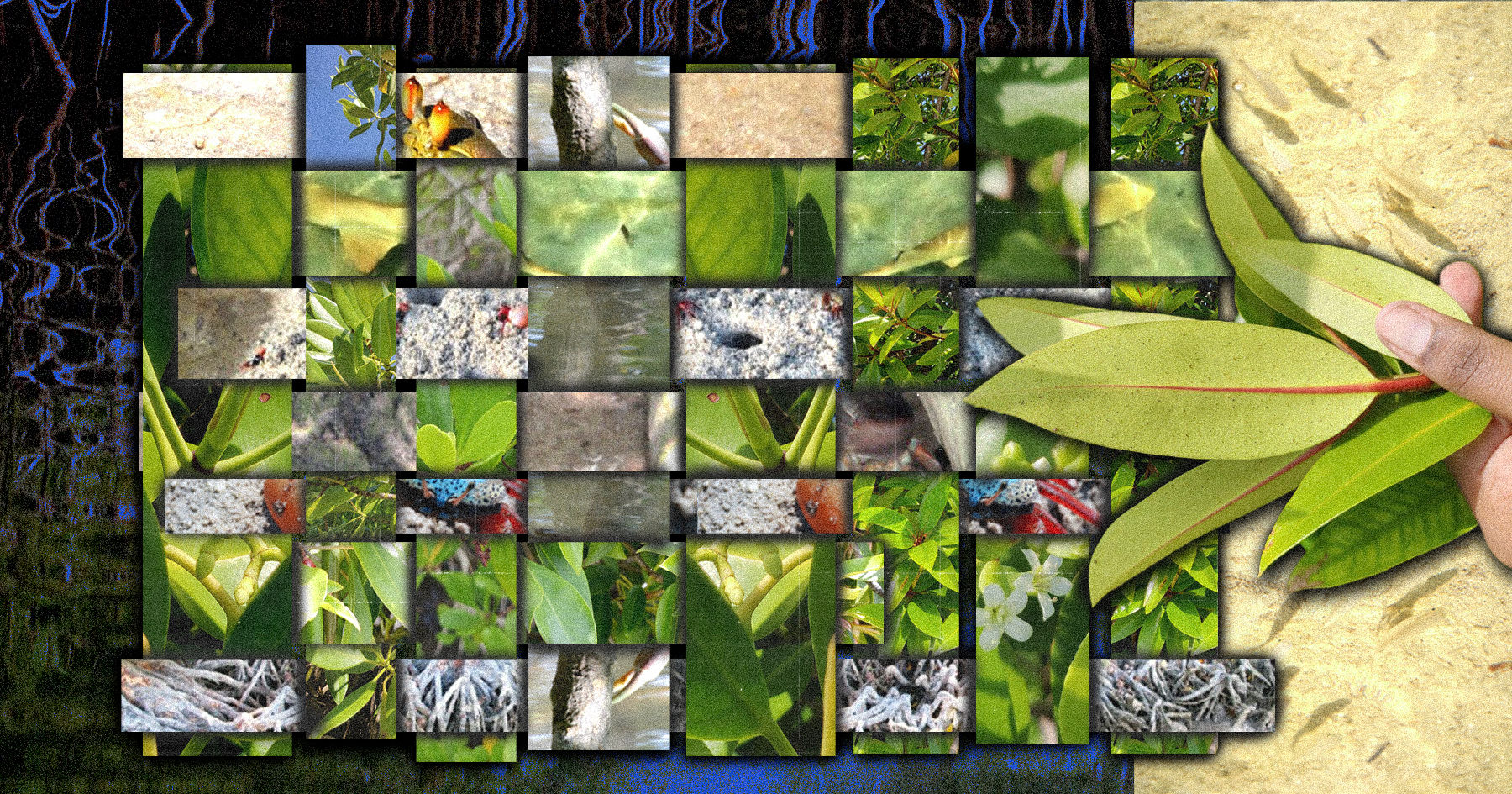
Artwork: Dosain
27 Jul, 13:53
The silt gives way under your foot and closes over it. There are no roads or harbour walls here. Only mud, roots and the sound of water moving somewhere behind the trees.
Huraa’s mangrove is one of many that help protect islands across the archipelago. For low-lying small islands, mangroves serve as natural barriers against strong waves, storm surges and coastal erosion. Their dense root system traps sediment, stabilises shorelines and safeguard both communities and infrastructure. The protective role was evident during the 2004 Indian Ocean tsunami when mangroves helped reduce the force of incoming waves.
Sunday marked World Mangrove Day, formally the International Day for the Conservation of the Mangrove Ecosystem, adopted by UNESCO in 2015. In the Maldives it shares the date with Independence Day and it went unmarked. But the long weekend ensured company for Huraa's mangrove as a good part of Malé emptied out for the holiday.
This is the only wetland in North Malé atoll.
Located about 20 kilometres from the capital, a 25-minute speedboat away, Huraa offers a gateway to the natural world for residents of the concrete city. Visitors can wade through brackish waters, paddle quietly by canoe, or spot birds and crabs hidden among the roots.
For the residents of Huraa, however, the mangrove is part of everyday life. Children play beneath the shade, families gather there, and communal celebrations, such as preparations for feasts, take place under its canopy.
It is also a barbecue site for tourists. Many visitors are already familiar with the mangrove, which has earned a name for itself among Chinese tourists.
"Our Chinese guests are already informed about the mangrove, more specifically the crabs that live near the mangrove," said Ismail Rafil Rasheed, operations manager of the Bilimbi guesthouse. "The mangrove provides a suitable climate for these crabs to grow and tourists that come here are fascinated by these crabs. This is also why Huraa is known as the 'Crab Island' within the Chinese community."
It is also a protected area. Huraa Mangrove Nature Reserve was designated in 2006 as a habitat holding species of conservation significance.
As a small mangrove, Huraa's is an ideal introduction to the rich world of mangrove habitats and the species that depend on them, a reminder of the biological diversity of the Maldives. This field guide to Huraa’s mangrove species, and the fauna found among them, is a celebration of its biodiversity, ecological importance and cultural significance.
Thakafathi: Tall-stilted mangrove
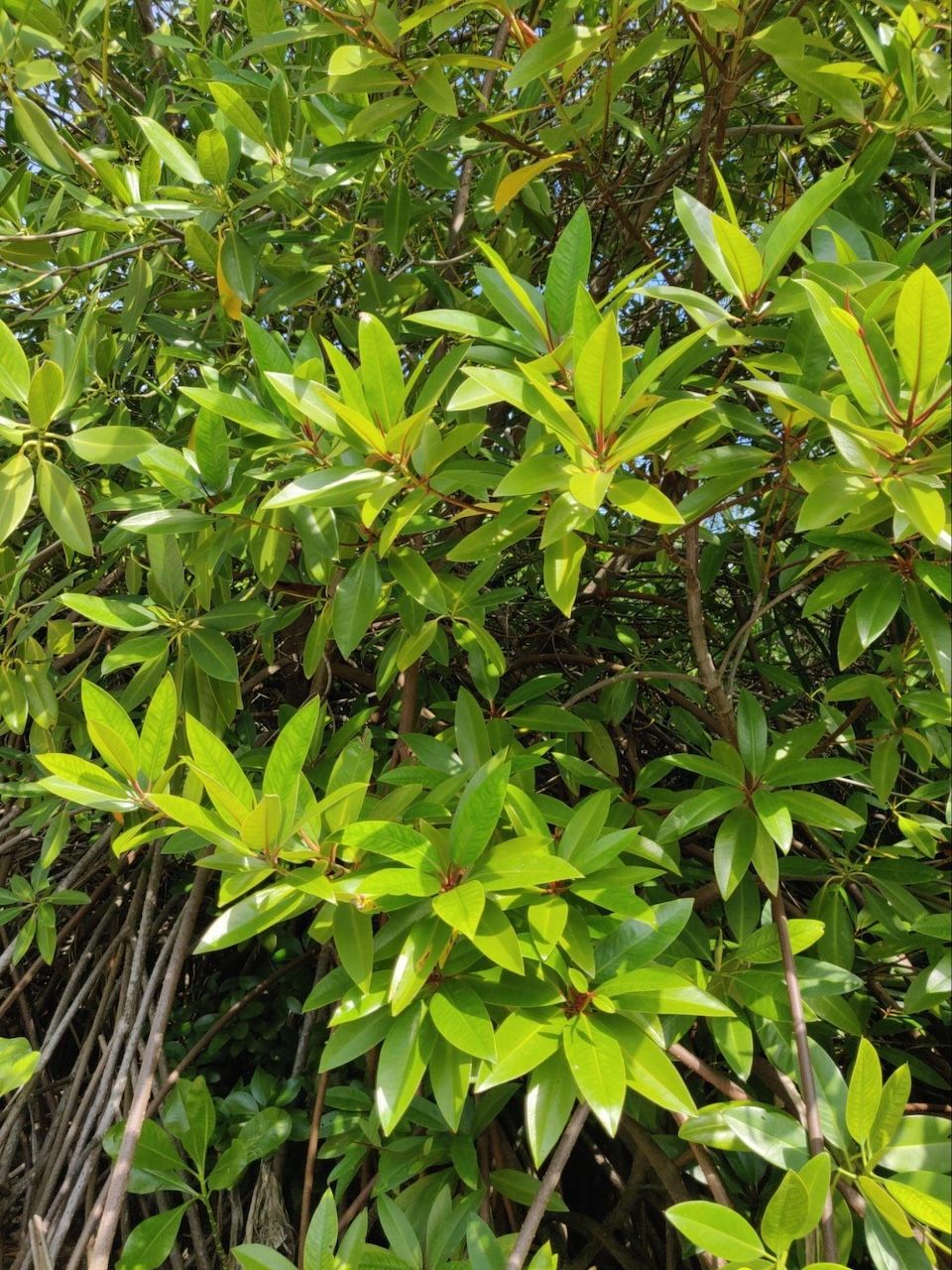
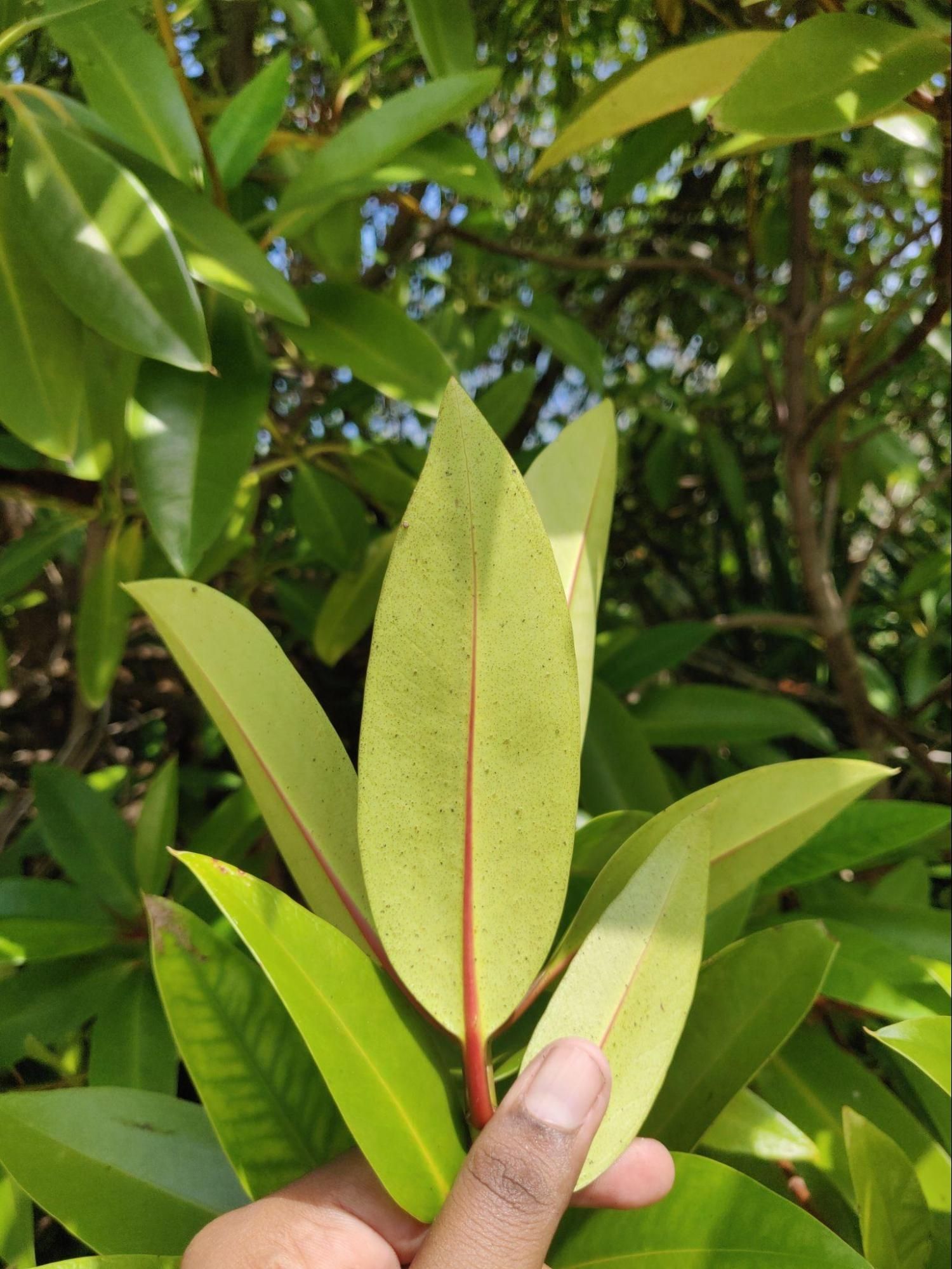
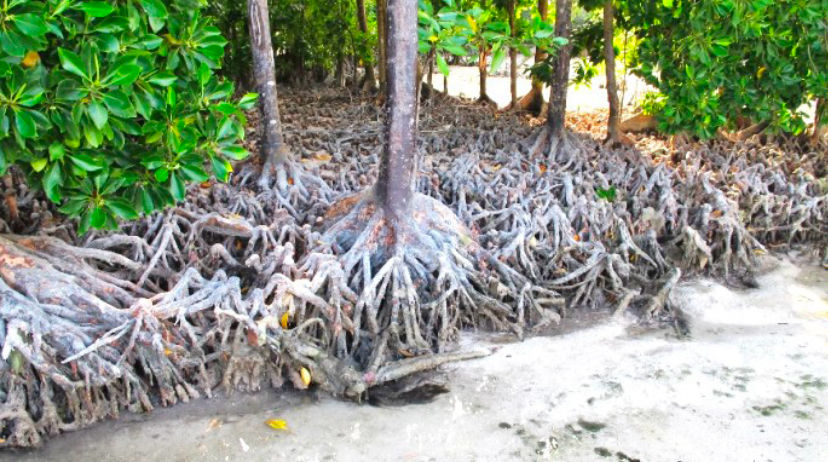
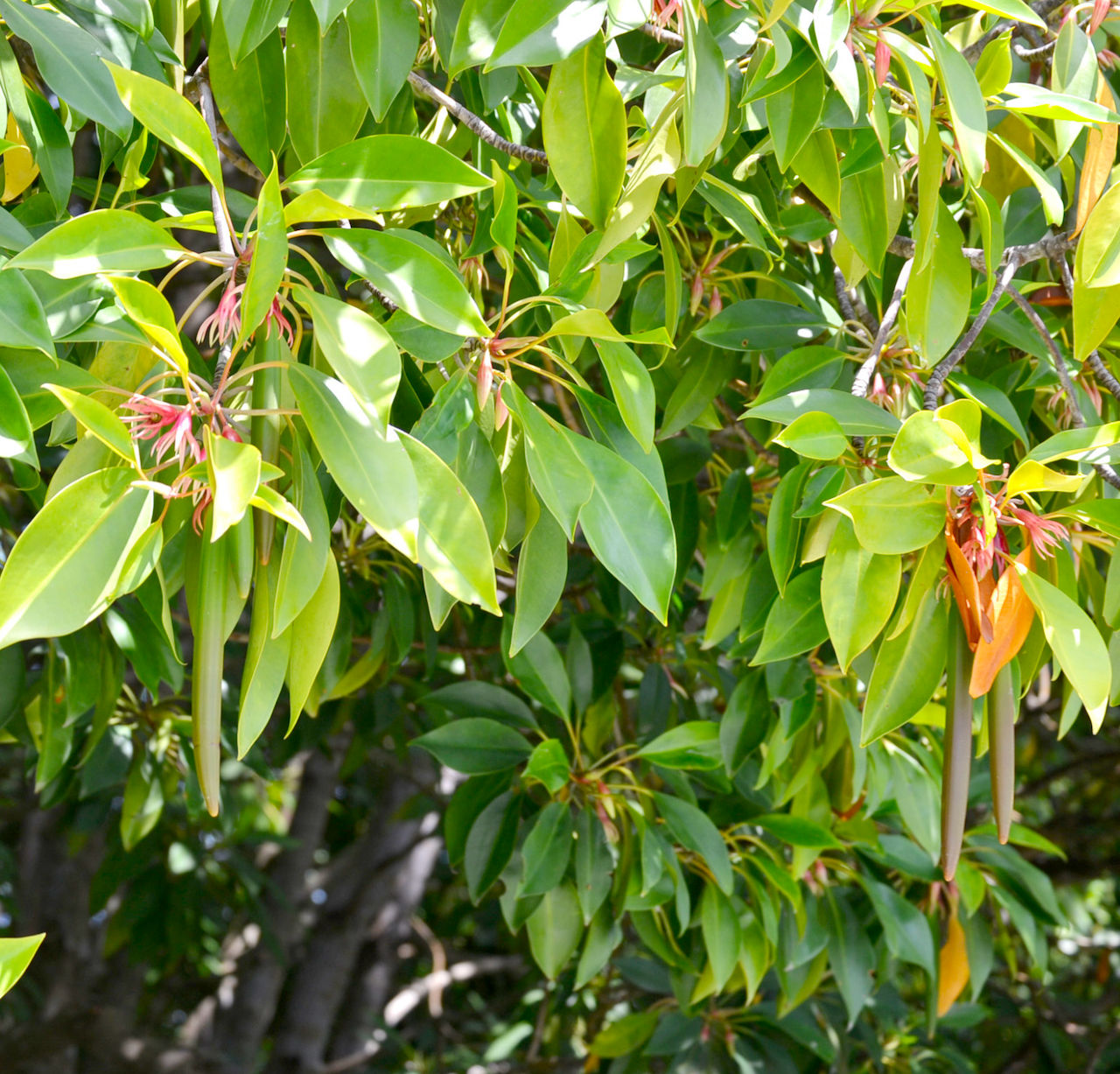
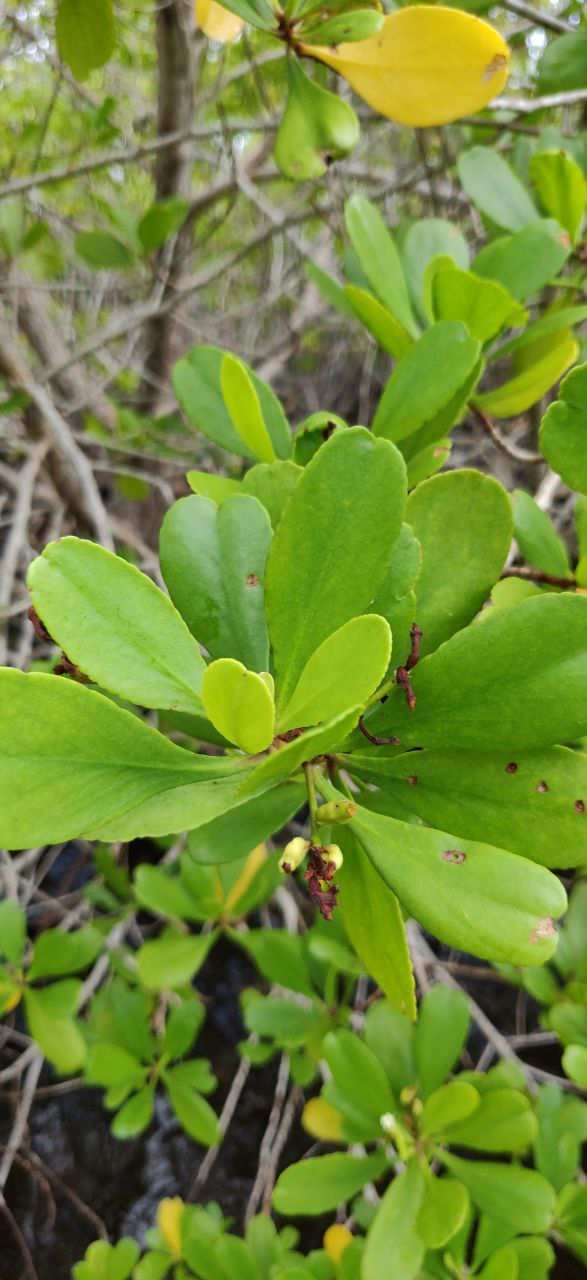
The tall-stilted mangrove is easily one of the most recognisable species. Its large, arching prop roots, extending from the trunks and branches into the mud below, hold the tree up from the tidal muds. These roots, providing stability in the waterlogged soil, are important shelters for crabs, juvenile fish, and other marine organisms. Up on its branches, its thick, leathery leaves with tiny dots on the underside stand out in contrast to its small, pale yellow flowers. From these buds, its propagules develop into elongated, cigar-shaped seeds, which fall into the water once mature. The leaf system and base has red tints.
Kandoo: Small-leafed orange mangrove
Kandoo’s unique adaptation to the challenging intertidal zone is a root system made of numerous thin, upright breathing roots known as pneumatophores, which rise from the mud at the base of the tree like bent knees. These specialised roots allow the plant to take in oxygen in waterlogged, oxygen-poor soils while helping to stabilise the surrounding sediment.
Its leaves are smaller and narrower than most mangrove species, with a smooth leathery texture. They are usually bright to dark green, an oval shape with a rounded dip. Their buds are small, distinctive, appearing in clusters. Their flower buds are rounded and can develop into bright orange to yellow-orange flowers, which gives the species its common name.
Bodavaki: Large-leafed orange mangrove
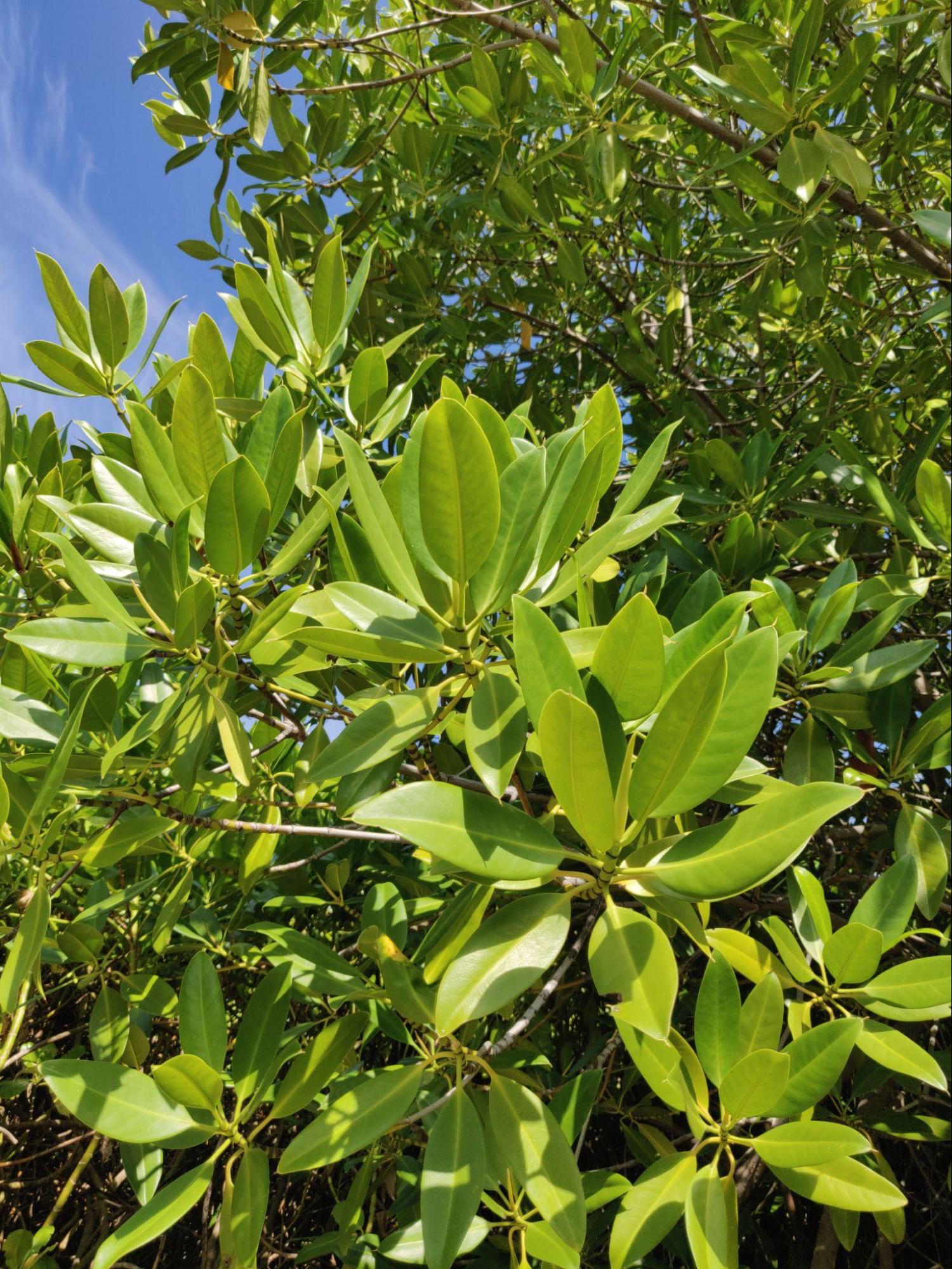
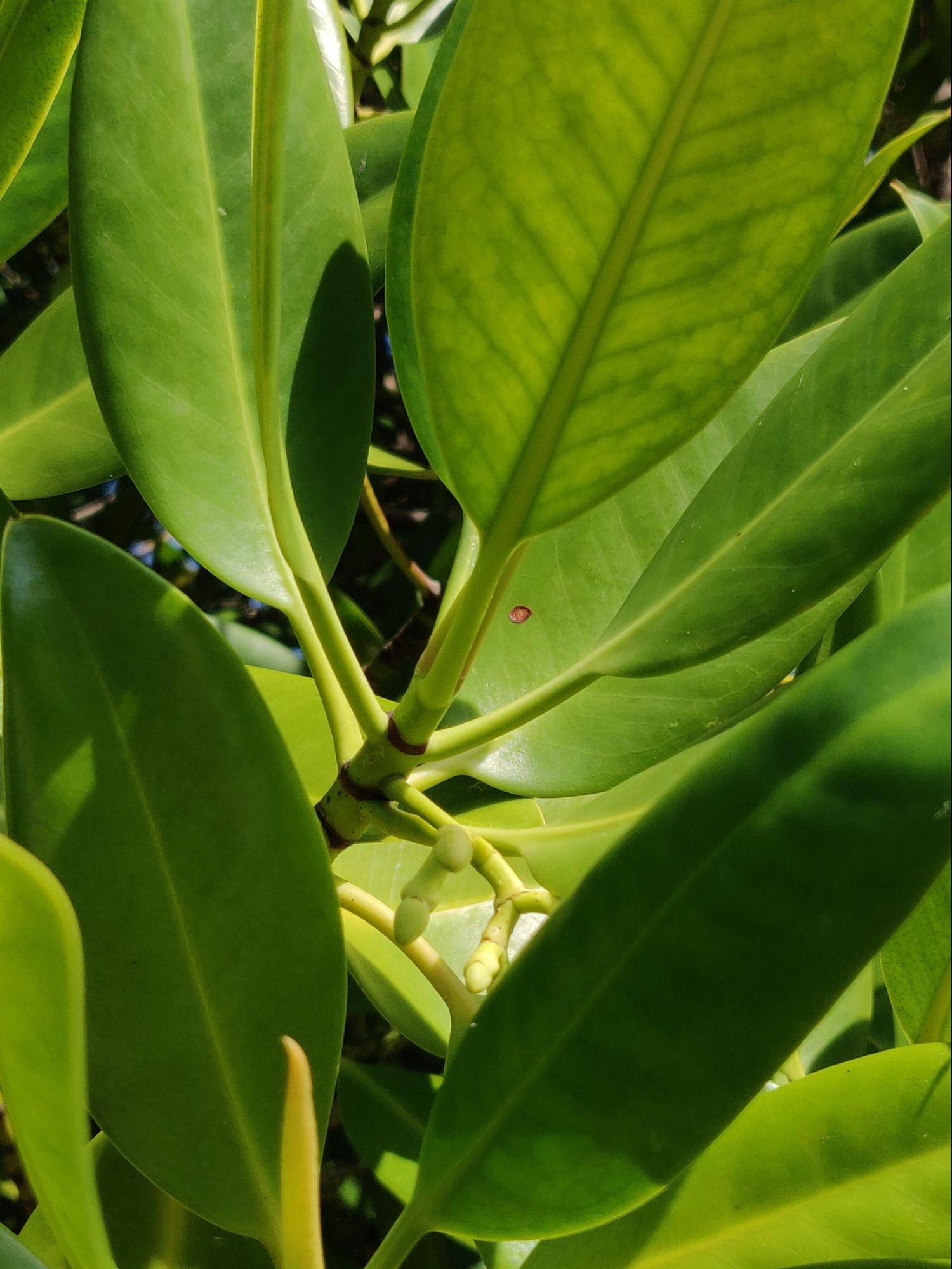
What makes the bodavaki stand out are its broad, sturdy leaves and its bright red flowers. Its leaves are thicker, broader, and larger than the small-leafed orange mangrove, with colours ranging from bright green to deep green with rounded tips. The buds and flowers, produced as small clusters at the end of branches, are noticeable against the foliage. Similar to the kandoo, bodavaki’s root system consists of breathing roots with upright pneumatophores emerging above the surface. Bodavaki also has knee roots.
Ran’doo: Red mangrove
One of the most recognisable of the mangrove species, known for its extensive network of arching prop roots that extend from the trunk and lower branches into the mud and shallow water. Similar to thakafathi, these provide strong support in unstable sediment and help protect shorelines from wave energy. Its leaves are thick, smooth, and leathery, which helps retain water and tolerate high salinity, with a glossy green upper side and a lighter underside.
Their buds are small and rounded, developing into pale yellow to creamy white flowers. These flowers, pollinated by insects, later produce long, pencil-shaped propagules that drop into the water to float before getting established elsewhere.
Burevi: Black mangrove
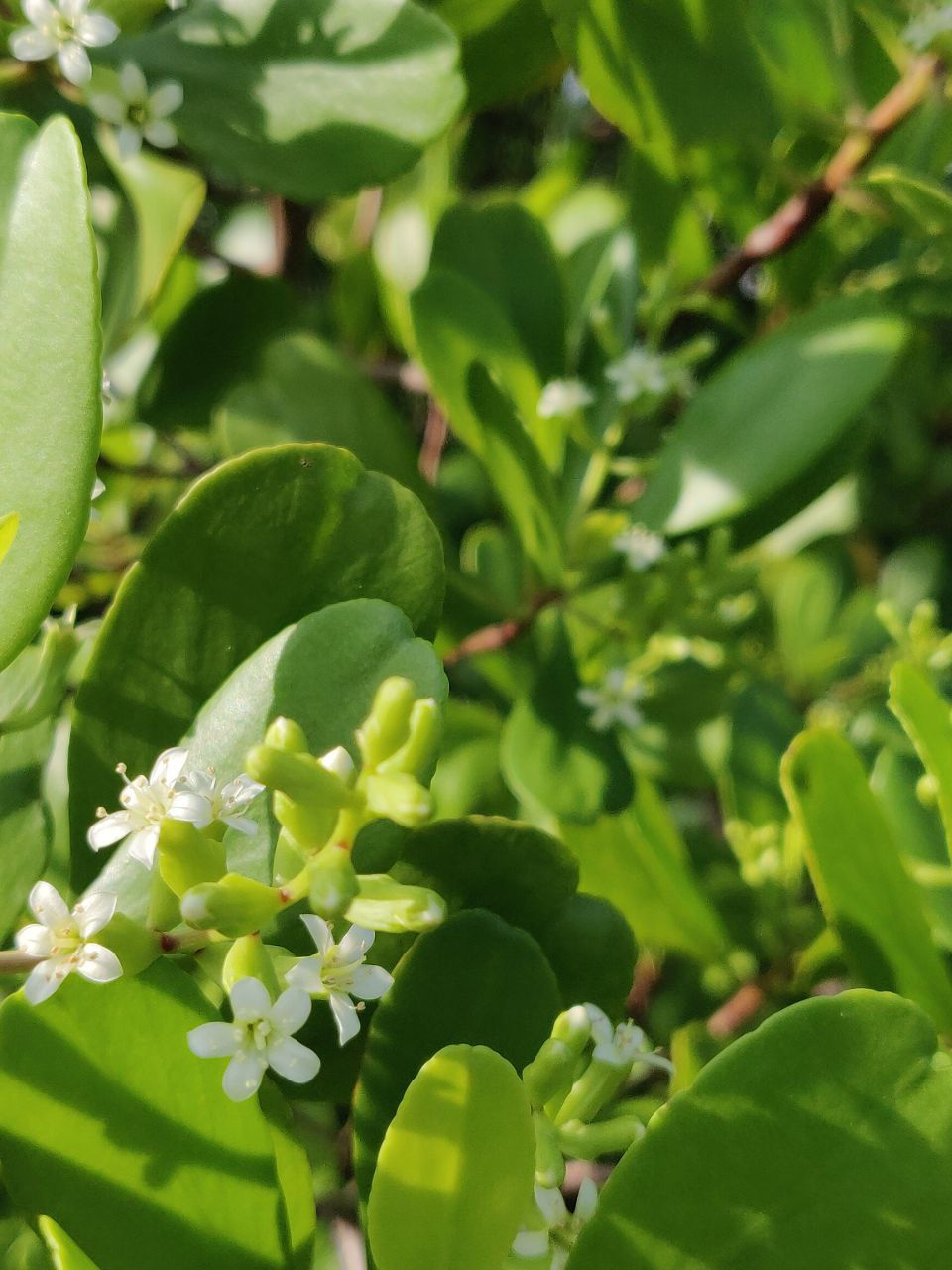
These small trees with their greyish, fissured bark have their pencil roots protruding from the mud like small spikes. They help anchor the tree against the tides, and trap organic matter around them. Their leaves are thick, oval shaped, with a smooth dark grey upper surface, and a paler, greyish underside. Their small white flowers have five petals and many grow on the stalk. Their light fragrance attracts insects for pollination. They like to live on the landward side of the mangrove.
Only one burevi has been recorded at Huraa and it is likely to have been introduced. The species is common and fast-growing elsewhere in the Maldives.
The mangrove is also alive with birdsong, its tangled roots and low arching branches forming a living refuge between land and sea. In the stillness of the waters, the maakana (heron) stands motionless in patient concentration. Raabondhi (black-crowned night heron) searches the waters for prey, the koveli (Asian koel) chirps from tree branches, and the kanbili (water hen) chase each other amongst the muddy shores.
And if you’re lucky, you might even spot a lagana (great egret) in the lake.
Amongst the chalky shores, vibrant fiddler crabs and larger mangrove crabs make their burrows and wait for the leaves of the mangroves to fall. Skimming close to the shore are schools of juvenile fish, stingrays, and sharks, all finding refuge. Where algae are dense, shrimps can also be found clinging onto the biofilms just below the surface.
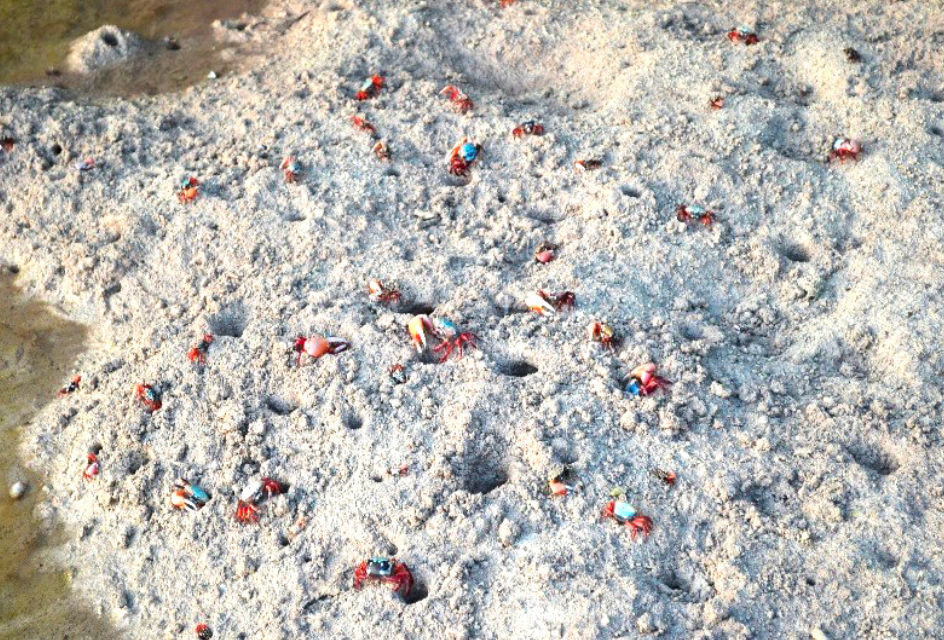
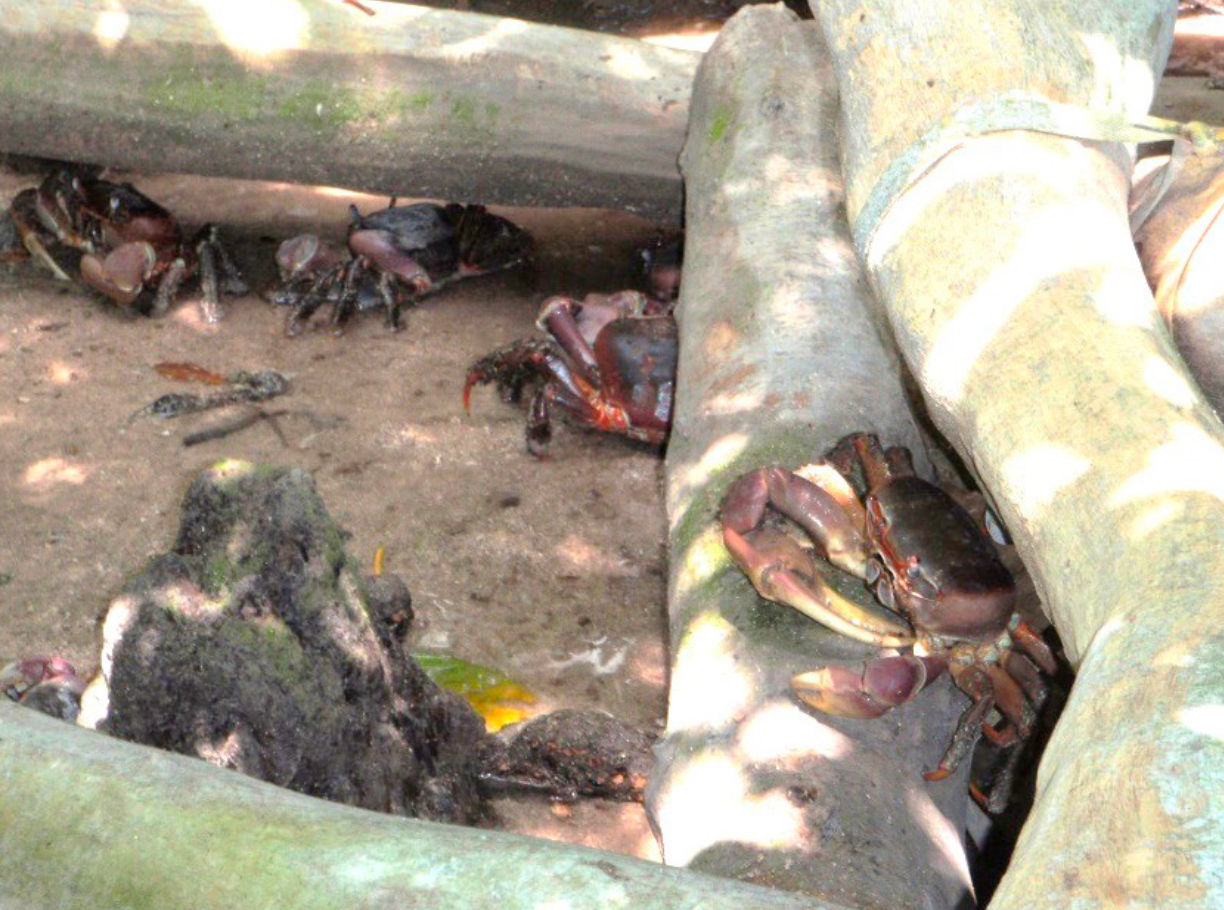
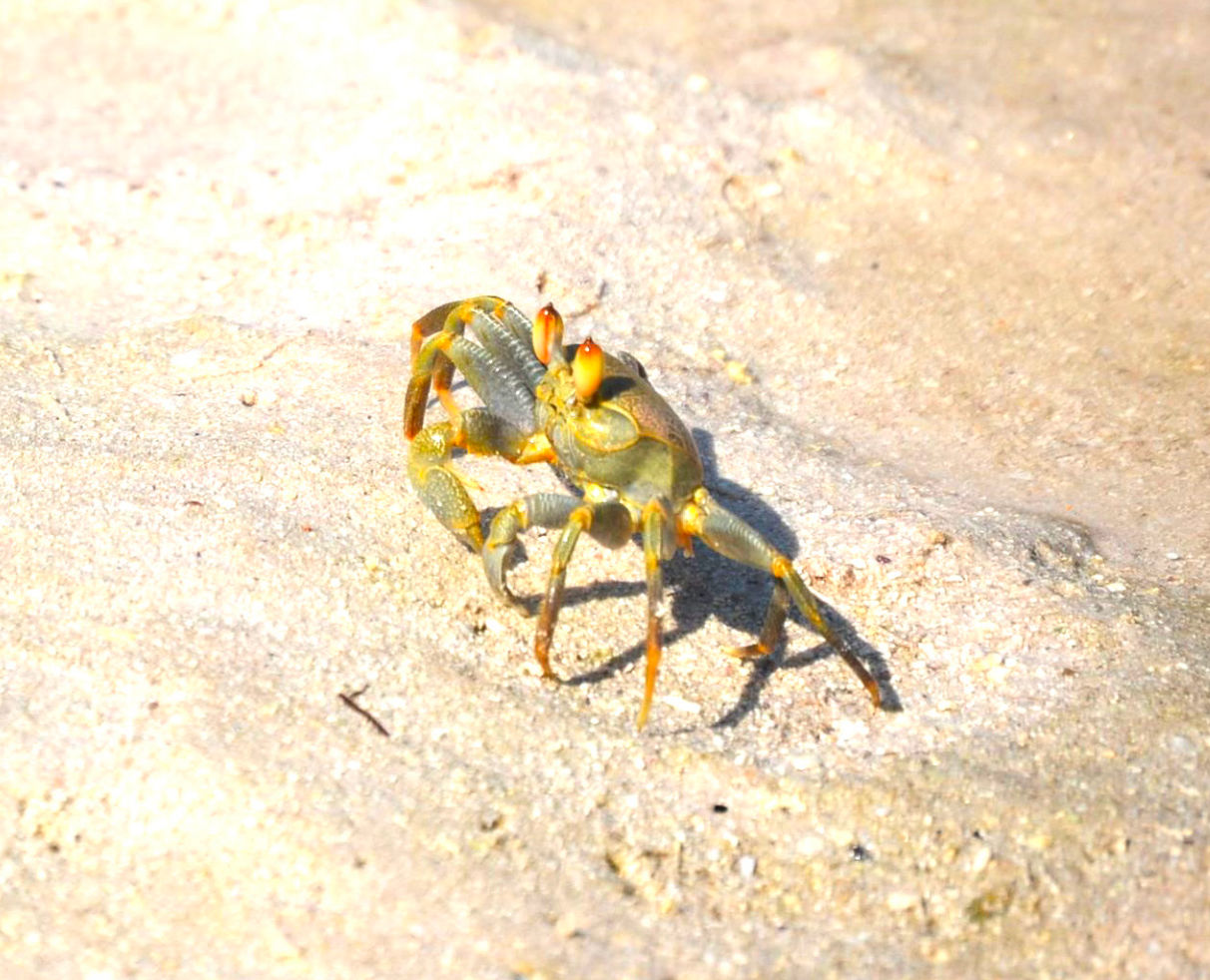
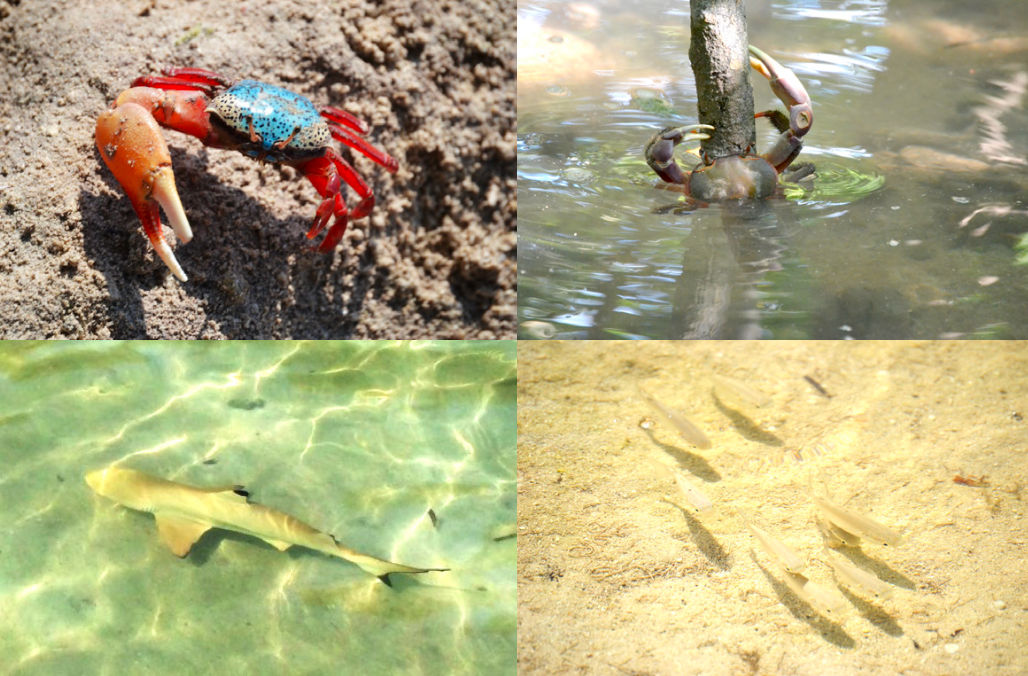
Its sheltered channels hold crabs, fish, and insects in easy reach, while its dense roots and foliage provide cover from wind, tide and predators. It is a chance for birds to rest, nest, and raise their young. Approach with care, so as not to disturb them.
The mangrove is not just a landmark, "but also a natural ecosystem that provides an environment for crabs, birds and other species to grow," Rafil noted. "Also what is unique about this mangrove is that it is connected to the sea so the marine life in this mangrove can be a little different compared to other mangroves."
"I hope that through responsible tourism and support from the local community we can create efforts to conserve the mangrove with proper maintenance," said. "Excursions can be arranged in a way so that visitors can enjoy the mangrove and its beauty without disrupting the ecosystem."
With the rising and falling tides, Huraa’s mangrove continues holding the shoreline, filtering the sea and sustaining life. It is more than a habitat or a barrier. It is a classroom, a playground, a sanctuary.
Learn more about mangroves at the e-learning platform MasmahaaVeshi.
Discussion
No comments yet. Be the first to share your thoughts!
No comments yet. Be the first to join the conversation!
Join the Conversation
Sign in to share your thoughts under an alias and take part in the discussion. Independent journalism thrives on open, respectful debate — your voice matters.
Support Independent Journalism
Help us keep the news free and fearless
Give once
$
or
Become a memberfrom $5/month