

The government built the flats. Why is it still running them?
Flat residents deserve elected management, not permanent control by state corporations.
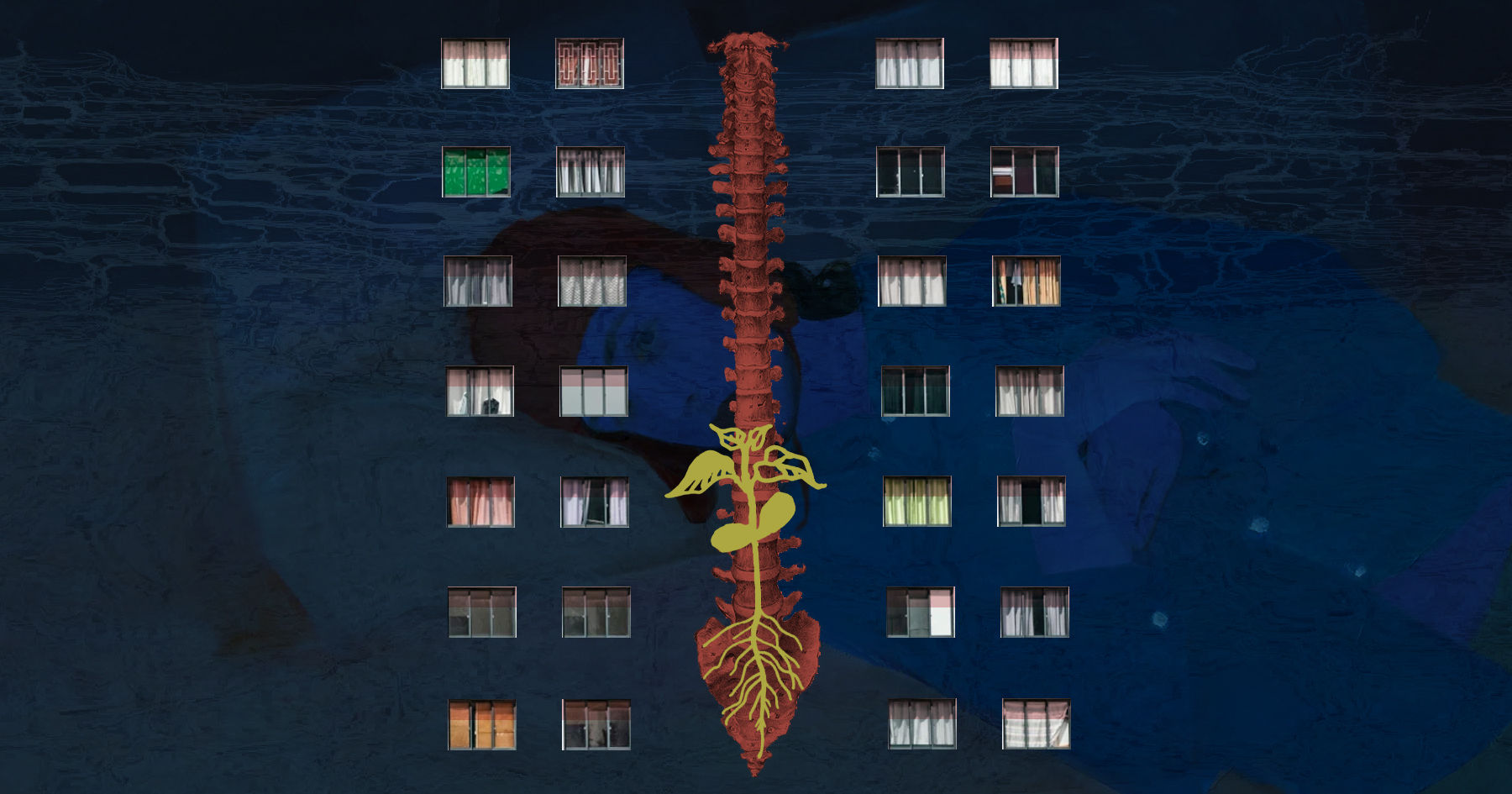
Artwork: Dosain
2 hours ago
The public debate over housing in the Maldives tends to focus on how many homes the government builds and who receives them. Yet for residents, some of the most consequential questions arise after the keys have been handed over: who manages their buildings, decides how maintenance fees are spent, sets priorities for repairs and answers when services fail?
At Hiyaa alone, 6,720 apartments across 16 towers are reported to house around 40,000 people. These are no longer simply government housing projects. They are permanent neighbourhoods, where thousands of families depend on decisions made by institutions over which they have little control.
The scale of the issue extends well beyond Hiyaa. According to the 2019 Household Income and Expenditure Survey, 33,310 of the country's 87,538 households lived in rented accommodation, or 38 per cent. Government-built flats and row houses accounted for 15 per cent of households nationwide, rising to 29 per cent in Malé. A further 3 per cent lived in government-built post-tsunami housing.
As publicly developed housing becomes a permanent feature of urban life, the question is no longer simply whether the state can build enough homes. It is whether the institutions that build them should continue governing the people who live there.
Government without representation
The problem goes beyond whether the Housing Development Corporation (HDC) cleans corridors properly, repairs lifts promptly or charges reasonable maintenance fees.
Residents pay rent, instalments and service charges. They depend on decisions about security, parking, waste collection, cleaning, common areas, repairs and maintenance expenditure. Yet much of this authority remains concentrated in HDC, a state-owned corporation whose management residents neither elect nor can remove.
When residents cannot choose those making these decisions, inspect accounts, scrutinise expenditure or meaningfully influence priorities, there is a democratic deficit. They bear the consequences of decisions and pay for them, but have little institutional power over how those decisions are made.
There is a broader constitutional principle at stake. Articles 230 to 232 establish decentralised administration through democratically elected councils responsible for democratic and accountable governance. Yet HDC has continued resisting the transfer of municipal functions in Hulhumalé to Malé City Council, while also retaining control over residential communities instead of transferring building management to elected resident bodies.
These are distinct questions of municipal administration and property management, but they raise the same underlying concern: why should powers affecting people's everyday lives remain indefinitely with a state corporation rather than accountable representative institutions?
The argument is not that every tenant must own their building or that the state should relinquish its responsibilities. It is that people permanently inhabiting publicly supported housing should have meaningful rights of association, participation and accountability in the governance of their immediate living environment.
The UN Committee on Economic, Social and Cultural Rights has connected adequate housing with freedom of association for tenants and community groups, and participation in public decision-making. Following her 2009 visit to the Maldives, Raquel Rolnik, then UN Special Rapporteur on adequate housing, argued that communities and civil society should be integral to housing decisions. She also warned that the state's traditionally paternalistic approach had sometimes weakened communities' capacity for self-organisation and initiative.
International human-rights law does not automatically entitle every social-housing tenant to take over building management. That requires a legal framework. But the principle has practical precedents. In England, council tenants can establish Tenant Management Organisations and exercise a statutory Right to Manage specified functions while the local authority remains the landlord.
Public ownership, in other words, need not mean permanent bureaucratic control.
HDC's record shows why accountability matters
The case for resident governance would be less urgent if centralised management were consistently delivering good services. Hiyaa's experience suggests otherwise.
In April 2022, when HDC began collecting monthly payments of MVR 8,500, including a MVR 1,000 maintenance fee, the Hiyaa Union urged residents not to pay. Its complaints included inadequate waste-disposal facilities. More importantly, the union argued that agreements signed with flat owners required maintenance fees to be collected through cooperative-society boards established between every two towers, and that HDC was supposed to establish these bodies within six months.
HDC disputed the call to withhold payments but acknowledged that the agreements envisaged cooperative societies collecting maintenance fees. It said it would collect the fees only until those societies were established. The corporation also announced in April 2022 that it was working to create a Management Corporation for Hiyaa's 16 towers under the newly enacted Strata Property Act.
Four years later, the promised transfer had still not materialised at Hiyaa. HDC continued collecting fees and controlling management, while familiar service complaints persisted. Residents complained about accumulating rubbish in April 2022; by February 2026, The Edition was again reporting an escalating garbage-disposal problem.
The lifts offer another example. Hiyaa's 25-storey towers were originally built with mostly three lifts each, despite a reported population of around 40,000. HDC contracted 32 additional elevators in February 2024 at a reported cost of US$18 million, or MVR 278 million. More than two years later, in June 2026, HDC said additional lifts had been installed in 15 of the 16 towers.
Then came the January 2026 fire at Hiyaa Tower 5. The blaze began in an outdoor air-conditioning unit in a ventilation shaft and destroyed sewerage pipes serving 38 flats. The National Disaster Management Authority subsequently reported providing temporary shelter and food for 140 residents from 30 flats over five days. Reporting at the time also raised continuing concerns about fire-safety systems.
Not every fire, pipe failure or broken lift is evidence of HDC negligence. Nor would an elected residents' council eliminate technical failures. But these incidents demonstrate why residents need a formal role in monitoring building conditions, setting maintenance priorities and scrutinising how their money is spent.
The wider Hulhumalé dispute reinforces the point. In July 2026, Malé City Council accused HDC of neglecting essential residential and municipal services following complaints from Hiyaa, Vinares and FDC residents. Mayor Adam Azim and councillors visited HDC headquarters seeking a meeting with Managing Director Ali Zuhair but said they were not granted one.
The council maintained that the transfer of Hulhumalé municipal services had already been delayed for more than two years, despite a formal process and memorandum of understanding.
Fathimath Zahiyya (Zaya), the North Hulhumalé councillor at Malé City Council, expressed similar frustration over the government's approach to resident governance.
"There is no indication that the government is willing to democratise the governance and management of flats," she said. "So far, it has been nothing more than lip service."
"Problems have continued to pile up, but residents' complaints fall on deaf ears," Zahiyya added.
When services fail, responsibility becomes fragmented between HDC, the Housing Ministry, Malé City Council, utilities and contractors. Residents are left navigating institutions that can pass responsibility between themselves, without a representative body empowered to demand answers or influence decisions.
The problem extends beyond HDC
Similar frustrations are being expressed by residents of flats managed by Fahi Dhiriulhun Corporation (FDC).
Ibrahim Noordeen, president of the FAHI Union, an association representing residents of FDC-managed flats, said the organisation has been active since applications for the flats were first announced. Yet its repeated attempts to engage with the corporation have produced little meaningful response, he said.
"What tenants say means nothing to them. They do not seem to care, and they are not responsive," Noordeen said.
He accused FDC of resisting the transfer of management responsibilities to residents and failing to establish representative structures.
"They have no intention of handing management over to tenants," he said.
For Noordeen, the concern is not merely about maintenance services. It is about preventing the deterioration of residential communities.
"Residents are facing many problems. We have repeatedly asked the corporation to meet with us to discuss how to avoid the mistakes of previous government housing projects, including the risk of apartment buildings becoming breeding grounds for crime."
Good housing management is not simply a matter of repairing infrastructure. It also involves creating functioning communities, maintaining safe common spaces and ensuring residents have a collective voice in decisions that affect their surroundings.
HDC and FDC manage different housing developments, and their precise legal obligations may differ. But the complaints raise a common question: why must residents continually petition state corporations for consultation when representative arrangements could give them a recognised role in governance?
The law already provides a mechanism
The Maldives does not need to invent a democratic model for apartment management from scratch.
Parliament has already established one through the Strata Property Act, Law No. 33/2021, which provides for Management Corporations to govern multi-owned buildings.
Under the Management Corporation Regulation, Regulation No. 2024/R-25, membership includes the developer as a temporary member, individual unit owners and people purchasing units under sale agreements. This last category is particularly important in government housing, where residents may spend many years paying for flats before obtaining full ownership.
Members have rights to participate and vote, stand for office, attend meetings, inspect records and receive annual reports and financial statements.
A Management Corporation council must have between three and 15 members, with its president, treasurer and secretary elected by secret ballot at the annual general meeting. Voting is based on the share value attached to each unit.
The developer's management role is intended to be transitional. An initial Building Management Committee may operate until the first AGM, after which an elected structure assumes responsibility. The interim committee must dissolve within three months of that meeting.
Once established, the Management Corporation can oversee common property, maintenance, management expenditure, fees and building rules, subject to continued scrutiny by members through meetings, voting and access to financial records.
The framework creates an institution through which those with a legal stake in the building can exercise collective authority rather than remain permanently dependent on the developer.
The position of residents who are exclusively tenants, rather than owners or qualifying purchasers, may require different representative arrangements. But this distinction is a reason to develop appropriate mechanisms for participation, not to exclude tenants from decisions affecting their homes.
Where the Strata Property Act applies, the institutional pathway is already established. The outstanding question is why the transition has taken so long.
Four years of promises, then Vinares
Only in April 2026 did HDC announce that it had begun establishing Management Corporations for co-owned buildings it developed in Hulhumalé.
Vinares was selected first.
Its ten towers were divided into three strata: Towers 1 to 4, containing 564 units; Towers 5 to 8, containing 492 units; and Towers 9 and 10, containing 288 units.
HDC scheduled the first AGMs for 26, 27 and 28 April, when each strata was to elect a president, treasurer, secretary and ordinary member. The elected councils were subsequently expected to assume responsibility for maintaining their buildings.
The corporation said Management Corporations for other co-owned buildings would follow, describing the councils as important for uninterrupted services and long-term maintenance.
But if elected management is necessary for Vinares, why was it not established first at Hiyaa, where HDC promised a Management Corporation as far back as April 2022?
The corporation's continuing role is substantial. According to HDC figures reported by The Edition in December 2025, it managed 8,511 flats. Outstanding amounts from Hiyaa flats alone stood at MVR 628 million, approximately 70 per cent of which was rent, with the remainder including management fees, fines and instalment amounts.
HDC is simultaneously a landlord, fee collector, property manager and developer for communities comparable in population to entire Maldivian atolls.
Regardless of one's position on rent arrears, residents making substantial payments should be entitled to transparent accounts, clear maintenance obligations and meaningful oversight of the institutions managing their buildings.
Residents, not permanent beneficiaries
Part of the problem lies in how social-housing occupants are viewed by the state.
They are routinely described as "beneficiaries", as though receiving publicly developed or subsidised housing requires accepting a permanently subordinate relationship with the institution that provided it.
But these are not temporary occupants of government projects. They are families raising children, making long-term payments, maintaining homes and building neighbourhoods.
The democratic claim is particularly strong where occupants are purchasers whose payments will eventually result in ownership. They can carry most of the financial responsibilities of ownership while HDC continues exercising the authority of developer, landlord and building manager.
There are, of course, responsibilities that must remain with public authorities. The government must regulate construction standards, enforce structural safety requirements and ensure that essential services are maintained. Major capital works may require specialist contractors and professional management.
None of this is incompatible with elected resident governance.
The principle of subsidiarity is straightforward: decisions should be taken as close as reasonably possible to those affected. Residents are capable of electing representatives to oversee cleaning contracts, maintenance priorities, common spaces, financial accounts and other matters concerning their buildings.
Cooperatives and residents' associations can play a role, but where the Strata Property Act applies, Management Corporations offer something more substantial: a statutory institution with authority over common property and finances.
Replacing HDC's control with another committee appointed or dominated by HDC would not resolve the democratic deficit. The essential change is the transfer of meaningful authority to representatives chosen by residents themselves.
It is time to hand over control
The state must continue ensuring that housing remains safe, affordable and properly maintained. But fulfilling those responsibilities does not require permanent control over the daily affairs of the people who live there.
HDC should publish a clear timetable for establishing Management Corporations in every eligible development, hold the required general meetings, disclose maintenance accounts and transfer management authority to elected councils as the law provides.
FDC should likewise explain what representative structures are required for the developments it manages, engage with the FAHI Union and establish meaningful mechanisms for tenant participation.
Column By Saif Fathih
Saif Fathih is a columnist at the Maldives Independent and a former member of the Malé City Council for Galolhu North. With his educational background in communications, international studies and public policy, he previously worked as a journalist, editor and public policy advisor, with roles including senior policy director at the ministry of national planning and editor of Ocean Weekly Magazine. Saif began his career as a radio producer and presenter at Minivan Radio, writer for Minivan Daily, and translator for the British High Commission and the European Union Mission to Sri Lanka and the Maldives. He is also the host of Ithuru Vaahaka, the Maldives Independent podcast.
All comment pieces are the sole view of the author and do not necessarily reflect the editorial policy of the Maldives Independent. If you would like to write an opinion piece, please send proposals to editorial@maldivesindependent.com.
Discussion
No comments yet. Be the first to share your thoughts!
No comments yet. Be the first to join the conversation!
Join the Conversation
Sign in to share your thoughts under an alias and take part in the discussion. Independent journalism thrives on open, respectful debate — your voice matters.
Support Independent Journalism
Help us keep the news free and fearless
Give once
$
or
Become a memberfrom $5/month