
Where to turn: a guide to the Maldives' mental health support system and the plan to rebuild it

Where to call, what to expect and what's being built.
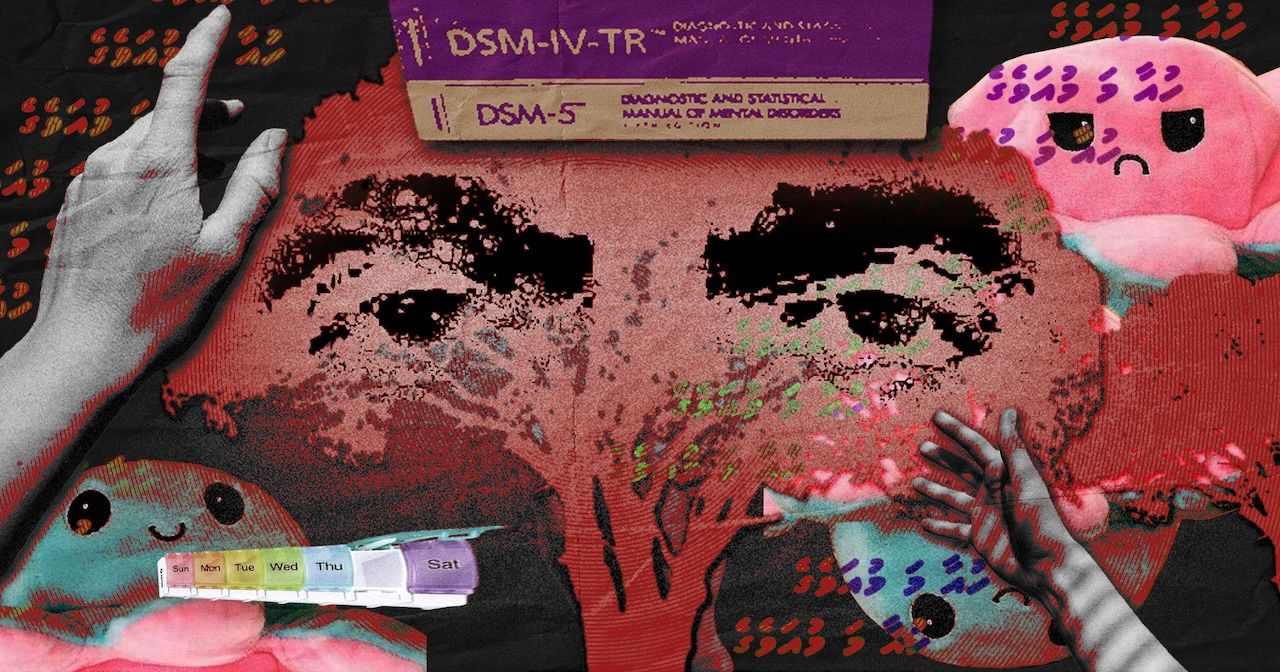
Artwork: Dosain

Artwork: Dosain

2 hours ago
If you or someone you know is struggling, the National Mental Health helpline is available at 1677. The line operates 24 hours. A list of additional support services is available at mhsgmv.org/get-help.
The Maldives has more mental health support than most readers know about, and less than the country needs. In the past week, the president announced a new hospital, advertised 12 new posts, moved to coordinate services, and pointed to an insurance reform that has brought more than 10,000 patients into formal care since January. The architecture is being rebuilt in public. For someone in distress, or worried about someone else, the more pressing question is where to turn now.
This guide maps what exists today: the helplines and what each does, the clinical services and how to reach them, what to expect on cost and waiting times, the gaps the system itself acknowledges, and the plan that commits the state to closing them by 2029.

The helplines

The Maldives has one general mental health helpline currently in operation.
1677 – National Mental Health Helpline. Operated by the National Mental Health Department at the ministry of health, established in 2024. Offers 24-hour psychological first aid, with trained operators who can listen, assess, and refer callers to clinical services. As of December 2024, the line had received 2,032 calls.
NMHD director Aminath Shahuza, appearing on PSM's Komaakoalhi programme last week, urged people not to wait until problems escalate. The signs worth taking seriously included unexplained anxiety, insomnia, loss of appetite, and withdrawal from work or social life when they persist and begin to affect daily living. "These things become bigger over time," she said. "If you're able to call and talk before that, it might come to an end."
A second line widely cited in past coverage, 1425, was operated by the Maldivian Red Crescent during the Covid-19 pandemic and is no longer active.
For emergencies, the emergency room at Indira Gandhi Memorial Hospital and the emergency departments of regional hospitals can assess presenting cases. Support offered at emergency rooms may be limited unless trained mental health professionals are on duty.
Two further state lines handle adjacent functions. The Family and Children Service Centre under the ministry of social and family development handles cases involving children, families, gender-based violence and related concerns, including those with a mental health dimension. The police victim support unit at the Maldives Police Service provides support to victims of crime. However, Homeland Security Minister Ali Ihusan's public disclosure of one user's communications last month raised questions about confidentiality protections on this line.
The Mental Health Support Group operates as a navigation service, helping people identify suitable clinics, process applications for treatment, and apply for financial assistance through the National Social Protection Agency. The organisation no longer runs in-person support groups but maintains a list of services at mhsgmv.org/get-help.

The clinical services

For appointments with a psychiatrist, psychologist or counsellor, the Maldives has a thin but expanding network of providers. Public services concentrate at two sites in the capital region; private clinics offer faster access at higher up-front cost. Outside Malé and Hulhumalé, services are limited.
Mental Health Centre – Indira Gandhi Memorial Hospital, Malé. The country's main public provider, opened in 2019, with a nine-bed inpatient psychiatry unit added in 2022. Five or six consulting rooms in the psychiatric ward limit how many patients can be seen at once.

Landline: 333 5335

Viber: 746 0885

Email: info@igmh.gov.mv

Mental Health Centre – Hulhumalé Hospital. Provides outpatient services for the central area. The site also houses a Child Development Centre with services for children under 15 with mental health and developmental concerns.

Landline: 335 0169

Viber: 931 4109

Public-sector waitlist. The Maldives Independent checked the public Mental Health Centre's appointment system on May 5. A person requesting a first appointment that day would be placed 1,302nd in the queue, unlikely to be seen within the next year at present rates.
However, at Hulhumalé Hospital, the waitlist stood at 10. Patients with the flexibility to travel may face a substantially shorter wait at Hulhumalé. It operates in collaboration with India's Cadabans Group of Healthcare.
The Ungoofaaru Regional Hospital in Raa atoll is the only atoll-level inpatient unit currently operating, with four beds, two psychiatrists and a psychologist. Serves the northern atolls and conducts outreach visits to surrounding islands.
Other regional hospitals. Five regional hospitals – Addu Equatorial, Kulhudhuffushi, Ungoofaaru, Dr Abdul Samad Memorial in Gaaf Dhaal, and Gan in Laamu – currently have psychiatrists. Most offer psychiatric consultations but limited multidisciplinary care. As of 2021, the Maldives counted around 14 psychiatrists nationally across the public system.
Private clinics in Malé. Several private mental health clinics, including the Institute for Mental Wellbeing and the Institute for Counselling and Psychotherapy, offer faster access for those who can pay. Initial consultations are typically MVR 500 (US$ 32) to MVR 700. Psychological assessments for adults cost between MVR 3,000 and MVR 4,000. Online sessions are available at most clinics, though uptake remains low.
Private waitlists exist too. One Malé clinic told the Maldives Independent it had around 100 people waiting to see its two psychiatrists.

What Aasandha covers

Since January 1, mental health treatment has been brought under full insurance coverage. As of April 24, more than 10,000 patients had sought psychiatric consultation or psychological therapy under the reform, President Dr Mohamed Muizzu said in his press conference last week. Of those, 8,125 were in Malé.
In the public sector, treatment at the Mental Health Centre at IGMH and Hulhumalé is fully covered.
In the private sector, full Aasandha coverage is offered at seven facilities, according to Aasandha:
1-

Cyma Care

2-

Eve Clinic

3-

Kulunu Medical Clinic

4-

V-Care Counselling and Psychotherapy Center

5-

Mednova Medical Center

6-

Elite Medical Center

7-

Senahiya Hospital

Partial Aasandha coverage applies at most other private clinics. At one Malé clinic, the typical out-of-pocket pattern is:

Initial consultation – Aasandha covers MVR 100 of the usual MVR 600 fee

Follow-up consultation – Aasandha covers MVR 200 of the usual MVR 600 fee

Psychological assessment – Aasandha covers MVR 1,500 of the usual MVR 3,800 fee

Coverage applies at the point of service. Patients do not pre-claim. The Aasandha portion is deducted at the clinic. National Social Protection Agency assistance can be applied for to cover further costs, usually for three months at a time, and requires a letter from a treating clinician. The Mental Health Support Group can help with the application process.

The trajectory of demand

The 10,000-plus consultations under the new insurance reform are not a sudden spike. They sit on a longer trajectory of rising demand:

Mental Health Centre consultations rose from 7,246 in 2019 to 17,708 in 2020 and have continued to climb

The Human Rights Commission found that 26,627 people accessed Aasandha for mental health treatment in the five years to 2023, 63 percent of them in the Greater Malé area

The number of people taking mental health medication for the first time rose from 203 in 2017 to 9,163 in 2021

Youth mental health consultations at IGMH for patients aged 10 to 19 rose by more than 400 percent between 2015 and 2024

Deputy Health Minister Aminath Ismail, also appearing on PSM last week, attributed the broader rise to changing public attitudes alongside rising case numbers. "In the past, people were frightened or found it hard to talk about this because they might get labelled, or people didn't know what the treatment was," she said. A WHO STEPS survey had found one in five people in the Maldives suffered from depression, including 13 percent of teenagers.

Schools and universities

Mental health support inside educational institutions is uneven and largely unstandardised. Counsellors are present in some schools, particularly in Malé, but coverage is partial and there is no mandatory referral protocol when a student is hospitalised for self-harm. The action plan endorsed in February commits to training 240 school staff in early detection and referral by 2028.
At higher education level, Maldives National University offers some counselling support through the Faculty of Health Sciences, with masters-level students providing supervised support to other students as part of internship requirements. MNU has been developing a dedicated student counselling facility, work that began before the recent dormitory case. Other higher education institutions vary in what they provide.

The chain that doesn't yet function as a chain

The system above – helplines, FCSC, victim support, primary care, Mental Health Centres, regional hospitals – is a set of services run by different bodies, with limited mechanisms for moving someone from one to another.
 The country lacked an adequate referral mechanism for people calling the helpline, Shahuza said on PSM. "Where would that person go next, which centre could they go to? How would people at regional hospitals be referred if they're going to another hospital?" Callers might also be living with co-occurring conditions, including substance use or other social difficulties, she noted.
She suggested the answer was not simply more capacity at the centre but a redistribution across tiers. "Everyone is going to a psychiatrist," she said. "We end up on a waitlist because we don't have the right information. Instead, we need to broaden these services at different levels within our health services."
The Asia Foundation's mapping study, published in November, made the same observation: the country's mental health system is a set of parallel structures that do not function as a chain.

The plan

The architecture the state has committed to building is set out in the National Mental Health Strategic Action Plan 2025-2029, endorsed by the health ministry in February 2025 with support from WHO and UNICEF.
The plan organises its work into four objectives: governance and leadership; integrating services into primary care; promotion and prevention; and information systems and research. Within these, it commits to measurable targets by the end of 2028 or 2029:

Mental health services integrated into 80 percent of all atoll hospitals

90 percent of primary healthcare providers trained in mental health

Specialist Mental Health Services with multidisciplinary teams in six regions

Community-based mental health programmes initiated in six regions

A mental health rehabilitation unit established at a major hospital

A national suicide prevention strategy developed and implemented

Youth mental health services in four sites, with peer support networks

The 24-hour helpline strengthened with improved referral mechanisms

Mental health workforce expanded from five specialists to 25 by 2028

Stigma reduced by 20 percent, measured by national survey

The plan acknowledges that at present community mental health services are "nonexistent". Services at the primary care level are "very limited". Provision for children and adolescents is "scarce". Most services are concentrated in Malé. Workforce capacity at the atoll and regional levels is "limited".
The plan also raises a concern about the government's hospital-led approach. Building a dedicated mental health rehabilitation facility, it warns, "could lead to institutionalisation of [people with lived experience] and [goes] against current global best practices". WHO guidance is for mental health services to be integrated into primary care and for individuals to be treated in the community.
The new mental health hospital announced by President Muizzu last week will be operational in about a year after construction begins. In the meantime, the president said the focus would be on increasing capacity at existing facilities – therapists and other staff at the Malé Group hospitals, regional and tertiary hospitals – alongside improvements to the helpline and to inter-agency protocols on how cases are handled.
Other commitments remain at draft stage. A Mental Health Act has been in development since 2022 and is expected to be sent to the People's Majlis this year. A national mental health survey – the country's first comprehensive baseline – is planned to begin fieldwork in 2026 with publication targeted for 2027.
If existing routes feel out of reach, talking to someone trusted – a friend, family member, religious figure, or community elder – is documented to help. The Mental Health Support Group can help with navigating services and applying for financial assistance; further peer-support resources are listed at mhsgmv.org/get-help.
The system is not yet what it needs to be. By the state's own admission, it is in the process of being rebuilt.
If you or someone you know is struggling, the National Mental Health helpline is available at 1677. The line operates 24 hours. A list of additional support services is available at mhsgmv.org/get-help.

Discussion

No comments yet. Be the first to share your thoughts!

No comments yet. Be the first to join the conversation!

Join the Conversation

Sign in to share your thoughts under an alias and take part in the discussion. Independent journalism thrives on open, respectful debate — your voice matters.

Support Independent Journalism

Help us keep the news free and fearless

Give once

or
Become a memberfrom $5/month