
From archipelago to city-state: a Q&A with Salma Fikry
On who benefits when Maldivians leave their islands behind.
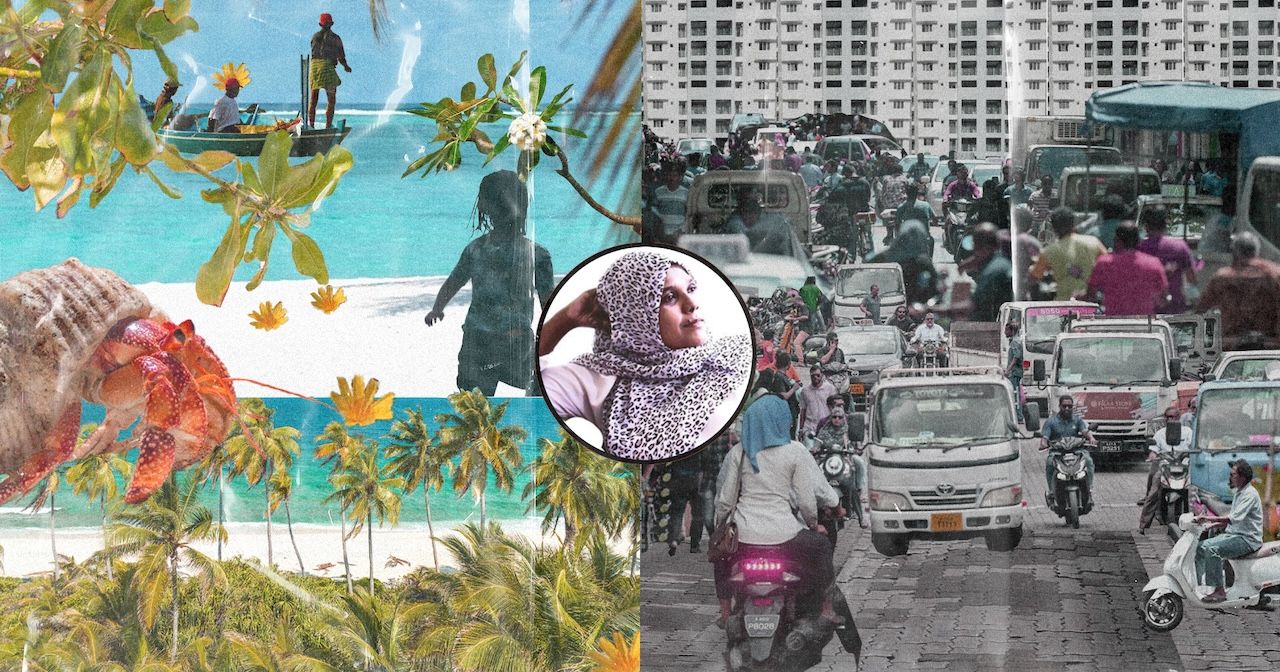
Artwork: Dosain
23 Feb, 15:17
Salma Fikry spent much of her career working on decentralisation and community governance in the Maldives. She served at the Ministry of Atolls Development, co-founded the Institute for Governance and Development, and received a National Award of Recognition for her contributions to local governance. In 2016, she wrote the foreword to Muna Mohamed's Falhu Ali Ranmuiy, a book documenting the history of forced migration and island abandonment, in which she challenged the premise that the country's dispersed geography makes equitable development impossible.
Although Salma has not been actively advocating or working on decentralisation in recent years, she retains deep expertise in the subject and a keen interest in its future. We asked her whether anything has changed since she sounded the alarm a decade ago.
In January, 1,530 children moved to the Greater Malé region to start Grade 1. You wrote about forced migration a decade ago. Since then, we have seen the reclamation of Gulhifalhu, Hulhumalé Phase 2 and 3, Giraavaru, and now Ras Malé. Has anything changed besides the numbers?
A great deal has changed, not only in scale but in speed and structure. Migration from the atolls to Malé has accelerated markedly. The 1911 census recorded just over 5,000 residents in Malé; by contrast, recent decades have witnessed rapid and sustained demographic concentration in the capital region. Over the past ten years in particular, this shift has intensified to the point where the depopulation – and eventual abandonment – of some inhabited islands is no longer a distant possibility but a foreseeable near-term outcome.
Current state investment in large-scale land reclamation, housing, and infrastructure in the Greater Malé region constitutes a powerful set of pull factors. Migration theory consistently underscores how such concentrated opportunities in employment, education, healthcare, and housing draw populations toward urban centres. As these investments expand, movement towards Malé becomes not incidental but structurally incentivised.
Governance reforms have also altered the social fabric of the atolls. The abolition of atoll councils has weakened institutional expressions of atoll-based identity and belonging. Over time, this is likely to diminish the psychological and civic attachment to atoll citizenship, particularly among younger generations. While older Maldivians may continue to identify strongly with their atolls, younger cohorts – many of whom are already oriented toward Malé for education and employment – are less likely to sustain that identification. As a result, the atoll as a meaningful political and cultural unit may gradually recede.
If population consolidation continues at its current pace, the Maldives may increasingly resemble a city-state model centred on the capital region. This trajectory was explicitly encouraged during the administration of President Abdulla Yameen, when the Hiya housing towers in Hulhumalé were promoted as capable of accommodating up to 70,000 residents and were marketed as a “youth city” intended to attract young people nationwide. Such initiatives were not merely housing projects; they symbolised a reimagining of national spatial organisation.
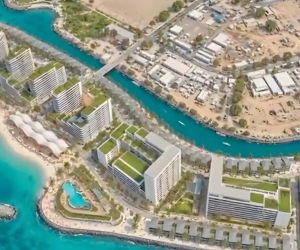
The ongoing development of Ras Malé – described as the largest land reclamation project in the country’s history – further reinforces this centralising trend. If every citizen is, in principle, able to obtain land or housing in the capital region, the traditional pattern of dispersed settlement across an archipelago may be fundamentally transformed.
In that sense, what has changed is not only the number of people relocating, but the underlying political economy, governance structures, and national imagination. The Maldives, historically defined by its archipelagic dispersion, is moving towards an unprecedented degree of spatial consolidation.
In your foreword to Muna Mohamed’s Falhu Ali Ranmuiy, you challenged the foundational premise of Maldivian development policy, that our dispersed geography makes island-by-island development unfeasible. Was it ever a genuine constraint, or always a political choice?
In the early decades of independence, the constraint was arguably genuine. During the 1960s and 1970s, the Maldives had a very limited revenue base and minimal productive capacity. Tourism began in the 1970s, but for many years fiscal systems were underdeveloped, taxation was limited, and state income remained modest. At that time, dispersed island-by-island development posed real logistical and financial challenges. The country was among the poorest in South Asia, and public resources were insufficient to sustain large-scale, decentralised investment.
However, the structural conditions that once justified that argument have changed. With the rapid expansion of tourism, the Maldives has become a high-income country by many macroeconomic indicators. Yet increased GDP and state revenue have not necessarily translated into equitable wealth distribution or broad-based resource ownership. Public income does not automatically produce social justice.
Over time, development policies have increasingly relied on the sale or long-term lease of national assets – including uninhabited islands, lagoons, and even portions of inhabited islands – under frameworks such as the Special Economic Zone legislation. While these measures may generate capital inflows, they also consolidate control over strategic resources in the hands of a small economic elite and, in many cases, foreign investors or operators. A significant share of tourism revenue continues to flow outward, limiting domestic multiplier effects.
Thus, while geographic dispersion may once have been a material constraint, the persistence of centralised development today appears less a matter of necessity and more a reflection of political and economic choices. The opportunity created by tourism-led growth was not accompanied by structural reforms to democratise resource ownership or narrow inequality. As a result, the wealth gap has widened considerably, raising fundamental questions about whether contemporary development policy serves the broader population or primarily entrenches concentrated privilege.
You wrote that while ordinary Maldivians accepted we had "few natural resources," a select few became oligarchs using those same resources. How did that transfer happen?
The Maldives is often characterised as a country with no minerals, limited land, and a high dependence on imports. In conventional terms, this suggests scarcity. Yet such a description overlooks the country’s high-value, location-based assets: its coral reefs, lagoons, white sand beaches, fisheries within the Exclusive Economic Zone, and its strategic maritime position in the Indian Ocean. These are not negligible resources; they are exceptionally valuable ones.
Over time, however, control over these assets has become increasingly concentrated. In a context where land is extremely scarce, economic accumulation has largely occurred through tourism rents and, more recently, high-end real estate development. Contemporary projects marketed as “sustainable luxury townships” exemplify this shift. It is now common to see foreign influencers promoting the sale of entire Maldivian islands as exclusive private paradises. The imagery of effortless luxury contrasts sharply with the lived reality of many Maldivians, who no longer experience such access to their own natural environment.
The transfer of resources into the hands of a small elite has been facilitated by weak transparency and governance failures. The corruption scandal involving the Maldives Marketing and Public Relations Corporation exposed how island leases were manipulated for private and political gain. Yet even after that episode, the long-term leasing and sale of islands and lagoons has continued with limited public scrutiny. Comprehensive transparency regarding beneficial ownership remains elusive.
Decentralisation did offer a pathway toward more equitable resource governance. Atoll-level management could have ensured that revenues from nearby uninhabited islands or lagoons directly benefited local communities. However, the abolition of atoll councils re-centralised authority, consolidating control over valuable assets at the national level. This centralisation has reduced the capacity of local populations to assert customary claims or influence decisions affecting their surrounding resources.
In this sense, the emergence of oligarchic wealth is not accidental. It reflects a political economy shaped by centralised control, opaque leasing arrangements, and corruption. Revenues derived from national assets have, at times, been channeled into political patronage, campaign financing, and vote-buying rather than into broad-based development. The transfer, therefore, occurred through institutional design and political choice: public resources were converted into private capital under conditions of limited accountability.
You posed a pointed question in the foreword: who gains the benefits of the land, lagoons and reefs that Maldivians leave behind (when they evacuate their islands). Do we have an answer now?
I posed that question because comparable trajectories can be observed elsewhere. In island economies such as Mauritius, Seychelles, Jamaica, and Puerto Rico, liberalisation, long-term leasing, and the commodification of land have generated enduring tensions over ownership and belonging. When land and coastal resources are opened to external capital without clear safeguards, disputes over who benefits – and who is displaced – inevitably follow.
In the Maldivian context, the relocation of communities from islands such as Hirimaradhoo raises fundamental questions. If residents are moved, do they retain a meaningful right of return? If future generations seek to reclaim what they regard as ancestral land, will that be legally and politically possible? Comparative experience suggests that when such rights are denied or eroded, intergenerational grievances can emerge.
It is also noteworthy that infrastructure investments have sometimes proceeded on islands slated for depopulation. This raises legitimate questions about intended future use. Existing harbours, utilities, and buildings can readily support tourism or real estate ventures once a resident population is removed. In such cases, depopulation may function less as a social policy and more as a precursor to asset repurposing.
The broader concern is that ownership may shift – whether through sale, long-term lease, or state-mediated arrangements – into the hands of a narrow set of actors, including private developers, tourism operators and/or real estate agents. The process is often opaque, and public debate remains limited. While politicians may assert that such assets remain “state property,” the state is, in principle, constituted by its citizens. The critical question, therefore, is whether ordinary Maldivians retain substantive rights – of access, return, and benefit – or whether their stake becomes merely nominal.
The Decentralisation Act of 2010 was supposed to give councils real power. Looking back, did decentralisation ever have a genuine chance, or was it undermined from the start?
Decentralisation did have a genuine opportunity, but it was undermined from the outset. As the saying goes, a flawed foundation produces a flawed structure. While it is true that governments often devolve power gradually, the Maldivian experience was marked less by phased strengthening and more by early institutional weakening.
When the Decentralisation Act was enacted in 2010, local communities already possessed functioning financial mechanisms. Island community accounts and atoll community accounts held funds generated through local economic activity – powerhouses, community-run shops, and other initiatives. In six atolls, shared atoll development funds pooled citizen contributions, donor funds, and state allocations. These mechanisms were functioning effectively in places such as Shaviyani and Lhaviyani atolls.
However, prior to the election of councils under the new law, these community accounts and atoll development funds were centralised. The justification offered was an administrative “legal vacuum” as previous island and atoll development committees approached the end of their mandates.
Yet when newly elected councils assumed office, they inherited neither financial autonomy nor meaningful resources. From the beginning, they were rendered fiscally dependent on the central government.
Additional structural issues compounded this weakness. The creation of province offices inserted an extra bureaucratic layer above atoll councils, diluting rather than strengthening local authority. Political polarisation further destabilised the system. The decentralisation bill itself was heavily contested in parliament, including hundreds of amendments proposed by the opposition Dhivehi Rayyithunge Party, reflecting a lack of cross-party consensus on empowering local governance.
Crucially, several legal provisions of the Act were never implemented. Conflicting laws were not amended within the stipulated timeframe; island and atoll jurisdictions were not formally declared.
Following the change of government in 2012, council powers were further curtailed, leaving local bodies with minimal administrative functions for several years.
A period of relative recovery began after 2018, when councils received formal recognition and a five percent budget allocation. Despite limited resources, many councils reportedly demonstrated tangible progress. Yet subsequent political shifts have again signalled a preference for re-centralisation. Today, I find it extremely disconcerting that the newly created Ministry of Cities, Local Govt and Public Works would tweet they have weeded and levelled a road in Kulhudhuffushi City. To me, it is an indication of utmost disrespect and undermining of local level officials and authorities.
Ultimately, decentralisation in the Maldives was less defeated by incapacity than by insufficient political will. Capacity is not merely a matter of credentials; it is cultivated through authority, resources, and responsibility. Where these are withheld, decentralisation cannot mature into a robust system of local self-governance.
Climate mitigation is increasingly invoked to justify population consolidation. How do you distinguish legitimate adaptation from using climate as a cover for centralisation?
A distinction must be drawn between evidence-based climate adaptation and politically driven population consolidation.
A number of studies on internal migration in the Maldives suggest that centralisation cannot be credibly justified on climate grounds alone. Local perceptions, in particular, rarely identify climate change as the primary motivation for relocation. Instead, migration decisions are more commonly shaped by access to education, healthcare, employment, and housing – especially opportunities concentrated in the Greater Malé region.
Historically, movement to Malé was closely linked to educational progression. Students relocated after Grade 7 to pursue secondary schooling, and later for higher secondary or tertiary education. Health needs also played a significant role. These were practical, service-based drivers. More recently, however, relocation is increasingly associated with access to state housing schemes, employment prospects, and political patronage networks. Promises of flats or public-sector opportunities have become powerful incentives for migration to the Greater Male’ area.
If climate change were the principal driver, one would expect communities to articulate environmental degradation, flooding, or erosion as immediate push factors. Yet such concerns are seldom cited as the decisive reason for moving. This suggests that consolidation is not primarily occurring as a planned adaptation strategy, but rather as an outcome of development policy and political manipulation.
This is not to deny that climate vulnerability exists. However, invoking climate migration to legitimise centralisation risks conflating two distinct processes. Adaptation policy should be grounded in transparent risk assessments and community consultation. When climate rhetoric is deployed primarily to secure international funding or justify pre-existing centralising agendas, it ceases to function as genuine adaptation and instead becomes a political instrument.
Is there a policy path that does not end with most Maldivians in one corner of the archipelago? If a government were genuinely committed to reversing this centralisation, what would need to happen?
The construction of the Hiya towers and the public invitation to young people nationwide to relocate to Hulhumalé marked, in my view, a critical milestone. When housing projects are framed as capable of accommodating a substantial share of the national population, they signal not temporary relief but long-term consolidation.
Since large-scale relocation began around 2021, even Hulhumalé has begun to exhibit the congestion, waste-management pressures, and spatial constraints once associated primarily with Malé.
Reversing this trajectory would require a decisive policy shift. First, expansion of the Greater Malé region would need to slow – or halt – while serious investment is redirected toward regional development.
Infrastructure, higher education, healthcare, and employment opportunities must be distributed across atolls in ways that make remaining in the atolls viable and attractive. Without such structural rebalancing, migration will continue to follow concentrated opportunity.
Second, decentralisation must be substantively strengthened rather than rhetorically endorsed. One cannot meaningfully devolve authority while simultaneously centralising land, finance, and planning decisions. The two logics are incompatible. If new reclamation projects such as Ras Malé are pursued without parallel regional empowerment, consolidation becomes self-reinforcing.
More fundamentally, policy must be guided by principles of intergenerational and social justice. Land and marine resources are finite, and long-term leasing arrangements raise questions about transparency, equity, and future access. If development continues to prioritise capital-intensive mega-projects without broad public accountability, the burden will fall on future generations.
A viable alternative path exists, but it requires political will: equitable resource governance, genuine fiscal decentralisation, transparent land policy, and a renewed commitment to sustaining the Maldives as an archipelagic nation rather than allowing it to evolve, by default, into a densely concentrated city-state.
Discussion
No comments yet. Be the first to share your thoughts!
No comments yet. Be the first to join the conversation!
Join the Conversation
Sign in to share your thoughts under an alias and take part in the discussion. Independent journalism thrives on open, respectful debate — your voice matters.
Support Independent Journalism
Help us keep the news free and fearless
Give once
$
or
Become a memberfrom $5/month