
Forced migration around the corner: Time to act
“Maldivians are paying a high social and economic cost for development policies that force atoll populations to migrate to Malé,” writes Salma Fikry in her foreword for Falhu Aliran Muiy, a book by Muna Mohamed on the inhabited islands of Maldives.
07 Jul 2016, 09:00
By Salma Fikry
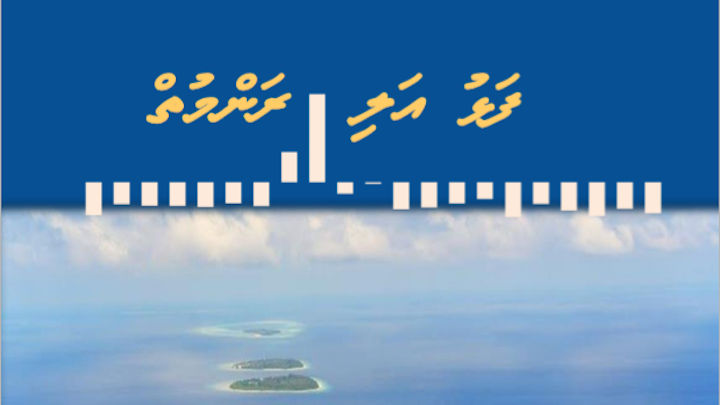
The following article is a translation of the foreword written by Salma Fikry for Falhu Aliran Muiy, a book by Muna Mohamed on the inhabited islands of Maldives, the abandonment of islands, and on the history, present and future of forced migration in the Maldives.
For several years, we in the Maldives have accepted that we are a country with few natural resources. Our development policies were formulated and implemented with the underlying justification that the biggest challenge to our development was the highly dispersed nature of sparsely populated communities, over a vast spread of the ocean.
This being the case, it was seen as unfeasible to provide services and opportunities to every inhabited island. Priority was given to develop the capital island Malé and subsequently, Vilingili or ViliMalé (a resort island in the vicinity of Malé changed to an inhabited island). Since then, we saw a huge stretch of land reclaimed near Malé, that is Hulhumalé, and the efforts to develop and relocate Maldivians to the artificial island of Hulhumalé. In recent years, we also witnessed a grand project to develop “GulhiMalé’ in the lagoon of Gulhi nearby Malé. And today we witness the reclamation of land for HulhuMalé Phase II.
These projects at creating artificial islands took place while there remained already existing natural land, undeveloped and underdeveloped, in the north, mid and south of Maldives. Development policies were formulated and implemented such that Maldivians were forced to abandon their land/homes and migrate to one corner of the country. The trend continues even today and at a much more alarming pace.
While we Maldivians accepted ours as a country with few natural resources and understood this factor as the most challenging to our development as a nation; the truth is that a select few individuals became powerful, wealthy oligarchs using the same “few” natural resources. It is also a reality that the gap between the rich and the poor continued to widen through the years. It is also an undeniable fact that the development disparity in income, services and opportunities between the capital Malé and the atolls of Maldives are glaringly obvious.
Maldivians are paying a high social and economic cost for development policies that enforce atoll populations to migrate to Malé – the capital island, which today, is among the most congested places on earth. A place burdened with environmental degradation,societal problems and ever increasing crimes. Regardless, our development policies are still geared in that very same direction that has brought us to the present unsustainable, inequitable development. We are still pursuing policies and investing our finances to congest all Maldivians into one little corner of our archipelago, while abandoning the rest.
Today, we should ask ourselves what will happen to our birthright, i.e the land we leave behind and its natural capital, as we migrate to one corner of the country, in the pursuit of better development opportunities and services. Today, we should question who will gain the benefits of the land, the lagoons, the reefs, the seas and other natural resources that we as Maldivians proudly thought belonged to us.
Salma Fikry is a recipient of the National Award for services to decentralisation in the Maldives and is an advocate of sustainable development through community empowerment.
Muna Mohamed, Falhu Aliran Muiy, Published: Novelty Bookshop, June 2016, MVR240.
Discussion
No comments yet. Be the first to share your thoughts!
No comments yet. Be the first to join the conversation!
Join the Conversation
Sign in to share your thoughts under an alias and take part in the discussion. Independent journalism thrives on open, respectful debate — your voice matters.
Support Independent Journalism
Help us keep the news free and fearless
Give once
$
or
Become a memberfrom $5/month