
Political divide threatens Maldives' 20-year development blueprint
Consultant concedes MDP boycott will leave US$ 1.1 million plan incomplete.

Artwork: Dosain
02 Oct 2025, 15:58
As teams of consultants set off to visit every inhabited island in the Maldives, the first attempt to create a legally-binding national development plan is colliding with the country's polarised political reality.
The architect of the 20-year plan concedes that the main opposition Maldivian Democratic Party's boycott of the US$ 1.1 million initiative undermines the ambitious blueprint, even as his team presses ahead with seeking grassroots input.
Hamid Sodique, managing director of Nexia Maldives, the local firm enlisted to formulate the roadmap, told the Maldives Independent that the MDP's refusal to participate "is something that will affect the completeness of this plan" – an admission that casts doubt about the plan's durability across future administrations without cross-party consensus.
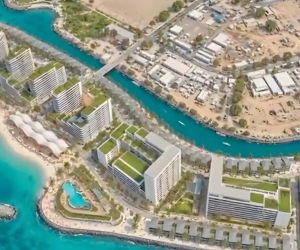
In early September, the MDP acknowledged the importance of developing such a plan "with a long-term vision" but questioned President Dr Mohamed Muizzu's policies and priorities. Despite the president's announcement about the formulation of the plan, his administration has launched projects to build new domestic airports and create new land "while many things remain unfinished," the MDP said, referring to the reclamation of the Fushidhiggaru lagoon for Muizzu's flagship Rasmalé city without completing land reclamation closer to Malé.
"Therefore, this party does not see any purpose in developing a plan at this time. Nor do we see any good intention on the part of the government in this matter," the MDP said.
The government's alleged "disregard for constitutional principles, good governance, and state institutions" undermines confidence in any new roadmap, the MDP contended, stressing uncertainty over the effective implementation of the plan.
Political buy-in
Hamid from Nexia suggested that any opposition party would question the intentions of the party in power that takes the initiative to develop such a plan.
"The message I would give to parties who are unable to do so for various reasons is that this is a national development plan, a very citizen-centric approach is utilised in a plan like this. Therefore, providing input to a plan made in consideration of the long-term progress or advancement of the nation and the people is very important and beneficial," he said.
"The way forward is sharing input. The extent to which those views are integrated will also be known to them."
Nexia's teams began travelling for island-level consultations during the first week of September. They have since conducted consultation sessions on 50 islands in nine atolls. The firm hopes to cover all the atolls by the end of October.
Consultations include main stakeholder groups such as political parties, businesses, associations and public service providers, Hamid said. Meetings are open to the public, he noted.
"I believe there will be an opportunity for people of different political ideologies, those representing political parties, or party members to attend these meetings and provide their views," he added.
Nexia sent invitations to all registered political parties, nearly all of whom are engaged in the process, Hamid said.
"The MDP, even if this is their stand at this stage, any time they change their mind, we would like to have their input as well. So we do not think that door is completely closed." he suggested.
As the development of a long-term plan calls for authority and technical viability, Nexia aims to reach a level "where the public and all wider stakeholders believe this is an exercise being conducted through a credible, transparent process," Hamid said.
Getting started
President Muizzu announced plans for a 20-year national development "masterplan" during his inaugural address on November 17, 2023. The new government will be guided by "insights and suggestions gathered from the public consultation process" in formulating the plan, he assured.
The plan would be "more than a set of guidelines" as it would "carry legal authority, ensuring its effective implementation and lasting impact," Muizzu said, calling on "intellectuals, thinkers and thought leaders in different fields in the country, to assist the government with your research and your findings."
In November 2024, the ruling party's supermajority in parliament pushed through controversial constitutional amendments that expanded the president's powers to include the formulation of "national development plans and strategic visions."
A month later, the government invited interested international firms to submit their expressions of interest. But in August this year, the finance ministry enlisted Nexia to formulate the plan. According to disclosures from a right to information request, Nexia won the contract after competing with two other local consultancy firms: CDE and Riyan. Both companies had been ruled out after scoring below 70 points. Riyan scored 54.6 points and CDE scored 50.6 points. Nexia emerged as the top bidder with 81 points.
The contract was revealed to be worth MVR 17.9 million (US$ 1.1 million).
Nexia was tasked with finalising the plan by the end of January 2026 and developing a monitoring framework by late July.
In addition to following a consultative process, "through a participative and collaborative approach," the plan should also be "data-driven and evidence-based," Hamid said.
"The purpose is to determine the most actionable long-term direction and priorities for the Maldives in a very fair and balanced manner, by considering the views and aspirations of all parties, consulting with our expert team as well as experts from various sectors of the Maldives, with their input as well," Hamid said.
According to Hamid, Nexia is employing a multi-layered consultation approach including stakeholder interviews, sectoral roundtables, town halls, and focus groups targeting marginalised and special-issue groups.
The process also incorporates sector discussion papers based on research and data analysis, written submissions from civil society and professional organisations, online surveys for broad public input, interactive social media engagement, a two-day national conference bringing together policymakers and sector leaders, and a dedicated website to disseminate findings and enable moderated public discussion throughout the consultation period.
Hamid urged the public to proactively share their views through Nexia's online portal.
Discussion
No comments yet. Be the first to share your thoughts!
No comments yet. Be the first to join the conversation!
Join the Conversation
Sign in to share your thoughts under an alias and take part in the discussion. Independent journalism thrives on open, respectful debate — your voice matters.
Support Independent Journalism
Help us keep the news free and fearless
Give once
$
or
Become a memberfrom $5/month