

Climate harm in plain sight
Environmental decline is becoming a public health crisis.
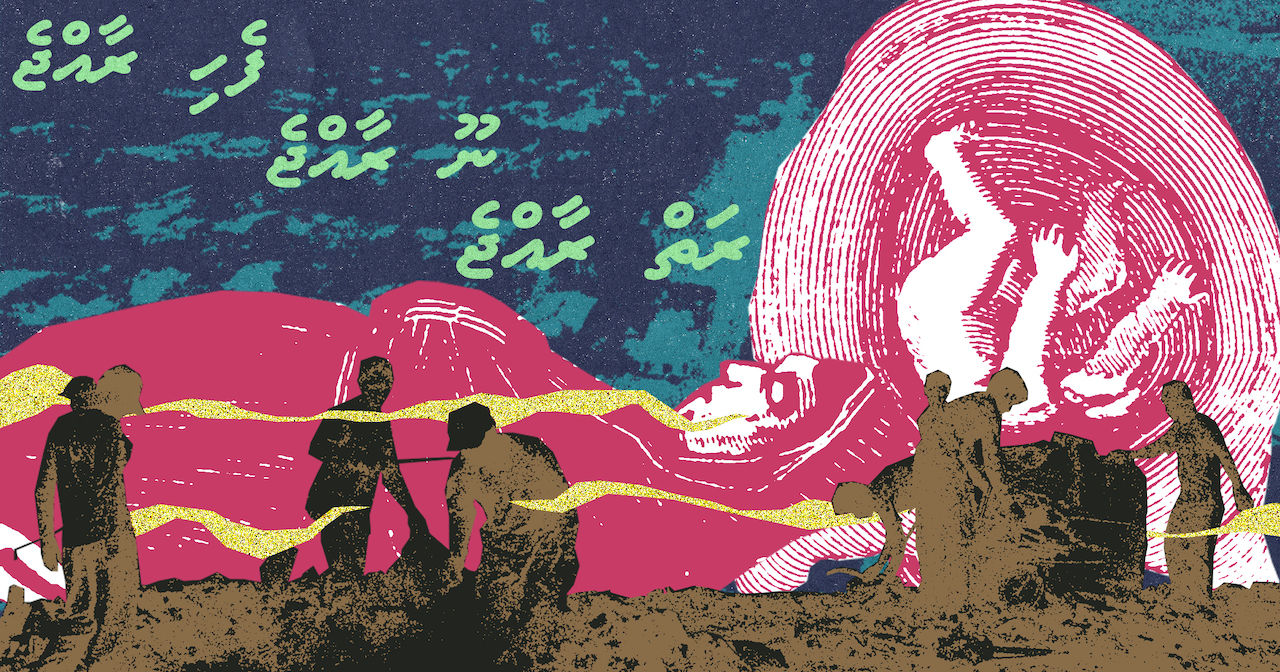
Artwork: Dosain
11 Jan, 17:37
The Maldives likes to present itself as a climate victim. It is also becoming a public health casualty. Environmental decline is now shaping everyday life across the archipelago, with consequences that fall hardest on those least able to avoid them.
Air pollution alone causes an estimated 160 premature deaths each year – a striking figure for a country of just over half a million people. At the start of each year, polluted air from the Indian subcontinent drifts southwards, adding to domestic pressures created by waste incineration, construction and congestion in Malé. Environmental harm has accumulated slowly and largely out of sight.
Those most exposed are residents of the outer atolls and the Maldives’ large migrant workforce. Both groups face higher environmental and health risks while receiving fewer protections. The imbalance is becoming a defining feature of the country’s development.
Healthcare offers a revealing lens. In many outer islands, access to specialised care is limited. Maternity services are particularly uneven. Several islands lack trained obstetric staff, forcing women to travel to the capital for extended periods to give birth. Traditional midwifery – once a lifeline for pregnant women in remote communities – has been curtailed by recent legal changes.
For a couple born in Kaashidhoo, an island about 60 miles north of Malé, these constraints shape family planning itself. Starting a family would mean months in the capital, paying rent and medical costs on top of everyday expenses. Yet Malé brings its own hazards. Air pollution is heavier, green space scarce, and environmental stress more concentrated. Women seeking to conceive are reporting higher infertility rates, adding another layer of uncertainty.
Research increasingly links environmental stressors such as air pollution, endocrine-disrupting chemicals, and heat exposure to reproductive health risks, including reduced fertility. The Maldives lacks comprehensive local data, though its health registries offer a starting point. Whether rising reported rates reflect an actual increase or improved monitoring remains unclear.
Beyond healthcare, environmental stress is reshaping daily life in the outer atolls. Water scarcity, saltwater intrusion, and flooding linked to land reclamation projects have strained already fragile public services. The World Health Organisation warns that climate change is increasing risks from heat stress, vector-borne diseases and water contamination. Children on remote islands face higher rates of diarrhoeal disease and dengue during periods of extreme rainfall and prolonged dry spells. UNICEF notes that disruptions to safe water access disproportionately affect women and girls, who bear primary responsibility for household water use.
If citizens are struggling, migrant workers are worse off. Roughly 150,000 foreign workers – mainly from South Asia – live and work in the Maldives, often in overcrowded and poorly ventilated accommodation. Many are employed in construction, waste management and boatbuilding, where exposure to hazardous substances such as asbestos and formaldehyde remains common. Others live near waste-incineration sites, with little oversight and limited access to healthcare or legal recourse.
The links between environmental degradation and chronic disease – cancers, endocrine disorders, respiratory conditions – are well documented globally, though indirect. Local evidence remains limited. More systematic research is needed to understand how these global patterns are playing out. Enforcement of labour and environmental standards is uneven, leaving a population essential to the economy acutely vulnerable.
After disproportionate cases of heat-related health stressors on construction workers became apparent, Gulf states introduced laws restricting outdoor labour during peak heat hours. The Maldives has no equivalent protections.
These conditions raise legal as well as moral questions. In July last year, the International Court of Justice reaffirmed that the right to a healthy environment is protected under international law. For countries such as the Maldives, the advisory opinion strengthens the basis for holding local authorities and foreign governments accountable for environmental harm affecting both citizens and non-citizens. It also reinforced the growing convergence between climate change and human rights, a theme that carried into climate negotiations later in the year.
None of this absolves larger emitters. As David Boyd, the former UN special rapporteur on human rights and the environment, observed after his 2024 visit, the Maldives is grappling with pressure it neither created nor significantly worsened. Development pathways shaped by external demand – luxury tourism, construction and waste-intensive growth – have imposed heavy costs on small island states with limited room to adapt.
Yet climate physics is indifferent to responsibility. Environmental decline does not pause while blame is apportioned. Without meaningful changes in environmental governance, healthcare provision and labour protections, the Maldives risks entrenching a two-tier system: those who can shield themselves from pollution and those who cannot.
The consequences are already visible. Environmental stress is pushing people away from outer islands toward a capital ill-equipped to absorb them safely. Over time, it may drive migration beyond the country’s shores. What was once held as a model of coexistence with nature risks becoming a cautionary tale of how slow-moving environmental damage can undermine public health, social cohesion and national resilience.
Mushfiq Mohamed is a lawyer, writer, and human rights advocate. He is a former public prosecutor and a recipient of La Médaille du Barreau from the Paris Bar Association.
All comment pieces are the sole view of the author and do not reflect the editorial policy of the Maldives Independent. If you would like to write an opinion piece, please send proposals to editorial@maldivesindependent.com.
Discussion
No comments yet. Be the first to share your thoughts!
No comments yet. Be the first to join the conversation!
Join the Conversation
Sign in to share your thoughts under an alias and take part in the discussion. Independent journalism thrives on open, respectful debate — your voice matters.
Support Independent Journalism
Help us keep the news free and fearless
Give once
$
or
Become a memberfrom $5/month

