A Majlis e-petition to ban BDS-listed products in the Maldives
Consumer boycotts are incomplete without state-level sanctions.
Artwork: Dosain
12 Apr, 13:11
Before we begin, here’s the link to the e-petition we submitted to the Majlis. We’ll detail out the steps for signing and verification later in this op-ed.
In summary, this petition proposes a policy green-paper to implement a nationwide ban on all fast-moving consumer goods (FMCG) brands on BDS (Boycott, Divest, and Sanction) lists – and to simultaneously introduce a market transition plan to aid local businesses, retailers, stores, restaurants, cafés, and other entities with such a transition. This petition also urges parliament to hold active public consultation sessions with all citizens when drafting this policy.
What this policy green-paper proposes
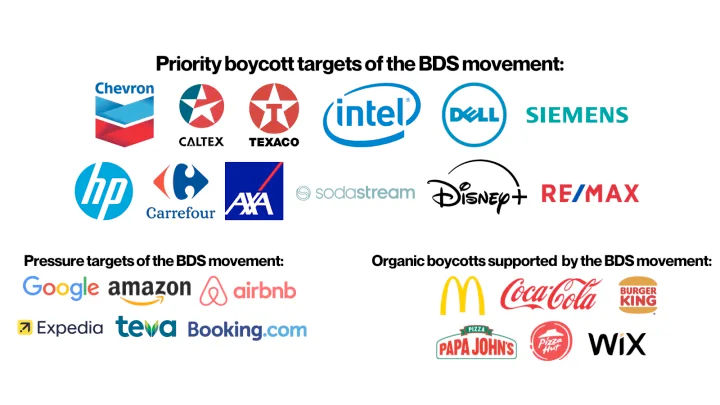
We propose a nationwide ban on manufacturing, importing, distributing, and selling FMCG products from brands and companies on boycott lists like the BDS movement’s campaigns as well as the more comprehensive lists on Palestinian software engineer Ahmed Bashbash’s No Thanks software application and the lists on Disoccupied.
We also call for a simultaneous policy along with this economic sanction to subsidise the imports of alternatives for five years, as well as providing purchase subsidies for local retailers who do not have distribution rights for any brands or single product lines therein.
The companies/brands targeted for this nationwide economic sanction should be ones producing, manufacturing, and distributing within the following categories:
1-
Food items and cooking ingredients (e.g., cooking oil, seasoning, flour, sugar)
2-
Beverages and confectioneries (e.g., sodas, potato chips, chocolates, coffee)
3-
Personal care items (e.g. skincare, shampoos, make-up, supplements)
4-
Household items (detergent, batteries, furniture, etc.)
Why start with these categories only for economic sanctions (for now)
Most FMCG products are easy and cheap to replace, with various available alternatives. Most of these products are luxuries that aren’t necessary for psychological or physical wellbeing.
Technological and healthcare brands are harder to replace due to reasons like structural necessity (e.g., equipment for hospitals, fire-squads, vehicle operation, social networks). Attempting to immediately replace these things will prove a difficult task. However, if we start with luxury goods like most FMCGs, we can lay nationwide foundations, experience, and knowledge for targeting larger categories in the future.
Why it must be a state-level sanction
If importing these brands are prohibited altogether, these multinational corporate giants cannot legally or materially enter the Maldivian market anymore or use their economies of scale to crush local and regional competitors and alternatives.
As long as the products exist, so will the demand for it, especially in resorts and tourist islands.
If the responsibility for direct action is demanded only from the consumers and private sellers, then the national implementation of the BDS strategy is incomplete. The ‘S’ in BDS (sanction) is a necessary step towards comprehensive action; it complements boycotts with collective force.
The importance of drafting market transition plan
Among the most immediately affected would be small distributors, small businesses, hawkers, corner stores, cafés, restaurants, retailers, and such entities without large-scale distribution portfolios.
To avoid damaging local commerce, it is important to draft a market transition plan to execute immediately after the economic sanctions take place. That means subsidising the imports, distribution, and retail purchases of products from alternative brands for five years, or until the market equilibrium readjusts itself and is able to function without further assistance.
Such an initiative should be carried out sincerely and fairly. It should be conducted alongside careful and transparent discussions and consultations with the general public to ensure no unfair advantages are given to any specific entity or individual.
The success of all our commercial entities ensures a healthy domestic economy well-insulated against external shocks.
A beneficial move for the Maldives
We estimate that this policy measure, carried out in its entirety, would benefit the Maldivian political economy rather than hinder it.
The rising costs of living and fuel due to global warfare is a warning sign for our communities. As a nation that hasn’t diversified its wealth-production capacity and relies almost entirely on imports for food and energy, our market reliance on the global north – in the era of a crumbling American and European hegemony – will only lead to us inheriting their market collapse too.
By taking these measures, not only would we deliver a meaningful collective blow to the empire’s commercial giants, but also, we would begin transitioning to a future with a diversified market free from the economic giants of the global north and their destructive market practices. We would also pave an entryway into greater regional trade alliances, insulating our political economy from the failures of the global north, and securing a steady and stable future for our future.
The war in Iran and its impact on our markets are already danger signals for the Maldives to detach itself from market reliance on the global north (especially the petrocapitalist industry), and this is one way we can lay out the groundwork towards total market independence from the west.
A multi-million dollar counter-sanction; Maldives to become a leading global example
Usually, it’s the global north that issues sanctions on the global south via blockades and trade restrictions. While some countries have banned products from a few companies as a boycott measure, it is a hitherto unprecedented measure to impose a comprehensive ban of all brands on the boycott target lists within specific categories.
According to our import composition data, we spent an average of US$ 145.72 million on beverages and confectioneries from 2021 to 2025, and an average of US$ 694.9 million on food items altogether. Even if the value of goods from boycott-targeted brands are only a fraction of these imports, it still makes up a multi-million dollar counter-sanction against the empire while simultaneously introducing alternatives from regional markets to replace these products.
In doing so, we could set an example on the world stage for impactful resistance against systems of oppression, and encourage larger countries to follow our footsteps, converging into what could become a global force of resistance.
If we must be pragmatic about our politics, then we cannot wait around for ideal circumstances or situations. We must work incrementally with the things within our collective abilities, and we must start from somewhere, no matter how imperfect. Pressuring our government to ban the Israeli passport was a victory for citizen researcher-activism even if the government ended up erasing the part about banning Israeli dual-passport holders – it is a step in mobilisation that eases the next steps, and each step leads to the crystallisation of the resistance in form, philosophy, energy, and material reality.
Mahal Ibrahim Abdulla is a writer, artist, musician, and aspiring social scientist. He works as the managing editor for Moosumi magazine. He is an honours graduate in Politics and Social Policy from the University of Leeds. His goal is to become a researcher – to eventually settle down and live a quiet life. His current research interests are political communication, social psychology, and the de-growth paradigm.
All comment pieces are the sole view of the author and do not reflect the editorial policy of the Maldives Independent. If you would like to write an opinion piece, please send proposals to editorial@maldivesindependent.com.
Discussion
No comments yet. Be the first to share your thoughts!
No comments yet. Be the first to join the conversation!
Join the Conversation
Sign in to share your thoughts under an alias and take part in the discussion. Independent journalism thrives on open, respectful debate — your voice matters.
Support Independent Journalism
Help us keep the news free and fearless
Give once
$
or
Become a memberfrom $5/month