
Coconuts vs dates: why palm trees sparked a debate about Maldivian identity
Airport greenery became a question of cultural authenticity.

Artwork: Dosain
15 Jul 2025, 14:24
What's the fuss about palm trees?
A revived debate has been raging about the type of trees that should be planted in public spaces. Should the country stick with its emblematic coconut palms or embrace imported date palms? It might sound trivial, but it has struck a nerve with many Maldivians who see it as a question of national identity.
Aren't all palm trees basically the same?
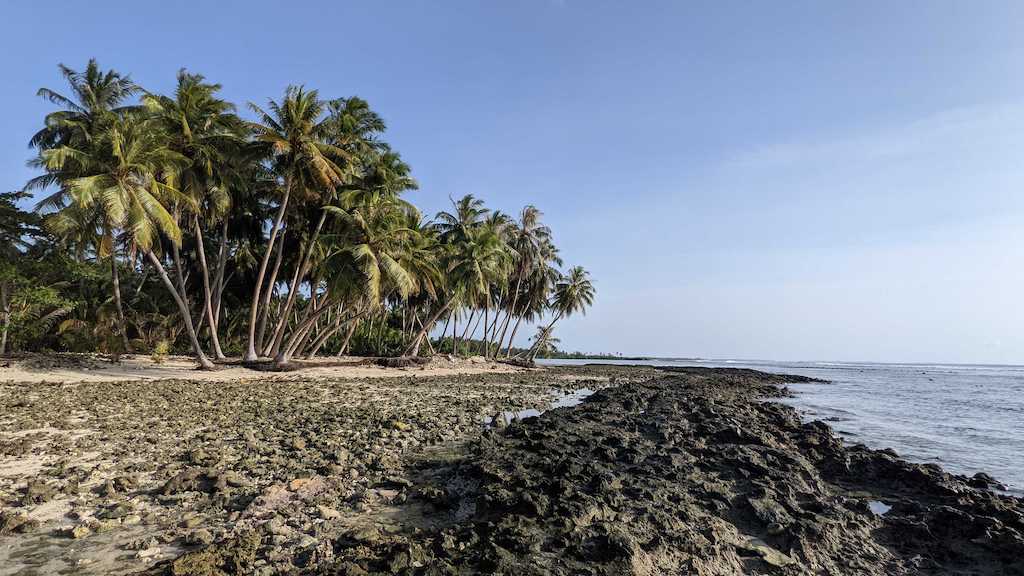
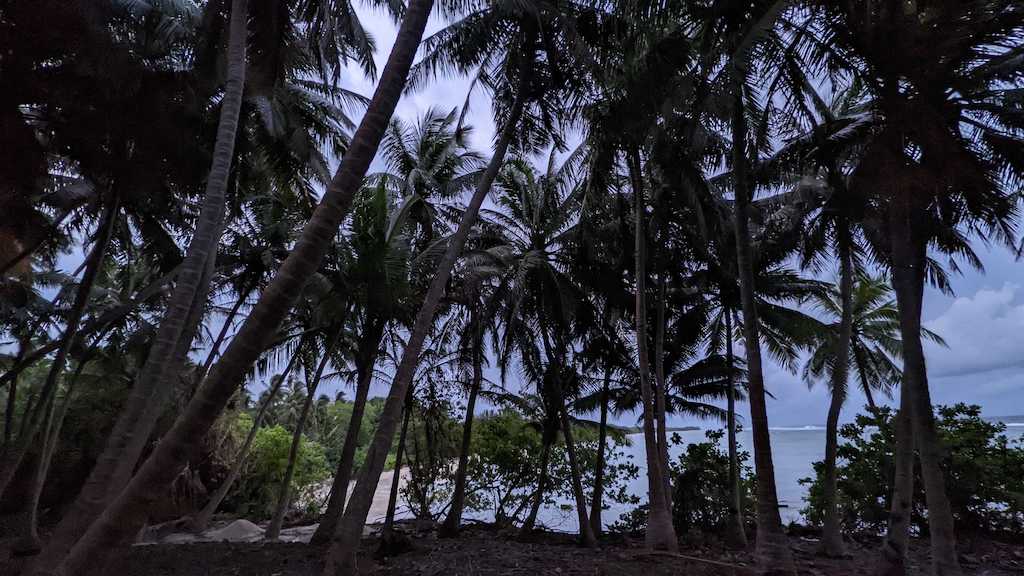
No. Coconut palms (Dhivehi ruh) are native to the Maldives. They are perfectly adapted to the tropical climate. Date palms are from the Middle East and North Africa. Think desert oases, not beaches. They're shorter and don't provide as much shade.
How did this controversy start?
When President Dr Mohamed Muizzu was the mayor of Malé, he started planting date palms along the city's ring road. His successor from the main opposition party continued the practice. Date palms have since cropped up on the harbours of other islands.
What's the latest flashpoint?
Date palms were planted outside the new terminal at the Velana International Airport, the new first impression for visitors when it opens on July 26. Critics say it sends the wrong message to tourists expecting a quintessential tropical experience.
Hasn't this happened elsewhere too?
Yes, in March 2022, the Addu City Council sparked a furore by uprooting more than 50 coconut palms on the link road. The Ruhfasha area was considered a landmark, one of the most Instagrammed spots in the southernmost atoll. The council claimed falling coconuts posed a danger to drivers. Mayor Ali Nizar argued the palms did not provide any shade or benefit, and replaced them with date palms despite public opposition, even on wide roads in Hithadhoo where shade trees would be welcome.
What do the critics say?
Historian Naajih Didi and others argue this is nothing short of "eroding Maldivian identity." The coconut palm is literally the national tree, they point out, stressing its centrality to Maldivian culture and economy for millennia.
"We teach children about the coconut palm in school, we sing about it, we build our culture around it – and then visitors arrive to see date palms?" as one critic said.
What do supporters say?
It's about practicality. Date palms are easier to maintain, require less frequent cleaning, and are safer in high-traffic areas like airports, the pro-date camp argues, whereas coconut palms can be dangerous – falling coconuts and fronds pose risks. Government supporters say there are plenty of coconut palms elsewhere on the airport island.
Other supporters frame their preference in religious terms, invoking the date palm's special significance in Islam and ascribing opposition to "Arabification" as anti-religious or secular (laadheenee). Critics countered with many Muslim-majority tropical countries proudly maintaining their indigenous vegetation.
Is there a middle ground?
As one X user put it: "You can plant a date palm in a mosque yard or public park. The problem is when you start replacing coconut palms, especially in the front-facing parts of islands, resorts, and city areas."
Date palms could have their place, but coconut palms should dominate the coastlines, waterfronts and airport entrances that define the country's visual identity.
Has there been any official government response?
The Environmental Protection Agency weighed in last week, recommending that coconut palms be planted instead of date palms at the new terminal.
The best approach is to plant species that are connected to the local environment, EPA Director General Ibrahim Naeem told Sun.
Why does this matter beyond just aesthetics?
For many Maldivians worrying about changing the country's face to the world, it raises questions of cultural identity and authenticity. The online discourse reflects deeper concern over preserving that identity.
The 14th-century explorer Ibn Battuta wrote about the abundance of coconut palms that "produce each year twelve crops, one a month". The coconut palm was historically indispensable to the Maldivian economy, a source for everything from food to building materials. It was planted for every birth and death, maintaining a sustainable cycle. Now the country actually imports coconuts.
Didn't the Maldives used to export coconuts? What happened?
In 2023 alone, the country imported 662 tons of coconuts, compared to almost none before 2017 when import restrictions were relaxed.
The decline was down to multiple factors: ageing palm populations, land being allocated for tourism development, urban planning that prioritised housing over palm groves, and disease outbreaks like the black fungus that devastated northern plantations in 2023. During Ramadan 2025, coconut prices hit record highs of MVR 75 (U$ 5) per coconut – more than six times the usual price.
So there's an economic argument for keeping coconut palms?
The coconut crisis drew uncomfortable attention to the country's import-dependency and vulnerability to price shocks and global supply chain disruptions.
Traditional coconut palm groves were economic engines. Every part was used: from the fruit to extract sugar, honey, vinegar and toddy, to the shells for containers, to the husks for making coir rope valued by seafarers. This created what one expert called "the backbone of the women-led informal economic system of the Maldivian islands".
At a forum on Monday night, the environment minister said the government's programme to plant five million trees prioritises 90 endangered native species. The agriculture ministry has also designated an uninhabited island to develop a "Coconut Development Centre" to grow higher-quality palms and combat diseases.
As an atoll council president suggested, when islands lease land for tourism development, they might earn MVR 60,000 monthly, "but we overlook what the local economy gained from that same hectare before – things like the value of coconut palms and screw-pine trees".

Discussion
No comments yet. Be the first to share your thoughts!
No comments yet. Be the first to join the conversation!
Join the Conversation
Sign in to share your thoughts under an alias and take part in the discussion. Independent journalism thrives on open, respectful debate — your voice matters.
Support Independent Journalism
Help us keep the news free and fearless
Give once
$
or
Become a memberfrom $5/month

