
Economy

Nine years and US$ 1 billion later: Maldives unveils landmark airport terminal

Leaders trade blame over costly infrastructure saga.

Artwork: Dosain

Artwork: Dosain

24 Jul, 11:38 PM
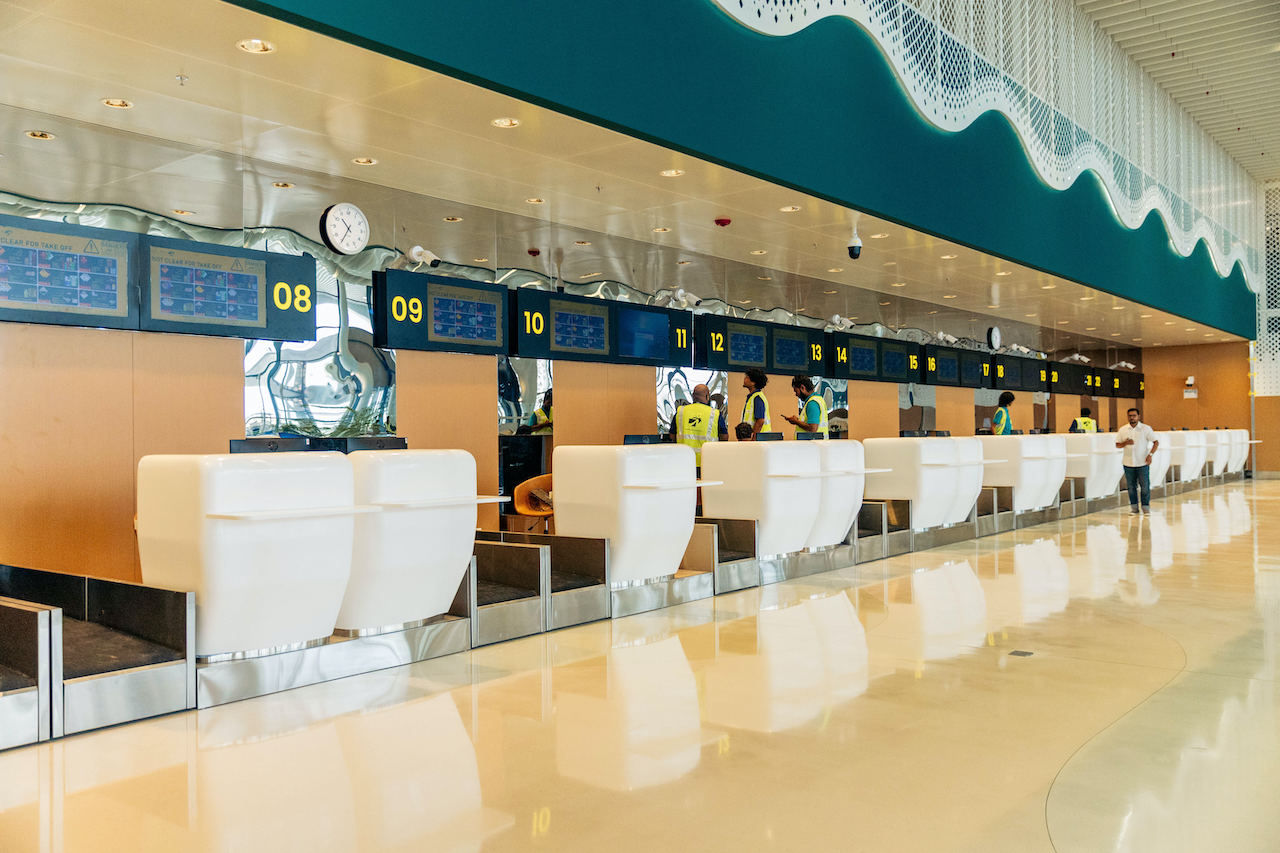
Nearly a decade and a billion dollars later, the Velana International Airport’s transformative new terminal opens on Saturday, a sprawling testament to the Maldives’ most expensive and complex infrastructure saga.
The lead-up to the partial opening on Independence Day – six years behind schedule and over US$ 100 million above budget – was marked by a three-way tussle to claim credit and cast blame, reopening an old political wound from over a decade ago.
The termination of the US$ 511 million GMR airport development deal in December 2012 cost US$ 60 billion to the economy, opposition Maldivian Democratic Party Chairman Fayyaz Ismail contended, calculating losses based on a counterfactual scenario where tourist arrivals and GDP would have doubled after the Indian infrastructure giant completed a new terminal in 2014 at no cost to taxpayers.
“This is the most foolish decision ever made by a Maldivian leader to date,” he declared.
The loans taken for airport development, which account for a large portion of the country’s debt burden, have “closed off the opportunity to raise finances to fulfil other essential needs of the Maldivian people,” he said.   

Blame game

Fayyaz laid the lion's share of the blame at the feet of former president Abdulla Yameen, who oversaw the arbitration settlement with GMR during his tenure from 2013 to 2018.
Yameen was happy to take responsibility. Then-president Dr Mohamed Waheed "had no role in GMR's eviction and compensation," he said at a rally of his People's National Front, claiming that Waheed and other government coalition leaders favoured renegotiation to proceed with the 25-year concession agreement.
According to Yameen's account of a 2012 meeting, when Waheed administration officials prepared to present revised financial projections, he intervened decisively: "I told them these figures can be fiddled by people and adjusted any way they want. That can't be done."
Yameen claimed he ultimately forced the termination after walking out of the meeting, and leveraging his Progressive Party of Maldives' parliamentary majority. Other leaders later advised Waheed to take back the airport, he said. 
"GMR knew the pulse of the Maldivian people very well," Yameen said. "There was no lack of patriotic leaders in the Maldives who didn't want to become enslaved, give away our main doorway to a foreign party, and keep the Maldives as just their satellite." 
Yameen accused the MDP government of relinquishing control over a critical and strategic national asset. "This is called inviting trouble," he said, describing India as a competitor who was "jealous" of the successful Maldivian tourism industry, and who might have even "diverted [flights] to Goa."
The dispute over the GMR contract cancelation eventually involved intense bilateral negotiations between the Maldivian and Indian governments, he said. 
Reclaiming the airport was worth the US$ 271 million that a Singapore tribunal awarded as damages to GMR, Yameen argued on the grounds of protecting sovereignty and national security. In contrast, MDP leaders "sell off" assets because they lack the foresight or the ability to generate revenue, he said.

Overshot deadlines

When Yameen came to power, a partially completed terminal infrastructure sat rusting on 60 hectares of reclaimed land. In lieu of continuing with GMR's 25 percent completed modernisation, his administration decided to start over entirely.
A new passenger terminal was awarded to the Saudi Bin Ladin Group in May 2016 at a reported cost of US$ 350 million – part of an ambitious expansion project that also involved the development of a Code F runway, fuel farm and cargo complex for more than US$ 370 million. 
Yameen acknowledged delays and cost overruns beyond the late 2019 completion date, noting in particular a dispute between the contractor and the Saudi Fund for Development.
Subsequent changes of administration brought new priorities and five different completion dates.
In recent interviews with local media, Ibrahim Shareef, managing director of the Maldives Airports Company Ltd, attributed the delays primarily to difficulties with arranging syndicate funding. The complexity of coordinating financing from four Arab development funds – Saudi, Kuwait, Abu Dhabi, and OPEC – created persistent payment delays, he said. Some of the Arab financiers refused to disburse lump sums to prevent misuse for other purposes, according to project insiders.
The contractor faced its own challenges. In 2016, the Bin Ladin Group was saddled with over US$ 30 billion in debt and laid off nearly 70,000 workers. A crane collapse at the Grand Mosque in Mecca in 2015 that killed 118 people led to the Saudi government suspending new contracts for the company.
In the Maldives, the company's inability to maintain consistent operations required government intervention and restructuring. Completion was pushed back further when the Covid-19 pandemic caused labour and supply disruptions. 
When the terminal fully opens in September, it will finally provide the Maldives with modern airport infrastructure befitting a luxury tourist destination, and capable of handling 7.5 million passengers annually (from 1.5 million at the existing terminal). It was built on 78,000 square metres and features an automated baggage system and 47 traditional counters in addition to multiple self-service kiosks. 
The airport company's 2024 audit showed US$ 430 million spent on the terminal by the end of last year, backed by loans from the Arab development agencies, and supplemented by extensive spending on electricity infrastructure, road networks, and other supporting facilities. A further US$ 17 million loan was obtained from the Saudi Fund this year. 
A history of the airport development saga:

19 October 1960

Hulhulé airstrip opens with runway made of slotted steel sheets.
First aircraft: Royal New Zealand Air Force Bristol Freighter lands.

10 April 1962

First commercial flight: Air Ceylon Avro 748 lands.

12 April 1966

President Ibrahim Nasir inaugurates Hulhulé airport opens with new asphalt runway.  
The runway construction began in May 1964 as a community effort led by the government and people of Malé. The capital's four wards competed for MVR 1,000 prize for fastest construction. Some 150 volunteers were enlisted and MVR 1,563.08 was donated.

9 October 1974

First Maldivian-owned aircraft lands.

11 November 1981

Inaugurated as international airport with new name "Malé International Airport."

1 January 1994

Maldives Airports Company Ltd (MACL) incorporated to operate and manage airport.

December 2006

First draft Master Plan compiled by Scott Wilson consultancy.
Key findings: Facilities inadequate for forecast growth to 6.1 million passengers by 2030.
Estimated development cost: US$ 658-825 million for three-phase development.
Revenue requirement: US$ 60 per departing passenger needed to finance development.
January 2008: Final Scott Wilson Master Plan submitted to MACL.
Limiting factors identified: Lack of taxiway, small apron space, low terminal capacity.
ICAO compliance issues: Inadequate runway-aircraft separation, security concerns.

11 November 2008

President Nasheed takes oath of office.
In December, the new MDP-led government requests expressions of interest for joint venture development. But by June 2009, there were no bids to buy a 49 percent stake of MACL.
The partial privatisation plan is abandoned. The International Finance Corporation (IFC), the World Bank's investment arm, is engaged as financial advisor in July 2009.
In December 2009, after approaching 21 firms, IFC recommends concession model. Eight firms shortlisted for competitive bidding. Six firms are qualified to submit final bids in January 2010.
Changes proposed by IFC and technical advisors Halcrow:

Reduce capital expenditure requirement by building a new terminal on the eastern side of the airport. 

Undertake aircraft pavement costs – runways, aprons and taxiways – for estimated $66.5 million. (Since Scott Wilson’s assessment found that the residual life of existing runway could be preserved for up to 20 years with substantial repairs, it would be poor value for money to build a new runway).

Scale down proposed terminal from IATA level C to level B and reduce size from 70,000 square metres to 45,000 square metres.

Total of terminal construction would be US$ 169 million, down from US$ 278 million in Scott Wilson plan.

Overall cost down to US$ 377 million from US$ 658 million.

Introduce a US$ 32 per passenger Airport Development Charge as a separate charge to airport service charge.

28 June 2010

GMR-Malaysia Airports Holdings Berhard selected from three evaluated bids.
The US$511 million, 25-year concession agreement is extendable to 35 years. Key provisions include a US$ 78 million initial payment and a US$ 25 Airport Development Charge (ADC) per passenger. 
In addition to constructing a new terminal and carrying out other capital improvements, GMR must pay an annual concession fee to MACL based partly on airport revenues, inclusive of a fixed US$ 1.5 million a year, 15 percent of revenue from fuel sales, and one percent of all other revenue (set to rise to 27 percent and 10 percent respectively after 2015).
Ibrahim Noordeen is replaced with Ibrahim Saleem as MACL chairman after refusing to sign a board resolution for the airport handover, citing inadequate time to study the GMR agreement. Two other board members are dismissed.  
Nasheed exercises veto power to delay ratification of legal changes requiring parliamentary approval to lease state assets. 

25 November 2010

Airport operation handed over to GMR Malé International Airport Limited (GMIAL).
Government revenue rises from average MVR 90 million annually (2006-2010) to MVR 1.3 billion. MACL profits increases from US$ 16.6 million to US$ 21.4 million.
Government earns revenue of MVR 687 million from GMR concession fees in 2011.
GMR earns U$ 26.1 million profit while paying $30.3 million to government.

8 December 2011

Judge Ali Rasheed Hussein declares ADC illegal under Airport Service Charges Act.
The civil court rules in favour of the Dhivehi Qaumee Party, which challenged the legality of the ADC as a tax requiring parliamentary approval.

22 December 2011

GMR requests compensation and permission to deduct ADC losses from concession fees.
Nasheed government issues letter on January 5, 2012 authorising fee adjustment.
The developer says 25 percent of planned refurbishments completed; 87 percent of land reclamation material dredged.

7 February 2012

President Nasheed resigns amid a violent police mutiny and Vice President Dr Mohamed Waheed assumes presidency with opposition coalition support.

19 April 2012

MACL declares January 5 letter was "issued without authority."
Government now pays GMR instead of receiving payments.
Government concession revenue drops 75 percent from US$ 25.4 million in 2011 to US$ 6.1 million in 2012. GMR deduction for ADC shortfall means government effectively subsidises GMR operations.

5 July 2012

GMR commences arbitration in Singapore under UNCITRAL Rules and claims declaration of right to adjust fees and compensation for lost revenue.

27 November 2012

Waheed government declares concession "void ab initio" (invalid from inception).
Seven-day eviction notice issued to GMR.

3 December 2012

Singapore High Court grants interim injunction protecting GMR's rights.

6 December 2012

Singapore Court of Appeal overturns injunction, allows termination to proceed.

7 December 2012

GMR is evicted and hands over airport operations to MACL as the largest foreign investment in Maldivian history is terminated.
The developer leaves behind boarded-up terminal sections and stalled upgrades.

17 June 2013

Anti-Corruption Commission finds no wrongdoing in GMR contract award.
ACC concludes government would have received US$ 534 million vs MACL earning US$ 254 million over 25 years.
December 2015
China's Beijing Urban Construction Group contracted for 3.4km runway, fuel farm, cargo complex with US$ 373.8 million from China EXIM Bank.

25 October 2016

GMR arbitration settlement: US$ 271 million compensation ordered by tribunal.
Central bank uses US$ 140 million from reserves to buy MACL bond. The company is unable to pay dividends in 2015 and 2016.

21 May 2016

Saudi Binladin Group awarded contract for completion in three years.
Construction halts ahead of 2018 presidential elections due to funding interruption.

27 June 2019 

Contract renewal with Saudi Binladin Group under new administration.
Design changes: New exterior modifications and upgraded specifications.
New completion target: May 2022.
MACL statement: "Fresh start" for the project.
December 2019
Foundation completion: 1,400+ piles installed for terminal foundation.
2020-2021:
Covid-19 supply chain disruption: Material lead times extend from two to four weeks to 12 to 16 weeks.
Chinese subcontractor difficulties: Severe operational challenges due to China's restrictions.
International travel restrictions limit skilled labor access.
Construction input costs increase 38.7 percent over pre-pandemic levels.

8 June 2022

President Solih admits shortfall: Original US$ 357 million insufficient for project scope Additional funding secured: US$ 104 million from Saudi Fund
Contractor dispute resolution: Claims Binladin-Chinese subcontractor conflict resolved
August 2022
Payment facilitation: US$ 25 million letter of credit from Bank of Maldives.
Root cause acknowledged: Middle Eastern fund payment delays.
October 2022
New US$ 55 million seaplane terminal opens.
New 3,400-meter code-F runway becomes operational.
Terminal delay continues: Completion pushed to December 2023.

17 November 2023

President Muizzu takes office criticising predecessor's timeline of July 2025.
Campaign promise: September 2024 completion.
First Muizzu revision: Completion pushed to July 2025.
Additional funding: US$ 100 million Saudi Fund + US$ 40 million Abu Dhabi Fund approved
Second Muizzu revision: Completion pushed to October 2025.
Airline Operators Committee recommends against premature opening, highlighting ongoing concerns about integration with existing airport infrastructure and comprehensive testing requirements.
Service roads connecting airport facilities yet to be commissioned. Recommendation for thorough testing and certification suggests industry recognition that technical readiness remains incomplete.
Third funding injection: Additional US$ 100 million Saudi Fund loan approved in July 2024.

23 July 2025

MACL Managing Director Ibrahim Shareef confirms that terminal will open with initial operations by the national carrier Maldivian airlines.
"Narrow-body" aircraft operations to begin first.
All 34 airlines serving Maldives to complete transition to new terminal by September 2025.
Modaliss Consultancy managing transition phases.
Each airline must complete safety audit before new terminal use.

Discussion

No comments yet. Be the first to share your thoughts!

No comments yet. Be the first to join the conversation!

Join the Conversation

Sign in to share your thoughts under an alias and take part in the discussion. Independent journalism thrives on open, respectful debate — your voice matters.

Support independent journalism