

Between myth and memory: Eagan Badeeu’s ‘Liminal’ at Gallery 350
Liminal is Badeeu’s first solo exhibition since ‘Lionfish and the Plastic Bag’, inspired by the myth of Koimalaa, the legendary first king of the Maldives.

Photo: Anoof Junaid
20 Sep 2025, 12:20
In a country as centralised as the Maldives, stepping into a private gallery nestled in the heart of Malé city is a rare privilege, reserved for those who carry a deep cultural awareness. If you know of Gallery 350, and more importantly, if you make the effort to attend its exhibitions regularly, you are part of a small circle who truly value the visions of the nation’s fine art pioneers.
The Maldivian art scene remains strikingly young, still striving to anchor itself not only on regional and global stages but even within its own shores. Recognising and appreciating the artists emerging here is, perhaps, the first step in shaping that identity. With only a handful of private galleries operating in the capital, expectations surrounding any solo exhibition by a Maldivian fine artist are naturally high.
It was with this anticipation that many, myself included, awaited the announcement of ‘Liminal’. A solo exhibition by one of the country’s leading contemporary artists, Eagan Badeeu, the show promised a body of work that demanded attention - and it did not disappoint.
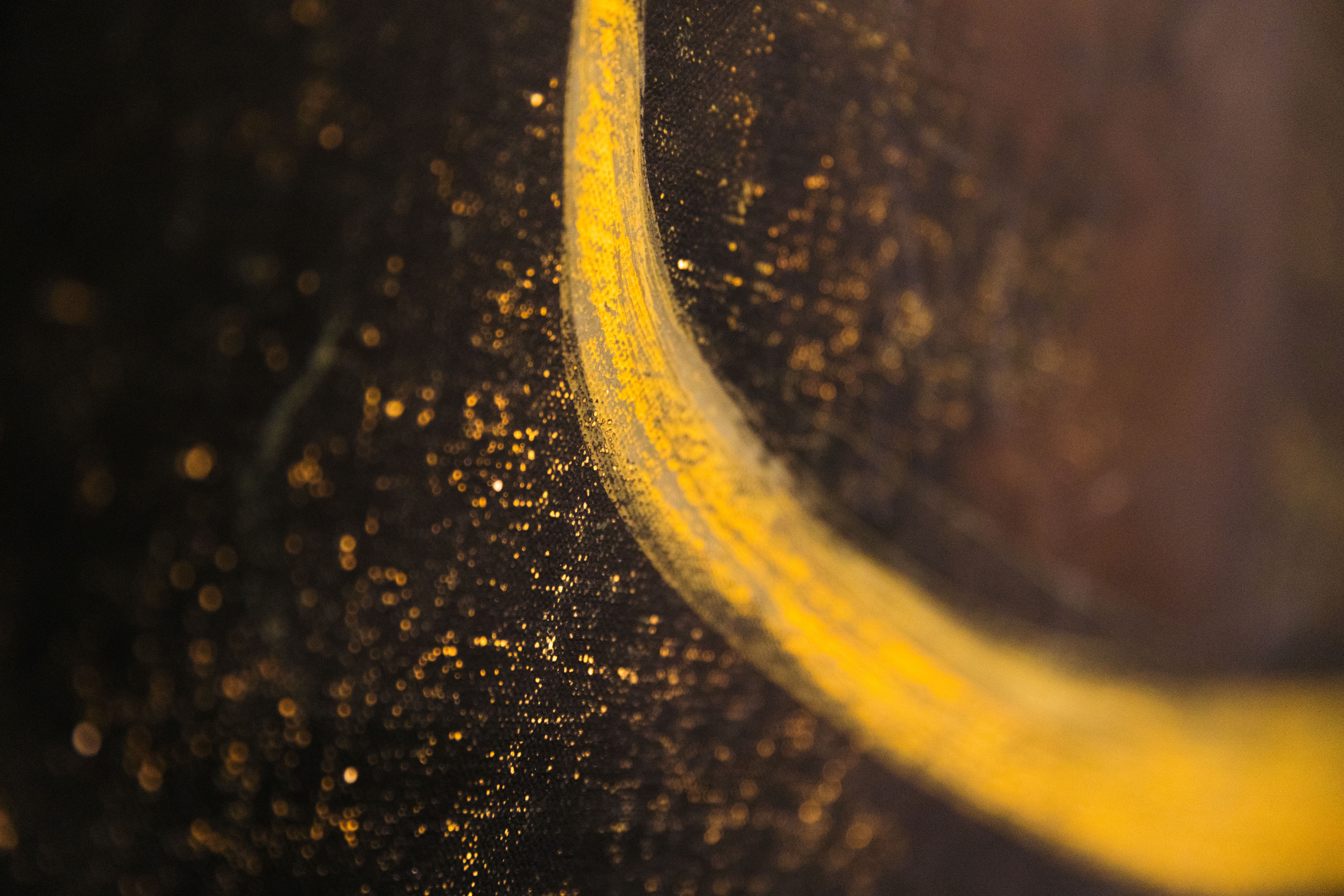
At first glance, the canvases - washed in acrylic with ochre hues and marked by bold, moody strokes - evoked nostalgia and warmth, reminiscent of firelight or a fading sunset. Yet, as I lingered before each piece, absorbing the silences between them, a deeper complexity emerged. Beneath the warmth lay tension: hope intertwined with unease, freedom shadowed by grimness. It felt as though Badeeu had deliberately cloaked darker truths beneath familiar colors, drawing viewers into a labyrinth of figurative abstraction and unanswered questions.
‘Liminal’ marks Badeeu’s first solo exhibition since ‘Lionfish and the Plastic Bag’ (2019) at the National Art Gallery. This time, his inspiration stems from the myth of Koimalaa, the legendary first king of the Maldives.
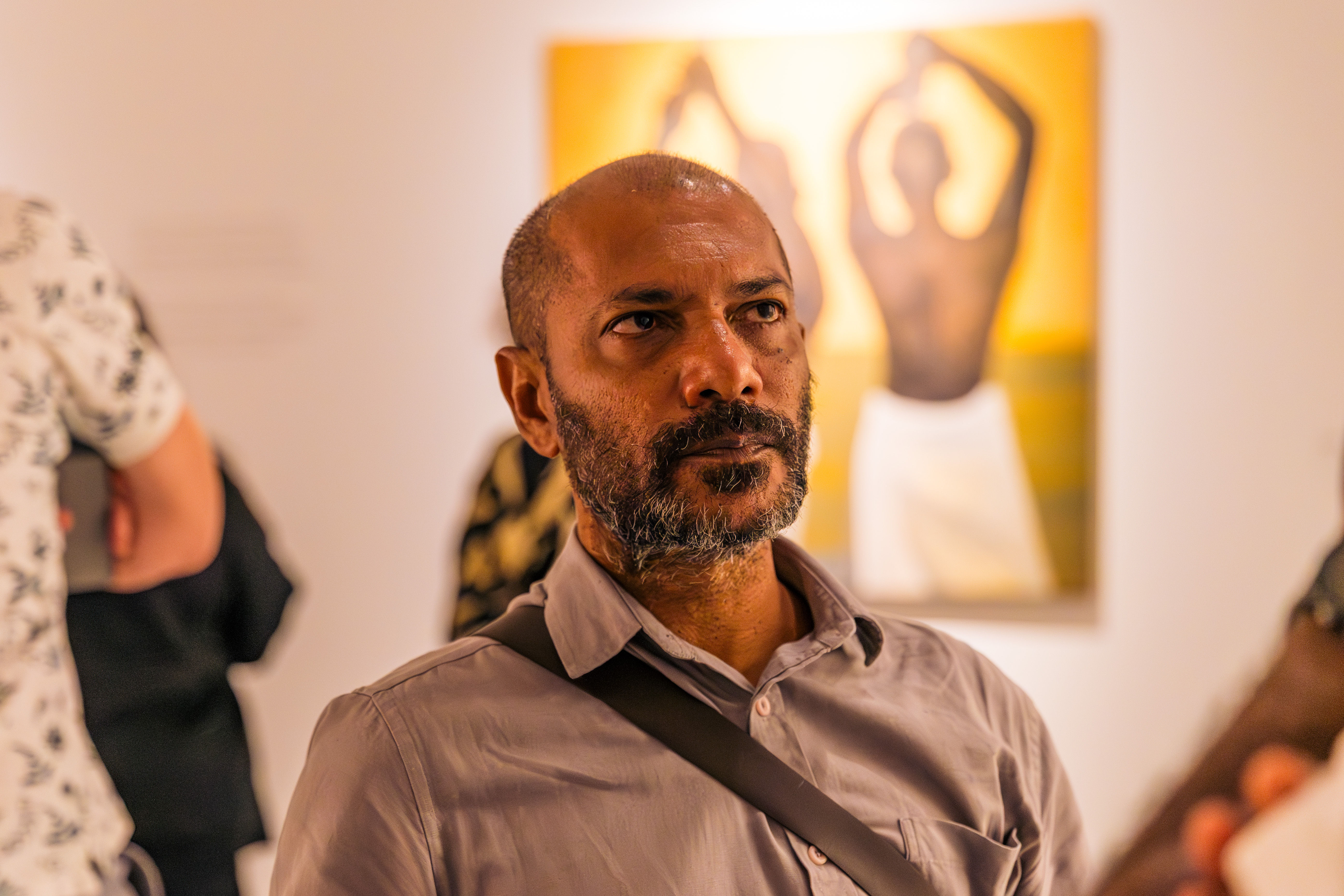
“I wanted to explore the myth of Koimalaa,” Eagan explained, his reinterpretation shedding fresh light on one of the country’s most romanticised tales of origin and royalty.
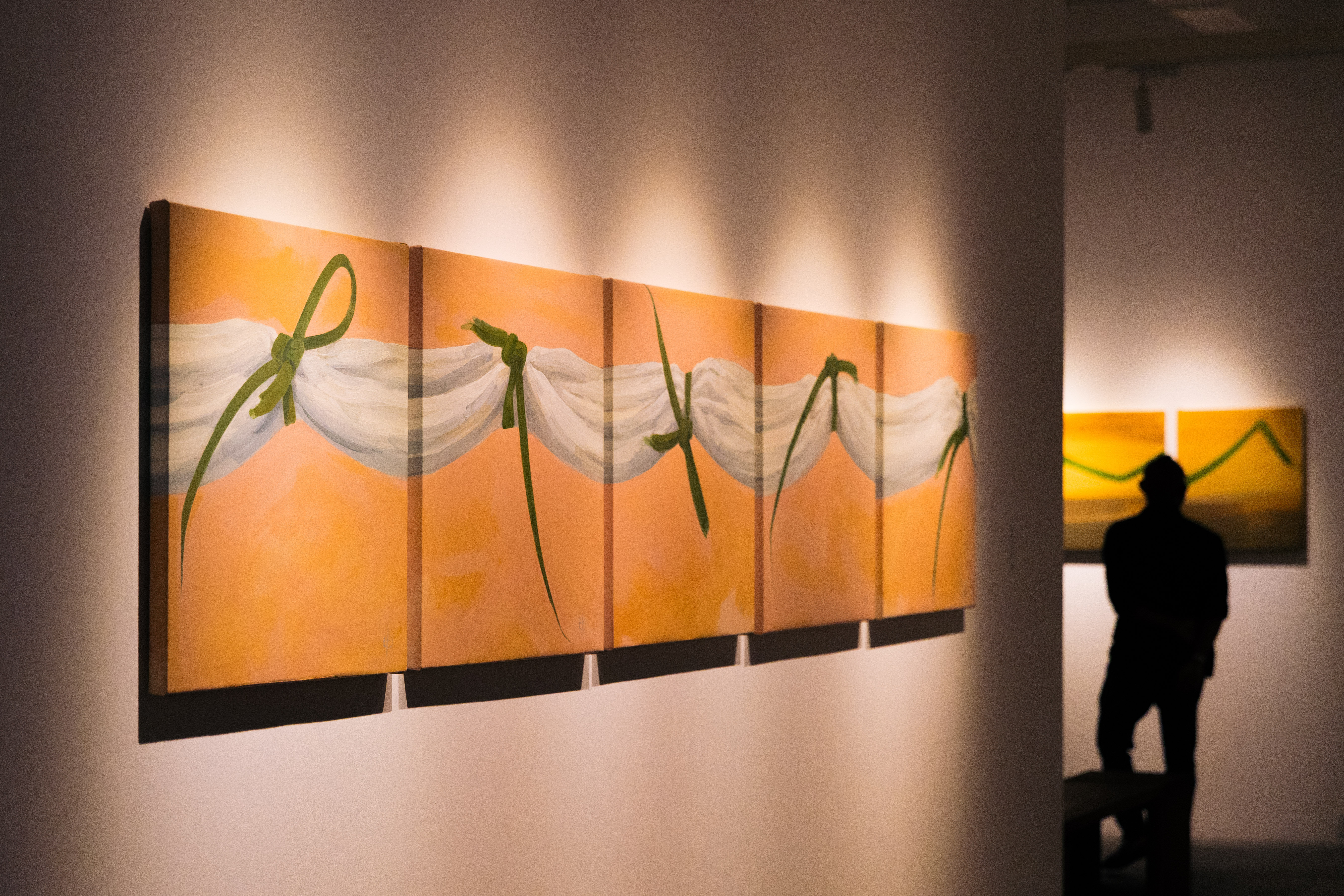
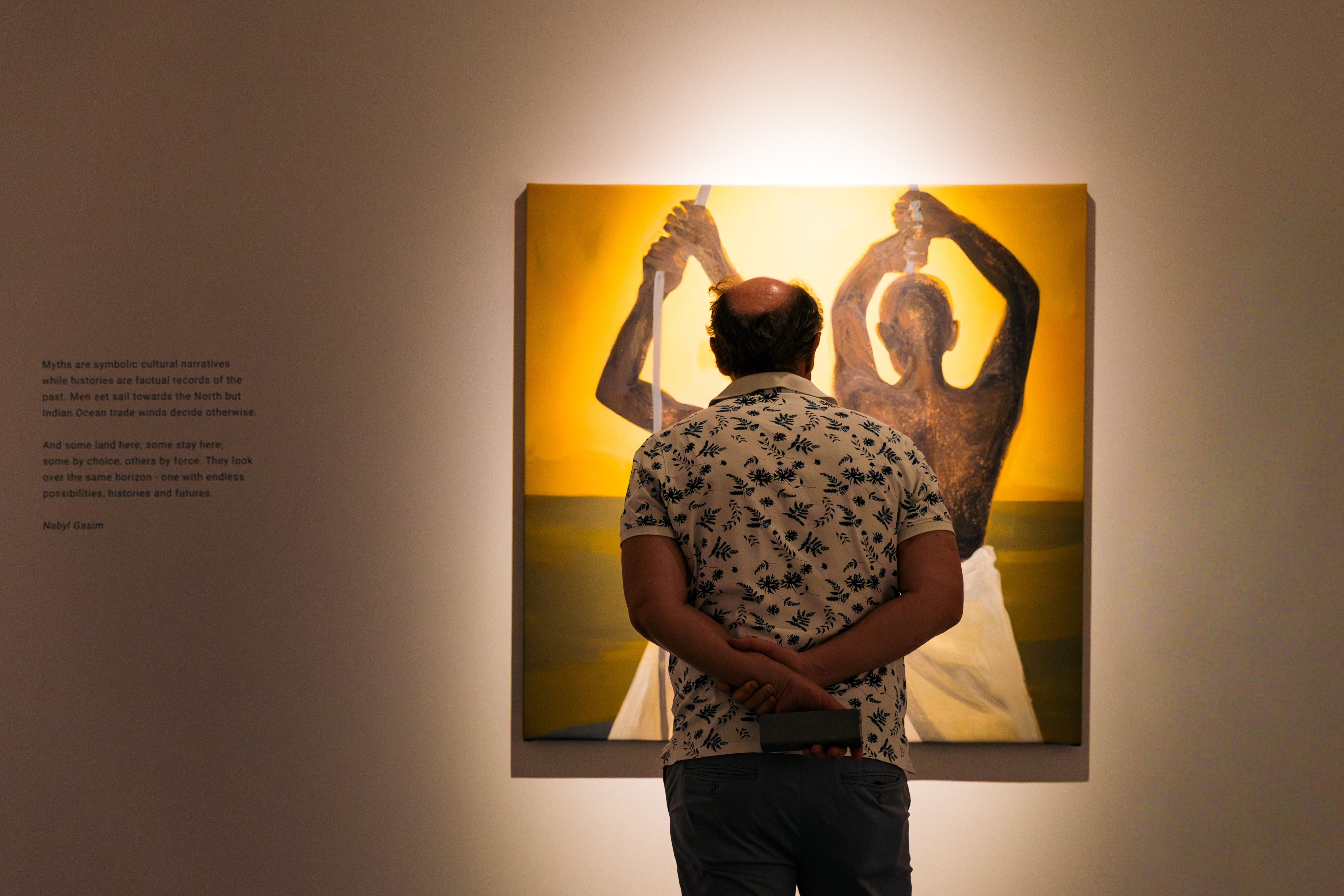
Among the standout works was the ‘Pinnule’ series - four canvases that served as one of the exhibition’s key foundations. Together, they opened up new ways of questioning the layers of myth, memory, and identity.
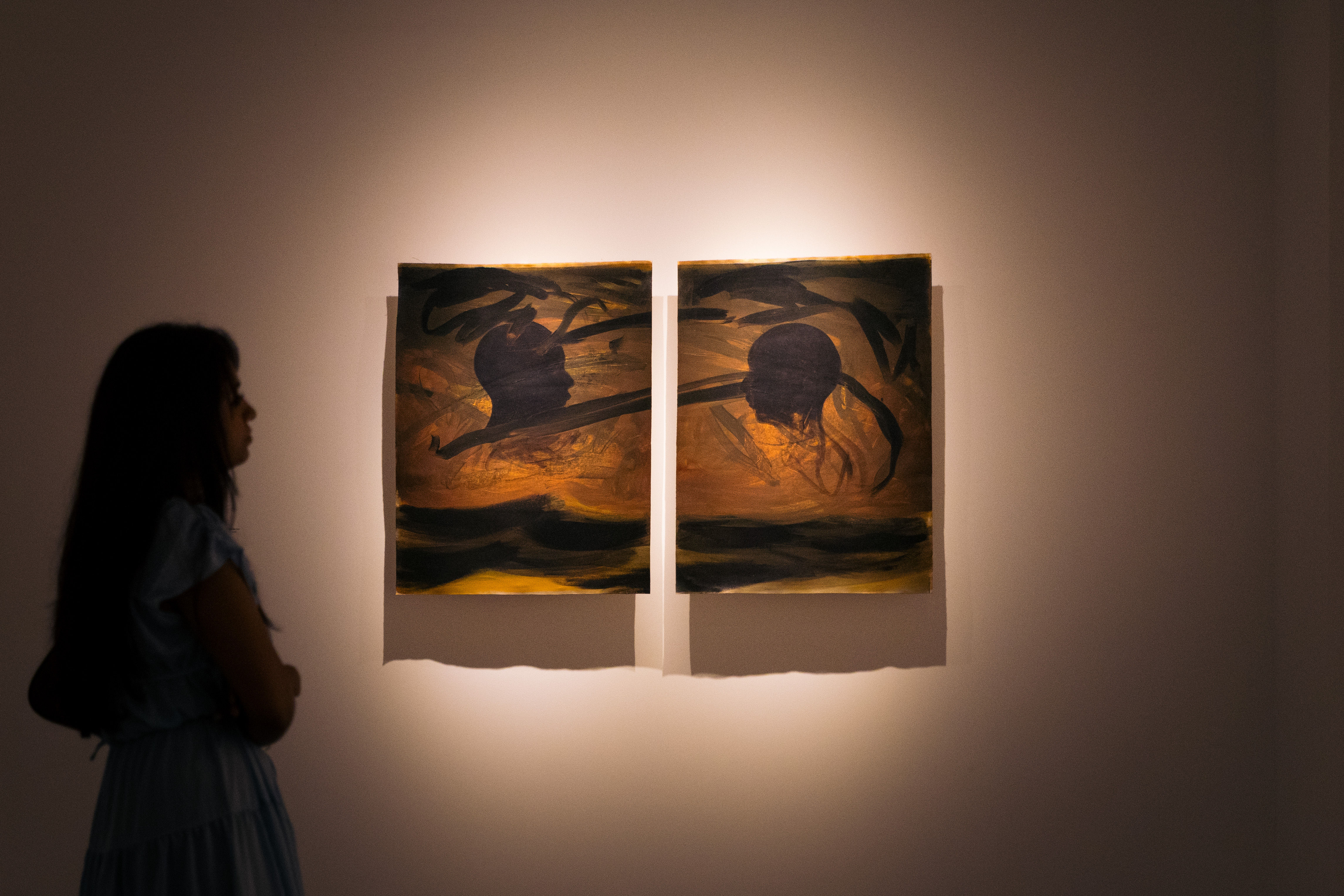
The green coconut palm leaf tied tightly around white sails in ‘Pinnule’ first appears in its fresh form, but in other works - such as ‘Skin and Awakening’, exhibited as a diptych - it morphs into a dark shadow. Historically, the coconut palm leaf has held an essential place in Maldivian life, serving both practical and decorative roles: from thatched roofs to toys and ornaments, such as the green birds fashioned during Eid for Bodu Maali festivities. Badeeu employs the leaf symbolically, representing the bird that, according to legend, guided Lord Koimala to the island that later became Dhoonidhoo. The irony is stark: an island once symbolic of hope and new beginnings now serves as a prison, a place marked by political detentions and stories of torture.
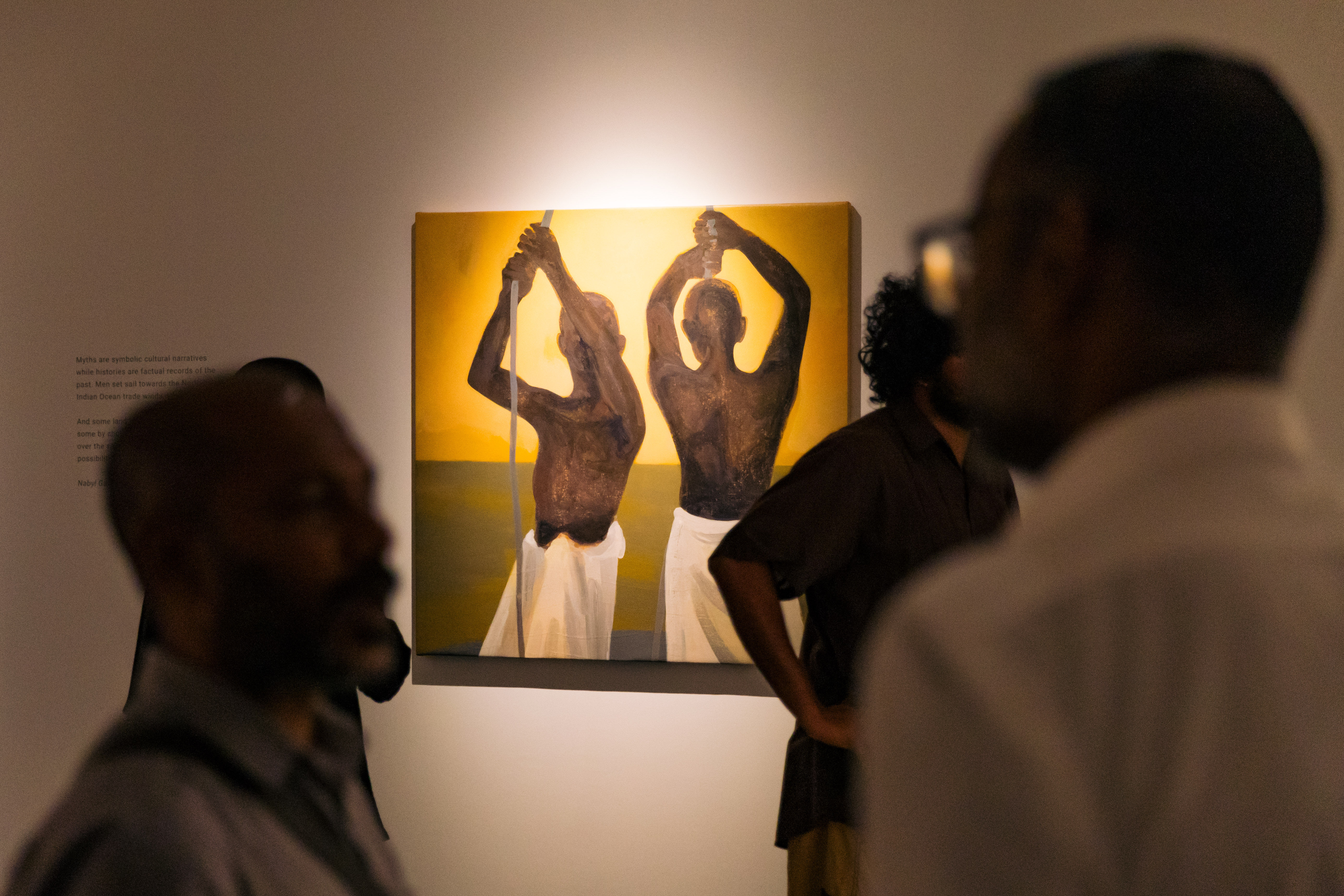
One of the most thought-provoking works was ‘Skin and Sky’, a two-panel composition that seemed to stage a dialogue between its halves, adding to its conceptual depth. Perhaps these panels evoke the slaves of the Indian Ocean trade who manned Koimala’s ship; the unsung heroes of his voyage, their toil erased from history. Koimala himself, according to legend, wiped out the indigenous people of the neighboring islands who were invited to Rasgetheemu for a feast, a brutal act that secured his sovereignty over the fragile archipelago. Was it cruelty, or the desperate price of kingship?
“Unfortunately, a lot of younger people are clueless about the Koimalaa story,” Eagan observed, his tone tinged with grief. His work seeks to bridge that gap, reviving a cultural narrative through a deeply personal lens.
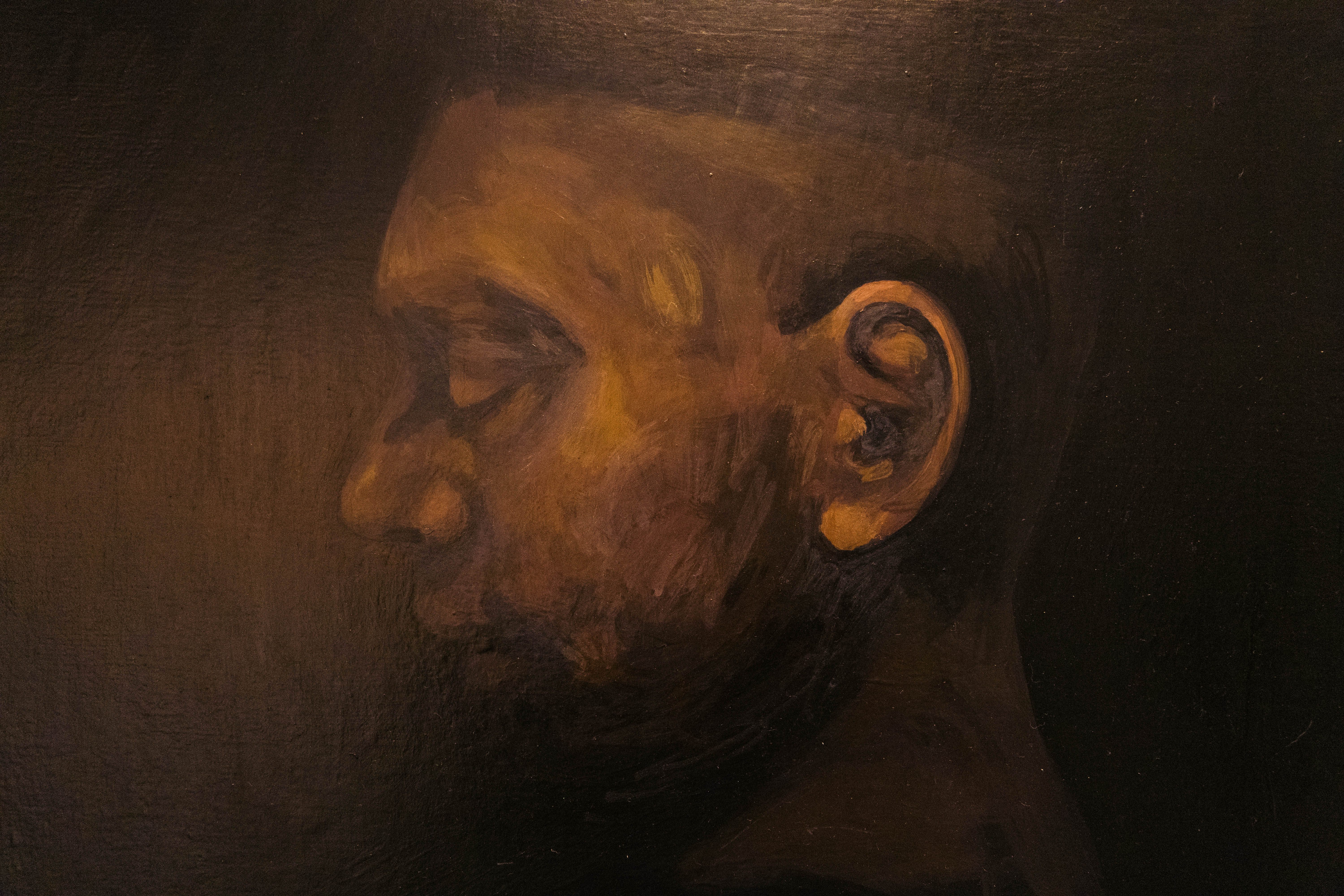
Badeeu resists glorifying the celebrated king of myth. Instead, he turns his gaze to the unnamed: the slaves, the laborers, the forgotten hands who built the myth’s foundation. The loose, untied palm leaves fluttering in his paintings might symbolise their yearning for freedom - the dream of the commoner. In one haunting portrait, an old man, dimly lit as if in the gallows of a ship, seems lost in such a dream. New beginnings are possible, Badeeu suggests, but always at a cost. Would those slaves ever taste the freedom mythically bestowed upon a king?
Leaving the exhibition, I found myself wanting more - wishing Badeeu had extended the concept further. Yet perhaps this longing is deliberate, a call to continue seeking.
Discussion
No comments yet. Be the first to share your thoughts!
No comments yet. Be the first to join the conversation!
Join the Conversation
Sign in to share your thoughts under an alias and take part in the discussion. Independent journalism thrives on open, respectful debate — your voice matters.
Support Independent Journalism
Help us keep the news free and fearless
Give once
$
or
Become a memberfrom $5/month

