

"We knew it was a scam": why thousands joined the GMCE pyramid scheme anyway
US$ 11 million moved through 10 digital wallets.
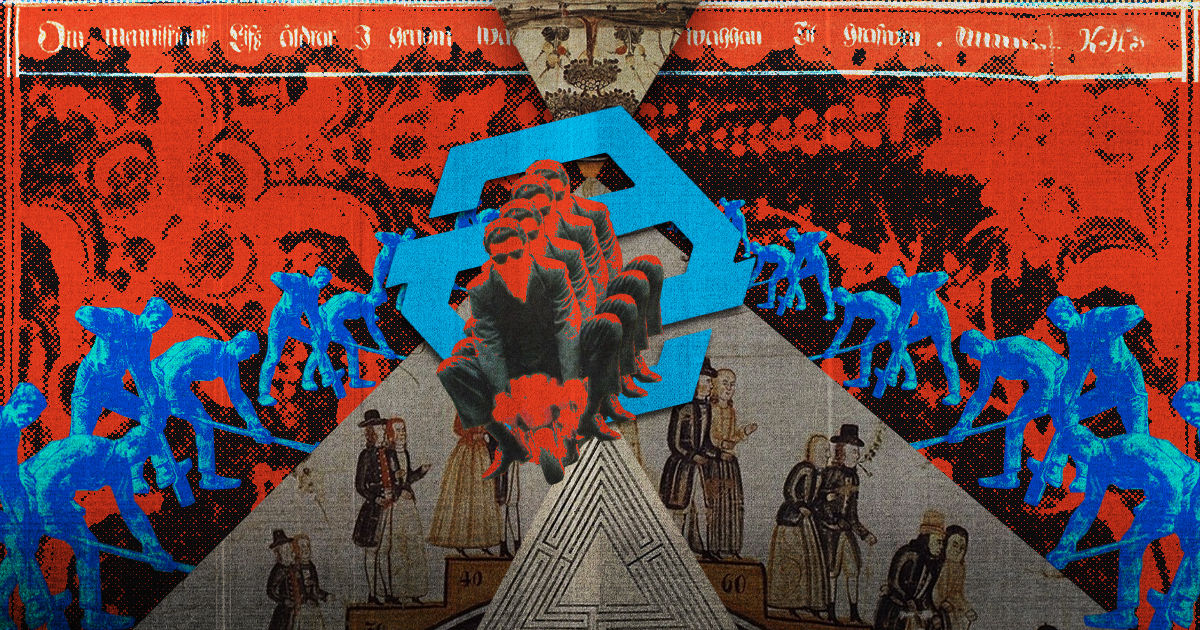
Artwork: Dosain
08 Jul 2025, 12:38
Who doesn’t want to get rich quick?
In just a few months, US$ 11 million in cryptocurrency flowed through a handful of digital wallets as thousands of Maldivians chased daily returns of two percent. The promise was simple: let artificial intelligence trade for you. The reality was simpler: it was the oldest scam in the book.
The collapse of the Gemcue or GMCE investment scheme in mid-June after the police flagged it as a pyramid scheme left at least 7,000 investors facing losses of up to US$ 3 million. More than 50,000 people – nearly a quarter of adult Maldivians – including police officers and lawmakers, were believed to have been ensnared over the past year.
The scheme
Invest your money in AI-powered trading of the USDT cryptocurrency (a digital token pegged to the US dollar). The returns could exceed two percent if you bring in more people to invest. The more people you recruit, the higher your level – eventually rising through the ranks to become a leader on the platform.
Investors did not need to do anything, except click through a basic grid, which expands based on the level of seniority. The scheme used "grid trading" as a buzzword to lure people who believed their investment was being managed by automated bots buying and selling USDT on cryptocurrency exchanges.
Grid trading is real. It utilises bots to trade within predetermined prices in a grid-like structure, selling when prices go up and buying when it goes down. This strategy is used with limited manual intervention to profit from market volatility.
However, in the case of Gemcue, the grid was all smoke and mirrors.
It is a classic tactic that is becoming common in crypto scams, according to CoinLaw. Scammers cloak old-school pyramid schemes in new crypto and tech jargon to create the illusion of a cutting-edge opportunity.
The target
Ahmed Naushad, who works in a resort in the south of Maldives, first heard about the GMCE scheme through friends.
"Some of my old friends told me about it when I was home for vacation in February. There was a lot of excitement because by then, some of them had doubled or even tripled the money they had invested," he said.
The gains his friends showed were still in their accounts on the GMCE web app. But they were spending extravagantly. "They thought they had money now. All of them put in money every month and it kept increasing," Naushad said.
Drawn by the allure of cryptocurrency riches, Naushad decided to invest a few hundred dollars.
One of the people who showed off this newfound wealth was an older neighbour, a "leader" in the scheme, according to Naushad, although what that meant wasn't entirely clear.
"I don't think anything of it really. I think he also got scammed," he said, when asked about the neighbour's affiliation with the operators of the Gemcue scheme.
"He used to spend big. Paying for everyone's coffees and smokes – even food without a care or complaint. He also sponsored some events like a football competition to promote the scheme."
The recruiter
Investors in the scheme who talked to the Maldives Independent thought everyone was a victim of the scam – a "mark" in con artist terminology.
"The actual people behind this, I don't think they will put their names and faces on it. Everyone that has been identified through the telegram group or whatever were also scammed," an investor said.
Naushad's neighbour refused to answer questions when called by the Maldives Independent. "I don't know anything. I have become a joke in my community because of this," he said before abruptly hanging up.
One investor claimed she knew it was a pyramid scheme and so only put in US$ 100. "I managed to transfer that US$ 100 back to my wallet before it came crashing down. But the profit I had made was lost," she said.
Another investor, who was drawn by the hype and went on to recruit 20 people, echoed the sentiment about people knowingly participating. "We are not [expletive] idiots. We also know it is a scam. But while it is going around, why not make some money?" he told the Maldives Independent.
He ended up losing US$ 6,000. Half of the money was his initial investment. The rest was the "profit."
He blamed the police and the government.
"They would not have exited so quickly if the police had just let us be. What is their problem? Why can't they go after actual thieves?" he said.
Naushad also ended up losing his US$ 500 investment along with any gains he made.
The rug pull
On June 15, the police and the Capital Market Development Authority issued a joint warning confirming GMCE as a pyramid scheme, based on collaboration with international partners.
As soon as the news broke, GMCE announced mind-boggling investment opportunities to double, triple and even earn a fivefold return on an initial investment of USDT 117.
According to USDT traders, sales spiked during those last few days with many people buying exactly USDT 117.
When complaints mounted from angry investors unable to withdraw USDT from their accounts, organisers at first appealed for calm and claimed the problem was related to a regulatory process by the US Treasury Department. But a letter that was posted was soon found to be fraudulent. It bore the signature of a fictitious official and the seal of the Securities and Exchange Commission, despite a header from the Treasury Department’s Financial Crimes Enforcement Centre.
A subsequent announcement on the GMCE's 42,000-member Telegram channel confirmed the scam.
"There has been no reply from the marketing department of GMCE. I have lost hope," an admin of the Telegram group posted on the evening of June 21, advertising a new "safe and reliable" trading platform called Quantpan.
The money
A Maldivian USDT trader explained the money trail to the Maldives Independent.
A tech professional by trade who moonlighted buying and selling USDT, he took an interest in GMCE after requests to buy USDT in the Maldives soared over the past several months.
"At some point USDT was selling higher, much higher than the actual [black market] US dollar rates," he said, referring to rates as high as MVR 23 (well above the parallel market rate of about MVR 17.50 per dollar).
"I told friends and family that this was a scam. You can't make that sort of profit by trading USDT. It is a stable coin that is tethered to the US dollar and backed one-to-one against US dollar. There are no margins to make two percent profit like this. It is bullshit," he said.
He started following the money trail after the police warning in mid-June.
"From what I noticed, most if not all the money went to around 10 different wallets. The amounts coming into these accounts are small denominations. From there it is transferred to four wallets," he said.
More than USDT 11 million circulated among these wallets, he found. "That does not necessarily mean it is just from the GMCE scam. We are talking about total assets," he noted.
Discussion
No comments yet. Be the first to share your thoughts!
No comments yet. Be the first to join the conversation!
Join the Conversation
Sign in to share your thoughts under an alias and take part in the discussion. Independent journalism thrives on open, respectful debate — your voice matters.
Support Independent Journalism
Help us keep the news free and fearless
Give once
$
or
Become a memberfrom $5/month