
Society

Fuvahmulah left without water after years of inaction on known leaks

Authorities knew since 2020, but residents were kept uninformed.
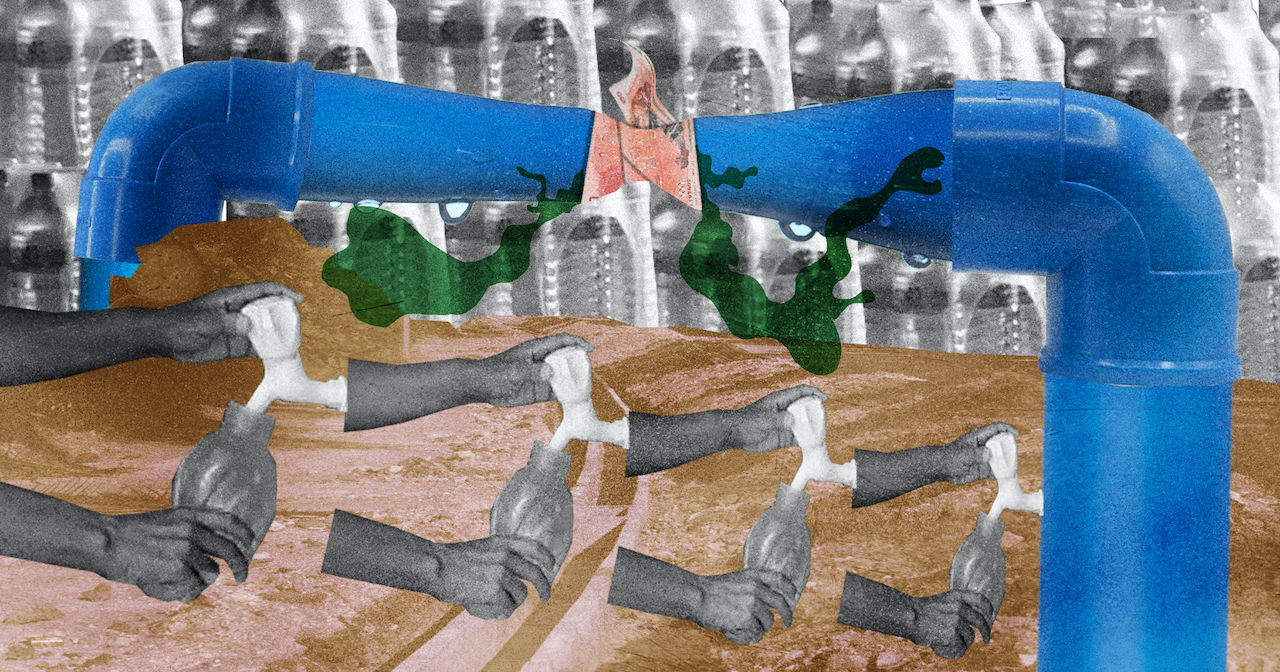
Artwork: Dosain

Artwork: Dosain

12 Nov, 7:55 PM
Fuvahmulah's water pipes have been dangerously compromised for at least four years. It took a public health emergency to finally force action. On Monday afternoon, the state-owned utility cut off the supply, leaving the country's third most populous island without water for more than 48 hours.  
Health and regulatory bodies have been worried about suspected but unreported leakages for years, a senior official from a government agency told the Maldives Independent
“We've known network leaks have been there since 2020 and have been trying to get it fixed,” the source revealed on the condition of anonymity.
The authorities were alerted to possible contamination more than three weeks ago, after which the Health Protection Agency held meetings with the hospital and the Fuvahmulah City Council. The Utility Regulatory Authority then inspected the network. A water sample taken last week and tested in Malé confirmed that it was unsafe for use.
"A high dose of chlorine is being injected to clean the water network," the Fenaka Corporation – a bloated and scandal-ridden state-owned company that provides electricity and sewerage services to most islands outside the Greater Malé Region –announced before cutting off the water supply at 1pm on Monday. 
Restoration could take two days, Fenaka's local branch told the city council at an emergency meeting on Monday night.
Based on instructions from both the HPA and the Food and Drug Authority, Fenaka has since “disinfected the entire pipeline in accordance with the determined standards, cleaned and flushed out the tanks, and now started work on producing water,” Heena Waleed, the president’s spokeswoman tweeted at 2:51pm on Tuesday.
The water supply would resume “within the next six hours or so,” she assured. However, the service was yet to be fully restored at the time of publication on Wednesday night.  
Fenaka acknowledged leakages on Wednesday morning, announcing it would restore supply to some areas after 12pm to "identify water network leaks". The water should not be used for drinking, cooking or bathing, the utility warned.

Built to fail

Fuvahmulah Deputy Mayor Mohamed Fikury raised concerns about the rushed restoration. High-dose chlorine used to disinfect contaminated pipes requires the water to be flushed multiple times before it's safe for use, he told the Maldives Independent on Wednesday afternoon.
"If water with high chlorine is released to the public for drinking or showering, it will affect people's health," he warned. Fenaka's warning against using the water during the tests came at the council's behest, he noted. 
According to Fikury, the water system has been plagued by critical failures. The island's aging desalination plants lack the capacity to meet demand. Spare parts for the old models are no longer available. One of the three plants recently broke down, Fikury said.
Major leakages have been identified in the supply pipes. Cross-connections in the network have meanwhile allowed contaminated well water – unsafe for consumption – to enter the drinking supply.
Inadequate water pressure compounds the problem. The network operates at one bar of pressure, but at least two bars would be needed to minimise contamination entering through the leaks, Fikury explained. But the old plants lack the capacity to produce water at the required pressure.
The council has been aware of systemic problems since road construction in 2019 revealed severe leakages. The previous administration brought in water detectors and attempted repairs, Fikury said. But the underlying problems remained unaddressed. The water system installed in 2013 had been "laid out very carelessly" with improper joints and substandard materials, and "no work has been done to maintain health standards or guarantee security."
He called the 2013 work a "cheated project," describing how contractors cut corners on pipe connections and did not use proper joints. 
The council noticed water quality issues two to three months ago. But Fuvahmulah lacks testing facilities, he said. When the Utility Regulatory Authority's team arrived in early November to test the water, the council requested the results but has not officially received them, Fikury said.
But the council learned from various sources that "the water has been contaminated to dangerous levels," which prompted the HPA's orders for the disinfection and chlorine cleanse. 
On the day that the water supply was cut off, the Utility Regulatory Authority sent a letter to Fenaka with explicit warnings. The URA ordered Fenaka to repair the damaged water plant, restore a non-functioning borehole, fix the damaged storage tank, identify and repair all network leakages, and eliminate cross-connections.
"Failure to promptly address the aforementioned issues will compromise the safety of the water supply for Fuvahmulah residents and is highly likely to result in a complete disconnection of water services," reads the letter circulating on social media and verified as authentic by the Maldives Independent.
The council has not received an update since Fenaka started producing water and testing earlier on Wednesday, Fikury said. A lasting solution would require at least one new plant with the capacity to produce 1,500 tons, up from 500 tons at present, the deputy mayor stressed.    
Fikury himself has been using mineral water for drinking and cooking since 2020. "For showering, if there are less issues we do use [the supply]," he said. "Even when we use that water we filter it before using it." Neither groundwater nor well water was safe, he noted, adding that 95 percent of the public had stopped using wells after the water supply was established. 
While leading citizens and heads of institutions in Fuvahmulah knew about the water quality concerns, most residents remained unaware of the extent of the problem, Fikury said.
The council raised the issue with President Dr Mohamed Muizzu when he visited Fuvahmulah on November 4, reiterating the same concerns shared during a 2024 trip. Fikury said the president echoed the response of all other government agencies: "We're looking into it, we're taking action."
Fenaka has since assured the council that "moving forward, they will make arrangements for testing through Addu atoll to test once a week," he said. 
The Maldives Independent was awaiting responses from both Fenaka and HPA at the time of publication.

Contamination’s toll

Fuvahmulah is home to a resident population of about 10,000 people. In recent years, the southern atoll has become globally renowned as a tourism hotspot for diving with tiger sharks. 
There are more than 100 tourists in Fuvahmulah at present, the deputy mayor estimated. Guesthouses have also been managing with bottled water, he said. 
Long queues stretched outside the Maldives National Defence Force headquarters when the army began distributing bottled water on Monday afternoon. As residents scrambled to stock up, 2,800 cases of bottled water were flown or transported by sea on Tuesday.
The relief effort has been marred by poor coordination, according to Fikury. The central government has excluded the city council from the response despite its "high capacity and experience" in distribution, he said. The MNDF and the local government ministry's office have been handling operations, leading to "repetition, clashes, delays and inefficiency."
"The complaints are piling up and coming to us as their elected representatives," Fikury said. The council is now considering using its own budget to send teams door-to-door to assess household needs and to distribute bottled water.
As the water crisis entered its third day, a demonstration took place late on Wednesday afternoon. 
“The people of the Maldives aren't aware of this but over the past two months Fuvahmulah residents have been in a diseased state because of drinking water that's not accepted by WHO standards," a protester said. "Children and adults have been getting diarrhoea, people are getting allergies and skin problems. This is not what the people of Fuvahmulah deserve." 
Fikury said there were outbreaks of diarrhoea over the past three months, "but not to an extent the hospital cannot cope." There were cases of intestinal issues as well that were identified as dysentery, he added.  
The Fuvahmulah hospital’s secretary general confirmed a spike in cases of diarrhoea and vomiting cases in October. "But it has since subsided,” she told the Maldives Independent on Tuesday.
However, rumours have swirled about illnesses caused by contaminated water since the supply was cut off, a Fuvahmulah resident told the Maldives Independent. "Teachers have reported children having stomachaches but assumed it was just carelessness," he said.
“A lot of people have been getting sick for over three months now. Even my kid and relatives have been getting sick. We were told it's a viral fever, and a lot of people still have not recovered. We have also been tasting that the water is a bit salty," a woman from Fuvahmulah said.
The URA's November 10 letter to Fenaka included the following instructions:

Repair and restore full operational capacity to the damaged water plant.

Restore and commission the damaged borehole (Bore holes are a pipe drilled into the ground for a depth of about 30 metres to pump sea water for desalination. Each island is required to have at least two bore holes, in case there is a problem with one. One of the bore holes in Fuvahmulah was not functioning properly).

Repair the damaged water storage tank and return it to active service.

Conduct an assessment to identify, characterise, and repair all sources of leakage within the water network system.

Identify households that have done cross connections and rectify it (cross connections occur when households connect their groundwater pipes and supply water pipes to the same household network, which can cause groundwater to leak into the main network).

Ensure all water supplied to Fuvahmulah residents can be tested according to the quality guidelines established by the authority.

Prepare a proposal and actionable workplan for upgrading the network capacity to support increasing population demand.

Discussion

No comments yet. Be the first to share your thoughts!

No comments yet. Be the first to join the conversation!

Join the Conversation

Sign in to share your thoughts under an alias and take part in the discussion. Independent journalism thrives on open, respectful debate — your voice matters.

Support independent journalism