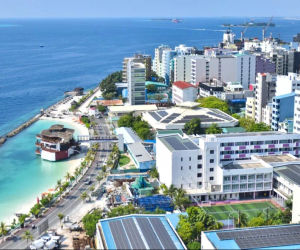

A nature house in Villingili, before the bridge changes everything
Veshige wants to reconnect a generation with nature.
Artwork: Dosain
11 Apr, 10:01
The hirundhu trees in Villingili attract a colourful orange bug, Dhon Moosa, that quite a few children haven't seen. Especially if they come from Malé.
I tell them that my mother calls the bugs 'hirundhu dhooni'.
"Oh, that's interesting," says Inasha Afeef, co-founder of Veshige (Nature House). "I've heard that people from certain atolls call them Hirundhu Kamana [kamana meaning lady or woman]. It shows how rich our language is in some ways."
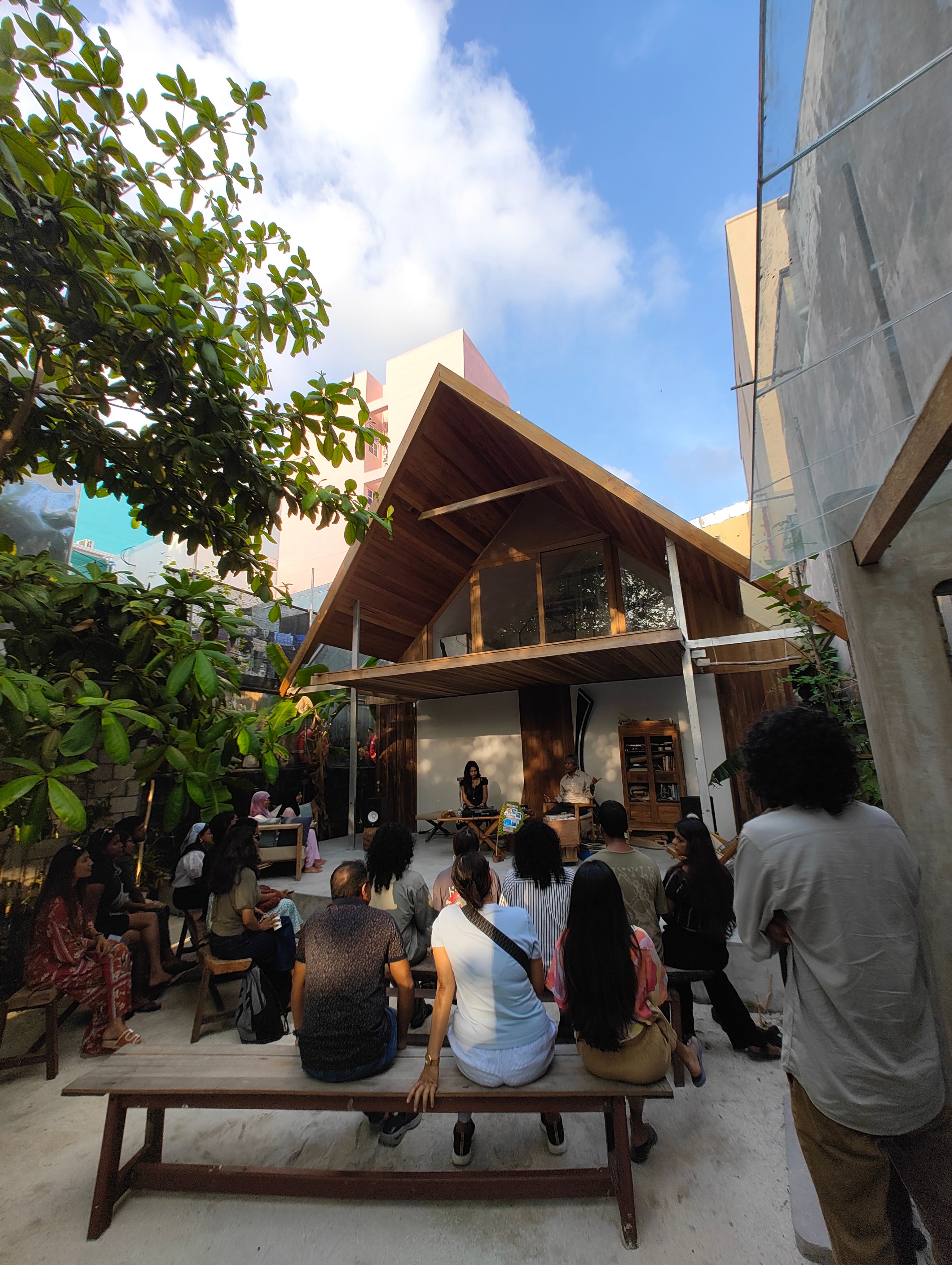
It's late afternoon. Everyone's tuned out of their phones and tuned in to the sound of music over the crackle of vinyl. Right now, it's a track by Mark Knopfler, his glittering guitar like flashes of sun seen through the leaves. A moment made memory by the mingling of human artistry and nature. That's my first experience of Veshige in Villingili. If first impressions matter, I don't see how they can be better.
Think of Veshige as a space that requires a deliberate distancing from our routines, calling for an intentional movement towards 'qudrath' or 'veshi'. It means slowing down and listening to bird calls, feeling the soil, watching the play of light on the sea. In a world of permanent distraction, it asks that you be present. And it wants to foster a community based on the values of a '1970s Dhivehi Raajje,' when, they believe, we were largely harmonious with our natural environment.
The crew at Veshige aren't new to community building. Co-founders Ina, Moosa Manik, and Zeeban Saeed were part of a project called FoiyGaadiyaa some years earlier. This humble book cart was based in a public space in Hulhumale Beach and self-regulated by the community, avoiding red tape.
The FoiyGaadiyaa community was based on values that we've practised for centuries. It's the same set of values at work in groups collecting coconuts on islands – a coconut on the ground with a ring drawn around it signals that it's been claimed, the gatherers will leave it alone.
Eventually, the trio founded Children of Maldives, an NGO that brought children together to read and enjoy activities out by the beach. The children themselves supported their little community, helping raise funds to expand FoiyGaadiyaa's collection by selling lemonade.
The three bring these experiences to Veshige, knowing that communities sharing similar values can be cultivated and nurtured. As Ina says, we protect what we love.
Broadly speaking, Veshige conducts two types of activities – the most crucial being 'MoodhuFilaa.'
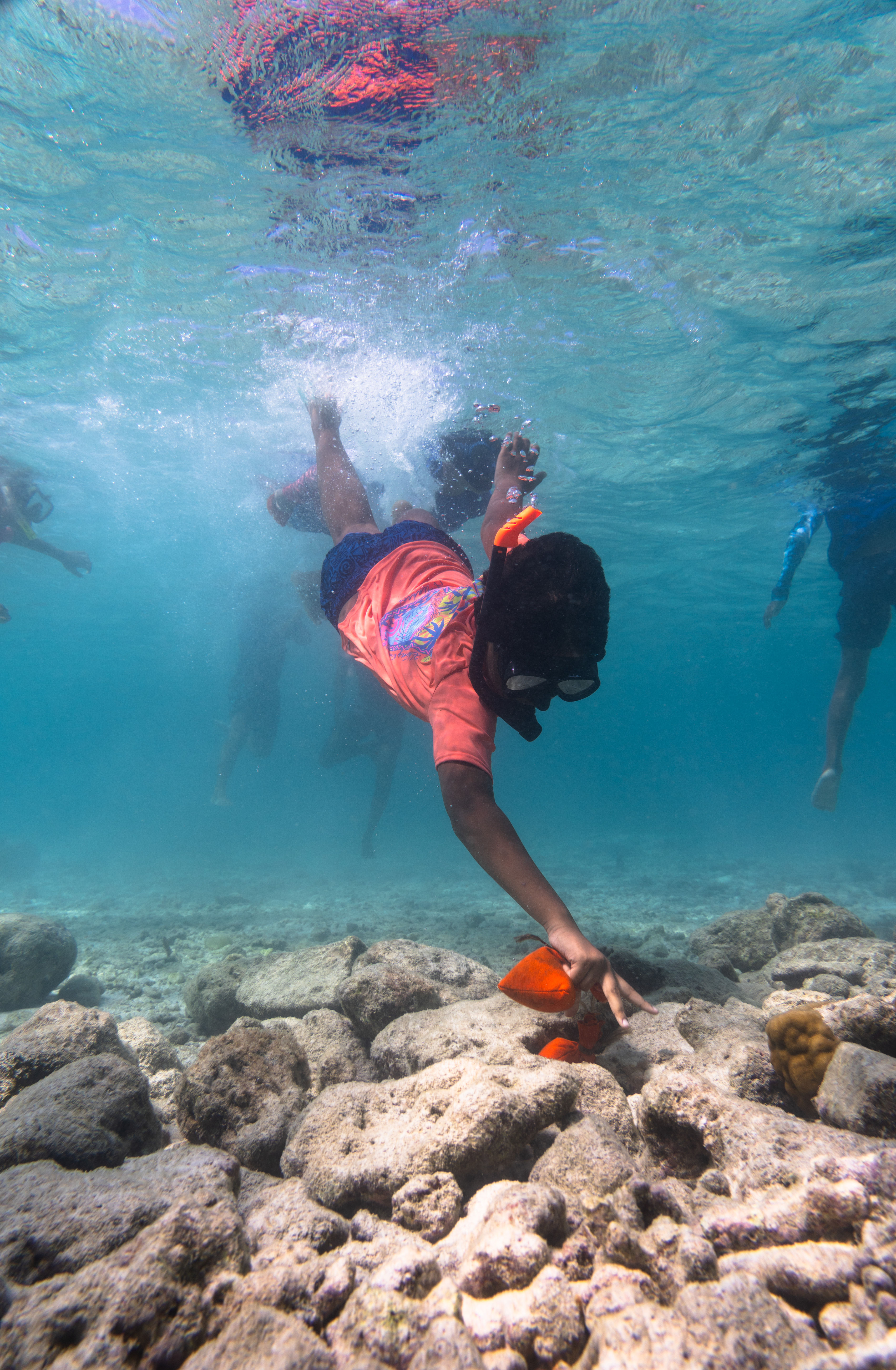
"MoodhuFilaa is a 'nature school' that involves place-based learning," explains Ina. "Children discover more about their environment through games, and it maps on to school curriculum as well."
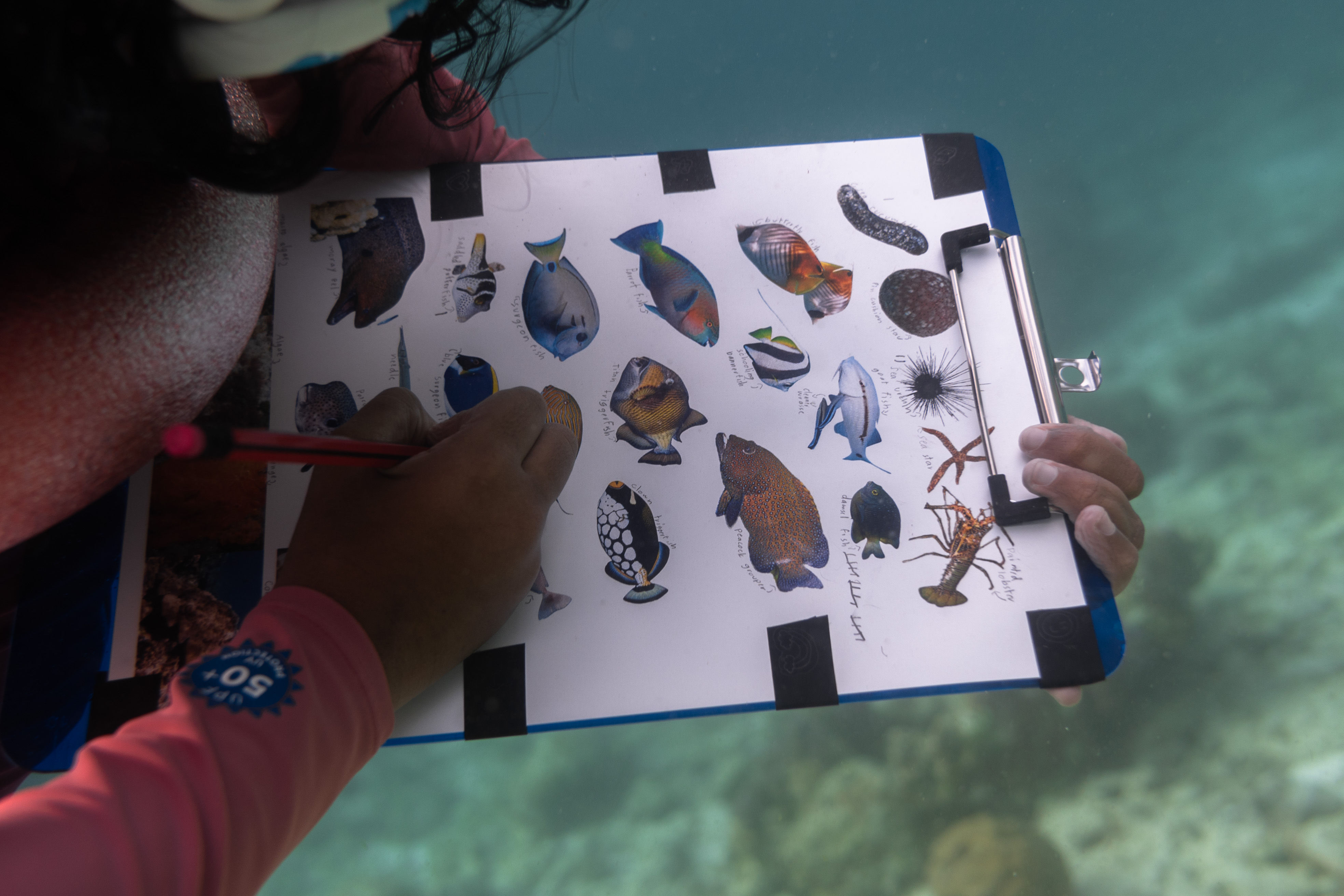
"They can try to spot different kinds of fish and be scored on that," Moosa adds. "Or discover types of trees."
Veshige has hosted several well-received programmes for adults as well. These include the vinyl listening sessions and the 'Sallaa' or discussion series. The Sallaas showcase traditional knowledge and practices such as the Nakaiy, our indigenous weather calendar, and more recently, Bodu Beru, our millennia-old musical form. A friend who attended said they learned how modern Bodu Beru diverged from its original form, which might soon disappear. Also, there were demonstrations of how different types of skins affect the sound of the drums. The Dhivehi keen they had at the end of the Sallaa was particularly enjoyable, they pointed out, noting the excellent fihunu mas.
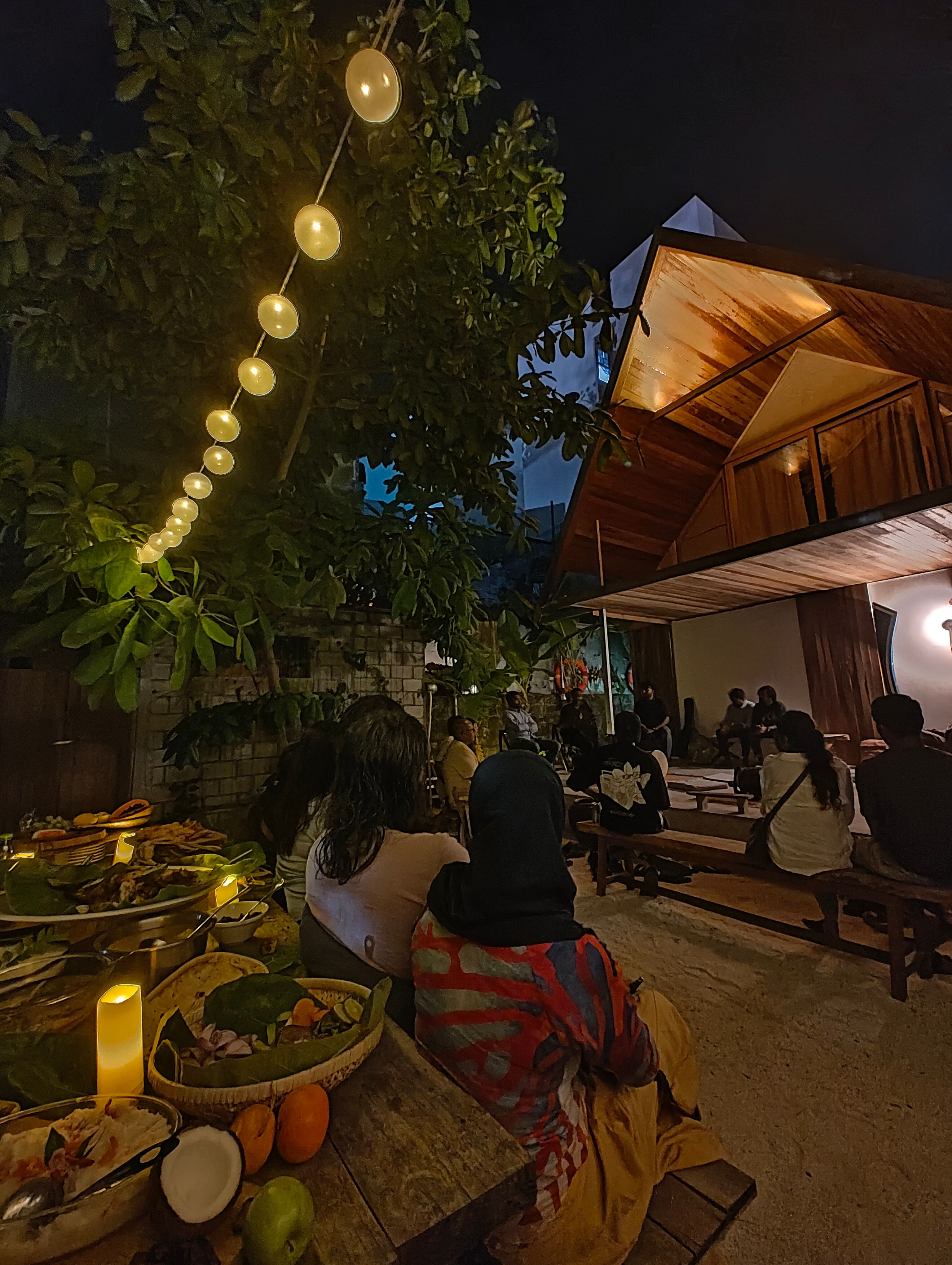
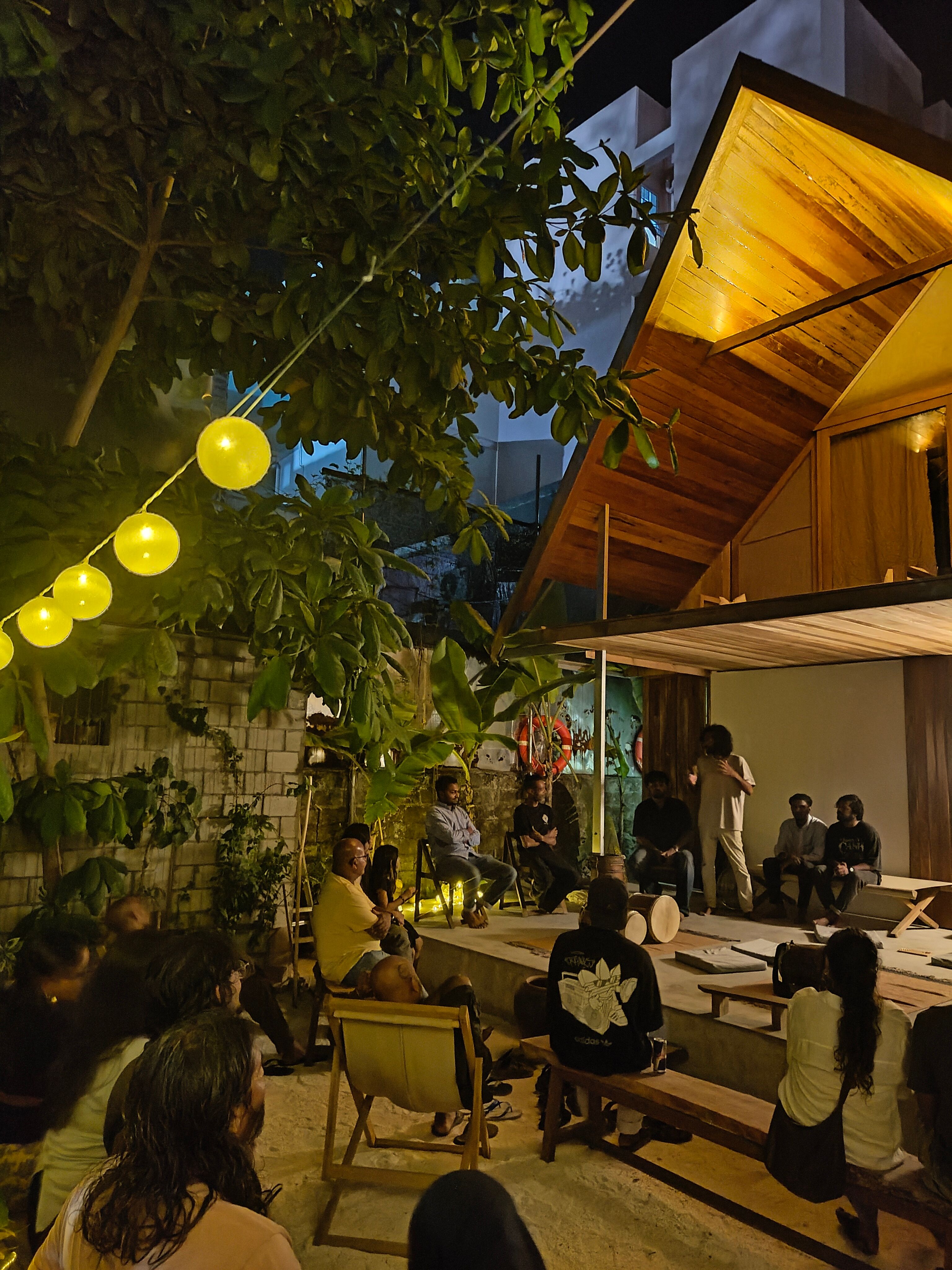
Moosa Mamduh, the respected artist who helps with Veshige's creative direction, tells me how out of touch we've become with ourselves now, especially with our smart devices.
"Shouldn't you be able to tell something's off about your own heart without relying on a wristwatch?" he asks.
"And how strange is it that you have to check your phone to confirm it's raining when the drops are already splashing on your skin?" adds Moosa. "Don't you trust your senses?"
Mamduh and Moosa talk of the elder generations, like our maamamen, knowing when it's going to rain – they learned from being in touch with the elements, which sharpened their instincts.
"It's like creatures in the sea knowing when the tide is about to recede," says Ina. "They have that connection to nature, but we seem to have lost ours."
At a time when environmental concerns are on the rise, including the recent protests in Villingili over the potential loss of a grove of old trees, Veshige's mission seems especially important. They are not in it for the short-term. Rather, they are trying to foster a new generation that values their community and their veshi.
"When trees aren't a part of your life, it won't matter if they're cut down," Ina points out. "But when your children climb them and read under them, you'll have an emotional connection with the trees themselves. They become part of your community. You wouldn't want them out of your life."
Zeeban believes that creating a generation that values and regains respect for nature is itself a form of protest. That generation wouldn't be throwing refuse into the ocean or razing a stand of trees to construct buildings, he argues. They would see nature as essential so today's concerns may never materialise in the first place.
"How did it feel to you, coming to that listening session?" he asks.
I think for a moment.
"I liked the little trip across the sea, it was like an in-between sort of space that prepared me for the event here. Coming in from Male, I could immediately sense the switch."
"Yes!" exclaims Moosa. "But how do we prove that, scientifically?"
"You won't have to, it's a fact," I say.
What Veshige offers is the absence of mental clutter. In our daily lives, we often forget that there's a world beyond our routine, we even forget that a few minutes from Male, there is a place that is still, for the most part, island-like. A place whose character may in fact disappear soon, with the new bridge.
Discussion
No comments yet. Be the first to share your thoughts!
No comments yet. Be the first to join the conversation!
Join the Conversation
Sign in to share your thoughts under an alias and take part in the discussion. Independent journalism thrives on open, respectful debate — your voice matters.
Support Independent Journalism
Help us keep the news free and fearless
Give once
$
or
Become a memberfrom $5/month