
A family for every child: the promises and risks of the Maldives’ foster care push
Applications are up. Safeguards haven't kept pace.

Artwork: Dosain
25 Feb, 17:19
The legal architecture for foster care existed for years. But few were willing to use it. Most applicants wanted infants. Older children, and any child with a disability, attracted almost no interest, the Human Rights Commission of the Maldives told a UN committee.
“Despite the legal emphasis on family-based care and reunification, a substantial number of children remain under state care for extended periods, with many spending over five years and in some cases more than a decade in state care without ever being reunited with their families or placed in a stable family environment,” reads HRCM’s shadow report to the UN Committee on the Rights of the Child
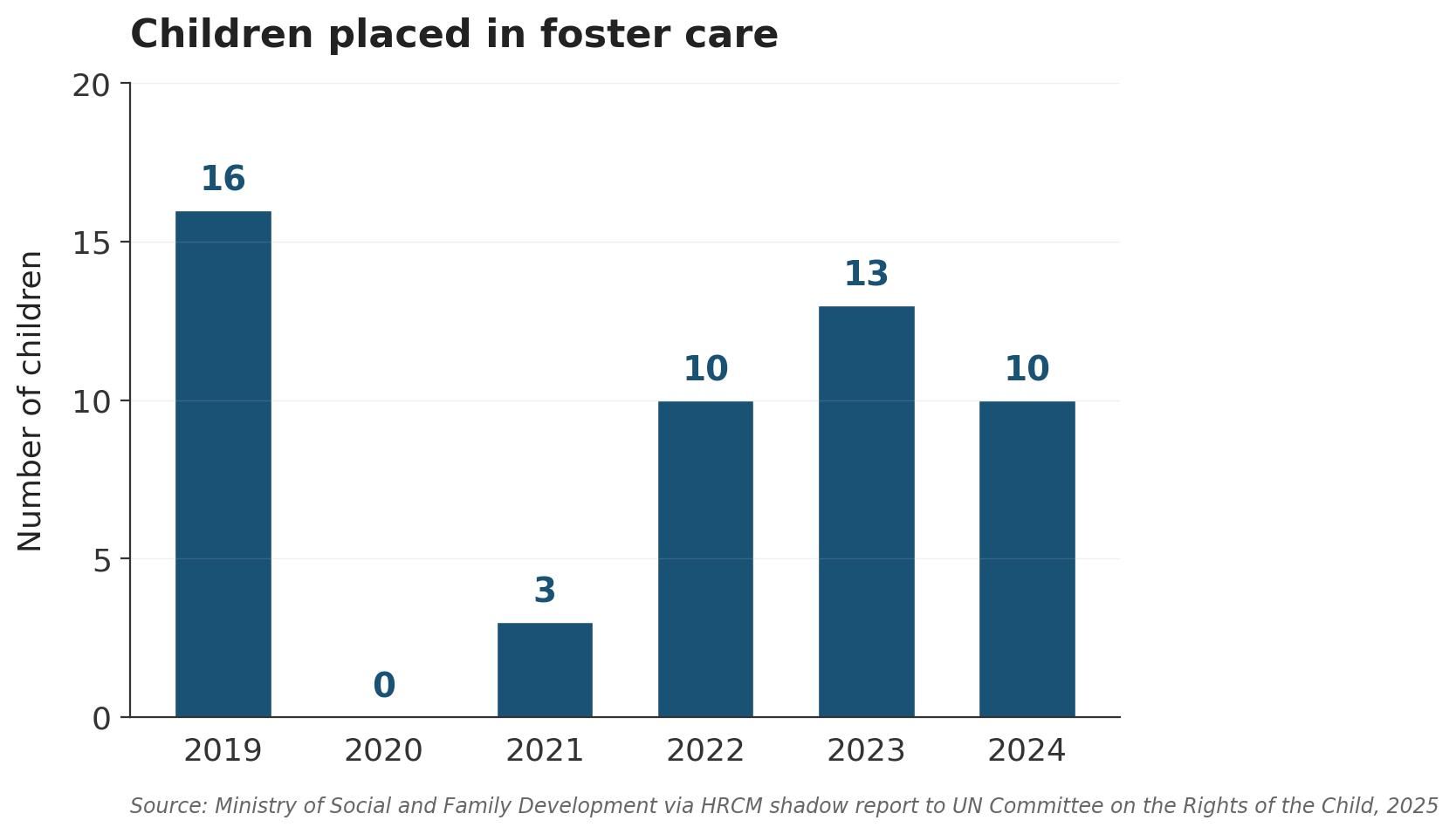
Placement remained "consistently low" between 2020 and 2024 before a recent uptick in interest in fostering older children, the watchdog said. The government says a turning point came from an unlikely source: Aailaa, a drama made for last year's Ramadan office competition.
“The film promotes family-based care by showcasing the fostering process, challenging stereotypes and highlighting the resilience and potential of children in foster care through storytelling,” Fazza Fuad, Lead Child Protection at the Ministry of Family and Social Development, told the committee in January during a periodic review of the Maldives implementation of the child rights convention. “[Aaila] amplified the voices of children in state care and foster parents and helped to reduce stigma and foster a more inclusive environment. We have had an increase in the number of foster applications and people reaching out to inquire about the process following the dissemination of this movie.”
The drama was not the only initiative. The ministry also conducted foster care awareness sessions during outreach visits to four atolls, collecting contact details of interested families for follow-up, she said. Television and radio programmes have also been used to promote fostering. But the community-based mechanism through which the sessions are delivered has not been implemented nationwide.
Despite the apparent progress, HRCM has flagged systemic gaps in the foster care system, and professionals in the field have questioned whether children are being moved out of institutions faster than the safeguards can follow.
“Children are not like clothes that you can try and send back if you don’t like,” a psychologist who works extensively with children told the Maldives Independent.
She questioned the basis for the fostering timeframe, which allows families to foster children for two years, while reunification with biological families is explored.
“Is it grounded in research, or longitudinal studies, or is this number derived from the experiences of other countries?” the psychologist asked.
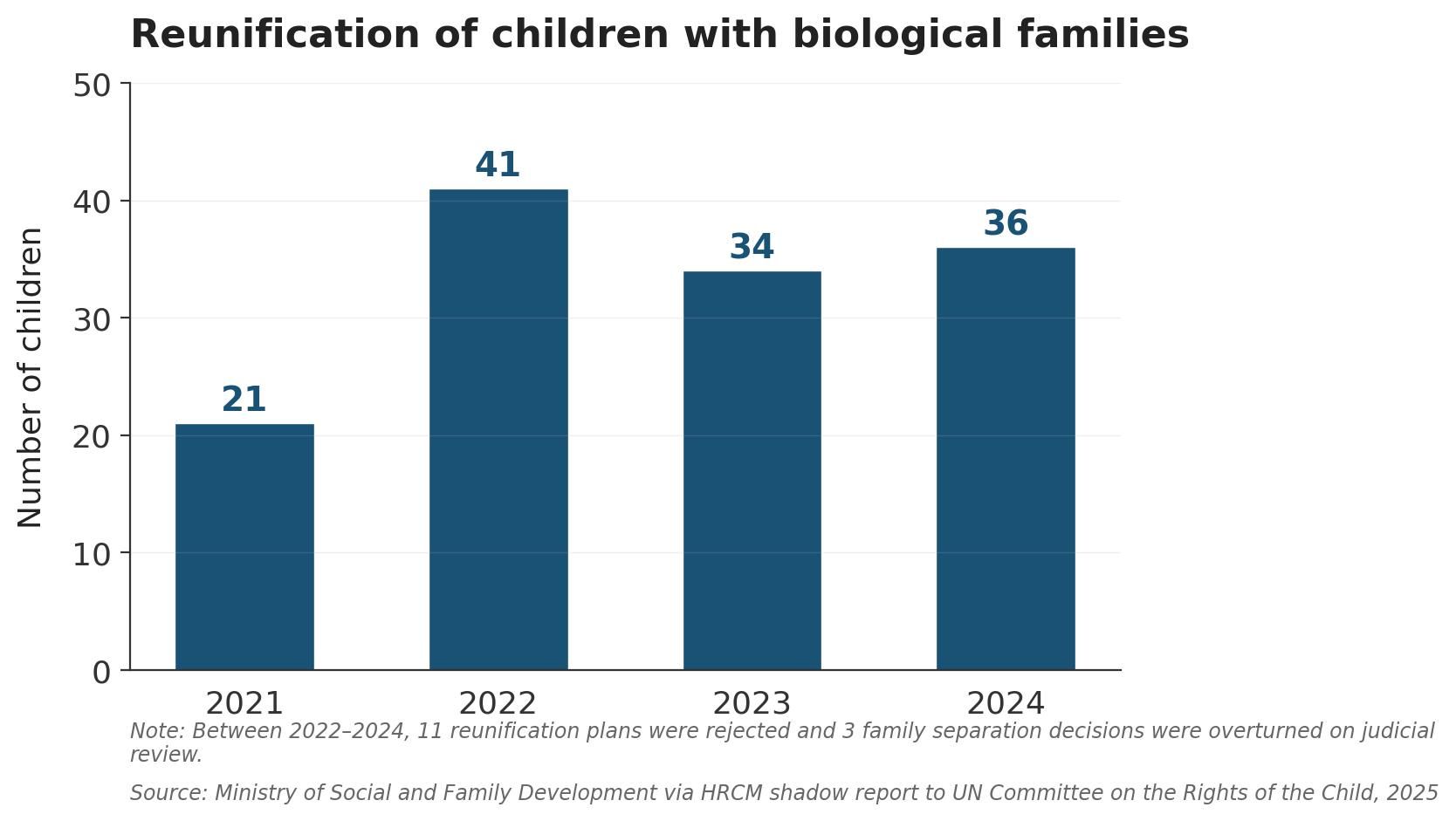
Since November 2023, that 110 children have been returned to their families or placed with new families under the government’s “A Family for Every Child” project, Family and Social Development Minister Dr Aishath Shiham told the press on December 29. She urged more families to participate in the program. “If you want to or are capable in any way of taking care of a child, the ministry urges you very much to work together with us,” she said.
Foster families have shown “extraordinary care and compassion” in caring for children, she said, citing monitoring by ministry officials.
According to the ministry, the initiative has enabled people who might be reluctant for a variety of reasons to commit to long-term fostering to still participate in providing temporary family care. At the end of the two-year period, in the absence of any biological relative coming forward, foster parents may apply for long-term guardianship.
But the psychologist warned about the potential harm that short-term fostering could do to children. “If the child was an infant when they were brought to [the state-run children’s home] Hiya, that is the only home they have known. The caregivers there are their de facto parents. We remove them from that environment for what is essentially a trial period – imagine the impact this would have on their mental health and wellbeing. Has anyone researched these aspects?”
She also raised concerns about the motivations of some prospective foster parents. The recent increase in the fostering allowance to MVR 5,000 (US$ 324) a month could act as a financial incentive, she argued. Eligible foster families previously received MVR 1,000 per child under 18 and an additional MVR 500 for the guardian. Most families were ineligible due to poverty-based targeting. The HRCM found that "few cases demonstrate that the allowance effectively prevents institutional care."
In other cases, people might be motivated by a desire to provide a sibling to their only child, which the psychologist suggested was a valid aspect to consider with the growing number of Maldivian families with an only child.
“If a foster parent’s main motivation is giving their child a sibling, even if they may expect initial behavioural or emotional challenges with the foster child, how would they react when the child acts up?” she asked. “Knowing there might be initial challenges is very different to experiencing it. Would these foster parents have the patience and long-term commitment needed, especially if they view the placement as temporary? Or would they be more preoccupied with the impact on their biological child?”
There are too many unknowns within the current policy framework, she stressed.
From kinship to institutions
Fostering as a legal concept is relatively new in the Maldives. For years the country had an informal system where relatives, acquaintances, or people who could not conceive would take children in and raise them. This informal kinship care worked relatively well for those lucky enough to be taken in. But it left out others who moved from home to home and in some cases essentially grew up on the streets.
As Islam is the state religion of the Maldives, family law is informed by sharia. The country signed the UN Convention on the Rights of the Child in 1991 with a reservation stating that full adoption under Article 21 is incompatible with domestic law. The Maldives instead practises kafalah, a form of long-term fostering that can transfer legal guardianship to the foster parent until the child turns 18. It is functionally similar to adoption elsewhere, though not always widely understood. Foster parents exercise the same rights and responsibilities as biological parents.
“This means that the legal guardianship is provided to the foster parent until the child turns 18 years of age, and all the parental rights and responsibilities outlined in the child rights protection act transfer to the foster parent,” Fazza Fuad, the ministry official, explained to the UN committee, adding that there are “comprehensive monitoring mechanisms in place to address the needs of the child and the foster parents after the child is fostered.”
The parallel informal system operates with no oversight. Relatives or family friends commonly take in children without going through the formal process, often perceiving it as unnecessary or wanting to avoid the lengthy court procedure. But caregivers in these arrangements lack enforceable rights, and HRCM warned that children "risk abrupt disruptions if biological parents reclaim custody without due process." These children also remain outside official records, limiting their access to social services.
The need for state-run institutions grew with the rise of drug abuse and its effects on families in the early 2000s: from Islaahiya – the first reformatory or residential centre for boys established in 1979 and closed in 2013 after much criticism – to the Kudakudhinge Hiya (children’s home) that opened in 2004, to Aman Hiya housing only girls, to Fiyavathi for children under 13. At present, nine smaller institutions are spread across the atolls, each caring for around 20 children, a deliberate shift from the larger facilities.
But Fiyavathi alone still houses 81 children in Hulhumalé. The HRCM found that long-term cases remain concentrated there and in regional Amaanveshi facilities, "underscoring the persistent dependence on institutional care despite the legal framework's emphasis on family-based alternatives."
In 2019, the Child Rights Protection Act formalised a foster care panel first established in 2012 and enacted regulations for family-based provision. But legal frameworks alone did not translate into public enthusiasm.
"The absence of structured foster care programs and community-based alternatives often results in institutional placements being used as the default solution rather than interventions tailored to the individual needs of the child," the HRCM observed. The system lacked the infrastructure to offer anything other than residential care.
As of March 2023, the most recent publicly available data, 187 children were living in alternative care: 82 girls and 105 boys, representing 0.02 percent of children in the country. The overwhelming majority (91 percent) were in residential institutions. Just 16 children had been placed with the country's 18 registered foster carers.
Children enter state care for reasons familiar across the world: parental drug use, maltreatment, domestic violence, parental imprisonment. But once in the system, many stay for years.
The HRCM identified several barriers. The guardianship process can take one to two years, requiring extensive paperwork and parental signatures, which is difficult when parents are unreachable or live on other islands. Many potential carers in informal arrangements are unaware of the formal foster care scheme or their eligibility for financial support. And children in state care "frequently experience discrimination from members of the community," making families reluctant to take them in.
Whether the system can support increased placements is uncertain. As of last year, the Maldives had just 61 child protection social workers to serve a child population of 128,208, with average caseloads of 160 cases at any given time. Just two social workers within the Child and Family Protection Service are responsible for conducting all foster care assessments, making presentations to panels, and requesting court orders.
The regulations require post-placement support, but a 2023 study noted that it was limited in practice. HRCM found that monitoring foster placements, "particularly in remote and under-resourced areas, remains constrained by staff shortages, which limit regular and comprehensive oversight." Counsellor and psychologist positions remain vacant in almost all care facilities.
Geographic realities compound the risks. Family contact for children in state care is often limited to phone calls. There is no financial support for parents to travel to institutions on other islands. If a temporary placement breaks down, children may be moved across atolls, disrupting relationships with family and the support networks that could help them when they leave care.
The risks of remaining in care are also well documented. Children in Maldivian institutions face complex challenges including exposure to drug use and recruitment by gangs, according to multiple reports reviewed in the 2023 study of the country's alternative care system. For some children, institutional care itself poses serious harm. The question remains whether the system moving them out is ready to catch them if things go wrong.
Discussion
No comments yet. Be the first to share your thoughts!
No comments yet. Be the first to join the conversation!
Join the Conversation
Sign in to share your thoughts under an alias and take part in the discussion. Independent journalism thrives on open, respectful debate — your voice matters.
Support Independent Journalism
Help us keep the news free and fearless
Give once
$
or
Become a memberfrom $5/month