
A new storm brewing over the Maldives

30 Mar 2015, 12:51
Minivan News
The following article is by Paulo Casaca, the Executive Director of the South Asia Democratic Forum (SADF).
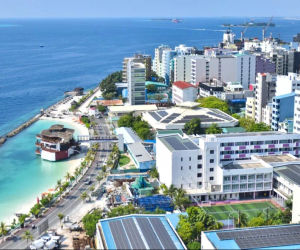
Many Europeans flock to the beautiful Islands of the Maldives to spend their honeymoon, discover the amazing scuba diving possibilities, and walk in pure sandy beaches and to enjoy the warm hospitality of people of the island state. The Maldives is often referred to as Paradise on earth. Today, this statement could not be further from the truth. Many visitors are unaware of the political and constitutional turmoil, the increasing danger posed by fundamentalists, the inefficient and politicized judiciary, and the erosion of human rights and democratic principles. They are neatly tucked away on island resorts, while Malé is once again prone to turn into a battleground.
The 30 year long authoritarian era of former President Maumoon Abdul Gayoom, who ruled the country from 1978 to 2008, formally came to an end seven years ago, but the reality on the ground is different. Gayoom has managed to keep a firm grip on power through old friends, family members and beneficiaries.
When Mohamed Nasheed, a long time democracy campaigner won the country’s first multi-party elections in 2008, there was hope the longest reigning autocracy in South Asia would come to an end. Nasheed was able to initiate first steps in democratizing the island state, but his efforts were blocked by a destructive opposition that continued to act ewithin the same obstructive and totalitarian logic of the past. The 2012 coup d’état that ousted Nasheed from power, half-way through his term, showed that the forces of oppression had not been silenced and were still alive and kicking.
When Mohamed Nasheed, a long time democracy campaigner won the country’s first multi-party elections in 2008, there was hope the longest reigning autocracy in South Asia would come to an end. Nasheed was able to initiate first steps in democratizing the island state, but his efforts were blocked by a destructive opposition that continued to act ewithin the same obstructive and totalitarian logic of the past. The 2012 coup d’état that ousted Nasheed from power, half-way through his term, showed that the forces of oppression had not been silenced and were still alive and kicking.
The dysfunctional state of democracy, especially with regards to the judiciary, became blatantly evident in the recent terrorism charges and sentencing of Nasheed through what can only be described as a “show trial.” The fact that judges presiding over the trial had acted as prosecution’s witnesses says it all. Not only are judged politicised, biased, and negligent of the constitution, they also lack professional education and training. In May 2013, the UN Special Rapporteur on the Independence of Judged and Lawyers Gabriela Knaul described the Maldivian Justice system as a “system in crisis” and expressed great concern over political bias and low qualifications. Nothing has changed in the past two years.
And nothing will change, if the international community shies away from robust measures. In 2004, the EU’s threatened sanctions on the Maldives in the wake of human rights abuses and totalitarian governance void of any democratic principles. Only then did the regime, under the auspices of supranational bodies, start changing its atrocious behaviour towards its own people. Only when the party cadre was affected personally, did they slowly and unwillingly soften their chocking grip on civil society and the hope of freedom.
Issuing statements is a good and necessary first step. It creates awareness, and generates and increases the interest of the public. But it is not enough.
Issuing statements is a good and necessary first step. It creates awareness, and generates and increases the interest of the public. But it is not enough.
If democracy wants to have a chance in the Maldives, the international community must help pro-democratic forces. Roughly a decade after the first wave of sanctions, the EU especially, has to consider imposing them again. Freezing foreign assets and all non-humanitarian aid as well as issuing travel bans are efficient tools in this regard.
There is a old Maldivian proverb, Furifá huri badiyale gudu gude naalhaane (roughly translated from Divehi: “The water pot that is full will not shake”). Under Nasheed, water was poured into the water pot, but it trickled away due to existing holes and new holes added by the then-opposition. Now the vessel is on the brink of being completely emptied. The EU and other supranational institutions should play their role in preventing the water from being absorbed by the authoritarian modus operandi.
All comment pieces are the sole view of the author and do not reflect the editorial policy of Minivan News. If you would like to write an opinion piece, please send proposals to [email protected].
Discussion
No comments yet. Be the first to share your thoughts!
No comments yet. Be the first to join the conversation!
Join the Conversation
Sign in to share your thoughts under an alias and take part in the discussion. Independent journalism thrives on open, respectful debate — your voice matters.
Support Independent Journalism
Help us keep the news free and fearless
Give once
$
or
Become a memberfrom $5/month