
Politics

Chaos in the Chagos: empire, exile and the islands caught between superpowers

Displaced islanders, rival claims and a rules-based order under siege.
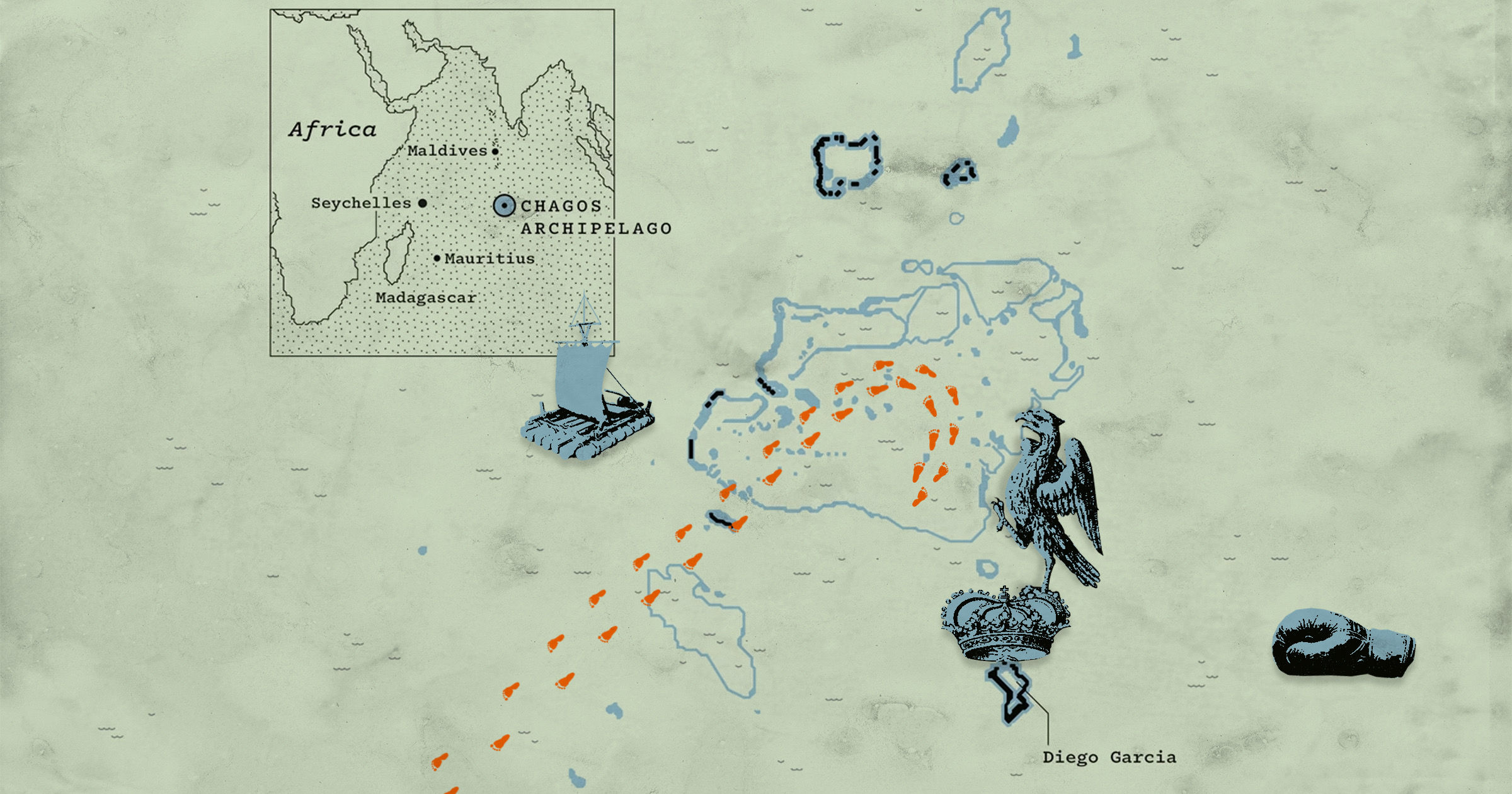
Artwork: Dosain

Artwork: Dosain

2 hours ago
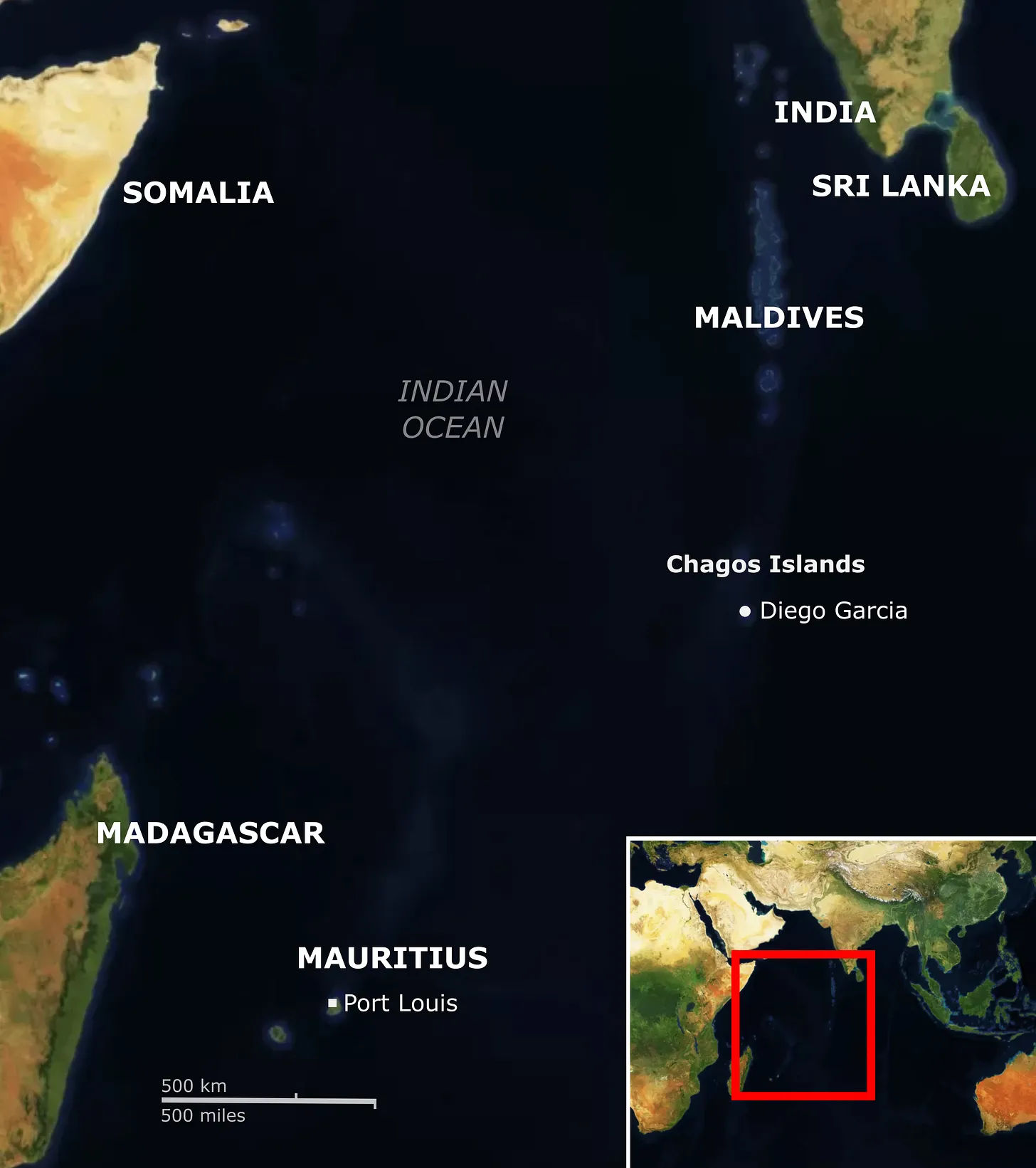
With all eyes turned to Greenland in January as Donald Trump pushed for a US takeover of the Arctic island, the imperial president suddenly rounded on the UK, expressing outrage at plans to hand over a collection of around 60 islands – 6,000 miles away – to Mauritius.
Describing the deal, officially agreed last May, as “stupid” and “weak”, Trump suggested it would jeopardise the UK-US military base in the archipelago. After his wrong-footed State Department had reiterated its support for the deal in February, the President again warned UK Prime Minister Keir Starmer to back out. “DO NOT GIVE AWAY DIEGO GARCIA”, he thundered, shortly after the UK government had denied the use of its territory to attack Iran.
The UK says the deal, which includes a 99-year lease on Diego Garcia, is the only way to secure the future of the base in the face of overwhelming international legal opposition. But, with the treaty still requiring parliamentary approval, Starmer’s government postponed hearings in the House of Lords as the opposition called for delay “in light of the changing geopolitical circumstances”.
Mauritius pointed out that the deal was agreed “exclusively” between itself and the UK, saying its sovereignty over Chagos was “unambiguously recognised by international law”. Its scheduled bilateral security discussions with the US State Department this month were cancelled.
UK opposition leader Nigel Farage’s Reform Party leapt into the political breach, with members accompanying four UK-based Chagossians to occupy Île du Coin at the northern edge of the contested group. Farage himself then flew to the Maldives before claiming, disingenuously, that the UK government had stopped him joining the new settlers three hundred miles to the south.
Meanwhile, the president of the Maldives, Mohamed Muizzu, pushed his own country’s Chagos claim, telling Newsweek his island republic was best-placed to protect US interests in the region. Mauritius subsequently suspended diplomatic ties with its new northern neighbour. The chaos also emboldened the Maldivian leader to revisit a recent border dispute, sending patrol boats into waters a UN tribunal has allocated to the Chagos archipelago and, therefore, to Mauritius.

Beneath the surface 

Mauritius came under British rule in 1810 and secured independence in 1968 only after it had agreed to sell the Chagos Islands – which lie almost 1,300 miles north-east of the Mauritian capital, Port Louis – back to the UK. The isolated atolls were subsequently renamed the British Indian Ocean Territory (BIOT) and the islanders, or Ilois, numbering around 2,000, were forcefully deported to Mauritius and the Seychelles. To smooth the process the UK lied to the UN, saying these were only contract labourers and has subsequently denied their right of return.
With the UK rapidly decolonising, retention of the islands had appeared counterintuitive until US military personnel arrived on Diego Garcia in 1971. While Britain had been shedding its territories, including the nearby base in the Maldives’ Addu atoll, the US was eyeing new military facilities and signed a deal with the UK for Diego Garcia in 1966. Today, the island is notorious for its secrecy with unpermitted entry to the BIOT forbidden. The air and naval base has been used for ‘extraordinary rendition’ flights of terror suspects and as a staging base for US operations in Iraq and Afghanistan.
Separation of the Chagos Islands from the rest of Mauritius was immediately condemned, with a 1965 UN resolution warning the UK that ‘dismembering’ a former colony was against its charter. It remained undeterred, however, with its designation of the BIOT as a Marine Protected Area (MPA) in 2010 eventually exposed as part of the same policy to thwart resettlement of the Ilois, or ‘Man Fridays’ as one leaked British cable had described them. The Permanent Court of Arbitration ruled it illegal, with two of the five panel members arguing the UK did not have legal sovereignty over the archipelago.
In 2019, after referral from the UN General Assembly, the International Court of Justice (ICJ) determined – with 13 judges to one dissenting member from the US – that the UK should end its administration of the BIOT “as rapidly as possible” to “complete the decolonisation of Mauritius”. The UNGA followed the ruling with a 116-6 resolution supporting the ICJ, though the UK continued to argue the opinion was not legally binding and that it would retain sovereignty until the territory was not needed for defence.
Fearing a binding ruling was inevitable, however, the UK began negotiations with the Government of Mauritius in 2022, though the base’s removal was never on the table. Indeed, when UK foreign minister David Lammy announced a treaty in October 2024, he said President Biden’s administration had encouraged the deal, though Republicans grumbled about unaccountable international institutions and “Chinese lawfare”. Under the deal, the UK will pay around £100m a year for the 99-year lease on Diego Garcia, with the right to extend, while Lammy said his government would prevent foreign armed forces accessing the outer islands.
For the Ilois, the deal opened up the possibility of resettlement to the Peros Banos and Salomon atolls – not to Diego Garcia. The UK also agreed to contribute £40m to a Mauritian-administered trust fund for the displaced community, though reactions from the diaspora were mixed, with cautious optimism matched by frustration at their continued exclusion from negotiations.
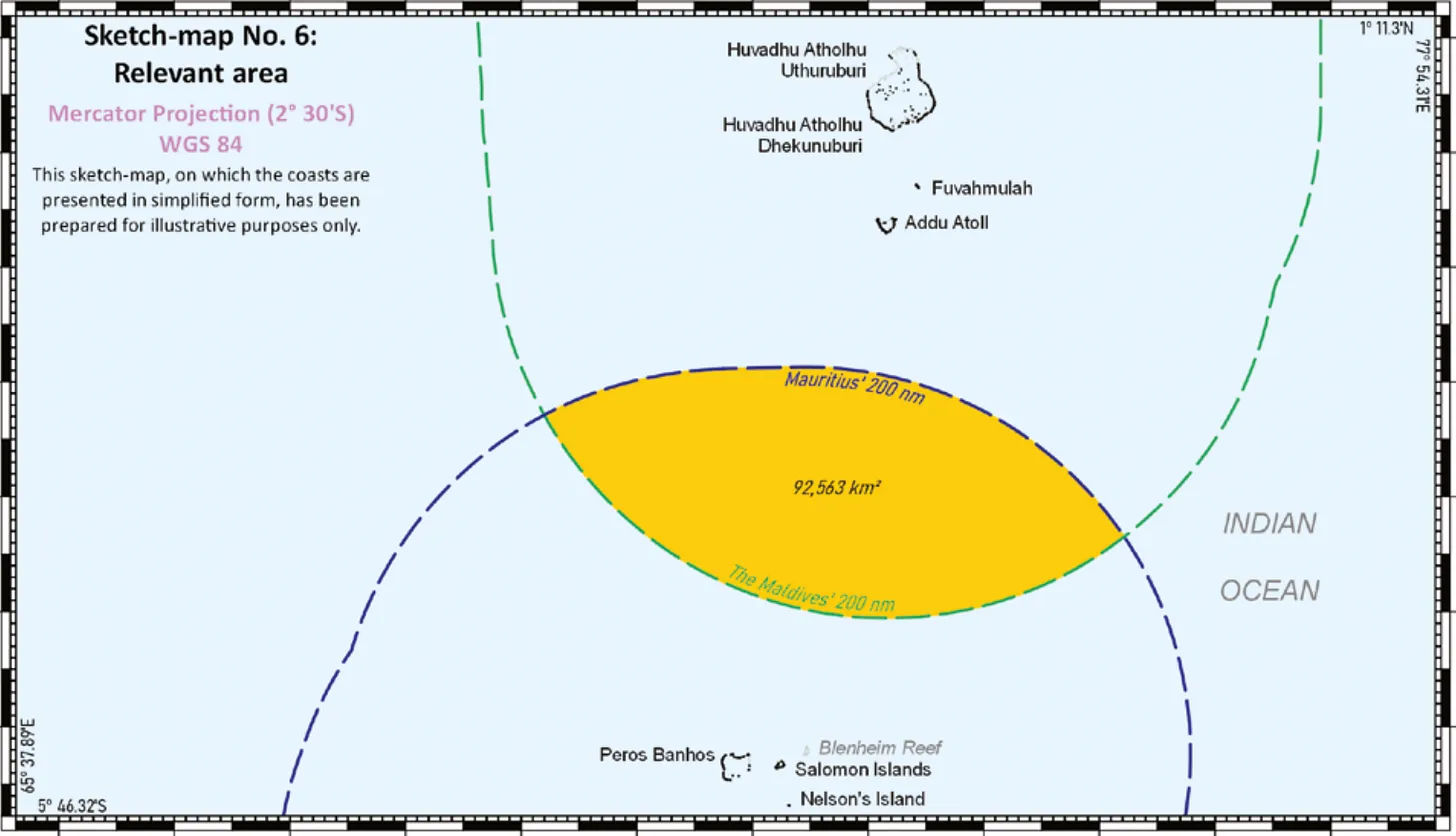
In the Maldives, interest in Chagos has primarily focused on demarcation of territorial waters rather than questionable claims of sovereignty. Under President Muizzu’s predecessor, Ibrahim Solih, the International Tribunal on the Law of the Sea (ITLOS) redrew the Maldives-Mauritius maritime border. The Maldives’ exclusive economic zone (EEZ) grew slightly as a result, but this did not prevent local opponents crying “treason” and vowing to contest the decision when in office. After successive Maldivian governments had stayed neutral over Chagos while the EEZ issue was resolved, the Solih administration endorsed Mauritian sovereignty in 2022 after the ITLOS judged the matter had no bearing on the territorial claim.
As well as defying the tribunal’s binding ruling by sending coast guard vessels and drones into waters north of the Chagos this month, Muizzu has made a late bid for control over the whole group. He now says his country has the “strongest claim” to the islands, something no leader of the republic has claimed before. While Maldivian sultans once claimed ownership of all islands along the Chagos-Laccadive ridge, there is no history of permanent habitation by Maldivian people in Chagos Islands, with historical accounts suggesting the mysterious atolls to the south had only ever been visited by fishermen, who were usually lost.

Who’s steering the ship?

This deal has entered troubled waters as new hands clutch at the tiller while others revel in rocking the boat. Who are the main players and where do they want to go?
Donald Trump: After struggling to differentiate Iceland from Greenland or Bermuda from the Bahamas, it’s highly unlikely the boat-rocker-in-chief knew where the Chagos Islands were six weeks ago. The President’s motives are always foggy and usually fleeting, but his outburst over Diego Garcia was clearly linked to his expectation that US military assets can be used without explanation or restraint anywhere in the world.
Keir Starmer: While treaty negotiations began under his Conservative predecessor, it’s no surprise that the UK prime minister – with his legal background – has insisted uncertainty over the Chagos Islands was unsustainable and damaging for Britain’s international standing. He stood firm against Trump over Greenland but, facing perilous polls and rampant right wingers, does he want to pick another big fight over a much smaller island nation? While Trump threatens to sever all trade with Spain after being denied use of its bases, Starmer has subsequently yielded on grounds of collective self-defence.
Nigel Farage: While the leader of the Reform Party’s whistlestop trip to the Maldives was an expensive stunt, the UK opposition’s power to delay ratification of the treaty is very real. The rise and rise of Reform – which labels the handover to Mauritius ‘surrender’ – is pulling the Conservatives further to the right and will encourage party members who have questioned the need for a full sovereignty transfer. For Farage, a man not known for protecting immigrants’ rights, giving the government an easy black eye may represent the height of his ambitions in the Indian Ocean.
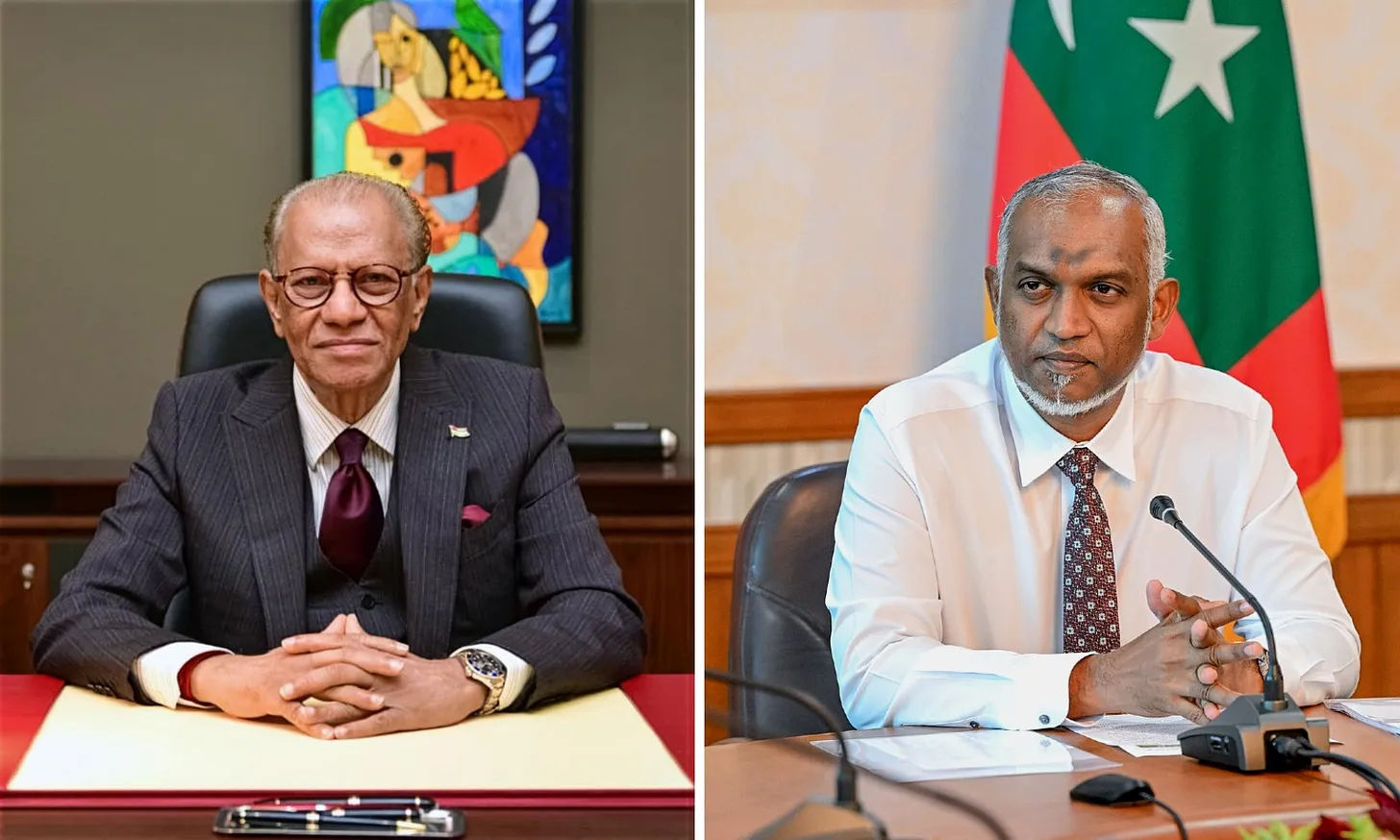
Navin Ramgoolam: Mauritius has been calling for the return of the Chagos archipelago ever since its first prime minister, Seewoosagur Ramgoolam – father of the current prime minister, Navin Ramgoolam – was strong-armed into ceding the atolls. Ramgoolam Jr has criticised the treaty for retaining the US base but, being so close to a momentous deal, and facing a serious budget crisis at home, he will be eager to conclude an agreement that will restore historical injustice while almost doubling his country’s EEZ.
Navin Ramgoolam (L) / Mohamed Muizzu (R) (Facebook / The President’s Office of the Republic of Maldives CC via Wikimedia Commons).
Mohamed Muizzu: The Maldivian leader routinely falls back on nationalism to whip up supporters, most notably through a virulent ‘India Out’ campaign on his way to the presidency before an embarrassing climb-down once in office. But, as a conservative leader in a nation whose identity is founded on independence and Islam, you have to ask if having a US base bombing the Middle East from his territory is something Muizzu – or any Maldivian president – would actually want.
Chagossians: The sad story of the Chagos Islanders is an indictment of a system in which small island communities struggle to be heard. Their story exposes the casual evil of empire, with the British opting for their removal without the US even asking, before continually denying their very existence. Opinions on the treaty’s merits among the approximately 10,000-strong diaspora are mixed: some note that the right of return is still uncertain and fear loss of their UK citizenship – granted in 2002 – while others cautiously welcome what they see as a huge step towards repatriation. Chagossians want their home back, their suffering acknowledged and their voices heard.

A drop in the ocean?

While the land mass of the Chagos archipelago is just 60 square kilometres, its EEZ is the size of France and global currents – actual and metaphorical – flow through the area. This is a case with big implications for decolonisation, international law and Indian Ocean security.
Decolonisation, sovereignty and SIDS
Prime Minister Ramgoolam described the deal for Chagos as “marking one of the last chapters in the process of decolonisation of Mauritius”. But this story shows that decolonisation may be a saga without end. The return of the islands will, nominally, bring four centuries of foreign control to a close. But the tortuous journey and the apparent ease with which a thumbs-down from the White House or Westminster can still reverse its course, shows that control of the international system has not travelled very far. The ICJ ruling was a reminder that decolonisation is not done; the drama and delay over its implementation is a reminder that it may never be.
Small island states like Mauritius, born into a post-war structure that secured the legacies of European empire, have benefited from a UN framework in which sovereignty is sacrosanct. Indeed, SIDS have survived within it by waiving certain elements of independence (see the Cook Islands’ outsourcing of defence to New Zealand or St. Kitts and Nevis selling investor passports). But this case shows small state sovereignty still can’t overrule big power interests. Mauritius’s ‘agreement’ to defer control over Diego Garcia feels eerily reminiscent of its ‘agreement’ to sell the atolls to the UK in 1965. Geopolitics still trumps decolonisation, and Trump is destabilising geopolitical structures ‘like never before’.
International law
Trump has insisted that the US retains the right to secure Diego Garcia “militarily” if the lease deal ever “falls apart”, thus rendering decades of legal wrangling and years of diplomatic negotiation instantly moot. For a president who has pulled his country out of countless treaties – five dozen in January, alone – this lack of faith in international agreements is unsurprising. ‘Might makes right’ in MAGA-world where unapologetic imperialism is back. Opponents of the treaty in the UK have suggested the US can, and has, vetoed the Chagos deal, though this is a claim based more in realpolitik than law.
For small island nations who have grouped together under the SIDS banner, a rules-based system is essential to amplify their collective voice and to secure their rights. The outcome of the Chagos affair could have huge implications for international law; a somewhat abstract concept that fades away without collective belief. Will it set new precedents or just expose old hypocrisies? China has already ignored the ITLOS over the Spratly Islands, demonstrating the difficulty of enforcing such rulings, particularly across the vast expanses of ocean in which SIDS reside. Trump’s contempt for the international system is emboldening other recalcitrants and could leave smaller nations looking elsewhere for protection.
China in the Indian Ocean
Both Trump and the UK opposition argue the Chagos deal is a gift to Beijing, whose influence in the Indian Ocean continues to grow. Building on its economic largesse through the ambitious Belt and Road Initiative, China placed its first military footprint in the region – and its first overseas base anywhere – in Djibouti in 2017. The potential dual-use of China-built ports in Pakistan and Sri Lanka have added weight to ‘string-of-pearls’ theorising about Chinese strategic encirclement. Opponents of the Chagos handover fear China’s influence in Mauritius and worry that the end of the BIOT’s no-fishing rules will allow Chinese spies into these waters.
This alarmism seems to underestimate India’s regional influence, however, which is deeply-rooted in culture and geography. It has long-supported Mauritian sovereignty over Chagos alongside the US presence and has already struck a deal to help monitor its neighbour’s expanded EEZ. SIDS will always seek to balance relations between larger actors, extracting maximum concessions while maintaining their fragile independence. China has indeed carried out major infrastructure projects in Mauritius and has a free trade agreement with the country, but both things are also true of the Maldives. This undermines Nigel Farage’s suggestion that British interests would be better protected by Muizzu, who came into office labelled the ‘pro-China’ candidate.
Those nostalgic for the time when this part of the world was known as the ‘British Lake’ should remember that it is called the ‘Indian Ocean’ for a reason, and that handing over the Chagos Islands will not leave a vacuum filled with passive island states. They should also be aware that undermining international law could force such SIDS into hard choices between China’s money and India’s military, further polarising this complicated region.

Ripple effects 

As the initial swells from Donald Trump’s intervention recede and the world’s attention moves on to war in the Middle East, we are left with key questions about the Chagos, its people and how this affair impacts SIDS as a group.
Is the deal really in danger?
With the inevitable war with Iran beginning in late February, the US president’s malign interest in the Chagos Islands will rapidly fade. But will the UK-Mauritius treaty survive a month of the Trump treatment?
While one UK minister told MPs that the enabling legislation was being ‘paused’ for talks with the US, the foreign office later denied this and, other than some sections of the Chagossian diaspora, all actors were satisfied to let the deal proceed just six weeks ago. The real question is how long UK opponents can delay ratification as wider interest wanes.
Nigel Farage saw such political potential in the archipelago that he flew to Addu just to stand on the shore and point mournfully towards the Chagos when he should have been campaigning in Manchester 9,000 miles away. But the fact he stayed for just a day and, as my sources in Addu have confirmed, was actually pointing in the wrong direction indicates a shallow interest which will soon return to more populist climes. Besides, with just eight of 650 MPs and no representation in the House of Lords, Reform’s practical influence is limited.
Some reports have mentioned an unofficial deadline for the legislation due to parliamentary scheduling constraints. But with the UK government facing legal limbo if it cannot embed the treaty in domestic law, it seems unthinkable that the bill would not be carried over into the next session if necessary. It’s already passed the House of Commons once and, while former Conservative prime ministers have reportedly lobbied Trump personally, the opposition doesn’t have the votes to block the bill. The only option would be to trap it in the ‘ping pong’ stage between houses, a move that could last, in theory, for months but is almost unheard of. When calmer heads prevail, a compromise will likely be reached and the treaty ratified.
When can the Ilois go home?
Above any legal or political arguments, the right of Chagossians to return home after six decades of exile lies at the heart of this story. Delayed treaty ratification will further postpone their resettlement, but the recent occupation of Ile de Coin reflects the diaspora’s wider anxiety - learned through bitter experience - that their welfare remains vulnerable to the machinations of more powerful actors. Ironically, even the move to retake this island last month, apparently facilitated by ex-SAS Reform Party members, seems symbolic of the islanders’ repeated exploitation for others’ political aims.
A BIOT court has temporarily blocked removal of the settlers on Peros Banhos atoll and the UK High Court is continuing to review the legality of the sovereignty transfer. While neither are likely to impact treaty ratification, it is worth noting that the latter case centers on the failure to consult islanders, an issue that was among the main reasons the ICJ found the original dismemberment of Mauritius to have been illegal. The courts have ruled in favour of the Ilois before, notably in 1997 when the UK government was told it could not block their return to the outer islands, prompting officials to finally explore resettlement. But this policy was subsequently reversed after America’s ‘war on terror’ elevated the unique strategic value of Diego Garcia once again. Islanders will be hoping the new war in the Middle East does not again overrule their dream of resettlement.
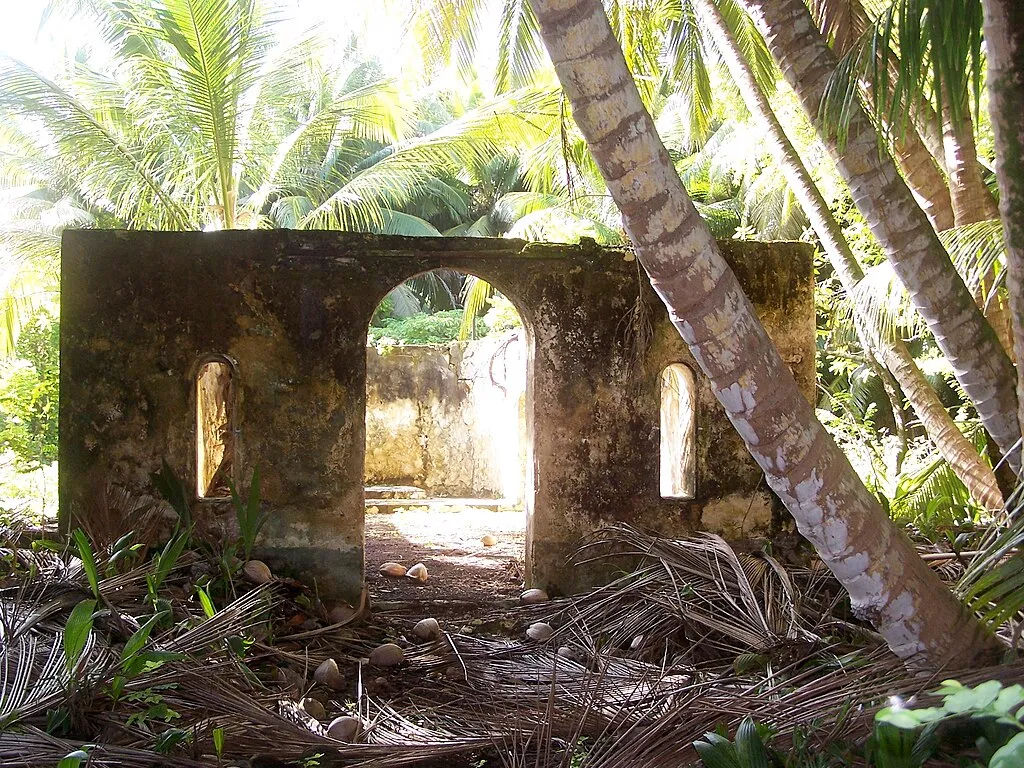
Abandoned Church on Ile du Coin, Perhos Banhos atoll (Fluke Chapman CC via Wikimedia Commons).
Finally, Mauritius’s plans for repopulation of the Chagos Island remain vague at this stage, with unresolved issues over how a Chagossian economy, which would require a viable fishing industry or tourism, will work around pledges to protect the pristine marine environment and continuing security restrictions. What’s more, a modern Iloissettlement will require significant infrastructure investment and financial support from a nation in the midst of an economic crisis while the rising oceans – irrepressible and apolitical – make island life increasingly precarious. In short, practical barriers to repopulation will remain even after legal ones have fallen away, meaning that most of the generation wrenched from their islands decades ago are still unlikely to make it home.
A big win for small islands?
Back in the UK, Conservative Party MPs insist the Labour government has exaggerated the BIOT’s legal peril, arguing the law of the sea exempts military activities from binding judgements. But the suggestion of unnecessary ‘surrender’ to Mauritius ignores the reality that Diego Garcia was never up for grabs. The Chagos dispute has become a legal headache, but the UK was never in danger of decapitating itself.
The Maldives’ sovereignty claim is of relatively minor interest to voters in a country which already has around 1,200 islands spread over 350,000 square miles. It is likely to recede as quickly as Trump and Farage’s interest, despite the latter’s unsubstantiated claim that the Maldives will file a counterclaim with the ICJ. Of more interest is the Maldives’ flouting of the ITLOS demarcation ruling, showing that SIDS can ignore international law too, even if they struggle in practice to police large EEZs with their limited resources.
Screenshot from 2023 ITLOS judgement.
While it appears Mauritius will prevail in its legal struggle for (most of) the Chagos Islands, giving hope that compromise between decolonisation and strategic security interests is possible, the case may increase hostility to multilateralism in the UK and elsewhere as surging populists mimic Trump’s contempt for a rules-based order. For SIDS, the battle over Chagos may be won, but it bodes ill for their prospects in ongoing wars over core issues like maritime arbitration and climate justice.

What’s on the horizon?

Road to ratification – Parliamentary debate on the Diego Garcia Military Base and British Indian Ocean Territory Bill remains on ‘pause’, but the current session is expected to end by May.

Ile du Coin evictions – A court injunction stopping removal of islanders from Peros Banhos raises the possibility that the sovereignty handover will happen before UK authorities are able to evict them.

High Court challenge – Calls to delay treaty ratification would grow louder should the legal review over the failure to consult islanders proceed to a full hearing.

Trump’s next ‘Truth’ – With Trump continuing to berate Starmer on social media, further comments on Diego Garcia could signal that a passing gripe has become a more problematic grudge

Editor's note: This article was originally published on Trouble in Paradise, a Substack by Daniel Bosley exploring the big stories shaping small island states. Bosley is a former editor of the Maldives Independent. It is the first in a series of deep dives that will explore whether the UK-Mauritius treaty destabilises the Indian Ocean and what it means for small island states in the international system. Subscribe to troubleinparadisesids.substack.com to read more.

Discussion

No comments yet. Be the first to share your thoughts!

No comments yet. Be the first to join the conversation!

Join the Conversation

Sign in to share your thoughts under an alias and take part in the discussion. Independent journalism thrives on open, respectful debate — your voice matters.

Support independent journalism