

Tariq Ramadan’s appeal for President Yameen to stop imminent execution
In a letter sent to President Yameen on July 5, the renowned Islamic scholar wrote that executing Hussain Humam without the consent of the victim’s family “would contravene the fundamental principles of Islamic law.”
06 Jul 2016, 09:00
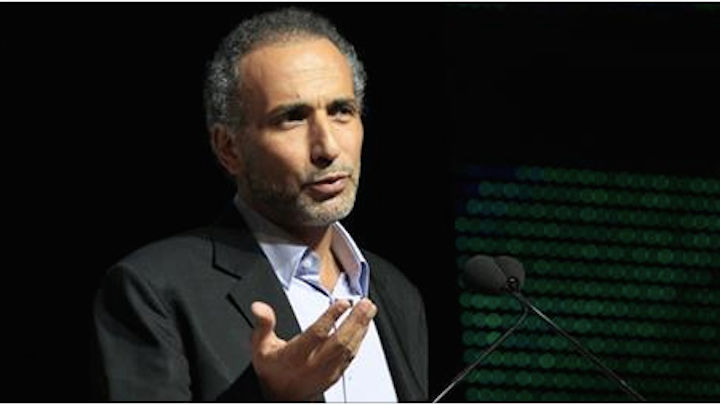
On July 5, renowned Islamic scholar Tariq Ramadan sent a letter to President Abdulla Yameen urging his administration to prevent the imminent execution of a 22-year-old convict. The following is an exclusive full text of the letter.
My name is Tariq Ramadan, and I am Professor of Contemporary Islamic Studies at the University of Oxford. I recently visited the Maldives (November 2015) where I met you after the Friday sermon that I gave at the Grand Mosque in Malé. I was invited by the Ministry of Islamic Affairs and I met with numerous knowledgeable Ministers and religious representatives. I was also party to many interesting discussions regarding the implementation of sharī’ah, the criminal justice system and possible reforms. During these discussions I expressed the importance of ensuring that every criminal defendant receives a fair and transparent trial. I have supported, based on Islamic understanding of the scriptural sources and the strict conditions required by the Islamic penal code (ḥudūd), the moratorium you implemented on the death penalty. I write now to express my concern about the forthcoming execution of Hussain Humaam Ahmed, which I understand is scheduled for later this month.
I understand that there are a number of concerns about the safety of the conviction and sentence in Humaam’s case. It has been reported that Humaam’s “confession” was forced from him after the authorities threatened to harm his family, a form of duress which undermines the fairness of his trial at the most basic level. In addition, Humaam’s family maintains that he has a mental disability, and yet no independent psychiatric assessment has taken place. This means that there is a risk that the Maldives will execute a mentally disabled individual, which is prohibited under international law. As you know, according to Islamic law and jurisprudence, any doubt about the mental health of a murderer, should play in his favour. The heavy conditions we find in the Islamic legislation have as a raison d’être (‘illah) to avoid any doubt: if there is the slightest doubt, then the punishment (ḥad) should be suspended.
I am also particularly concerned that the Maldives intends to proceed with the execution despite the fact that the victim’s father and brother have both explicitly stated that they do not wish for the sentence of death to be implemented. This call to spare Humaam’s life by two members of the victim’s family cannot be ignored. Once again, according to the principle of qiṣās, if the family of the victim asks for the sentence not to be implemented, at any time before the execution (for the majority of the ‘ulamā’), the latter should be suspended whatever the public authority might think or decide.
Furthermore, I understand that two of the victim’s heirs were less than 18 years of age at the time that the sentence of death was imposed, and that the court did not wait for them to come of age to make a decision on qiṣās. Rather, it waived the condition that they be consulted, meaning that some of the victim’s family have not consented to the execution. If this is the case we are facing, once again, a clear distortion in the way the Islamic principles have been interpreted and implemented. If we are to respect the sharī’ah conditions, to listen to the family’s position is required. I would add that above and beyond all of this, raḥmah (compassion) is an absolute necessity, an essential principle, an imperative duty, even if there is no doubt and all the conditions are gathered.
I am therefore convinced that to execute Humaam would contravene the fundamental principles of Islamic law. In these circumstances, I urge the Government of the Maldives to take all possible action to prevent this execution from taking place.
Yours sincerely
Tariq Ramadan
Professor of Contemporary Islamic Studies
Discussion
No comments yet. Be the first to share your thoughts!
No comments yet. Be the first to join the conversation!
Join the Conversation
Sign in to share your thoughts under an alias and take part in the discussion. Independent journalism thrives on open, respectful debate — your voice matters.
Support Independent Journalism
Help us keep the news free and fearless
Give once
$
or
Become a memberfrom $5/month