
Protect national security, face fines: what a new code asks of Maldivian journalists
Five ways the code of ethics departs from international standards.
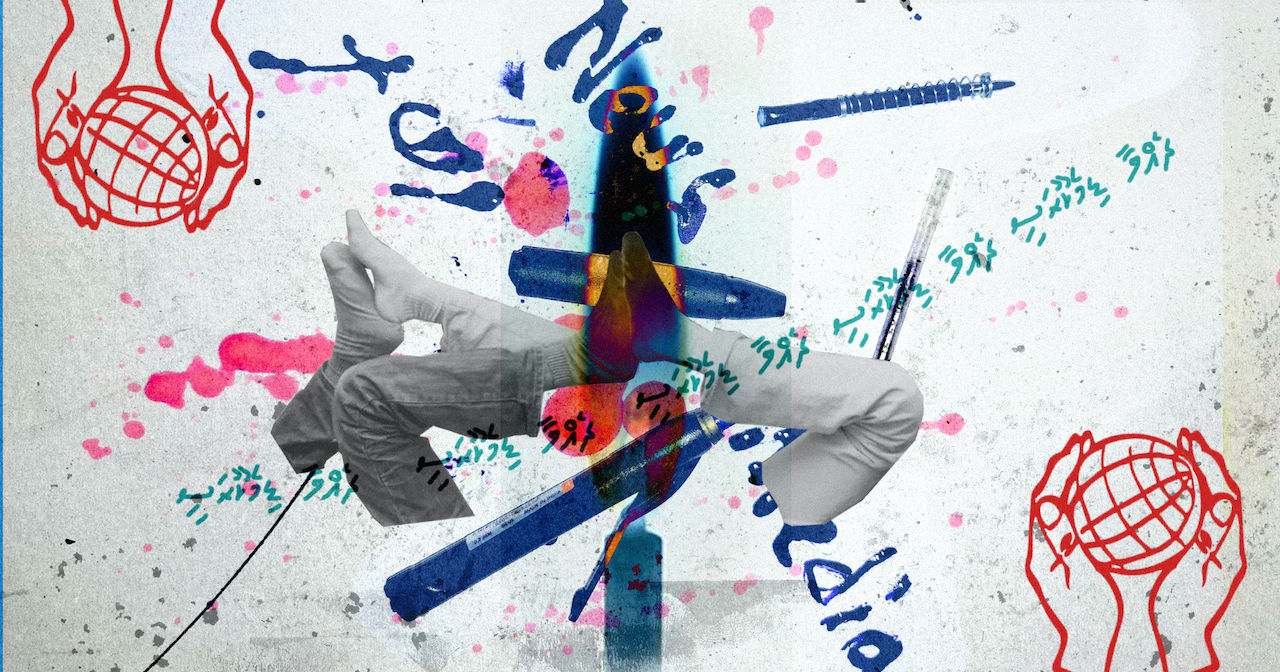
Artwork: Dosain
16 Dec 2025, 16:53
The Maldives Media and Broadcasting Commission published a new code of conduct for journalists on Monday, three months after the "media control law" came into force and created the regulator.
The 13-page document sets out ethical standards that broadcasters, media outlets and individual journalists must follow or face sanctions, including fines up to MVR 250,000 (US$ 16,200) and potential shutdown.
While the code includes standard provisions found in journalism ethics frameworks worldwide – accuracy, source protection, child safeguarding – several elements diverge sharply from international press freedom norms.
In October, a comprehensive analysis by the Centre for Law and Democracy, a Canadian human rights organisation, identified "numerous problems" with the parent legislation, much of which are now manifest in the code.
The CLD recommended "a self- or co-regulatory approach" and noted that the new media commission "does not qualify as either." While the regulator includes four members elected by the media alongside three parliamentary appointees, the ruling party's supermajority can appoint and remove the commission's president, whose powers include setting the agenda for meetings, assigning work to other members, and "managing and overseeing all affairs of the commission."
The CLD called the requirement for the Civil Service Commission to appoint a secretary general "a serious impediment to the independence of the commission, as well as just a general fetter on its ability to operate effectively." The power granted to "a state institution" to compel a commission meeting within 48 hours was meanwhile "completely inappropriate."
The code took effect upon publication in the government gazette on December 15. Media outlets and journalists are now subject to its provisions.
The commission has yet to publish implementing regulations detailing how complaints will be processed and investigated. The law requires these regulations within six months of the Act's ratification. The deadline falls in March 2026.
This explainer examines five areas where the Maldives code of ethics departs from established practice.
Truth and accuracy
What the code says: Section 6 imposes multiple overlapping requirements. Journalists must not publish information "known to be definitely false or with a high likelihood of being false". They must not publish without "making adequate efforts to verify" accuracy when "there is opportunity to do so". If accuracy "cannot be verified," it must be stated as such. Upon discovering that they have published inaccurate information, media outlets must make corrections "as soon as possible" and apologise if circumstances warrant an apology.
What international standards say: The accepted norm is that journalists should make a "professional effort to ascertain the truth before disseminating information" – not that they must never make mistakes. The CLD analysis noted that "many of the statements [in the law] do not align with international standards" and that the law's approach "creates confusion and different standards."
Why it matters: The code sets an impossibly high bar. All journalism involves judgment calls about unverified information, from anonymous tips to leaked documents to claims by sources. The requirement to label unverified information could be weaponised against investigative reporting. In many cases, confirmation comes after publication prompts responses.
Who the code applies to
What the code says: The code applies to "broadcasters, media personnel and journalists" (Section 1). The parent law's definition of journalists includes anyone "engaged in disseminating news and information through electronic means" – potentially covering social media users, though the government was adamant that it would apply exclusively to media workers.
What international standards say: "Dissemination of content by a media outlet, which is what primarily causes the harms sought to be avoided by codes of conduct, is a collective exercise, not just a result of the actions of one person," the CLD explained. A journalist may make an error, but harm only occurs when an editor approves publication. "More sophisticated professional systems only apply to media outlets, per se, and not to individual journalists."
The CLD pointed out that some sanctions are literally impossible for journalists to comply with: "a journalist cannot rectify a breach of the code or publish a correction as these are things only a media outlet can do."
The law also allows the commission to set requirements for who can be an editor. "This is not legitimate. It should be up to newspapers to decide on their own who they feel should work for them as an editor," the CLD said.
Why it matters: Individual liability could create a chilling effect. Journalists might self-censor rather than risk personal sanctions. While the law does not allow the regulator to impose fines on individual journalists, they could be ordered to "rectify" violations, issue public apologies, or publish corrections. Moreover, the broad "electronic means" definition could theoretically extend the code's reach to bloggers and social media commentators.
National security and public order
What the code says: Section 2 lists "maintaining national security and safety" and "maintaining social conduct and public order" among the principles journalists must uphold. Section 5 requires compliance with "standards set by relevant authorities" when reporting on national security matters.
What international standards say: "It is not the responsibility of the media to protect national security, safety, social conduct and public order," the CLD put it bluntly. The law's definition of national security is vague and broad enough to cover almost any critical reporting: matters that "could inflict major damages" to the entire nation or to a large portion of society.
Why it matters: This provision inverts press freedom. Instead of the state justifying restrictions on reporting, journalists must justify why their reporting doesn't threaten undefined "national security" interests. The reference to standards set by "relevant authorities" – without specifying who those authorities are or what standards apply – grants regulators broad discretionary power.
Public interest reporting
What the code says: Section 8 restricts reporting specifically on "matters of public interest." Journalists must distinguish facts from opinions, avoid presenting information or half-truths that "misleads the public", and explain their reasons if publishing content that "may undermine societal norms". Section 8(e) prohibits disclosing false information that could "harm a person's reputation or dignity".
What international standards say: "It is hard to understand the purpose of section 42 [the equivalent provision in the law], given that international law provides special protections for freedom of expression in relation to public interest content, while section 42 imposes additional limitations on it," the CLD noted.
Why it matters: Accountability journalism often involves reputation damage. That's the point of exposing corruption or misconduct. The basis in fact standard is vague: does leaked documentary evidence meet this threshold before the subject has responded? The requirement to justify publishing content that might "undermine social standards" puts the burden on journalists to defend editorial decisions to the regulator.
Sanctions
What the code says: Section 15 states that violations will be punished under Chapter 8 of the parent law. Television and radio stations deemed guilty of repeated violations could face fines of MVR 50,000 to 250,000, as well as suspension of programming or revocation of broadcasting licences (through a court order). For print and online media that "repeatedly violates" the law or the code of ethics: fines of MVR 5,000 to MVR 100,000, blocking of websites, temporary revocation of registration, or permanent de-registration.
What international standards say: Sanctions for code of conduct violations should be limited to "warnings and requirements to publish corrections, replies and the decisions of the oversight body, with smaller fines only being envisaged for repeated and serious breaches," according to the CLD. The rights group recommended that "a separate regime of sanctions should be developed for breaches of the code of conduct" distinct from other regulatory violations.
Why it matters: The code makes no distinction between minor ethical lapses and serious misconduct. A failure to adequately label unverified information could theoretically attract the same sanctions as fraud. For small outlets, fines at the upper range could be crippling or existential. The possibility of registration suspension during investigations – which can extend beyond the stated 30-day window – means outlets can be silenced before any finding of wrongdoing.
Discussion
No comments yet. Be the first to share your thoughts!
No comments yet. Be the first to join the conversation!
Join the Conversation
Sign in to share your thoughts under an alias and take part in the discussion. Independent journalism thrives on open, respectful debate — your voice matters.
Support Independent Journalism
Help us keep the news free and fearless
Give once
$
or
Become a memberfrom $5/month

