

Young Maldivians join global climate strike
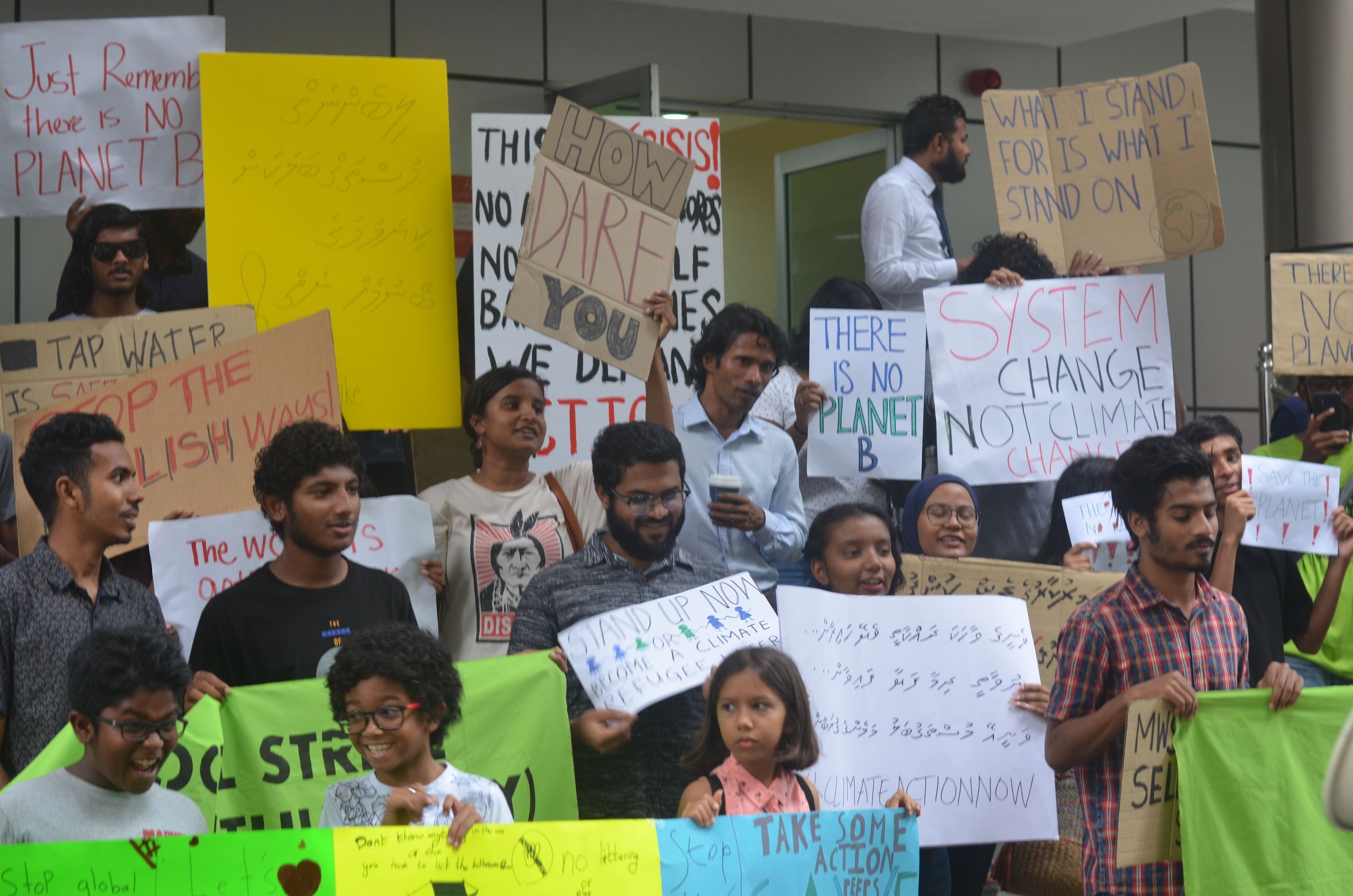
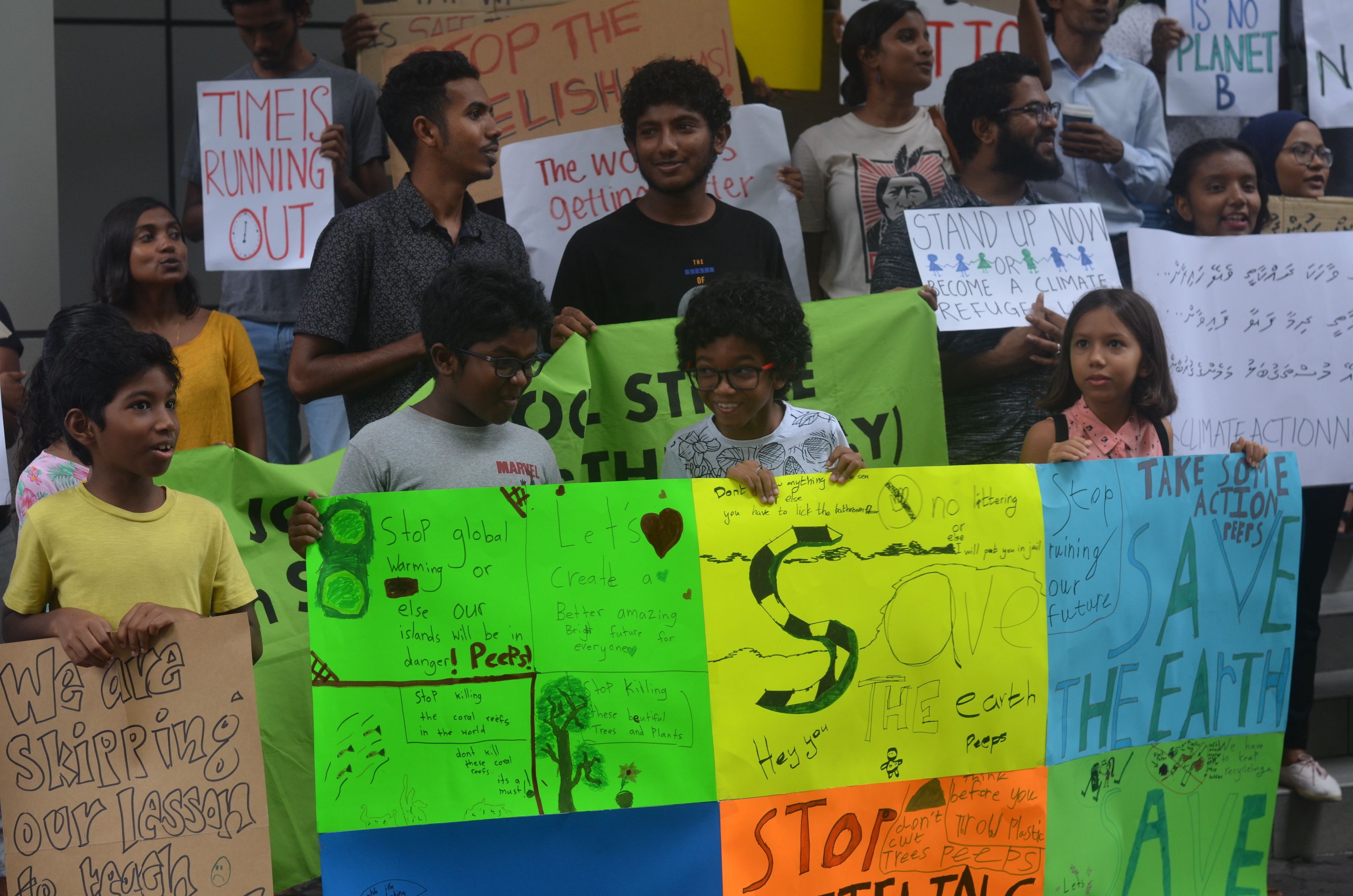
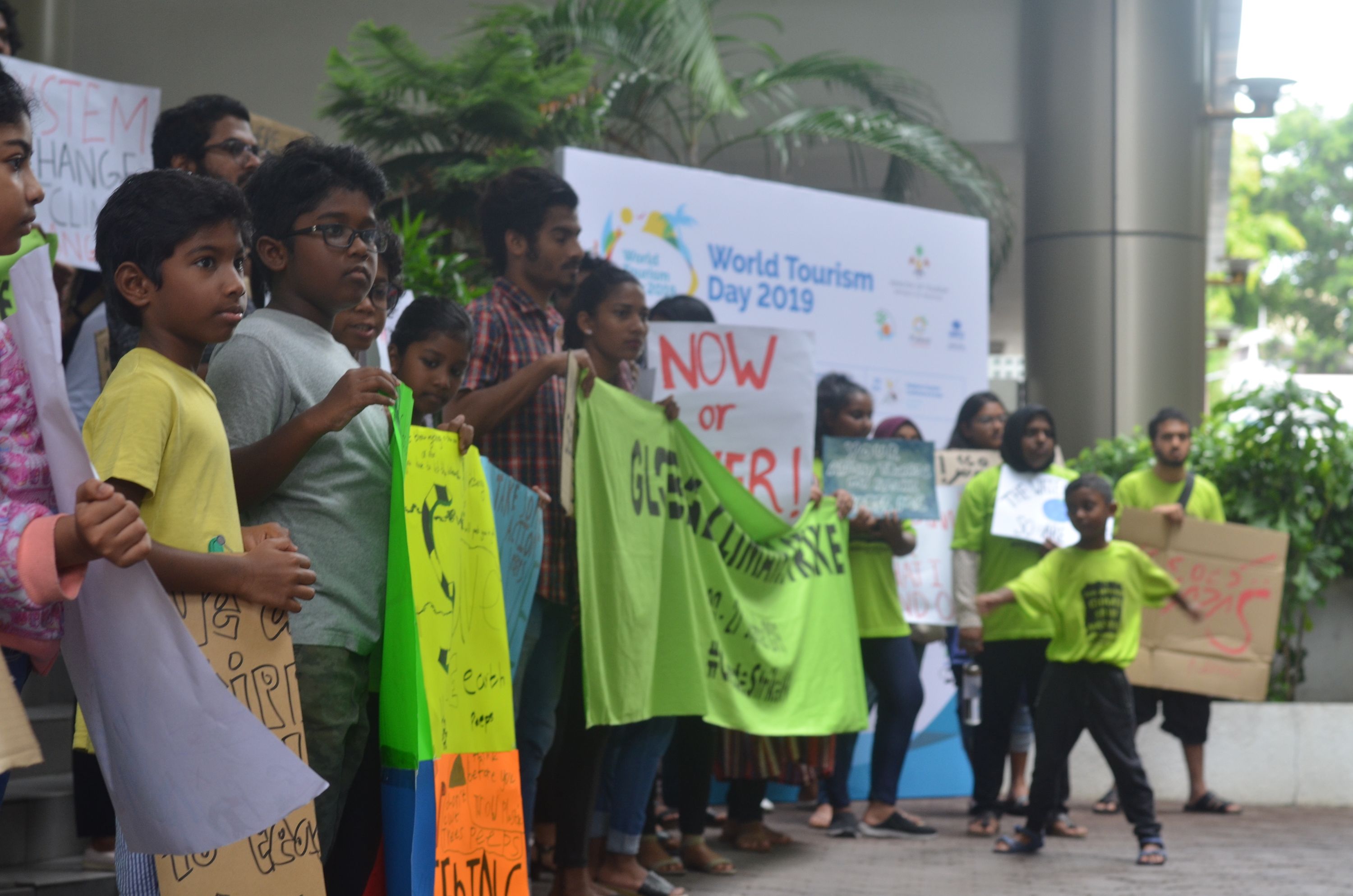
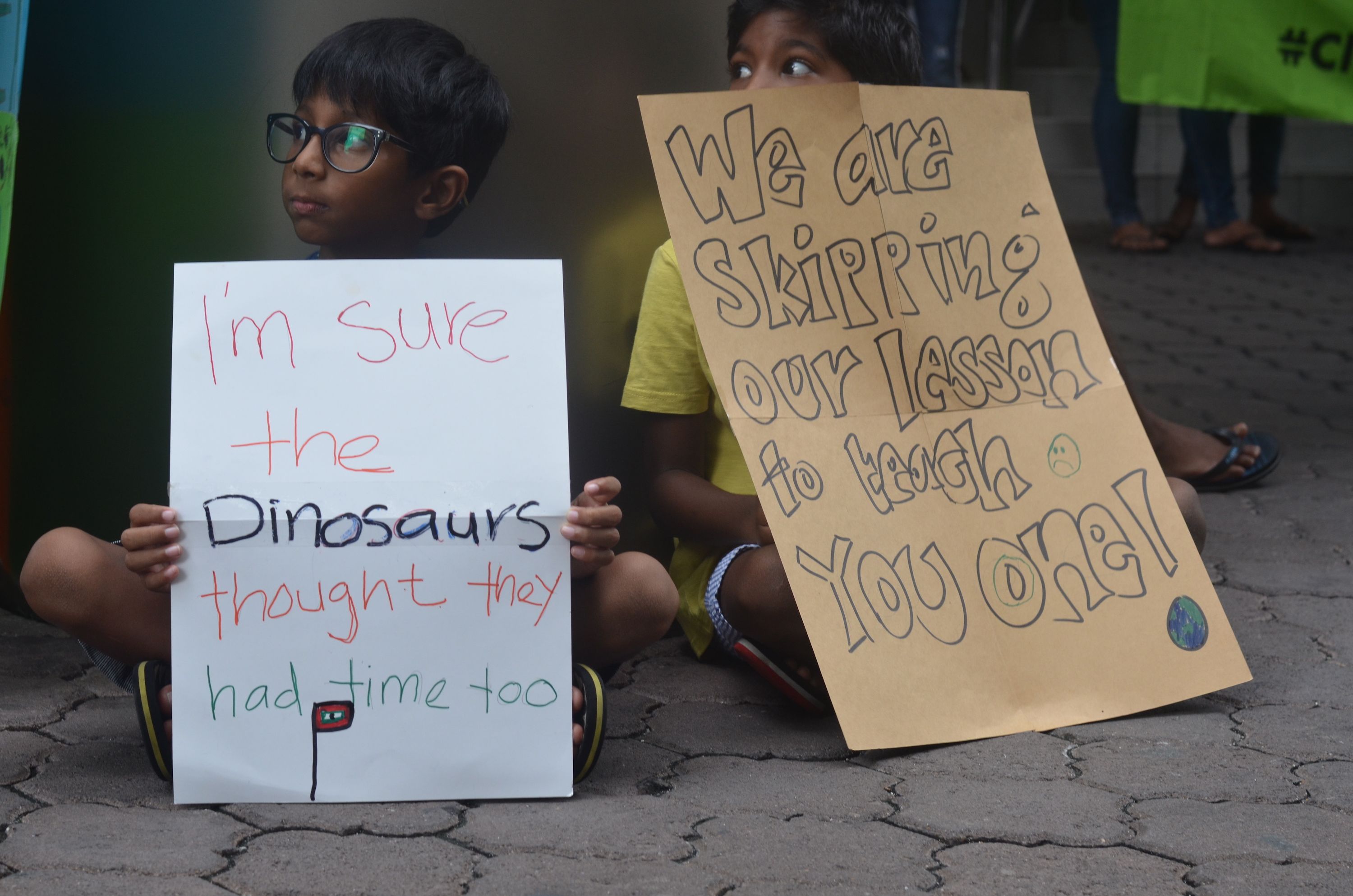
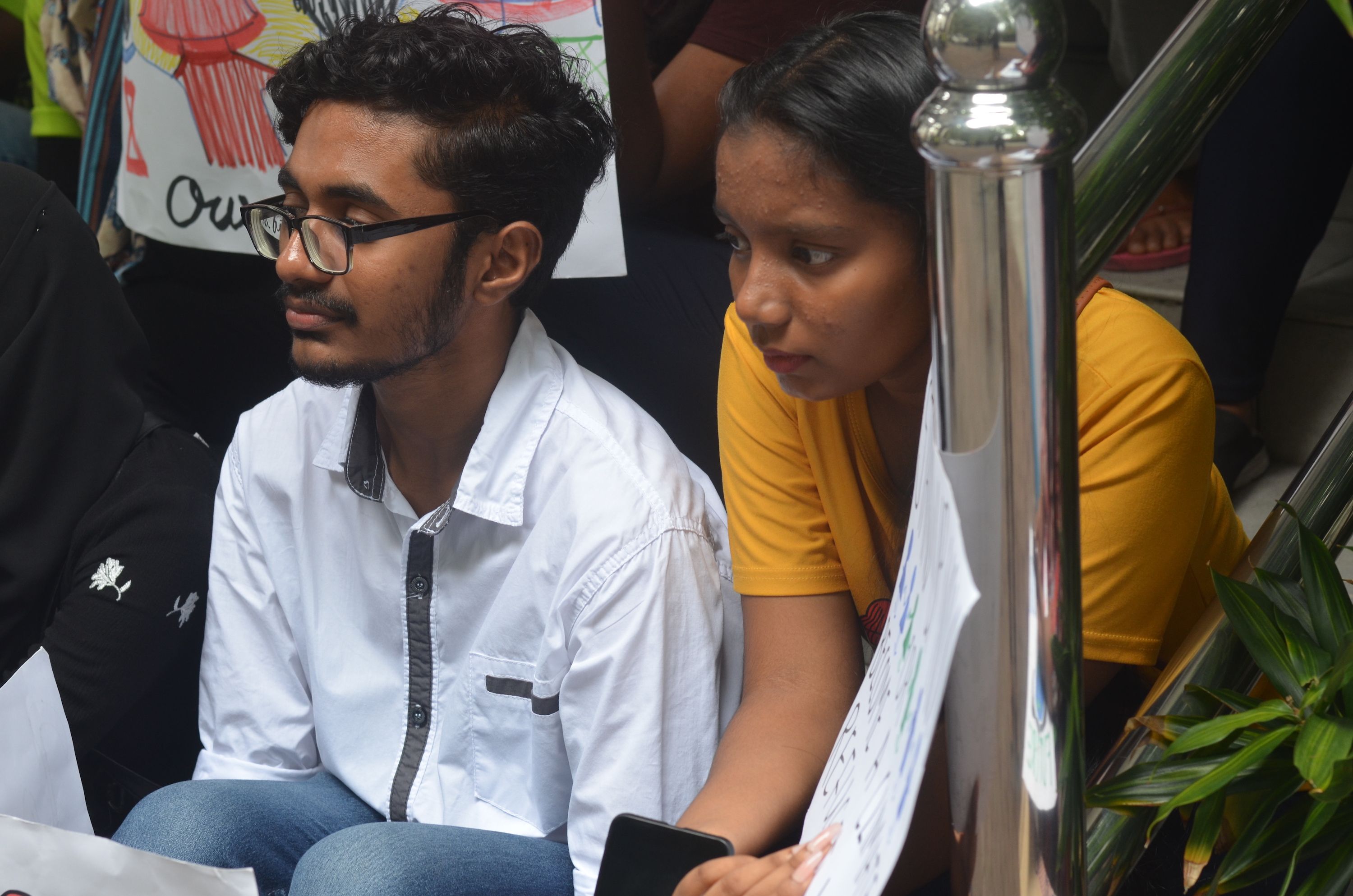
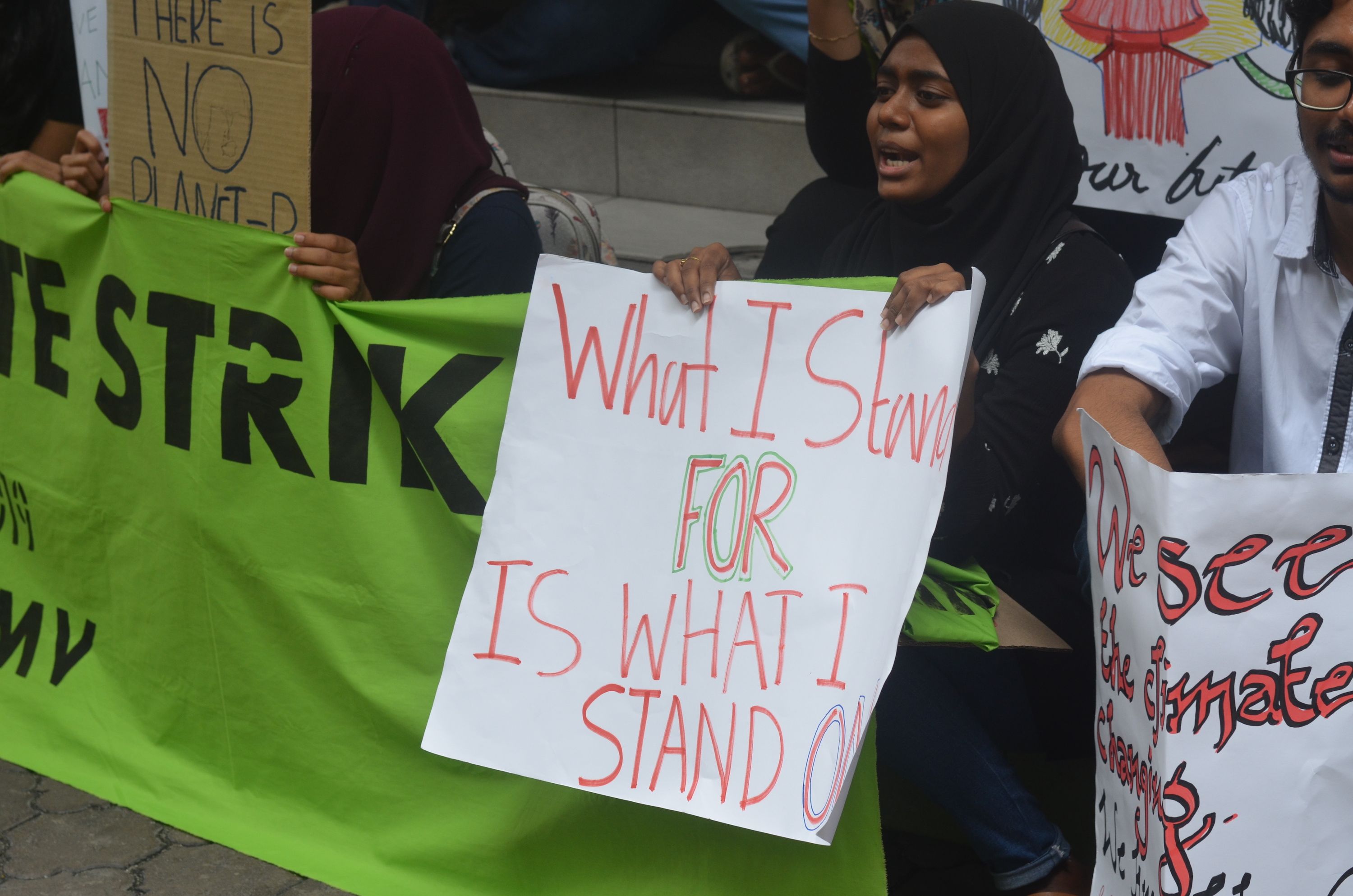
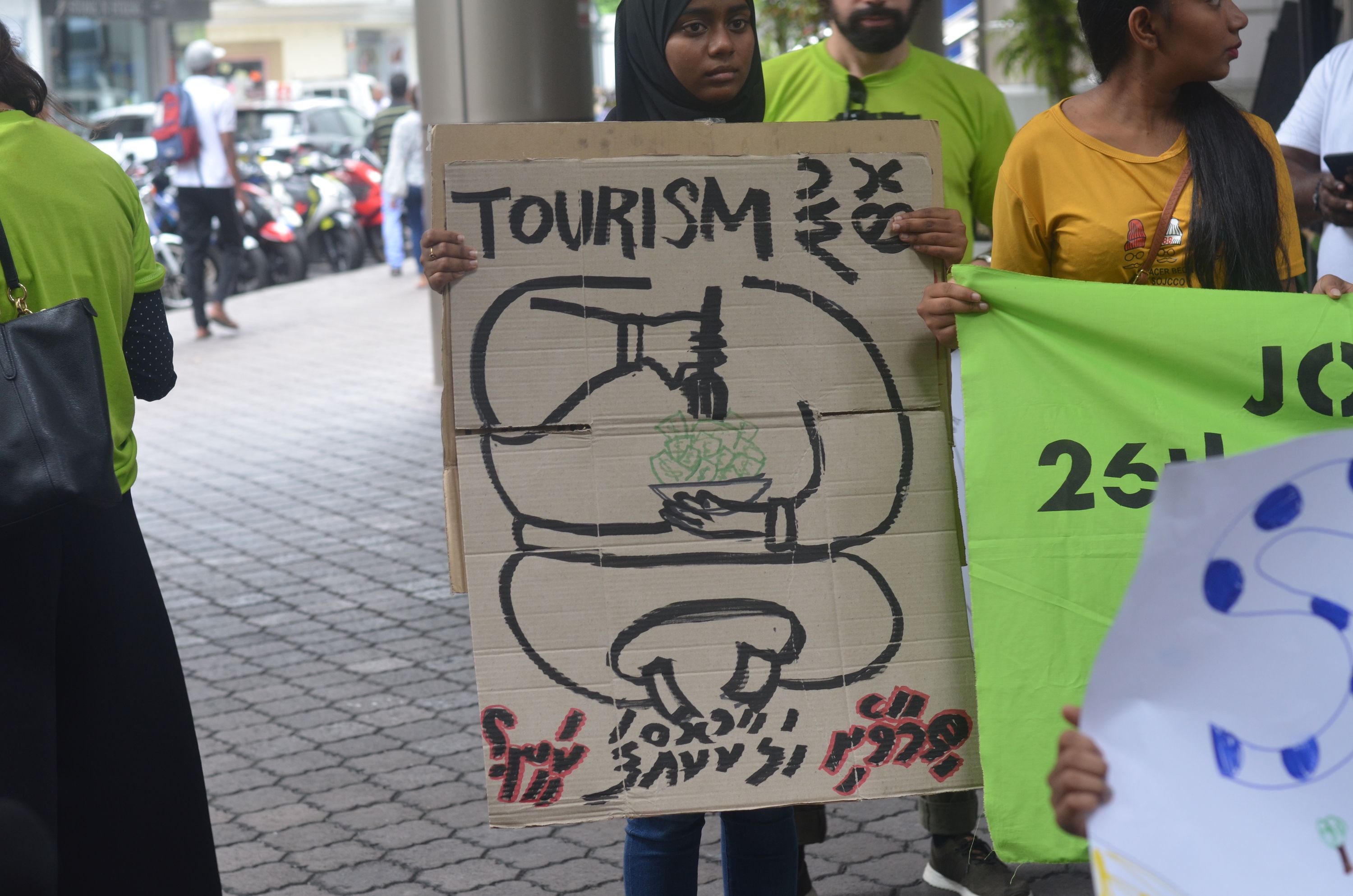
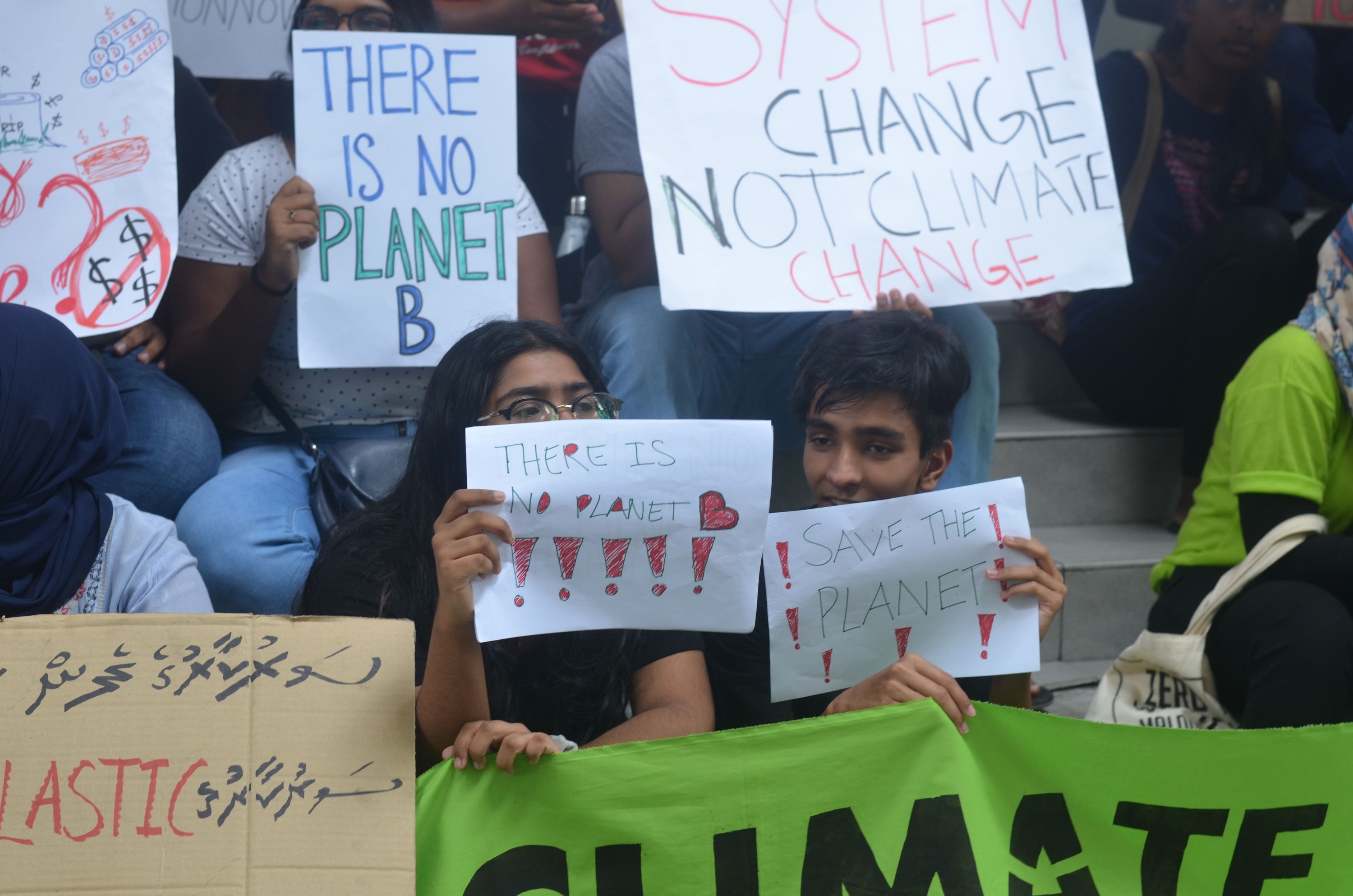
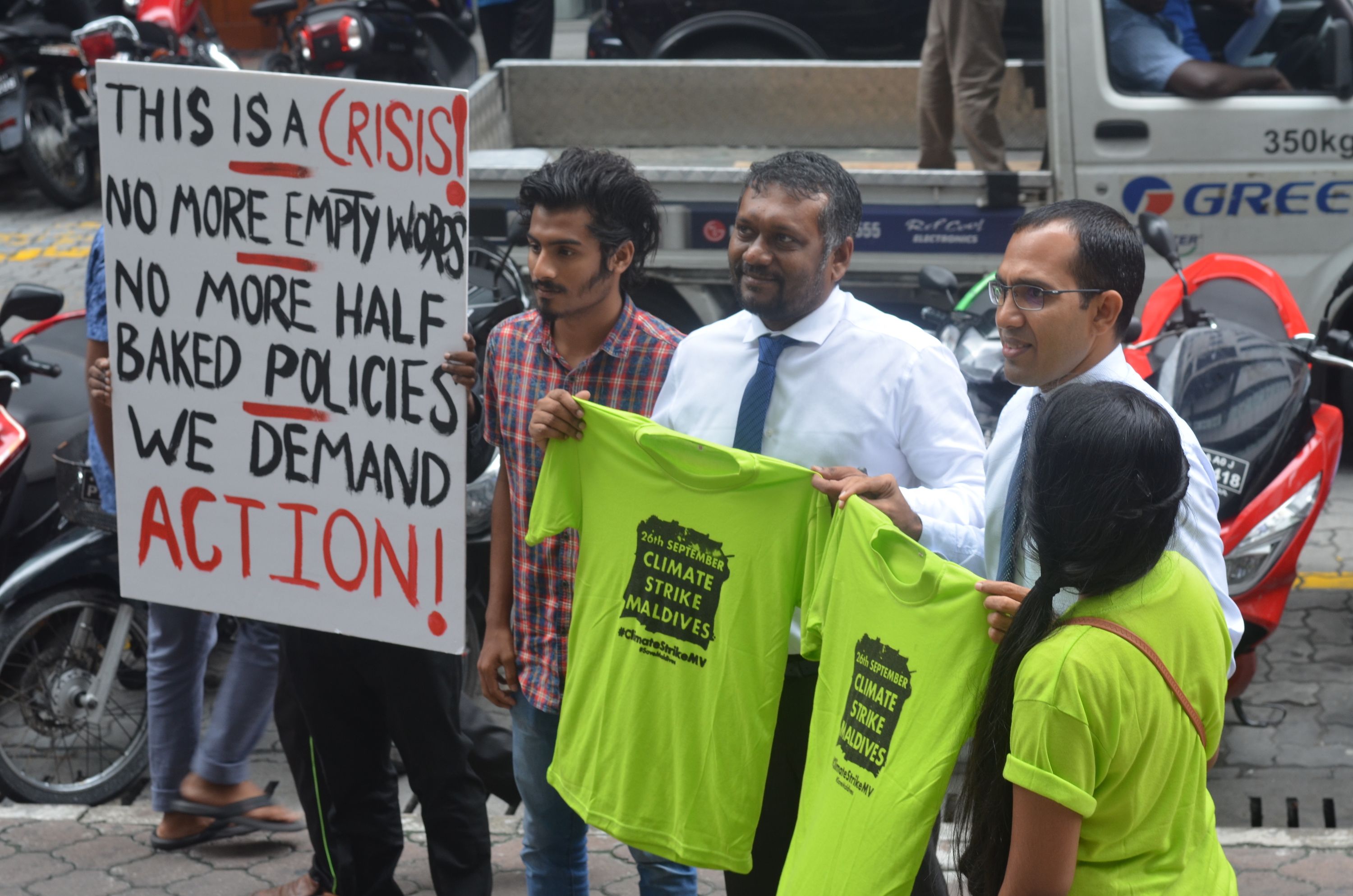
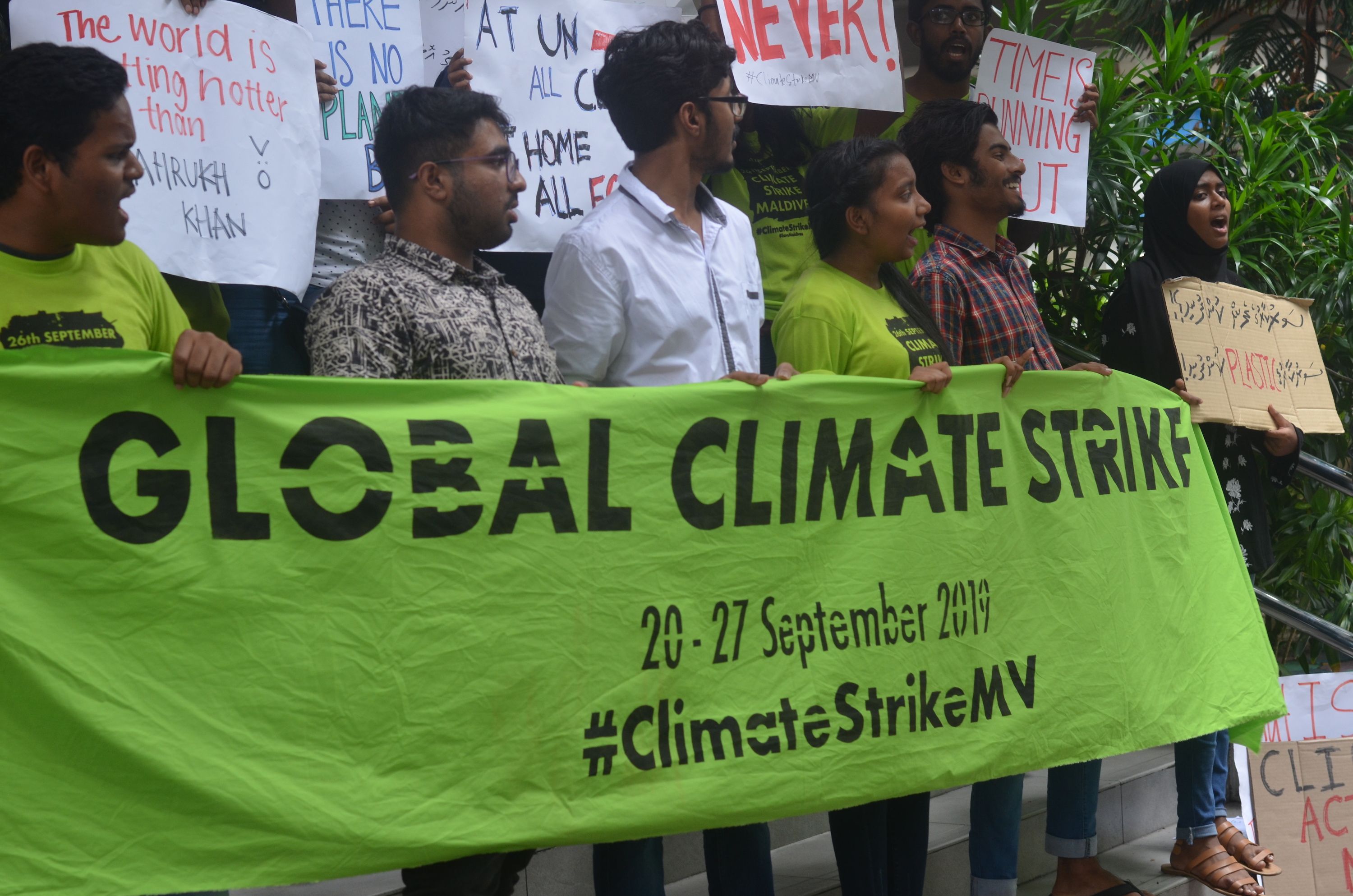
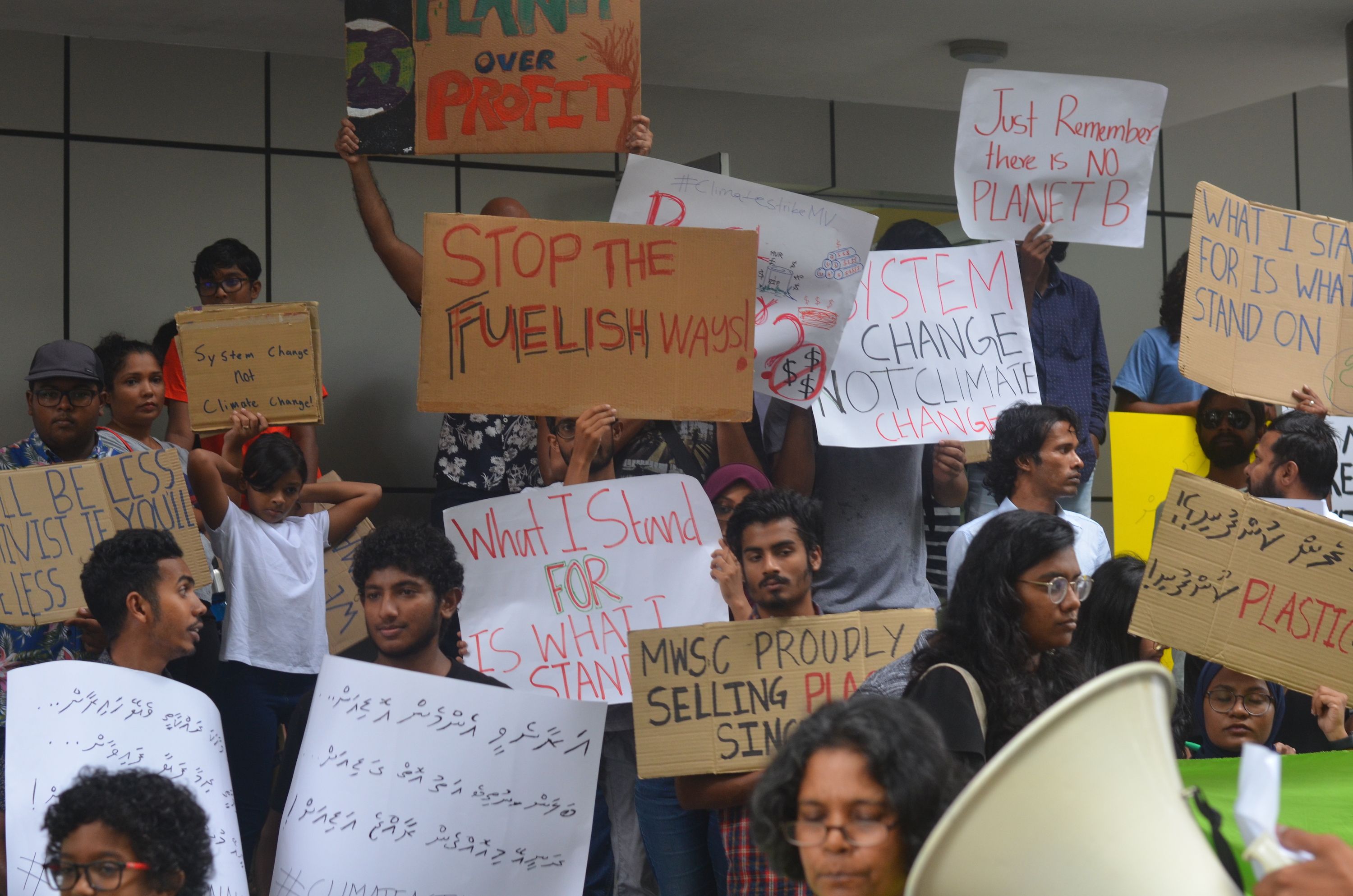
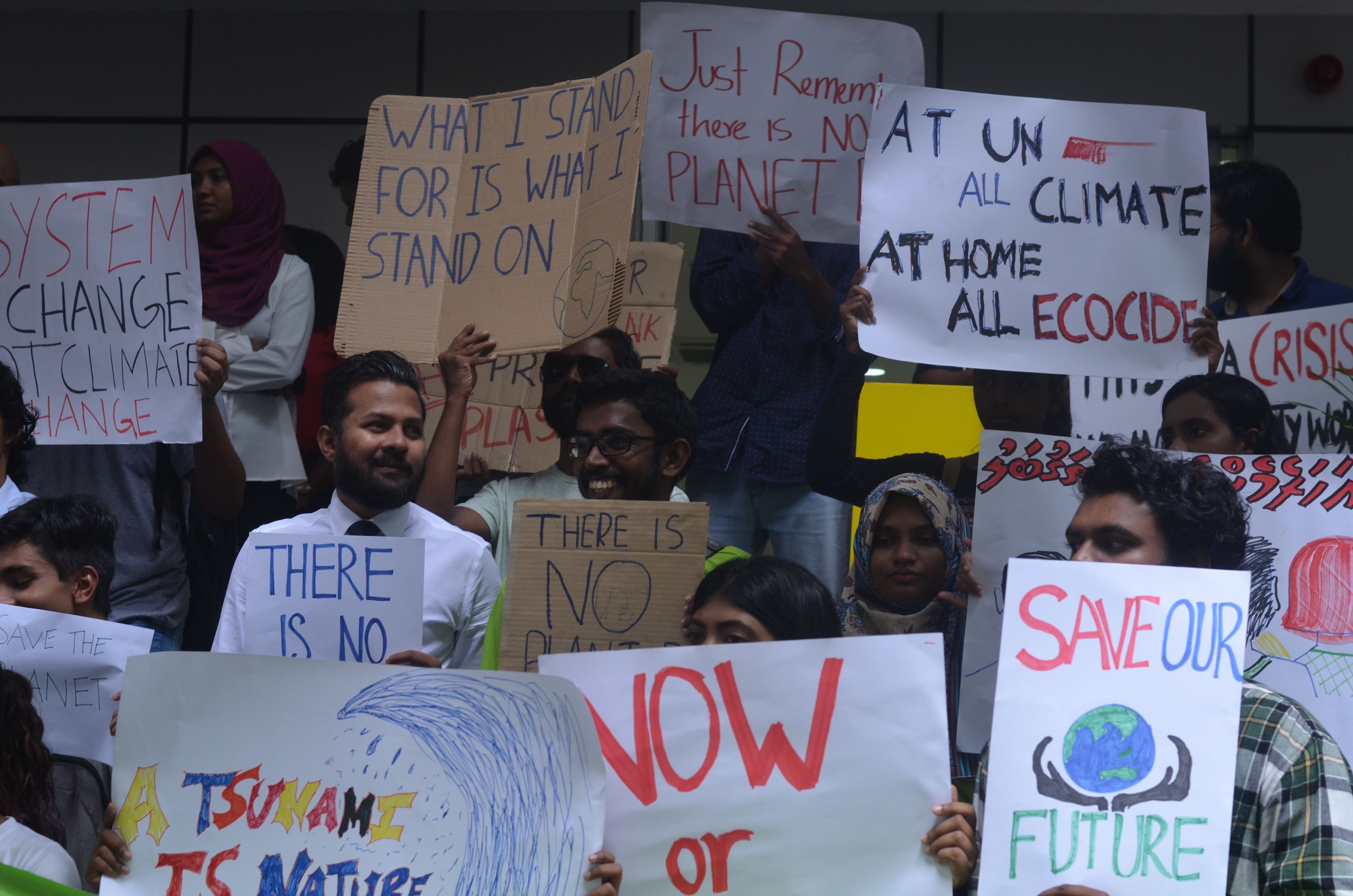
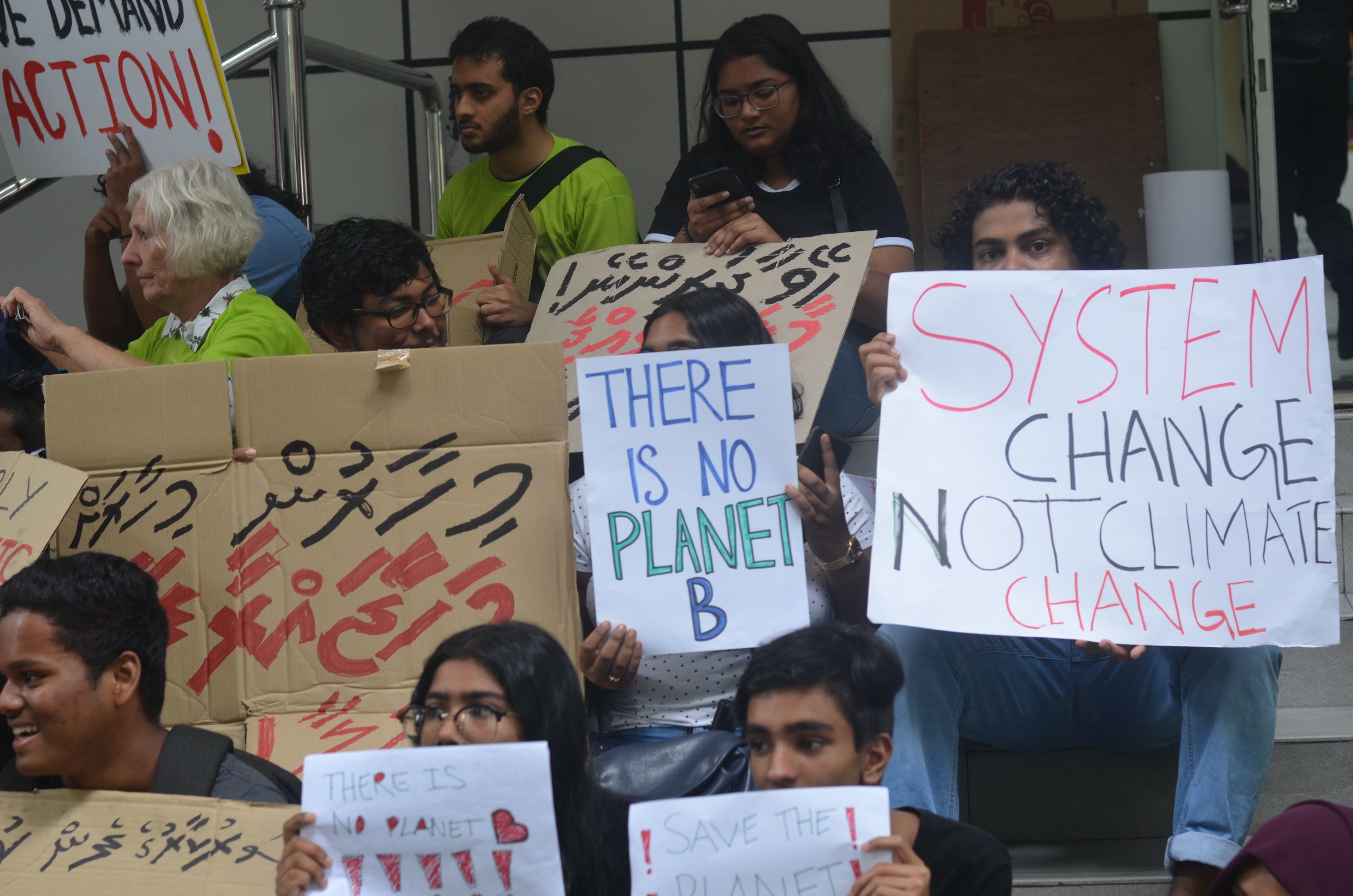
Students skipped school to protest in front of the main government office building.
DECLARE A CLIMATE EMERGENCY IN MALDIVES IMMEDIATELY
Stop reclamation and any degradation of marine ecosystems.
Make disaster preparedness and management a high priority.
Ensure climate resilience through nature based soft measures in the face of increased climate risks a. Preserve mangroves b. Preserve and build green zones around islands c. Preserve and plant trees on roads and open areas to combat increased ambient temperatures. d. Preserve forested areas and ban removal and transport of mature trees from islands for commercial purposes. e. Preserve seagrass habitats
Developing climate resilient housing and infrastructure a. Put in place population and development limits for all islands to avoid resource over-utilisation and to reduce pressures on natural ecosystems, and to better manage natural disaster scenarios and health related outbreaks (which are predicted to be more frequent and more intense in the face of climate change). b. Develop Climate resilient building codes and circular models for building design and build climate resilience index of buildings. Building codes to include adaptive measures like water storage, provision for renewable energy , innovative methods for food security such as edible gardens, composting, cold storage and reuse of greywater. c. Ensure the roads and drainage infrastructures take into account predicted increase in flooding events. d. Move away from the “conventional harbour” models to innovative harbour solutions that promotes climate resilience. e. Ensure that land use plans place critical infrastructure away from flood zones.
Safeguarding food and water security and safety a. Prioritise innovative ways for food security and land allocation for development of sustainable agriculture projects such as vertical farms. b. Ban use of harmful pesticides or chemicals in agriculture. c. Make harvesting of rainwater and its storage and water quality a high priority d. Urgently provide safe drinking water for all islands with identified water shortages during dry periods. e. Ensure newly planned installation of water supply on islands provide drinkable grade water f. Ensure mechanisms are in place for protection of water lenses on islands. g. Ensure sewage is treated before being discharged
Create a number of Biosphere Reserves across the Maldives that will preserve the resilience of the country. a. Create Marine Protected Areas as core areas within Biosphere Reserves, prioritising ALL regions which have not been impacted by development. b. Introduce strict laws and monitoring for the enforcement of the integrity of the biosphere. c. It should be illegal to dredge or reclaim land for any purpose associated with tourism or fisheries or other industries in the biosphere. d. Ensure the integrity of the water lenses on all islands at the biosphere reserve. e. Environmental Offenders should be held accountable.
Transitioning to renewable energy and reducing emissions a. Eliminate dependency on fossil fuels and transit to renewable energy sources for electricity b. Introduce and maintain a public transport system in more urbanised islands that is favourable for public use c. Provide pedestrian and bicycle friendly roads. d. Provide Electric Vehicle incentives and drastically reduce the import of fossil fuelled vehicles. This includes incentives for parking, yearly fees and registration incentives. e. Capping the amount of vehicles in an island depending on the population and the size of the island f. Projects under the government pledge to provide water and sanitation to all islands to be fuelled by renewable sources. g. Make a complete transition to renewable energy by 2030 as pledged in the United Nations General Assembly.
Climate transparency, communication and public engagement a. Communicate action plans and policies with all stakeholders and ensure transparency. b. Stop token engagements and policy documents without actions. c. Act on the Public’s right to information. d. Publicize and share Climate Smart Resilient Islands Model Action Plan with public within ONE MONTH. Including sharing the budget for climate mitigation and adaptation. e. Publicize the budget and spending of Green Fund. f. Ensure meaningful public consultation during planning. g. Ensure information dissemination on mainstream and public media regarding Climate Resilience and Climate Crisis. h. Create a network of partners and civil society to find solutions to the climate crisis locally.
Strengthen environmental related laws and regulations for immediate action a. Criminalise all reclamations for tourism and other industrial purposes. b. Develop Water Security and Safety Act which has not materialized to date. c. Make Strategic Environment Assessments compulsory for large national level programmes and development projects across the country. d. Government policy backed by legal provision, including targets for setting up self sustainable food sources to ensure food security for Maldivians. e. Act on the existing laws to immediately stop littering and dumping, open burning of waste.
Integrate climate mitigation and adaptation in Education systems a. Invest into building climate resilience in children and youth and ensuring their voices are heard and incorporated into policies and plans. b. Revise and re-create education modules to ensure children are mentally and physically ready and empowered for a rapidly changing world and the climate crisis. c. Include activities and lessons in all subjects that promote the love towards natural Maldivian environments with a view that the children will grow into responsible citizens safeguarding the environment they love. d. Make schools learning grounds for behavioral change and climate adaptation by establishing a “green school” grading system based on allocations such as School waste management, renewable energy, gardening, composting, food choices and conscious consumerism. e. Train teachers and educators on the importance of environmental education through hands on experiences and graded exams for teachers.
Include community and indigenous knowledge when addressing the climate crisis a. Prioritise and support documentation and dissemination of indigenous knowledge. b. Give priority to understanding, preserving and applying indigenous knowledge. c. Integrate practical components of native wisdom into school curriculums. d. Set up opportunities to support livelihood through traditional know-how and craftsmanship. e. Support and Empower community initiatives in resilience building, including the conservation and protection of environment .
IMMEDIATE Solutions to Waste Management a. Stopping the burning of Thilafushi waste and burning of waste on any island immediately. b. Immediately announce cessation of endorsing oxo-degradable plastic bags by EPA. c. Implement the pledge to ban all single use plastics by 2023 completely. Including the banning of drinking water storage in PET bottles and banning of all single-use plastic bags. d. Stop ocean dumping of waste, especially by sea transport vehicles. e. Control of sewage dumping and invest in innovative technologies for treatment and disposal of sewage
Discussion
No comments yet. Be the first to share your thoughts!
No comments yet. Be the first to join the conversation!
Join the Conversation
Sign in to share your thoughts under an alias and take part in the discussion. Independent journalism thrives on open, respectful debate — your voice matters.
Support Independent Journalism
Help us keep the news free and fearless
Give once


