

The Maldives didn't "decide" to fish sustainably. It always has.
A day aboard a fishing boat from bait to sale.
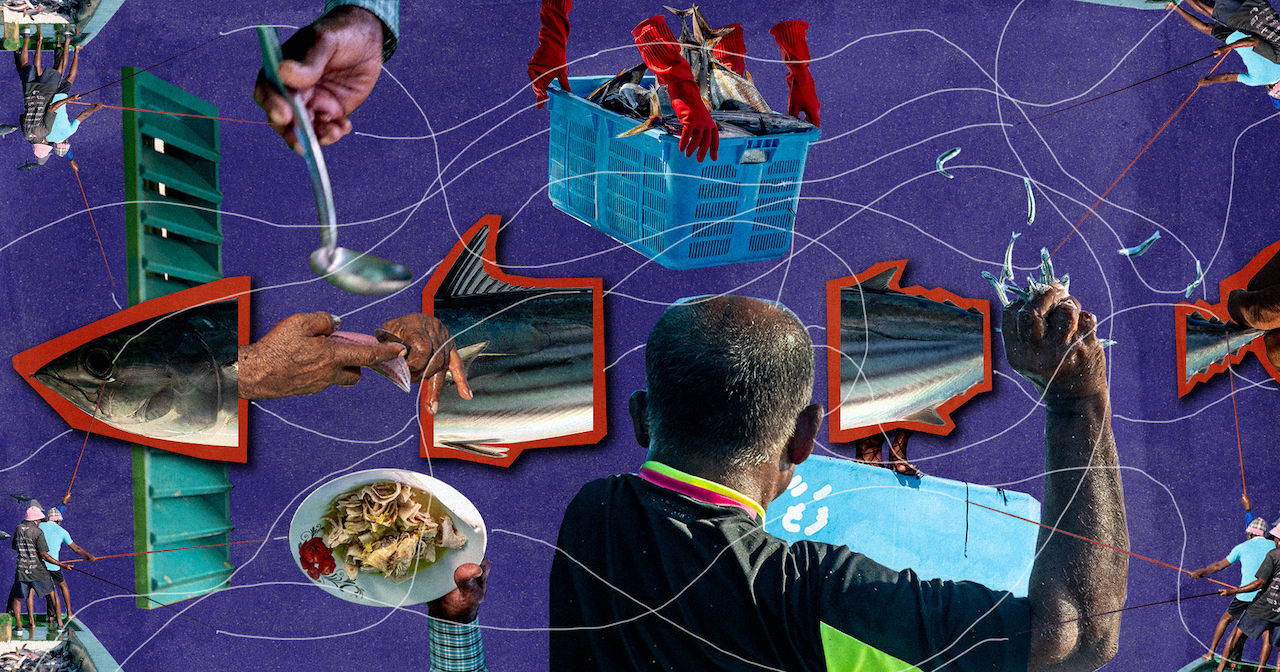
Artwork: Dosain
23 Dec 2025, 17:34
In February, international investors gathered in the Maldives to discuss the future of tuna – businesspeople from Switzerland, Canada, the UK and the United States, armed with sustainability frameworks and blue finance models. During a workshop, one asked a telling question: "When did the Maldives decide to adopt pole-and-line fishing?"
It revealed how little the outside world understands about the millennia-old fishing method. The Maldives did not decide. It has always been a pole-and-line nation. It was not a policy choice or a marketing pivot.
Another investor wanted to know what happens to unsold fish: "Is it dumped back into the sea?"
No. Nothing is wasted. Unsold tuna becomes sambol, valhomas, rihaakuru. For centuries, dried Maldive fish was a major export to Sri Lanka and beyond. The questions reflected an imagined industry that bore no resemblance to reality. Tuna is not simply an industry here. It is a cornerstone of food, culture, and identity.
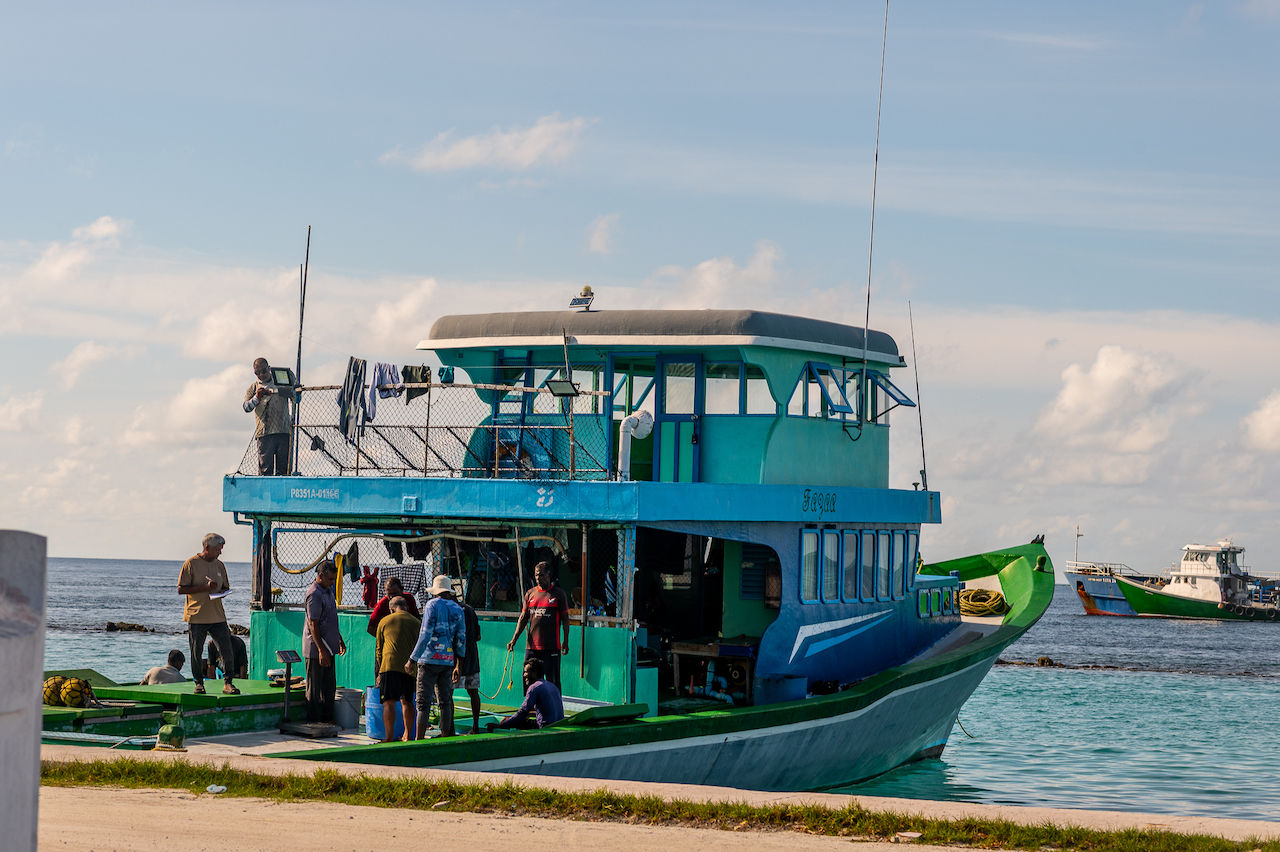
Last year, to understand what this looks like in practice, I spent a full day aboard a mas dhoni with a fishing crew from Meedhoo, documenting the process from bait to sale.
A day at sea
I arrived on the island the day before, meeting locals and touring the island. When the boat returned that evening, the captain warned me not to expect much the following day. Catches had been low for weeks.
At 2.30am, the dhoni slipped quietly out of Meedhoo harbour, its deck lit by a single bulb and the pale glow of the moon. Men lay on the deck, rocked to sleep by the gentle waves. The captain passed around dried tuna and coconut slices. The sea was calm, but the work ahead would not be.
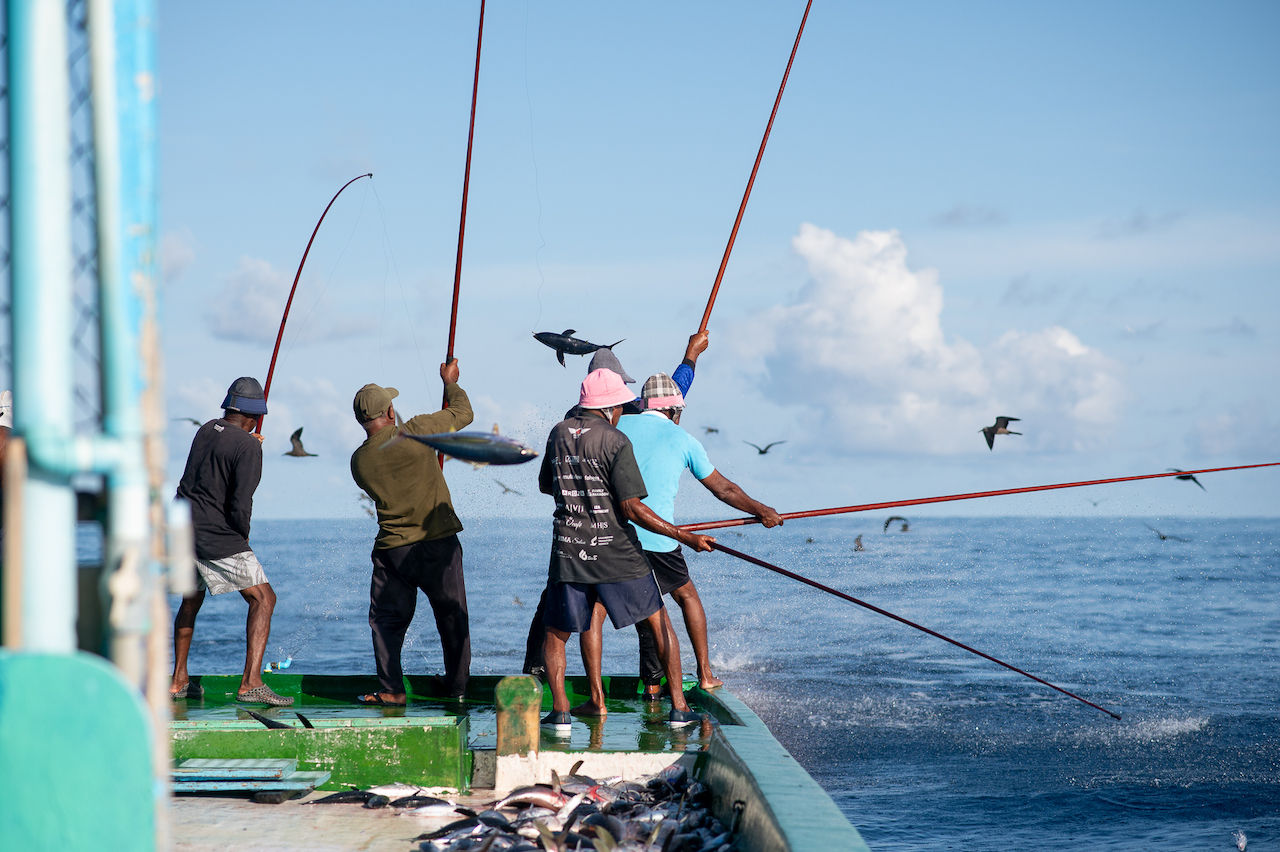
By the time the sun rose and set, these same men would haul live bait from the lagoon, chase tuna shoals alongside circling seabirds, and spend hours fishing by hand, pole and line, in a tradition passed down through generations.
At 4am, the boat reached a lagoon to catch bait. A powerful floodlight, a relatively new adaptation, had a red filter flashed over it to attract rehi, as bait becomes harder to find. Men jumped into the water, guiding fish into the net before transferring them into a live well in the hull that flushed continuously with seawater.
From there, we headed beyond the atoll to a nearby fish aggregating device. As the sun rose, the crew prepared their lines, napped, and took turns praying in the helm.
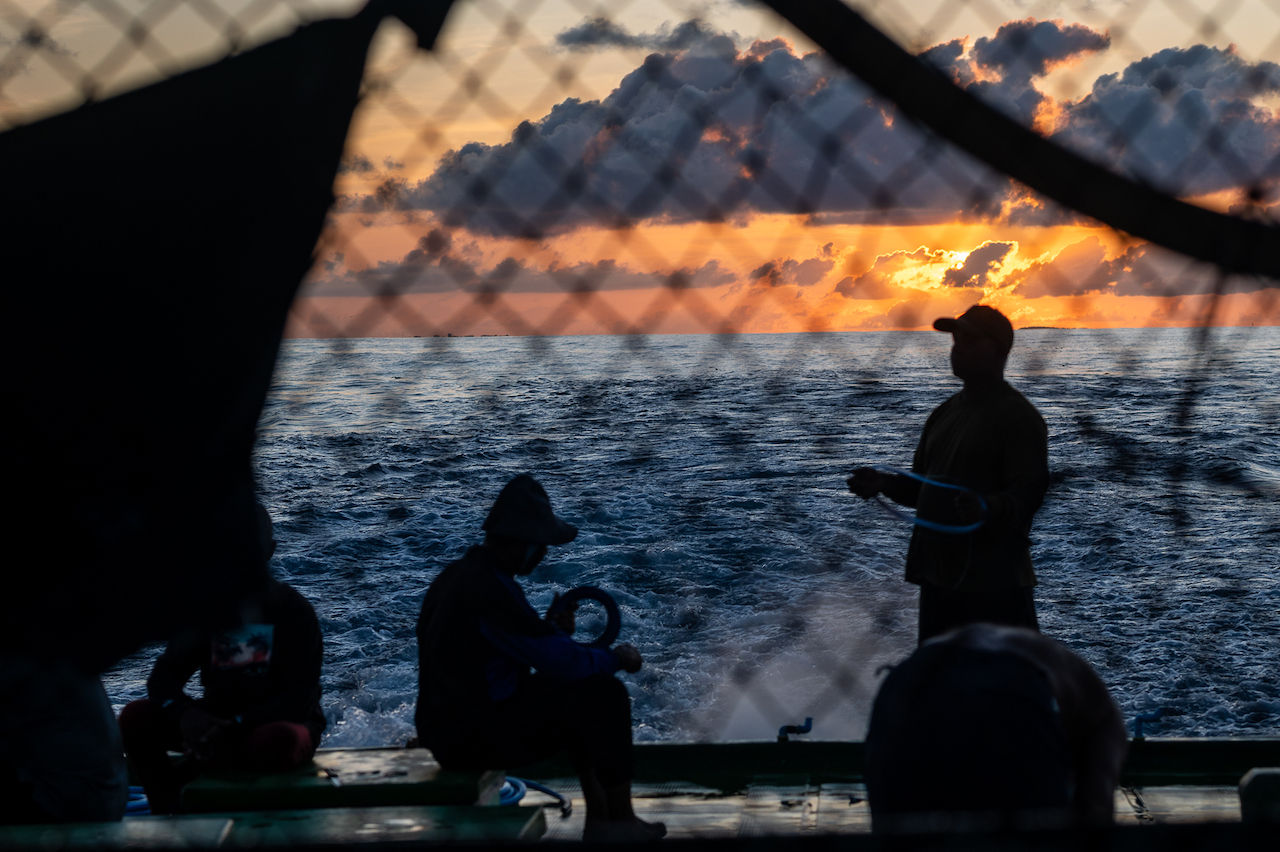
Over cups of heavily sugared coffee, Mohamed, the boat's owner, spoke candidly about the challenges facing the industry. The most pressing, he said, is demographics.
"Young people don't want this life anymore," he explained. Many leave for Malé in search of office jobs and what city life has to offer compared to a quiet island life. In Raa atoll, fishing crews are shrinking and ageing. Mohamed now hires Bangladeshi workers to fill the gaps, covering visas and accommodation on top of wages.
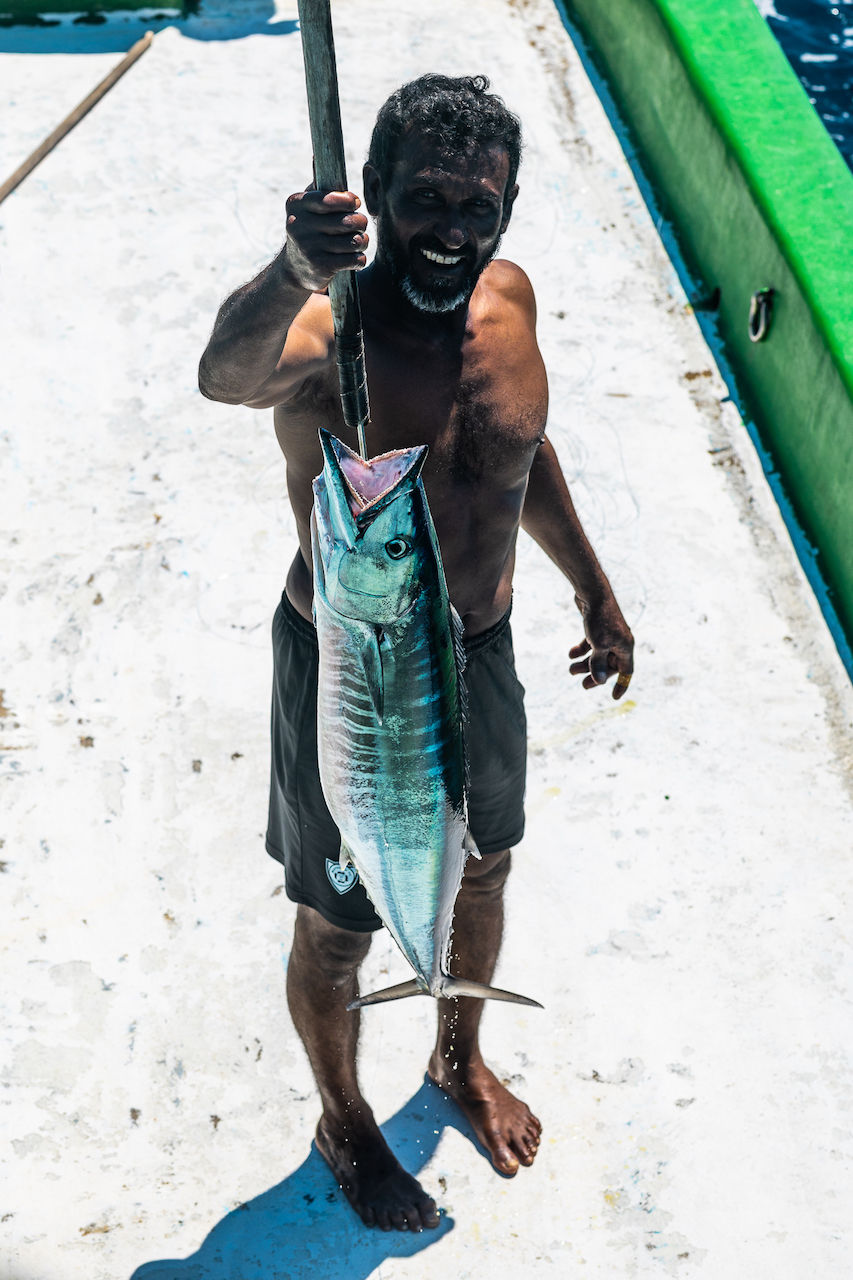
The youngest crew member, a Bangladeshi man, moved tirelessly across the deck, grinning at the camera and proudly posing. Older Maldivian fishers clapped him on the back as he passed. There was no hierarchy in how labour was treated. Even I, as I took part in bringing in the bait net, trying to catch tuna, and assisting in scrubbing down the boat, was respectfully treated like another member of the crew. Not a single person was made to feel like an outsider, or lesser than anyone else.
The work itself is physically punishing. Pole-and-line fishing demands strength, balance, and precision, and the men worked more than 12 hours that day. Many were grandfathers. Watching them scrub the deck repeatedly with knotted hands was, at times, difficult.
Yet when a tuna shoal appeared, exhaustion vanished. The crew sprang into action, working seamlessly with the brown noddies circling above. These seabirds remain essential to locating fish. Every movement was practised, efficient, and deliberate.
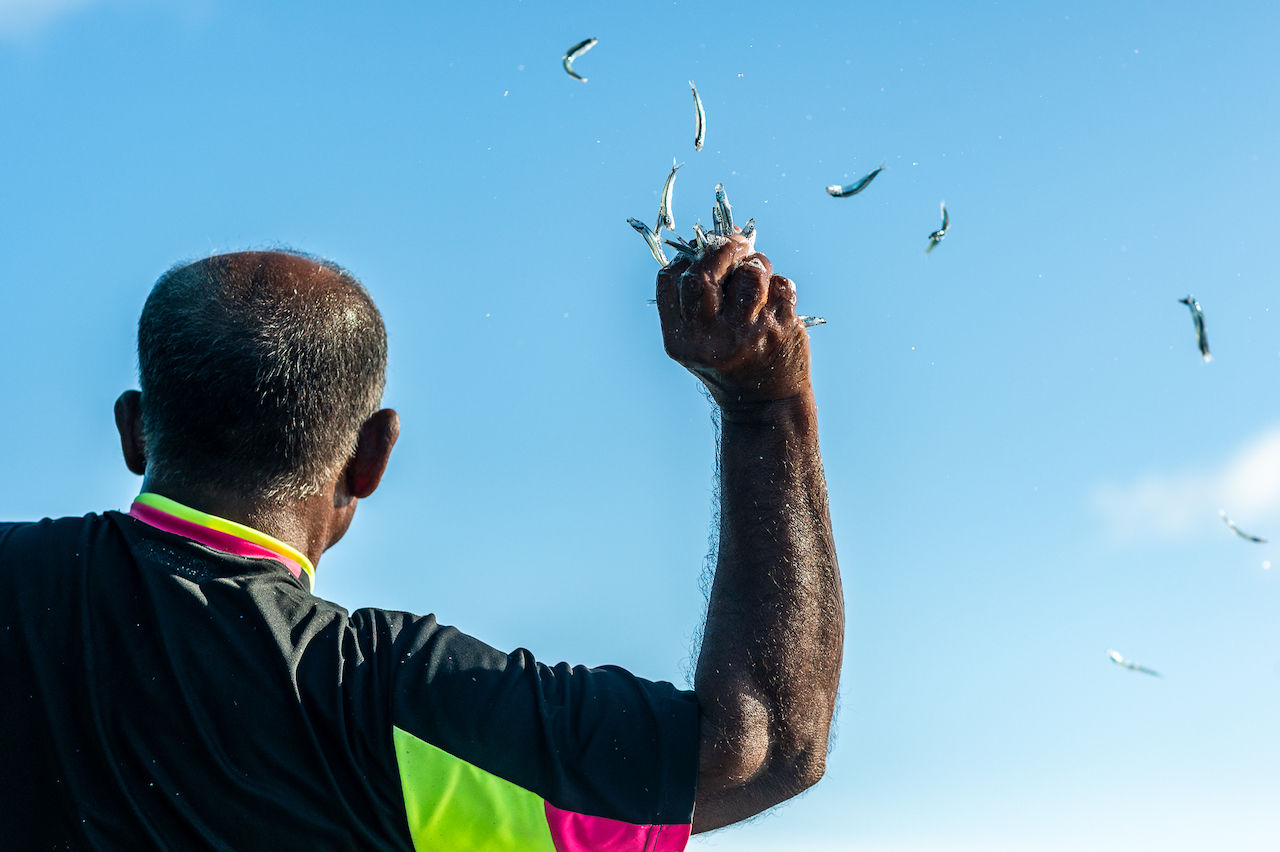
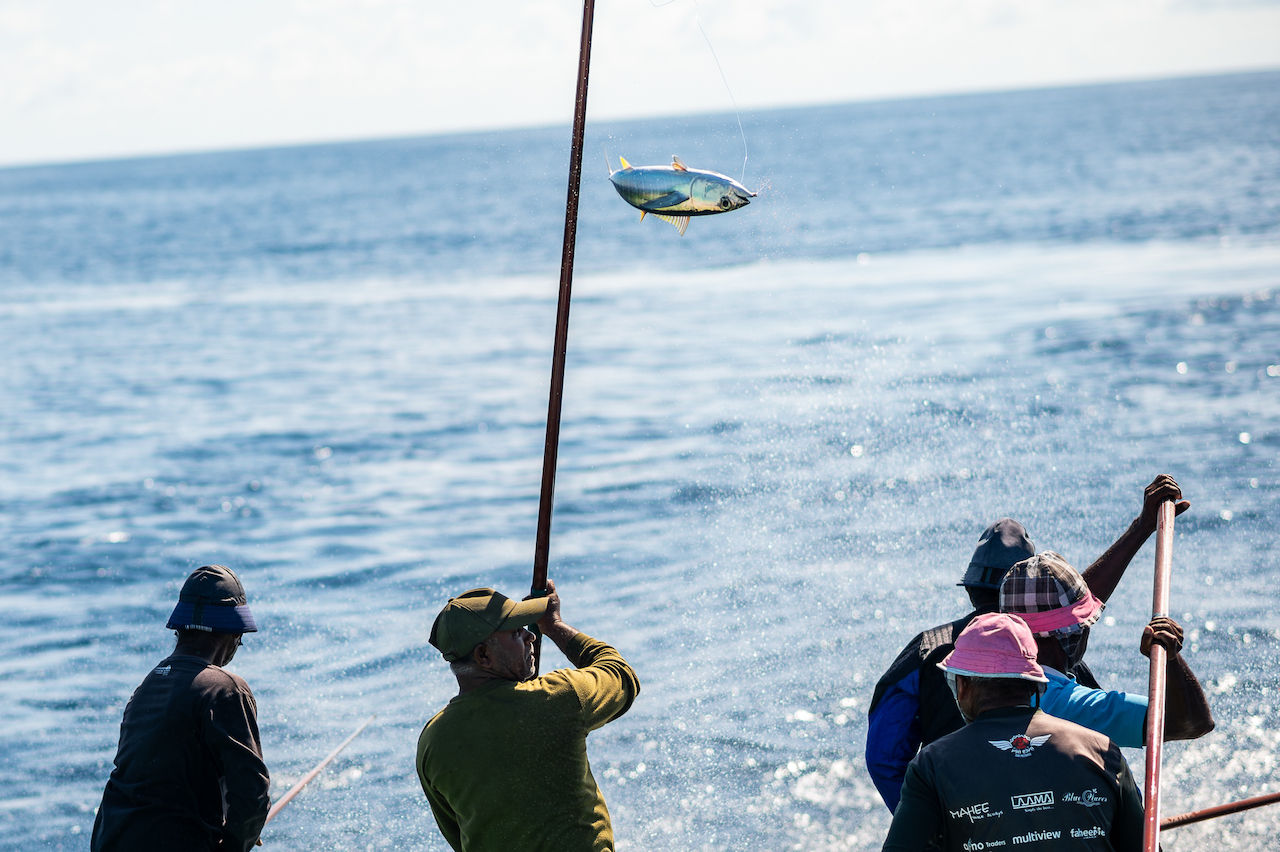
After each catch, tuna were rinsed and stored on ice while measurements were recorded. Smaller fish became our meals. After being warned that we could end up with next to nothing, we had finished the day with several tons of fish. The yellowfin and skipjack tuna catches were sold to an ENSIS cannery vessel and paid for by weight. Other small species, such as kawakawa, were taken home or sold locally, including for rihaakuru production.
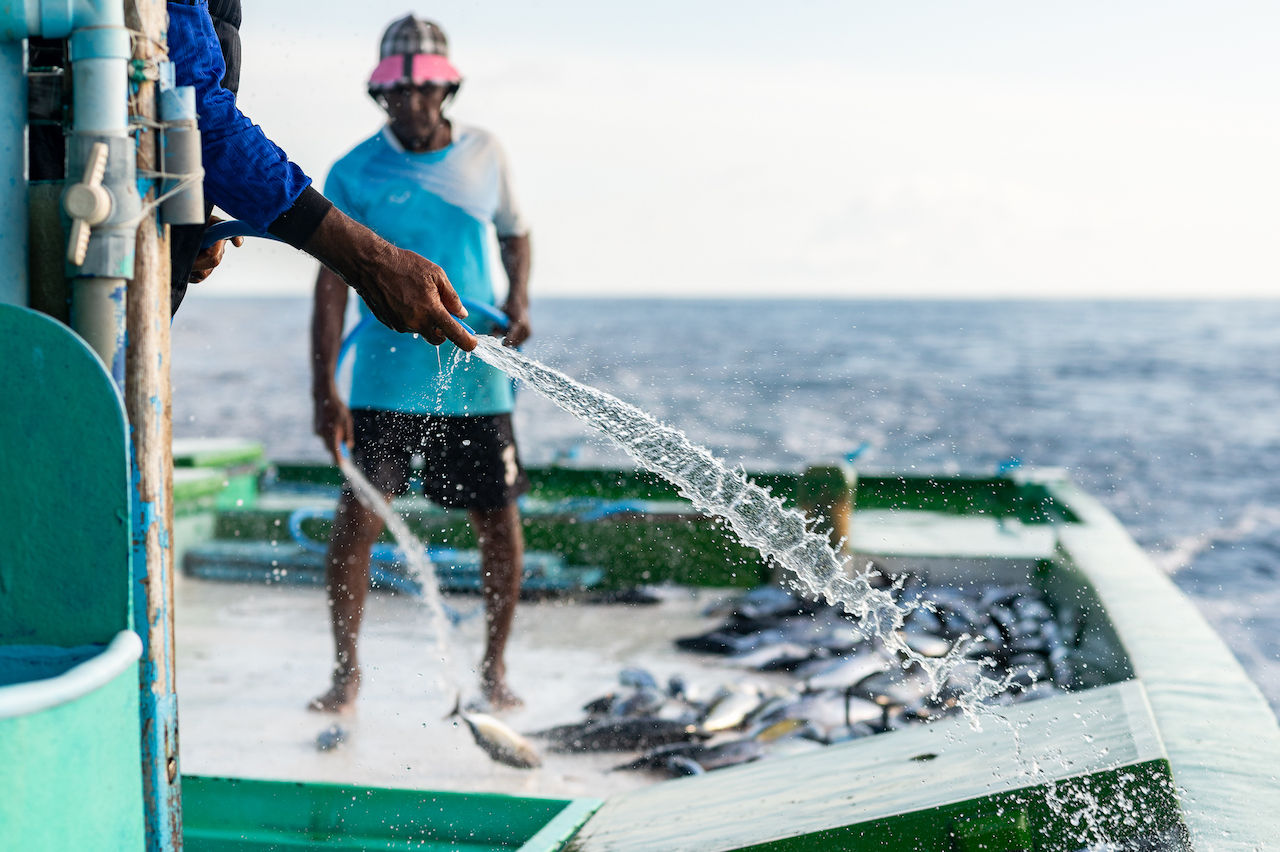
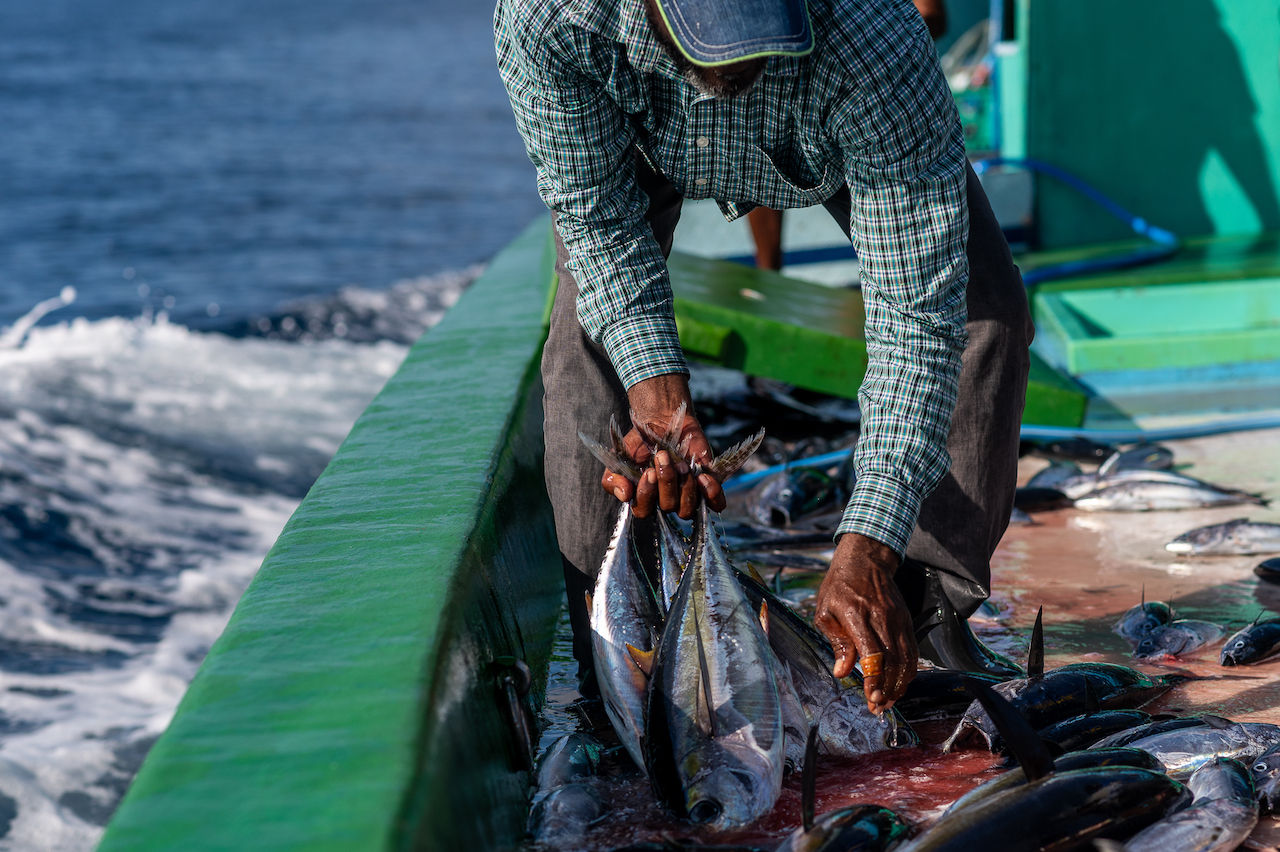
Even scraps from our onboard meals were saved, including skin, bones, and eyes, for the harbour tomcat waiting eagerly to greet the men on the dock at sunset.
What I saw
My experience represents only a small snapshot of a vast national industry. But over an entire day at sea, I saw no evidence of the labour abuses described in recent investigations into the global tuna trade. Instead, I observed workers treated with dignity, paid fairly, fed well, and given rest, within a system that aligns sustainability with tradition rather than compliance. The only issue that truly stood out on the day was the ageing workforce, but even with that, there was no hint of exploitation for these older workers or the expat workers supplementing their crew; they all took part in their work with pride and dignity.
A recent Financial Times investigation, "The dark truth behind supermarket tuna," exposed labour abuses and environmental damage across global supply chains. The findings were damning, and in the case of many fisheries, accurate.
But what the investigation did not explore was that not all tuna sold in British supermarkets comes from the same kind of fishery, or carries the same ethical cost.
The Maldives supplies tuna to some of the very supermarkets named in the Financial Times report, including Waitrose and Sainsbury's. Yet its tuna fishery operates under a fundamentally different model. Pole-and-line fishing is widely recognised as one of the most sustainable and selective methods of catching tuna, and it is deeply embedded in Maldivian culture. While the investigation rightly highlights abuses elsewhere, its lack of nuance risks flattening a complex global industry and obscuring examples of fisheries that demonstrate a viable, ethical alternative.
The Financial Times investigation is not the first to expose the darker realities of industrial tuna fishing. The 2021 documentary Seaspiracy sparked similar outrage, particularly over Indonesian fisheries as well, and went further by suggesting the fishing industry as a whole is incompatible with environmental sustainability and encouraging people to give up eating fish altogether.
Both works succeed in drawing attention to real and urgent problems. What they fail to do, however, is offer consumers clarity. Left without context, readers are given the impression that all supermarket tuna is ethically compromised, with no guidance on how to choose differently.
In reality, the difference is often printed plainly on the tin.
Tuna caught in the Maldives carries the country code 'MDV' on packaging. It is pole-and-line caught, free from high bycatch, and harvested by crews working close to home rather than on distant-water fleets. This distinction matters, not just for consumers, but for Maldivian fishers whose livelihoods depend on a reputation they do not control.
The Financial Times is right to expose exploitation where it exists. But applying a single narrative to all tuna fisheries does a disservice to those that demonstrate another model is possible.
At a time when ethical sourcing matters more than ever, perhaps the message should not simply be "beware of supermarket tuna", but something far more practical.
Check the label for where the tuna is sourced from.
For the Maldives, this is not just about reputation. It is about ensuring that a centuries-old way of life, one that respects both people and the ocean, is recognised, supported, and allowed to endure.
Sophia Nasif is a British-Maldivian photojournalist based in Malé, focusing on culture, environment and anthropology in the Maldives. She is the Ocean Culture Life ambassador for the Maldives, a member of PhotoAsia's Decoding the Anthropocene cohort, and a Revolutionary Storyteller for Photographers Without Borders.
Discussion
No comments yet. Be the first to share your thoughts!
No comments yet. Be the first to join the conversation!
Join the Conversation
Sign in to share your thoughts under an alias and take part in the discussion. Independent journalism thrives on open, respectful debate — your voice matters.
Support Independent Journalism
Help us keep the news free and fearless
Give once
$
or
Become a memberfrom $5/month