

Nine songs, one city: Huvan's Mithan tracks a generation
A quintessential Malé album made by a band of the 2020s.
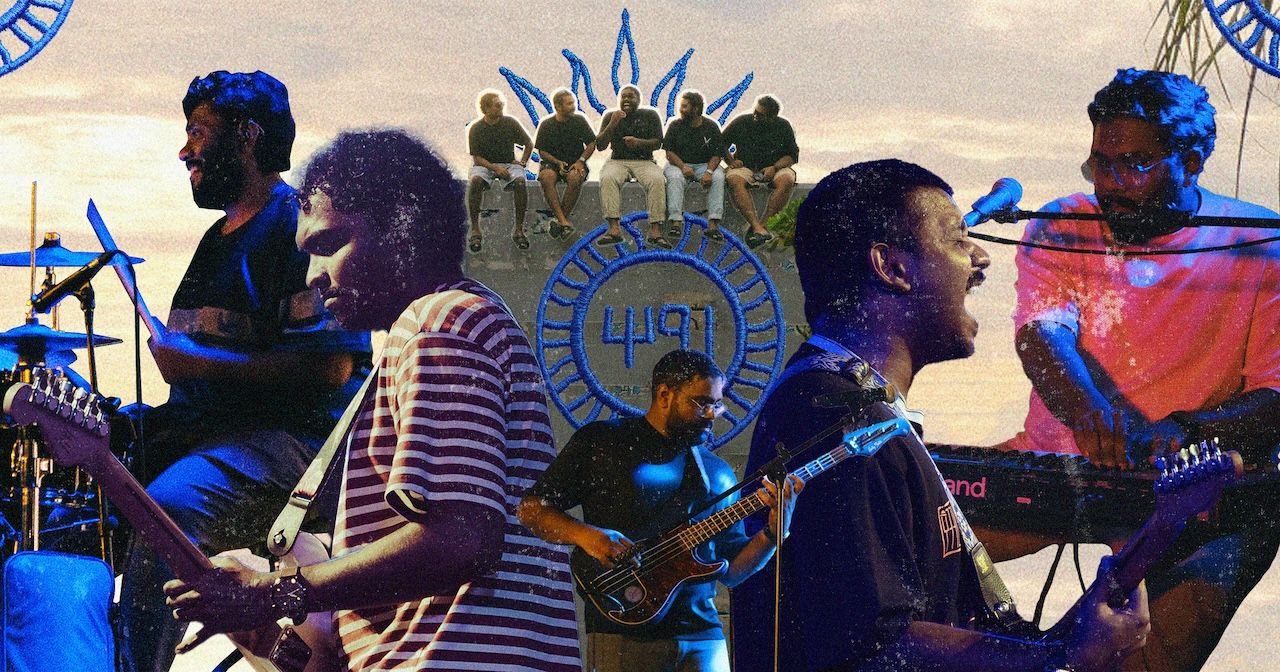
Artwork: Dosain
25 Jul, 11:50
What's distinct about Mithan is how it feels like a true concept album (when was the last time we've had one of those): every song placement from the beginning to end feels purposeful, each of them flowing seamlessly from one to the other. At almost an hour long (51 minutes and 40 seconds that is), Mithan is a quintessential "Malé" album. Released on June 30, it portrays life in the city as we know it, our collective shared experiences and the plights that are all too familiar to everyone who grew up here.
The blues, funky guitar and keyboard punctuates Yousuf's soulful vocals that sings about our shared experiences in the city. It's what some of our old folk would call "good old-fashion blues music". Aside from those wonderful synthesisers of course.
Named after the iruvaiy moosun (northeast monsoon) nakaiy, Huvan came onto the scene with the Asaasee Kilaas lineup in 2024. A show I missed unfortunately, having been out of the country. I'd heard a mixture of things about them at this point, a few critical remarks of one of their covers at the government-funded 'Youth-Hub' but mostly an overly positive reaction. I was growing curious.
The last time I'd been around the music scene in Malé, there wasn't really a lot going on. Sure, a few bands would jam at Fannugedharin (gathering of talent). Traphic Jam performed a bunch, some live improvisation here and there, but nothing new. These were the old guard; folk who'd been around in the music scene for years. They'd been through the nihilistic 90s and the "bohemian" 2000s, when folk music and the stomp-clap hippie schtick was in. Post-2008 optimism I guess.
This lasted throughout a good part of the 2010s, but the remnants still linger in the music scene, constantly haunting it. It's almost as if they'd marinated it all in some revivalist psychedelic soup that's impossible to wash off. The hand-pans and tie-dye t-shirts can still be found if you look hard enough. Good music was born nevertheless. Some even excellent. But that's not what we're here for today. I still adore my nihilists and bohemians quite a bit, but It'd been awhile since we'd heard of an album born of today: the big 2020s.
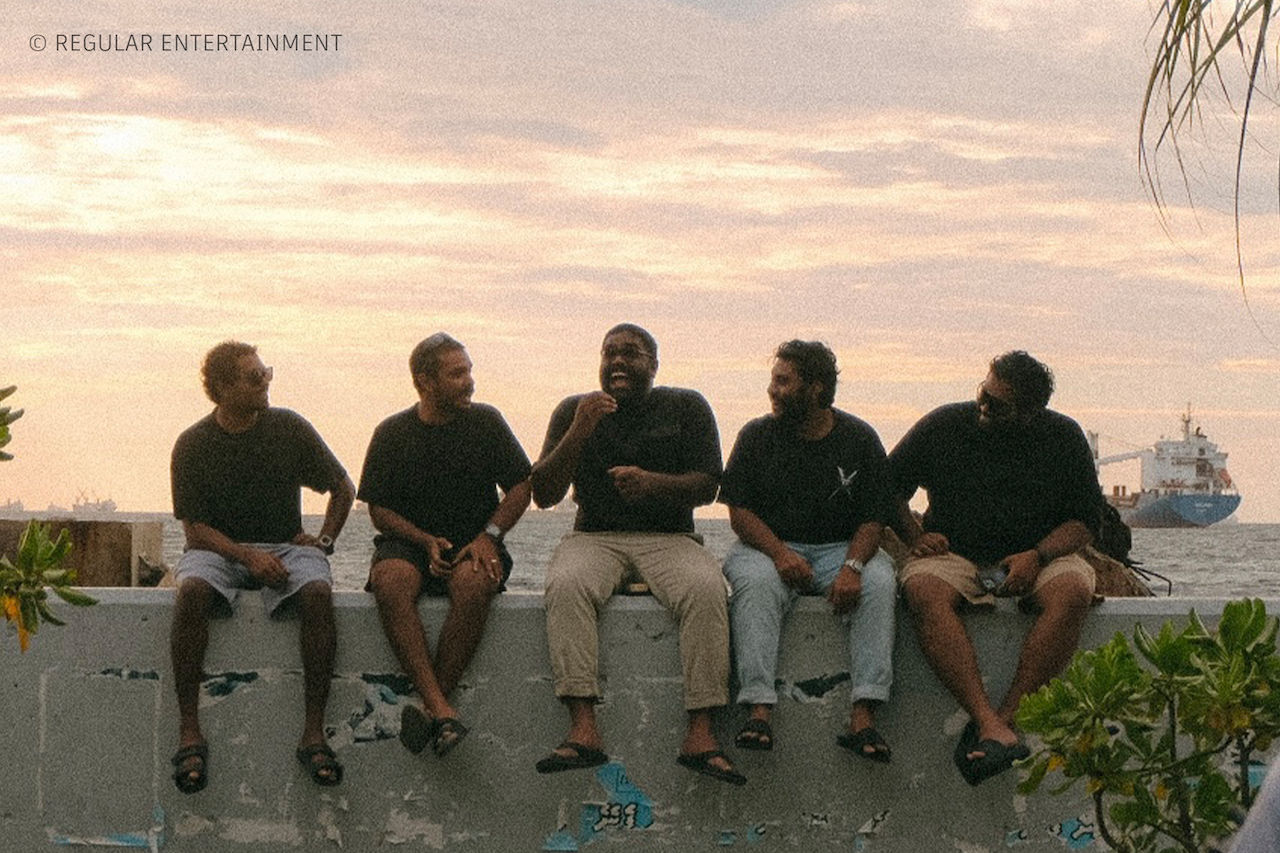
Consisting of five driven musicians, Huvan seeks to sonically bring forth the feeling of contentment one feels from a sunny day in iruvai. The ultimate goal, they say, is to make original music in the country. "Formerly blues-ish, now just a band from the Indian Ocean," says their instagram bio.
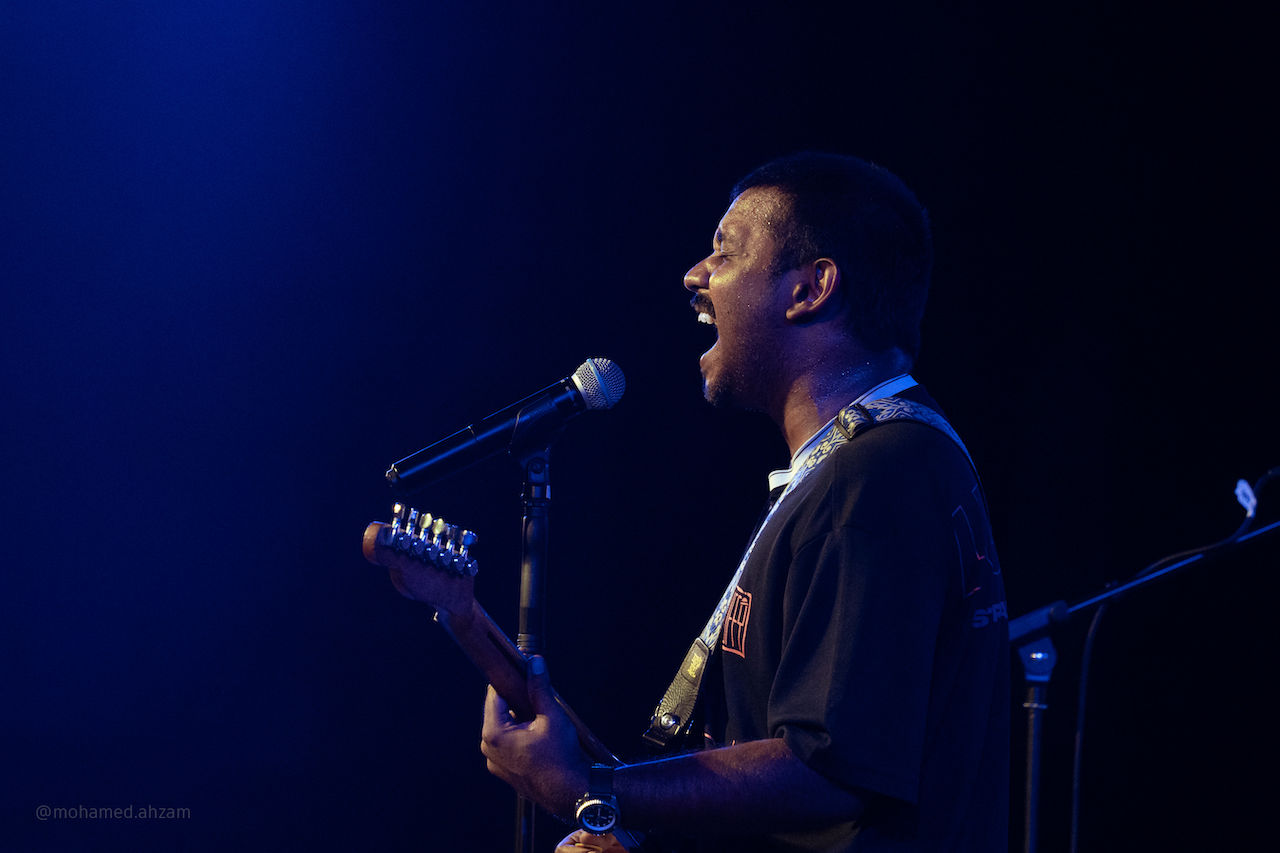
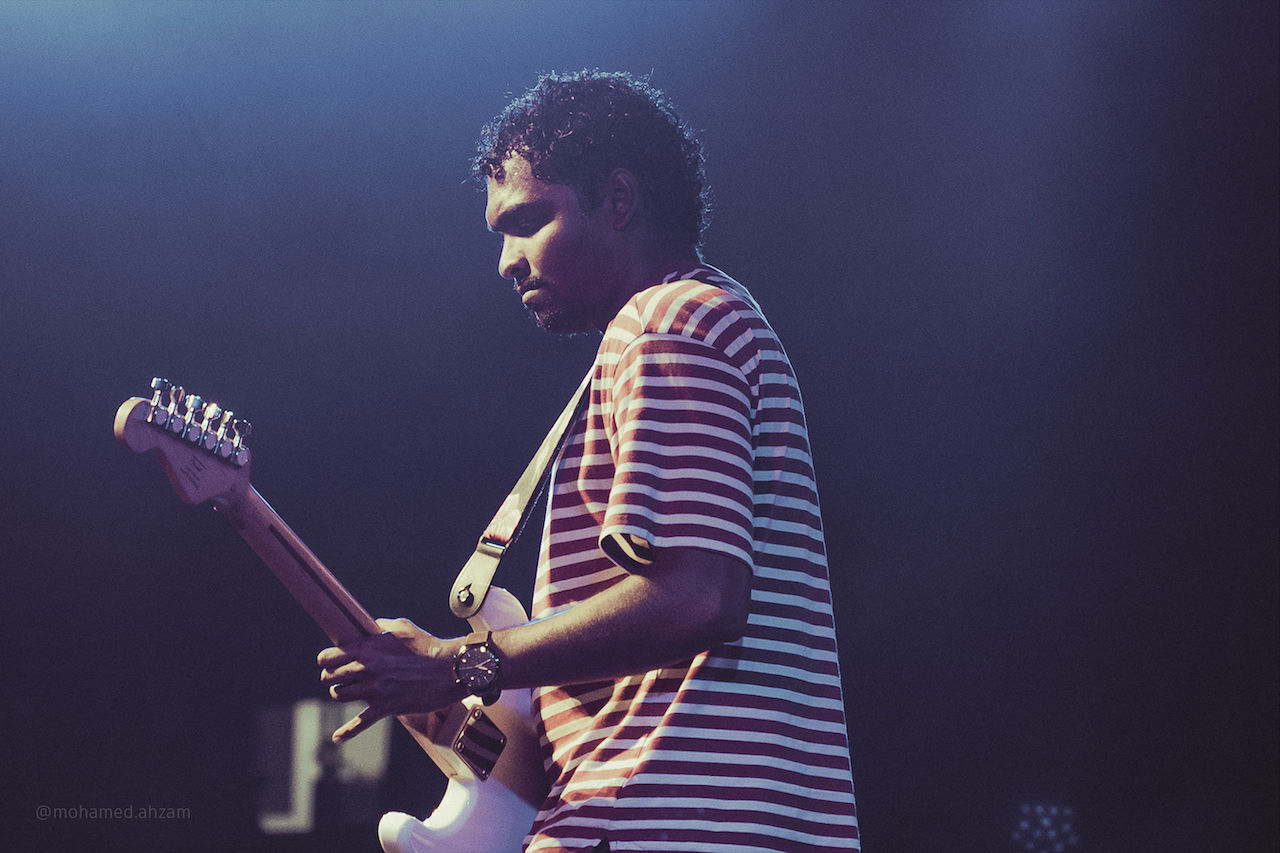
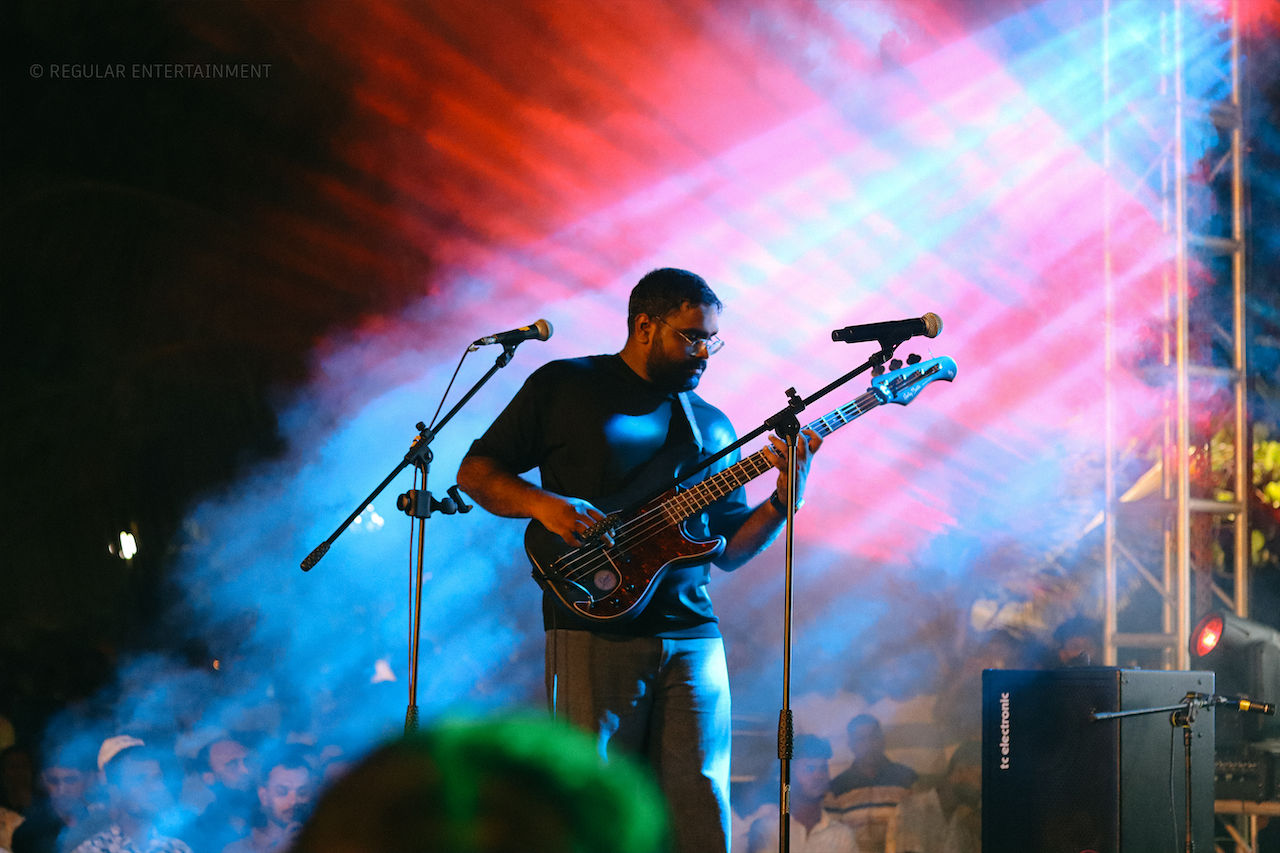
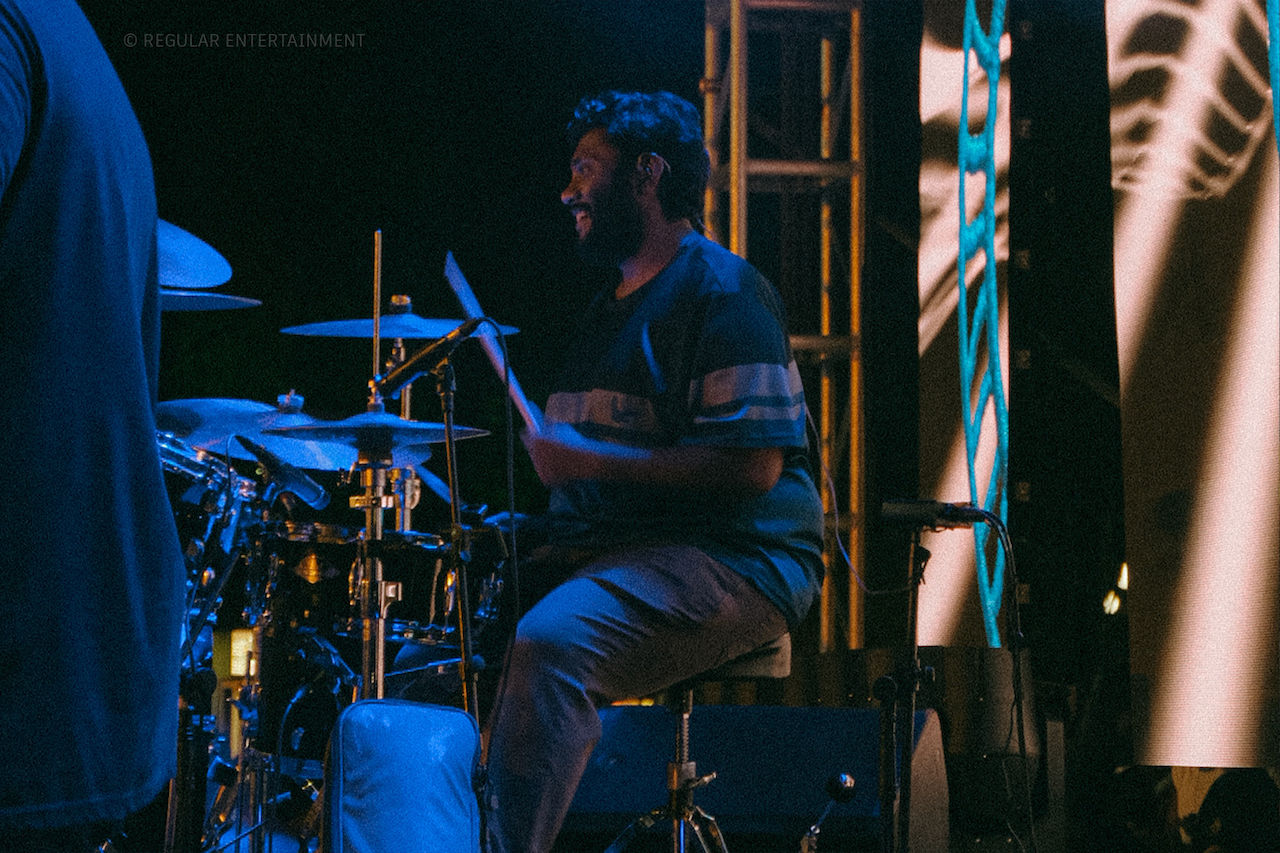
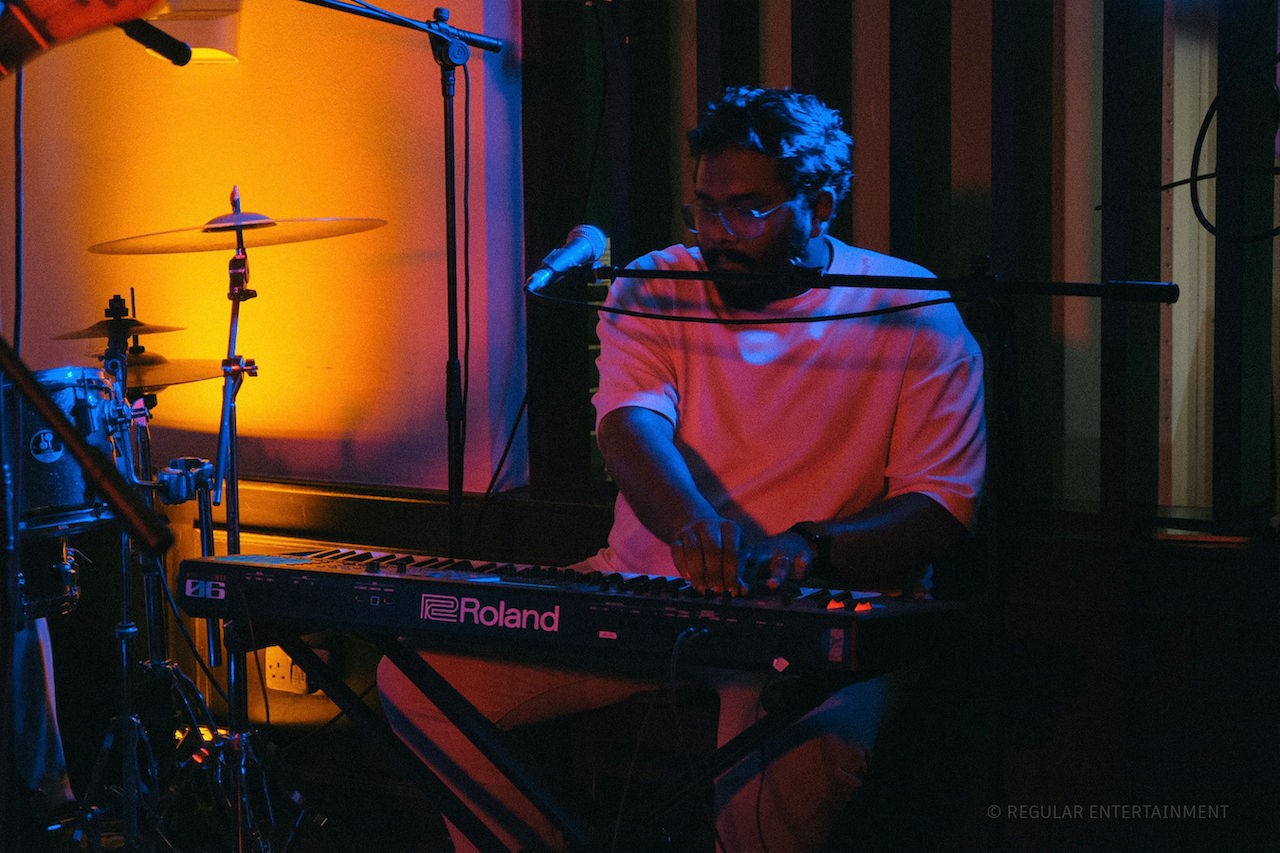
The lead vocalist and rhythm guitarist might ring a few bells. Yoosuf Amsal Shahban (yoursurf) is on lead vocals and rhythm guitar, Mohamed Zahuwaan Shakir (Zazz) on lead guitar, Ahmed Ayaaz (Flash) on drums, Ismail Abshar Mohamed (Abu) on bass and Mohamed Saif Umar (Po) on keys.
The inheritance
'Mithan' starts off with Thaveedh, a song I'd heard them perform live at Jazz Café recently. The kick drum was tuned a bit too loud at Jazz, quite abrasive and suffocating really (I thought I'd go deaf that night). But Thaveedh stood out to me even then, with Abu's clean vocals echoing throughout. It felt like my ears were being massaged, a sonic lullaby. The riff in this song is painfully arabesque, haunting and melodious, carrying you throughout the song while the drums sneak their way in. The keys sound almost like a santur. The whole thing was very eastern, it could easily fit into one of those 'World Music' compilations. It's as if they're parodying it. Maybe they are! Much to ponder. Perhaps It's a little something to draw-in the aforementioned "Bohemians." Make them dance a bit. A very fitting name for the song, I think. Thaveedh or Taweez, meaning "talisman" or "amulet." It is reminiscent of the songs we grew up with in our childhood.
We then transition to something quite different, Vindhu, a 90s-style ballad (albeit, a very bluesy one). The vocal delivery here is very earnest; it feels like the kind of thing you'd hear at the end of a bittersweet movie about lost love. I can already see this one being a hit. The female background vocals are angelic, lifting Yousuf's voice above a cloud of whispers. If it weren't for the very 90s guitar, and the driving drums in the background, this could very easily be a 70s chart-topper. It's confessional, young and just the right amount of sweet, that it doesn't sound corny. It's surprising just how well it works; you'd think we were all sick of odes to the 90s. Some teary-eyed father of four might be caught listening to this after a fight with his wife.
The city, young
Then West Park starts playing, this one I had heard before, they'd released it as a single earlier this year. It's funky and delightful and once you start, you can't stop listening to it. The keys drew me in immediately. It's reminiscent of Garth Hudson's clavinet work with The Band. It's a playful song, the chorus looping "Athirimathee Wanna West Park" repeatedly. Most any young person living in Malé today would connect to this song. It paints a very realistic picture, and perhaps comical to an outsider, of what an average day in Malé is like for a young person in the city. We're all familiar with West Park, a place we have all known and grown up around, and what social happenings we may or may not have partaken in there. Forty years from now, maybe West Park wouldn't be West Park anymore, or maybe it wouldn't mean to people what it means to us today. We'll still have this song to memorialise it. Whoever's on the keys (Po I'm assuming) is really doing a number on this one, because it's beautiful and the little break of the rhythm of the keys with the synthesiser is heavenly. This might be one of the more addictive songs off the album.
Kaanugandu, one of their earlier releases, is a seamless transition from West Park, a lighthearted portrayal of an experience all too familiar to us. The plight of trying to manoeuvre the streets of Malé on a rainy day – you cannot escape without your isthaakeen (socks) being completely drenched in the flood. Some playful critique of our wonderful urban infrastructure that we all seem to be a bit too familiar with. All I can think of though, is how Kaanugandu would make a great B-Side to West Park. You've still got that great funk from West Park but it's slowed down a bit. The synthesiser is still blaring and beautiful. Flash's drumming is filled with intentional subtlety, letting the bass-line cradle the rhythm guitar and synthesiser throughout. The highlight once again really is the keys, it pulls your ear right into the hook, building tension throughout, and then that sweet, sweet release right into the chorus. And then there's that great buildup toward the last section of the song, they sound like a less coked out Funkadelic here. The only criticism I could think of is that…I want more!
The grey
And now we're at 8 Rey/ Adi Gudan, what I'd like to think of as one of their more intentional tracks. It's a longer one standing at a good seven minutes. It starts off with the soft sound of waves crashing against the shore, and the familiar sound of a koveli (the Asian koel to our western folks). Zahuvaan belts out "dhanve, thari vidhaa!" and they already sound vastly different here. Gone is the youthful charm of West Park, this song feels like a solemn ode to a generation forced into adulthood through the bleak corporate world of unpaid overtime and rent. Working eight nights a week is no laughing matter, after all. You can't help but feel like the album was leading itself to this point, through the playful funk and quirky charms of West Park and Kaanugandu. The guitar work on this song is nothing short of beautiful. Flash's crashing cymbals carry you through the transition of work-optimism into the protagonist's alleged renewal. It's emotional and filled with the frustration and pent up rage of young adulthood, ending on a note of reawakening, a rising up against the oppressive grey that tainted five years off the protagonists' life. The last section of the song brings back the funky Garth Hudson-esque keys all over again and the listener feels the fresh air of relief as the colour is brought back into the protagonist's life while the bass slides its way back in. The outro on this song is angelic. Yoosuf's reverb-drenched vocals are enveloped by the rest of the band, and their instrumental talent really shines here, they're perfect together. This might be their magnum opus so to speak. It's their best work yet.
Huvan takes a more somber turn, it's instrumentally sparse, letting the lyrical content take the spotlight. It's a contemplative track until the guitars take the stage. The distorted guitar starts picking up rhythm as Yoosuf laments, "Azaabeh baa mi ee? Ajaibu Antharees." What really stood out to me was the rhythm section toward the end of this track. However, the studio version doesn't hold a candle to the live version. It's their most unashamedly 90s grunge track yet. More in the direction of the aforementioned nihilists of the 90s. There isn't too much progression in the studio version, but the experience is significantly better llve.
The transition to F.U is smooth, and now we're dealing with a slow blues number. It's a fresh breath of air after the last two tracks. An ode to a now fading, but eternal Maldivian archetype, the keyolhube. Once the breadwinner of every household, and a profession of integrity, now reduced to nothing in the urban corporate hell-hole that Malé became. The keys take you gently throughout the song until the blaring blue-sy guitar comes in, and you're completely taken aback; the tone of the guitar is gritty, filled with texture and really makes the track what it is.
The reckoning
Mithan, the title track of the album starts playing, and my expectations are sky-high for this one. It's only natural to be excited, considering the infamous video of the middle-aged lady dancing to Mithan at the Artificial Beach Eid Show. Much like many of the songs in the album, thematically, the song addresses lost youth and the quintessential mid-to late 20s malaise of lost time, and how it has culminated into nothing. We're back to the funky instrumentals from earlier, but the lyrical content is greyer. All this hard work and effort, and for what? The star of the song is the atmospheric synths that emanate throughout the outro, an incredible feat of work from Po. It is reminiscent of the synths used in Magdalena Bay's critically acclaimed 2024 album Imaginal Disk, an otherworldly, almost futuristic burst of sound.
We're at the grand finale, after this long exhausting journey through youth into adulthood/ Qaum is almost eight minutes long and starts off with an abrupt scathing guitar that immediately grabs your attention. It's clearly a more focused track, much like 8 Rey/ Adi Guda, and I'm immediately in love with the bass-line here. The synth melodies remind me of something off a Zero Degree Record. Fitting, I think. Yousuf raves about losing one's national identity, a crumbling nation riddled with corrupt leaders and a withering social fabric. It's their least subtle track; a political piece. One can't help but get the feeling that every track before was foreshadowing the last one (in it's lyrical content at least). We're around five minutes in, and there's an eerie instrumental break. The synthesiser remains, as Yoousuf laments, "Vikkaa Lanee, Dhoguthaa Hedhee," and the bass creeps its way in again and Flash is back on the drums again. I find myself nodding along to the instrumental. it's a sad track, the protagonist is completely stripped of their youth, and faces the unfortunate reality that is Malé. The outro is a depressive mantra complimented with a blaring guitar that takes you to the end. And then, silence.
Verdict
This may come off a bit too praise-y but one can't help but feel that the album would've gotten Nashid's stamp of approval (Fuloo Nashid that is, of Zero Degree fame). And it is a praiseworthy album after all! It's a more-than-solid debut from a new generation of musicians. I'm excited to see them live after all this. Perhaps the song Huvan would be more impressionable on me then. Maybe it's time we become a bit more optimistic about our music scene. Many little birds whisper many things in my ears, and I think we've got an interesting future to look forward to (musically, at least). After all, the best music is made in the worst of times. The upcoming economic crash may bring some new sounds to our ears and The Huvan Band is definitely one you should look out for.
Discussion
No comments yet. Be the first to share your thoughts!
No comments yet. Be the first to join the conversation!
Join the Conversation
Sign in to share your thoughts under an alias and take part in the discussion. Independent journalism thrives on open, respectful debate — your voice matters.
Support Independent Journalism
Help us keep the news free and fearless
Give once
$
or
Become a memberfrom $5/month