
After 16 years, 1984 is back
The band released its first single since 2009.
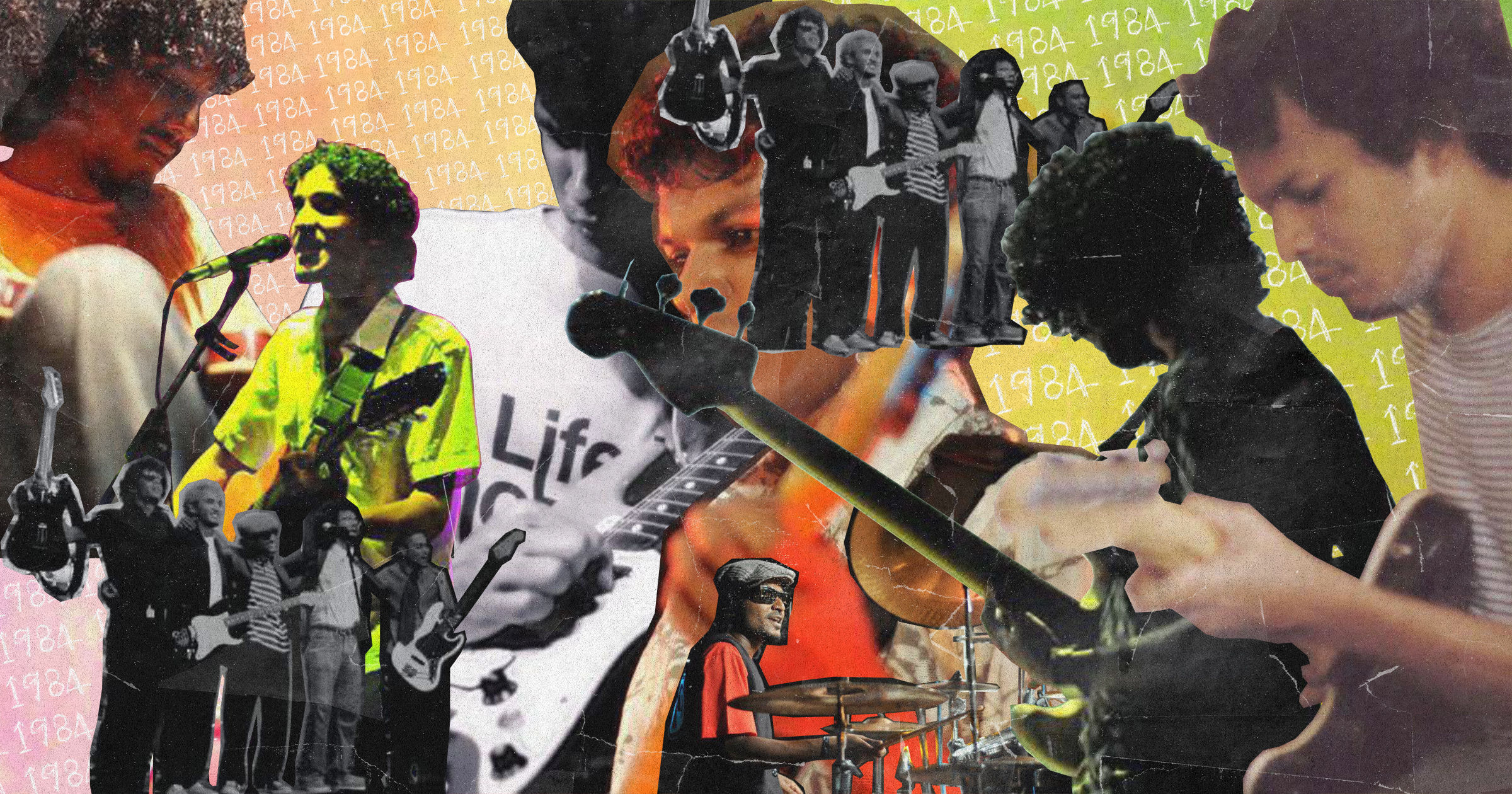
Artwork: Dosain
24 Jan, 16:33
I remember it like it was yesterday. It was 2008, a warm evening, the television in my parents’ bedroom switched on as TVM aired the Maldives Breakout Festival – one of the most anticipated music competitions at the time, where bands battled for a chance to perform on an international stage.
When the announcer called 1984 onto the stage, a cue followed: the sharp click of drumsticks marking the opening of their song, Bindhifa. A bright red-haired Appi began to sing, his voice melancholic yet strangely joyful, delivering an original Dhivehi track that instantly felt different. Beside him stood Shuau, the afro-haired bassist, Mummu on guitar, sharply dressed in a suit and dark glasses, Simon behind the drums, Yami on bass, his mohawk moving in rhythm as he completely lost himself in the music.
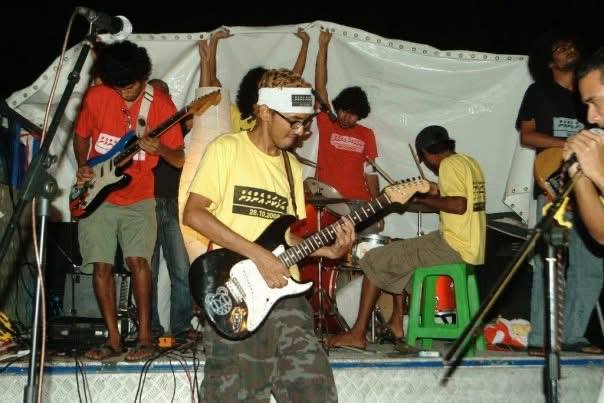
They caught my attention immediately – not just sonically, but visually. As the performance unfolded, my focus narrowed entirely onto them. I did not know who they were, and at first, the lyrics barely made sense to me amidst the chaos of a live broadcast. Yet the music flowed effortlessly, like water, carrying the poetic words along with it. I connected with it instantly.
From that moment on, 1984 became a favourite. I wanted to hear more, to understand more. When they released their first album, E’ku E’kee, in 2009, I found myself returning to it again and again – and I haven’t stopped since. Somehow, this alternative rock band has woven itself into both the most mundane and the most defining moments of my life. Their music has been there when I felt mellow, and when I needed that extra funk and drive – the kind of energy that can sometimes only come from a song sung in your native language.
1984: the beginning
It was in the early 2000s that 1984 began stepping into the local music scene through public performances. At the time, the band was known as Squad Chaos, playing cover sets at a then-popular café in Malé called The Godown. The venue itself was something of a cultural hub, hosting the cream of the crop in Maldivian music, including the legendary Zero Degree Atoll. Around the same period, Zero Degree Atoll’s Mohoj spearheaded a series of events titled Vigani, which showcased both upcoming and established bands, playing a pivotal role in nurturing talent and cementing these acts within the local music scene. Within this intimate, creatively charged space, the band sharpened its identity, spending years performing covers before gradually turning toward original music five to six years later.
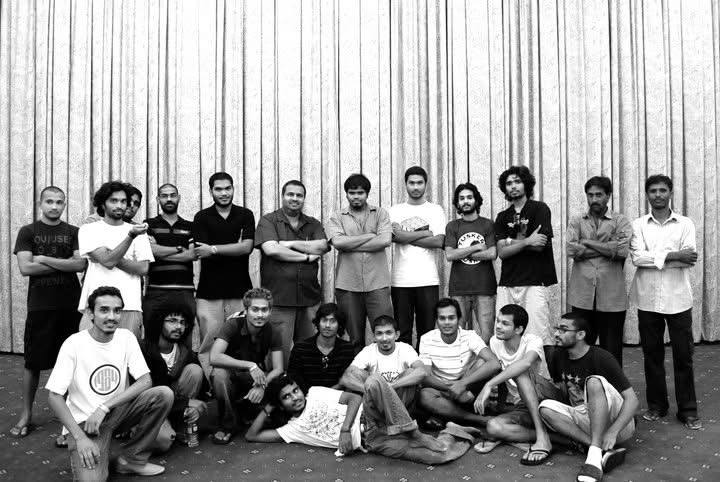
Another defining moment came with their appearance on the Badhalakah Emmen Campaign, set against a backdrop of political unrest, as dissent grew against the government of former President Maumoon Abdul Gayyoom. Even in this brief incarnation, they stood out, capturing the urgency and emotional intensity of the moment, aligning their sound with the pulse of a nation in transition.
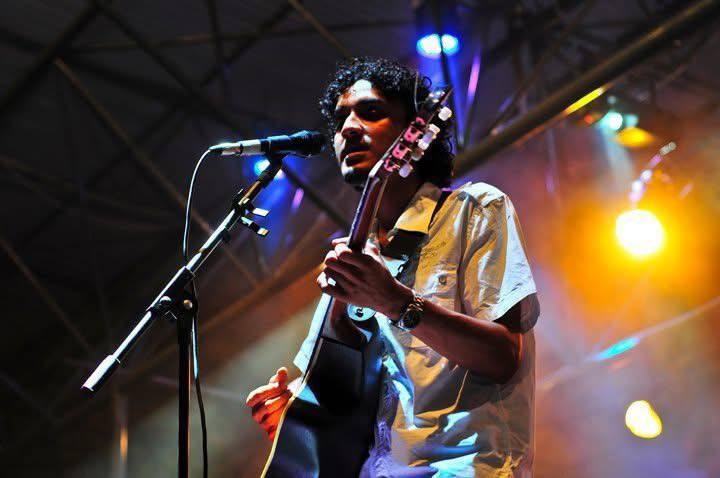

By 2008, the landscape shifted again with the Maldives Breakout Festival, where the band was required to record an album entirely in Dhivehi. At this crossroads, they made a decisive choice: 1984 would become their final and enduring name. The decision marked more than a rebranding, it signalled clarity of purpose and a commitment to shaping a distinctly local sound, uniquely their own.
That commitment fully materialised in 2009 with the live-recorded debut album, E’ku E’kee. It went on to become one of the most influential albums of modern Maldivian music, featuring songs that helped define a new era and set a pioneering tone for the local scene.
Although 1984 leans toward alternative rock, their sound spans far wider – drawing from alt-rock, 70s rock, grunge, experimental rock, post-rock, and even funk. To confine them to a single genre would be an injustice to the experimental spirit that defines their work.
The music and the process
“Usually Mummu would bring a concept, we’d discuss it, and then build on it with Shuau or me,” explains Appi. “And Appi would give input on what needs to be cut, added or changed," Shuau adds as we talk about their composition process.
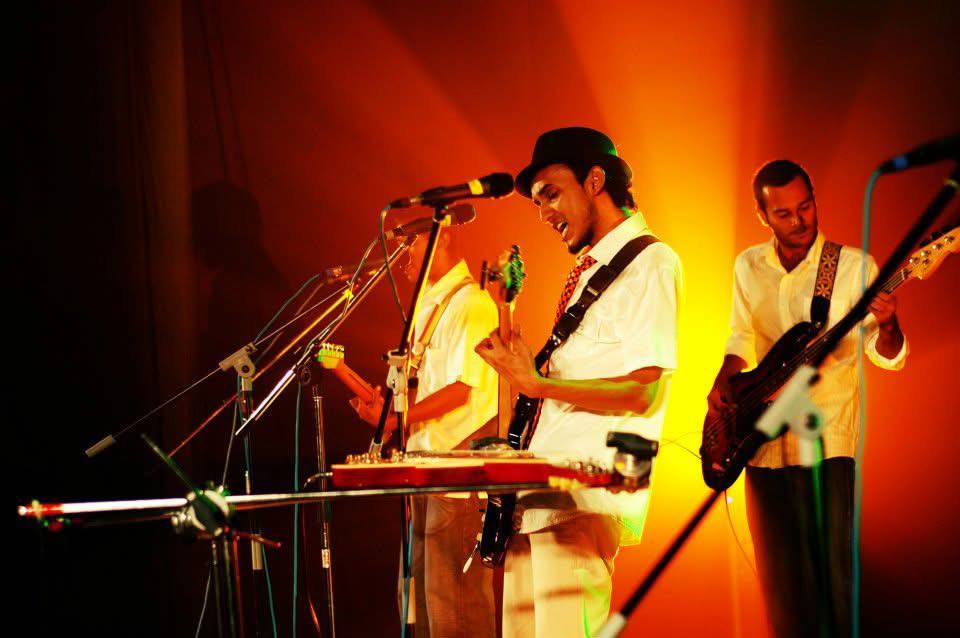
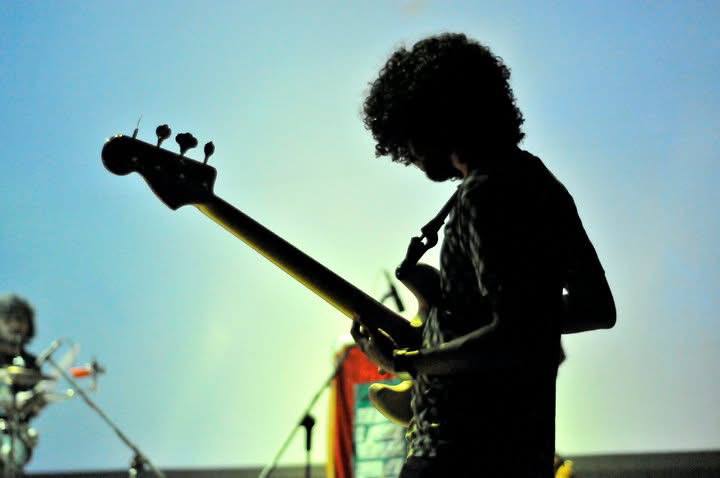
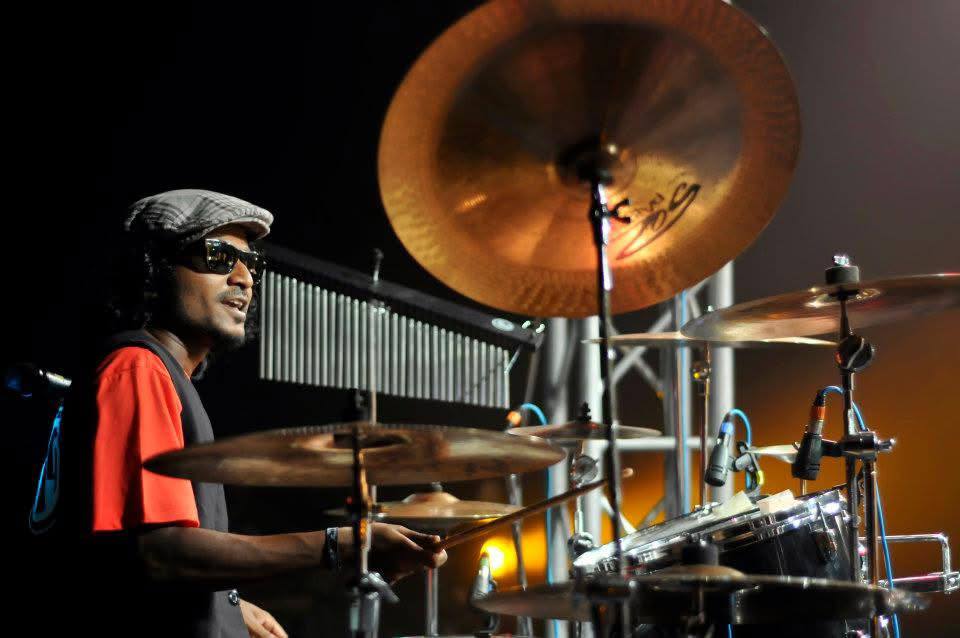
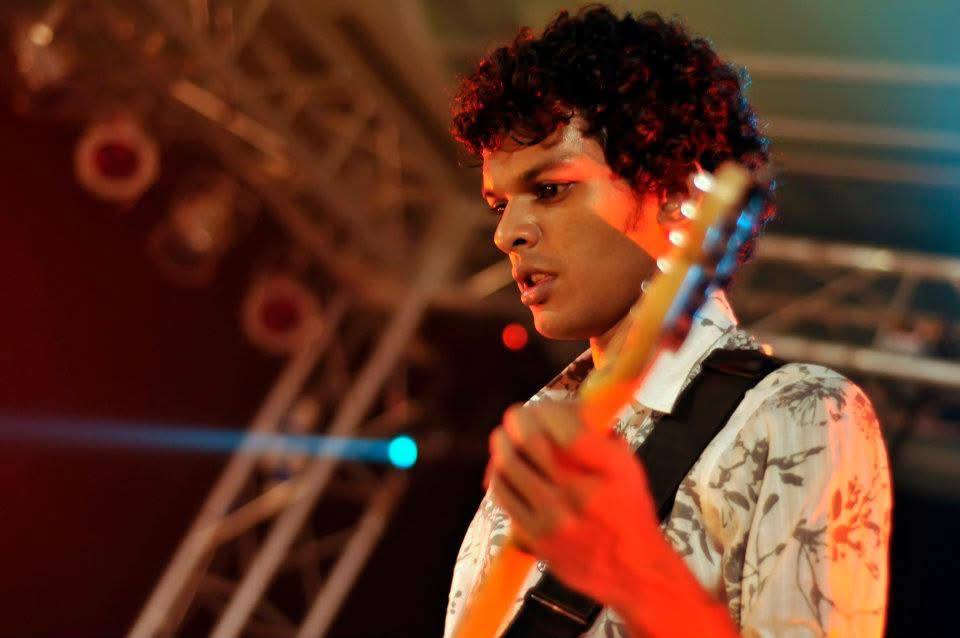
Every song is a collective effort. Each member brings their expertise without stepping into another’s space, delivering every track in the spirit of the album title, E’ku E’kee.
Barahana was one of the first Dhivehi songs written for the album. Before that, Appi had been writing lyrics in English until Shuau encouraged him to try Dhivehi. Despite having no formal background in writing Dhivehi lyrics, Shuau himself took a leap of faith and began writing. His early attempts were not without setbacks, but he soon found encouragement from legendary author and poet Aminath Faiza 'Daisymaa,' who was supportive of his efforts and even granted permission to use her poetry. Two songs emerged from this process, Fenthikithah and Faiymini, which was later included in Dinba Music’s Rakis Bondu album.
Shuau recalls typing the lyrics for Barahana in Latin at his office computer and showing them to Appi. “So basically, I wrote the lyrics for Barahana, and Appi composed the music.”
Appi, a multi-instrumentalist, says he constantly pushes himself creatively. “Whether it’s a difficult chord or an unusual structure, if it sounds right, I’ll make it fit. I don’t want it to be an off-the-shelf arrangement. Or even with a very simple chord progression and structure, if I can put in a small twist that can make it unique, that is exciting. We do take a lot of inspiration from our favourite bands such as Radiohead, Zero Degree Atoll, Tool and Daft Punk to name a few, not to copy exactly what they do, but to emulate techniques used by them."
The lyrics have always stood out to me, direct, yet layered with meanings left open for interpretation. Lyrics, after all, are often the breath and life of a song. And 1984’s lyrics are anything but basic. They are not what you hear every day, and it is clear how much thought goes into them.
Alongside contributions from the band members themselves, most of the songs on E’ku E’kee were written by Ahurey, who also collaborated with their friend Rishko on Kurin. Shuau contributed as well, penning Barahana and Musthaqbal.
They acknowledge that their lyrics might not always adhere to conventional grammatical standards. But perhaps that is precisely why they have formed such a deep and lasting connection with listeners. Language rules aside, 1984 seeks to capture raw emotion, an unfiltered feeling and that honesty is what draws people like myself to their music.
Appi recalls listeners approaching him to share how a particular song helped them through difficult moments. “That means more than any amount of money,” he says. “Music heals. It helps people feel seen, heard, accepted and knowing we can be there for someone like that makes me happy. Because I know how much other artists have meant to me.”
Why a new song now?
E’ku E’kee was recorded live and released with 10 songs. By the time the album was finished, there was already a new batch of material forming. “They’ve been marinating in my head ever since,” says Appi.
In December 2023, while helping Yami with recording drums for his song “Vaane Varu,” Appi finally found the motivation to get back in the studio. “After 2009, adulthood took us in different directions, work, family, responsibilities. But we never stopped making music,” he adds. They continued performing whenever they could reunite, including recent live shows at Jazz Café.
Unlike E’ku E’kee, which had strict deadlines, "this time, I wanted to take my time,” Appi says. “I took my time…to learn how to mix audio by myself…which involved numerous times where I had to start all over…and now it’s 2025,” he chuckles.
The maturity gained over the years is evident. What once came from musicians in their early 20s now reflects lived experience, patience, and intention. “It’s probably one of the first songs where I’m truly satisfied with the production,” Appi adds.
The debut single: Tharavefa
The title Tharavefa is unmistakably 1984, coded in their signature ambiguity. Rather than define it outright, the song invites personal interpretation. The rhythm trudges forward at mid-tempo. Guitars swell and recede. The vocals sound detached, almost numb.
“Let’s take Palestine for example, there doesn’t seem to be anything we can do to bring about an everlasting solution to it," says Appi. "Even when we look at our own struggles in the Maldives, we all seem to be tharavefa, passively flowing along with the chaos. Our message is not meant to be pessimistic, rather it may help to acknowledge what is…in order to overcome it."
The song’s verses were written collaboratively: Mummu and Manaf on the first, Ahurey on the second, Shuau on the final. Recorded at N9 Studio in Malé, the track was engineered by Addo – widely known for his work with Fasy Live and now Traphic Jam – with Appi handling vocals, live drums, and guitars, and Simon composing the electronic beats. Rather than being recorded live, the song represents a carefully pieced-together sonic evolution. Audio mastering was handled by Mirah Ali, better known as Digital Flock, renowned for his music productions.
“N9 Studio is key to the music scene today, the support and nurturing given by Addo is invaluable," Appi notes. Tharavefa will be available on all streaming platforms, including Apple Music, Spotify, and their YouTube channel.
The video launch and process
Coming back after a long hiatus with a new track demanded visuals that could carry the same weight and excitement as the music itself. A return like this could not exist in sound alone – it needed a visual language that felt equally intentional and reflective of where 1984 stands today. After recording the song over a year ago, the band came across Kula, a music video by Kusheh Nooney, which left a lasting impression on them. The video’s creative direction and execution resonated deeply, prompting them to reach out to their good friend Andhu, a band member of Kusheh Nooney, to connect them with the team behind it.
That connection led them to Shepherd, a creative production agency encompassing filmmaking and design, formed in 2022. Shepherd came on board as the creative collaborator for Tharavefa. Rather than imposing strict visual direction, the band placed trust in the team’s interpretation.
“We wanted them to come up with their vision of what they think is Tharavefa and how they visualise it,” says Shuau. The band members were immediately drawn to how Shepherd approached the project and were impressed with how the final video came together.
Largely animated by artist Starfiesh, the video is conceptually as unconventional as 1984 themselves – a rarity within the local music scene. Lauh Mohamed, one of the directors at Shepherd, explains the ethos behind their work: “Our aim with Shepherd is to create extraordinary visual products that feel at home on a global stage and are not just confined to the Maldivian landscape or the label ‘a Maldivian’ music video. We found that the music industry here was lacking in quality music videos as of late, and as fans of the local music scene, we found a unique avenue to display our skills and aspirations as a video production company – while pushing the standard of what video products could and should be. We are always looking for artists to collaborate with, and when 1984 contacted us to create a music video for their single Tharavefa, we jumped at the opportunity.”
And deliver they did. The animation style – resembling graphite pencil sketches – strips the visuals of colour, presenting most of the story entirely in black and white. This aesthetic choice perfectly complements the song’s intimate and somber tone. The world created feels eerily familiar yet distinctly alien – a universe that mirrors our own while existing just outside of it.
At its core, the video presents a cohesive narrative following a lead character grappling with internal conflict while simultaneously observing the world around him. His growing sense of insignificance, coupled with a desire to escape the monotony of his daily existence, unfolds gradually. One impulsive act, driven by frustration and a search for identity in a world that feels weary and devoid of meaning propels him onto a different path entirely. The care and precision invested into each scene is evident, making the video feel less like a visual accompaniment and more like a standalone piece of art – one that breathes in sync with the song itself.
“Creating a universe for our character to exist in was probably the most interesting and rewarding part of this project,” Lauh recalls. “As mimes cannot speak, we had to come up with a set of rules in which a world full of mimes could exist in. If it truly were a mime universe, wouldn’t it be just a white void? Would they drive cars or just ‘mime’ driving one? These were just a few of the many questions we had to answer, which was really fun. Plus, being able to create a city of mimes with different backgrounds and personalities - seen in the office and bus scenes – really elevated the video, something which would’ve been impossible to execute in real life.”
Animated music videos are almost non-existent within the local music scene, and when they do appear, they are rarely executed at this level of conceptual and technical quality. In that sense, Tharavefa music video stands as a significant milestone – not just for 1984, but for Maldivian visual media as a whole.
“The song itself has three to four different sections, all with their own unique setting and tone,” Lauh says. “We came up with a couple of initial ideas that fit the song’s structure and its themes, but in the end we decided to just go with an outrageous idea – something that had nothing to do with the song on the surface, but when you look deeper into it, they are both intertwined. Since the song deals with abstract ideas of individuality, greed and society amongst many others, we knew it had to be a linear, character-led narrative, while also being very organic and rooted in reality. Not like our previous videos where the environments, colours and over-the-top editing were the main focus.”
Considering this is 1984’s first-ever official music video, the choice to pursue such a bold and unconventional approach was a daring move, one that Shepherd deeply appreciated. The project was treated as a true collaboration rather than a transactional client-and-creator relationship. Throughout every stage of production, the band remained supportive, whether by appearing as extras, lending spaces for filming, or simply placing trust in the creative process. There was a clear mutual respect, recognising Shepherd not merely as camera operators or videographers, but as professionals shaping a shared artistic vision.
With over eight years of field experience under their belt, Shepherd is already pushing the boundaries of innovation within the local creative industry, steadily raising the bar and positioning themselves ahead of the flock.
What’s next?
“We took two years to make this song because we are busy raising families and have to earn a living….and have limited time to work on music,” says Appi. “But we are discussing working on new songs, and we don’t want to give a certain date or put pressure on ourselves – to say it will be released at a specific time. Ultimately, we want to make something that is of good quality and sincere.”
For 1984, the craft has never been about fame or financial gain. It is, instead, a deeply personal pursuit – one that brings wholeness, fulfilment, and satisfaction in staying true to themselves.
Discussion
No comments yet. Be the first to share your thoughts!
No comments yet. Be the first to join the conversation!
Join the Conversation
Sign in to share your thoughts under an alias and take part in the discussion. Independent journalism thrives on open, respectful debate — your voice matters.
Support Independent Journalism
Help us keep the news free and fearless
Give once
$
or
Become a memberfrom $5/month