
Comment: Energy for all
12 Oct 2011, 10:18
Erik Solheim and Mahmood Razee
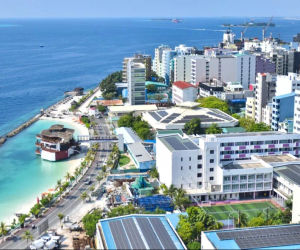
The Maldives has recently announced ground breaking plans to become the world’s first carbon neutral nation by 2020. The government has published its ‘renewable energy investment framework,’ which includes a mandatory target for the country to generate at least 60% of its electricity from solar power by 2020. The plan also proposes a shift to wind, batteries and biomass to complement solar power.
Energy is hope: hope for economic development, for a better future. Together with its partners, Norway is working to establish an international energy and climate initiative to increase access to energy services and limit greenhouse gas emissions from the energy sector in developing countries. This initiative will be presented at the conference entitled “Energy for all – financing access for the poor” in Oslo starting today. The conference is being arranged in cooperation between Norway and the International Energy Agency (IEA). Mahmood Razee, the Maldivian Minister for Economic Development, will attend the conference where Norway and the Maldives will announce a partnership on renewable energy.
Globally today, 1.4 billion people lack electricity. That is 20% of the world’s population. Electricity failures create huge problems: for the girl who cannot attend evening classes, for the doctor who cannot keep medicines cool, for the businessman who has to close down production. Such problems are widespread in many developing countries. Many countries also experience frequent power cuts due to an overburdened grid and inefficient energy use. Better energy systems would benefit everyone, as well as improving the economy and the environment.
Energy for all is an important goal. This means considerably more than just providing each family with a light bulb and the opportunity to charge a mobile phone. It means creating jobs, strengthening the economy and making it possible for doctors to use lifesaving equipment and medicines. It also means giving people access to new, clean cooking facilities. Today, around 1.5 million people – mainly women and children – die due to the cooking facilities in their homes.
If we are to achieve energy for all – including for industry – we must plan 10–20 years ahead. Electricity consumption will increase over these years, at the same time as there is considerable potential for using electricity more efficiently. Without a plan for improving efficiency, greenhouse gas emissions will increase.
In order to achieve the goal of access to more sustainable forms of energy, efforts are needed from many parties. The countries concerned must give priority to this sector and provide a good framework for investment. Companies must identify opportunities. Rich countries and the major international institutions must play their part, and so must NGOs by providing information and implementing concrete measures to increase access and improve efficiency.
Norway would like to play a leading role in this work by taking part in the financing of energy developments in other countries based on the results achieved in terms of increased energy access and reduced emissions for the country as a whole. Norway will also encourage companies to invest in enterprises that increase energy access in poor countries. The Maldives is taking a lead in implementing renewable energy policies, setting a new international standard for the future of energy.
Political will is vital for change, and we have enough examples that show that it is possible. Energy for all represents hope for a better future – for all. And together we can make it happen.
Erik Solheim is Norway’s Minister of the Environment and International Development. Mahmood Razee is the Maldives’ Minister for Economic Development
All comment pieces are the sole view of the author and do not reflect the editorial policy of Minivan News. If you would like to write an opinion piece, please send proposals to [email protected]
Discussion
No comments yet. Be the first to share your thoughts!
No comments yet. Be the first to join the conversation!
Join the Conversation
Sign in to share your thoughts under an alias and take part in the discussion. Independent journalism thrives on open, respectful debate — your voice matters.
Support Independent Journalism
Help us keep the news free and fearless
Give once
$
or
Become a memberfrom $5/month