

Part one: The Chola connection

How closely was the Maldives’ national hero connected to the Cholas of southern India?
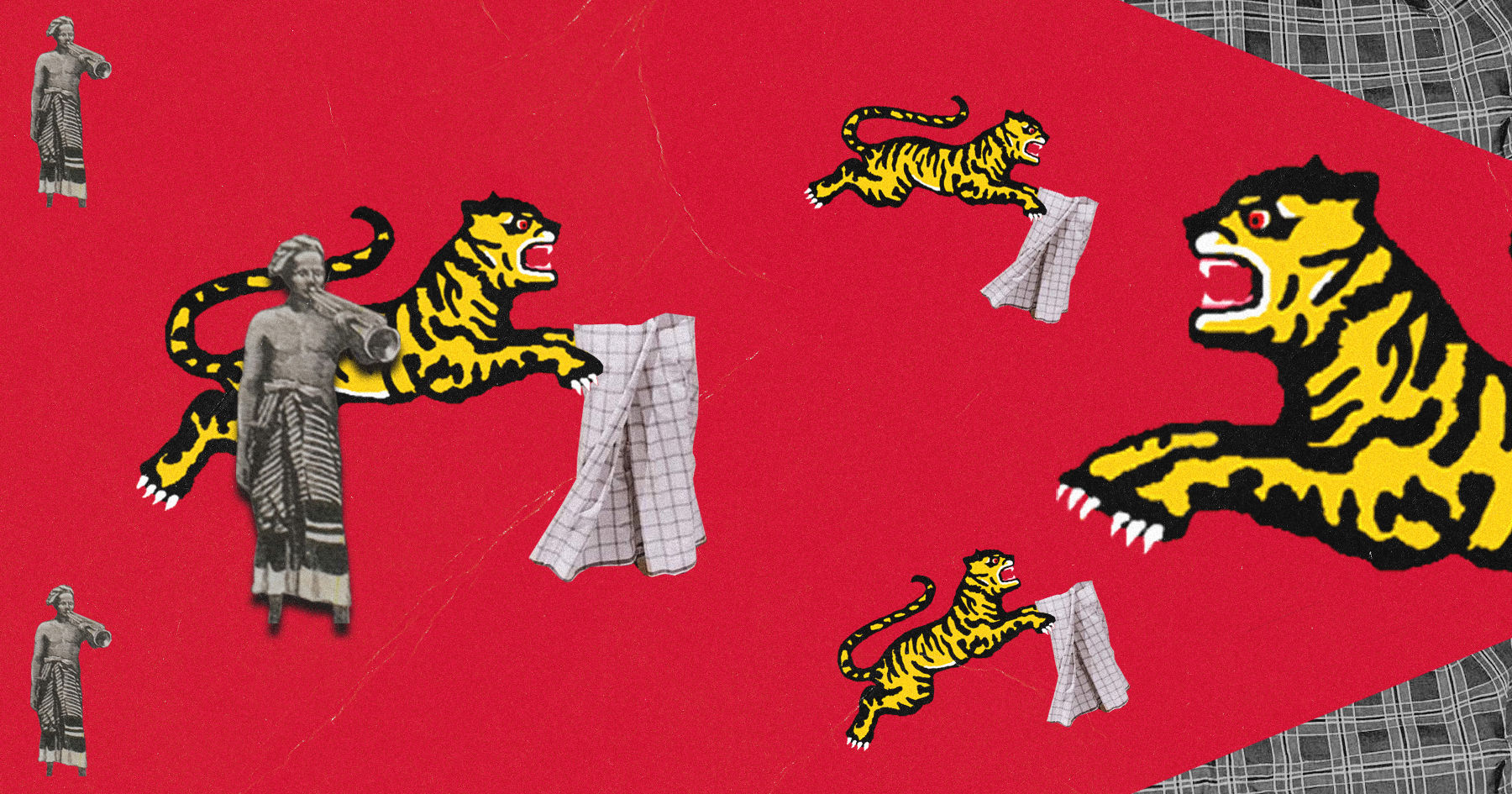
Artwork: Dosain

Artwork: Dosain

22 hours ago
In the footnotes of the late Mohamed Ibrahim Luthufee's Travels of Ibn Battuta, he writes that historians do not doubt that between 985 and 1014 CE, the Chola king of India, Raja Raja the Great, conquered the Maldives - or part of it. The Maldives was freed from this king's subjugation about 30 years before (1123 CE) the country's conversion to Islam. The kings of India continued to wage wars against the Maldives all the way up to the year 1775 CE, with Indian sea-raiders causing harm to the islands and people of the Maldives. But Maldivian historians failed to explain who the Cholas were in relation to Maldivians; only that they came from India.

Ibn Majid and the Cholas

When the historian Naseema Mohamed published her Dhivehi version of the book Rahunnaai Ranin in 2010, the word ‘Chola’ was simply translated in thaana as ޗޯލާ – Choalaa. But the etymology of the word loaned to Dhivehi in ancient times is interesting. This fact struck me while translating Kitāb al-Fawāʼid fī Maʻrifat ʻIlm al-Baḥr wa-al-Qawāʻid, a famous 15th-century navigational encyclopedia written in 1490 by the renowned Arab mariner and cartographer Ahmad ibn Majid.
Ibn Majid mentions one group of Indian navigators as الصوليان al-Sūliyān, and the 1971 English translator of the work translated the word as “the Cholas”. The Cholas were attributed to Tamil navigators of the Coast of Tamil Nadu and Sri Lanka, who frequently disputed the navigation star measurements of their Arab counterparts. Ibn Majid says:
“…As for the coasts of Siam and its islands, there is considerable doubt for few Arabs visit them repeatedly. Therefore, there is some doubt about the coasts of Bengal and Siam and the Carnatic coast. Thus the Cholas disagree with the people of Konkan and the people of Konkan have different values from them, while the people of Gujerat have yet other values. Each one differs with regard to some of these measurements while with others they all agree. As for the coasts of Hijaz and its islands and the coasts of the Arabian Peninsula and India (West coast), all of them agree, but they agree but little on the Carnatic and the coasts of Siam.
It is sensible to imagine that every man knows his own coast best, although God is all-knowing, and it is certain that the Cholas live nearer to these coasts than anyone else, so we have used them and their qiyās valuations as a guide”.
Now, having said that he trusted Chola measurements when it comes to Indian topography, Ibn Majid says regarding southern Maldives:
In the Maldives at 2¼ finger-spans (of the two stars of al-Farqad) is Fūlu Mulūk but the Arabs and the people of Konkan and Gujerat do not recognise this. At 2 finger-spans in the Maldives is Adhwawa (Addu) but the Arabs and the people of Konkan and Gujarat do not know this either, but perhaps it is because of some linguistic variation.
So Ibn Majid is implying that Indian navigators were not familiar with southern Maldives; and this attests to the fact that the Cholas only controlled northern Maldives when they occupied the country. 

Ibn Battuta and the Cholas

Around a hundred years before Ibn Majid – an Eastern Arab from the Gulf – was writing his navigational treatise, the Western Arab Ibn Battuta was travelling in southern India:
I stayed with [Sultan] at Sandabur (Goa) from the day of its capture, which was the 13th of Jumada I, until the middle of Sha'ban (October 1342- January 1343), I then asked him for permission to travel and he made me promise to return to him. So I sailed to Hinawr, continued thence to Fakanur, Manjarur (Mangalore), Hilli, Jurfattan, Dahfattan, Budfattan, Fandarayna and Qaliqut (Calicut) - all of which places have been mentioned above - and finally to al-Shāliyat (CHALIYAM) a most beautiful town, in which the fabrics called by its name are manufactured. After a long stay in this town I returned to Calicut.

Etymology of Chola

The Dhivehi word Solhiyaa points straight back to the Cholas. The Dhivehi dictionary defines Solhiyaa as "the Muslims of the land of Ceylon (Oludhoo Kara)" — but the word's own shape gives away its origin: it is simply the Dhivehi rendering of الصوليان (al-Sūliyān), the very term Ibn Majid uses for the Cholas, which his English translator also records in the variant form الشوليان (al-Shūliyān). That the same Arabic root also underlies Ibn Battuta's الشاليات al-Shāliyat (Chaliyam) — itself identifiable as Beypore — and seems too close to be coincidental. Taken together, this makes Solhiyaa not a coincidental resemblance but a direct loanword: Dhivehi absorbed the Cholas' own name for themselves, al-Sūliyān/al-Shūliyān, into Solhiyaa, and that same root appears to have carried over into Beypore's own name as well.
This connection matters because of Mohamed Thakurufaan's own itinerary. According to the accounts, he travelled to an Indian town called "Beydhaalhee" to learn hevikan (musketeering), and this town has been identified as Beypore — and he made this journey only after first visiting "Dhon Soalhiyaa" in Colombo. Given that the Dhivehi word Soalhiyaa plainly derives from the same root as al-Sūliyān/al-Shūliyān — meaning Chola — the pieces line up: Mohamed's stop with a Chola figure in Colombo and his subsequent training in a town whose own name is rooted in the same Chola-linked term are not separate, unrelated episodes.
The logical conclusion, then, is that the Chola presence in Sri Lanka — represented by Dhon Soalhiyaa — was the link that connected Mohamed Thakurufaan to Beypore, and by extension, it was this Chola network that facilitated his musketeering training there.

Mohamed and Dhon Solhiyaa

According to Buraara Mohamed Fulhu's full account of Bodu Thakurufaan, Mohamed and a man the story calls "Dhon Soalhiyaa" (the Fair Chola) met on six separate, well-documented occasions across his life:
1-

On the way to India: As a young man, Mohamed quarreled with his father over his marriage and ran away from Utheem, stowing away aboard Shirazi Fandiyaru Kaleygefan's Ceylon-bound trading odi. When the ship moored at the Ceylon harbour, Mohamed met a fair-skinned Ceylonese Muslim man (Dhon Solhiyaa) who happened to be walking along the jetty; and stayed with this man for about a year.

2-

After roughly a year: Mohamed sailed onward to the port of Beypore. There he was taken in by an elderly teacher, studied the Quran, maulood knowledge, Arabic grammar (nahu), war strategy and musketeering. When his studies were complete, the very same ship and captain that had first carried him to Beypore returned two years later to collect him, and sailed him back to Ceylon — where his old friend (Dhon Solhiyaa) was waiting at the jetty once more. Only after this second stay did Mohamed find passage on yet another ship and finally return to Maldives, disembarking at Hondaafushi.

3-

First tribute voyage: Years later, once Mohamed was established at Utheem and married, the Viyazoaru came to arrange that year's Ceylon trading and tribute voyage — a trip originally destined for Goa, until Mohamed personally negotiated for it to go to Ceylon instead. On reaching Ceylon, Mohamed once again left the ship in his old friend's care (Dhon Solahiyaa) and stayed at his house as before.

4-

Second tribute voyage: The following year, after Mohamed's wife Rehendhi Goyye, daughter of Cat Fathima of Baarah, had given birth to their son Kalaafaan, the Ceylon season came around again. Mohamed entrusted Dhandehelu with a delicate personal errand: carrying a marriage proposal to Kamba Aisa Rani Kilegefan for her daughter, Sitti Mava — a proposal Kanba Aisa sharply rebuffed (“dhaffaiga boa huri thoa aiy lavvaharey bunaharey”, or "Tell him to go check whether his head's ended up between his legs"). As Mohamed's ship sailed for Ceylon, Sitti Mava fell gravely ill back in Baarah, and Viyazoaru spent the following months bringing in doctors and sorcerers from every atoll north of Malé, and eventually from Malé itself, without success. Meanwhile in Ceylon, Mohamed again left the vessel with his friend (Dhon Solhiyaa) and stayed at his house as usual, his friend handling the sale of goods and the departure permit before Mohamed sailed home.

5-

Third tribute voyage: After Sitti Mava's recovery, the Ceylon season returned once more and Viyazoaru again asked Mohamed to make the voyage. Mohamed married Sitti Mava before leaving that year. Mohamed sailed for Ceylon and, on arrival, left the ship with his friend Dhon Solhiyaa as usual, staying at his house while the friend again managed the tribute, trade goods and departure permit.

6-

Fourth tribute voyage: While Kalhu Oh Fummi was under construction at Baarah — already up to its seventh and eighth planks - Mohamed sailed for Ceylon again. On arrival, Mohamed once again left the vessel in his friend's care and stayed at his house as always, his friend again handling the tribute and trade goods before Mohamed set course back for Maldives. This appears to be the last of these regular tribute voyages before the new ship was completed and Mohamed's campaign against the Portuguese began in earnest.

 Mohamed’s “Utheemu” Family

So far we have only proved that the Dhivehi word “Solhiyaa” was derived from the Cholas, and that Mohamed Thakurufaan had good relations with the Cholas. This does not prove that he was one of them.
That being said, we will now have a look at Mohamed’s “Utheemu” family. The most conspicuous fact about the family was that none were from Utheemu. Late historian Mohamed Ibrahim Luthufee says:
Considering the history of the men and women of the Utheemu Dynasty; it is seen that no member of that dynasty; man or woman, had married a member of their own dynasty or lived a married life in their island of Utheemu. The only members of this dynasty who lived in Utheemu were Kalhu Ali Khatheebu Thakurufanu and Hussain Khatheebu Thakurufanu. These above-mentioned members of the family too, lived in the area to the east, away from the more heavily populated area.
Luthufee is saying that Mohamed’s family were nomads: they did not belong to the island and did not marry anyone from Utheemu, or live among them in the village proper, choosing to live away from the Utheemu crowd. 
Basically: they were not landed gentry having claims to the Maldivian throne in Male.
François Pyrard de Laval, who lived at the Maldives from 1602 to 1607, explains that the reigning dynasty in his time did not descend from the old royal house at all. The previous king, whom he describes as "of noble and ancient lineage", had abandoned the throne and converted to Christianity at Cochin.
Pyrard is explicit that the reigning king of his time, Ibrahim Kalaafaan — Mohamed's own son — was descended from men of modest office: his father and uncle had been mere "Catibes" (Khatībs), each ruling only his own island under Portuguese oversight, before rebelling against Portuguese rule entirely.
Pyrard adds a detail that cuts directly against any claim of inherited nobility: when the two brothers (Mohamed and Hassan) rose in rebellion and were eventually acknowledged as kings, "there were many who would not obey, esteeming themselves of better lineage than the two brothers" — meaning their own contemporaries, the established bodun chiefs, regarded themselves as better-born than the new royal family. It was only after seizing power that the brothers "married wives of the best houses of the country".
The family's tie to Minicoy (Maliku) runs through this same episode. On his own forced departure from the Maldives after the 1607 Bengal raid, Pyrard was taken to Minicoy, then "governed by a lady" holding it under the king of Cannanore. This lady, he writes, "gave me a very good reception, for she had often seen me at the court of the king of the Maldives, her near relative" — grieving with the rest of the island's people at the recent death of that same king. This is the dynasty's own generation confirming, in Pyrard's words, that the ruling house had close kinship with the head of Minicoy who was under the tutelage of the king of Cannanore – who is connected to the Cholas according to Maldivian history and Dhivehi etymology.

Conclusion

We have now traced a single thread from several directions to the same point. Naseema Mohamed and Luthufee both record that the Cholas conquered the Maldives around the turn of the eleventh century. Ibn Majid independently confirms the Cholas as a distinct seafaring people of the Indian coast, disputing star measurements with Arab navigators. The Dhivehi word Solhiyaa turns out to be no coincidence but a direct loan from the Cholas' own Arabic name, al-Sūliyān/al-Shūliyān — a root that also underlies Beypore's own name, al-Shāliyat. Buraara's oral history then places Mohamed Thakurufaan in the company of a man called Dhon Soalhiyaa across six documented meetings, on the way to and from his own training at Beypore. And Pyrard, writing within living memory of these events, confirms that Mohamed's own family rose from mere island Khatibs rather than royal blood — acquiring its noble connections only afterward.
None of this proves that Mohamed Thakurufaan was himself a Chola. But it does establish, on independent authority at every step, that his life and his family's rise were bound up with the Cholas and their world far more closely than the histories have generally acknowledged.
In the next article, I shall relate how the Cholas and the King of Cannanore are connected in Maldivian lore and etymology.

Discussion

No comments yet. Be the first to share your thoughts!

No comments yet. Be the first to join the conversation!

Join the Conversation

Sign in to share your thoughts under an alias and take part in the discussion. Independent journalism thrives on open, respectful debate — your voice matters.

Support Independent Journalism

Help us keep the news free and fearless

Give once

or
Become a memberfrom $5/month