

Preserving paradise: Mauroof Jameel exhibits early Maldivian resort architecture
Esteemed architect showcases the disappearing designs that introduced the modern Maldives to the world.
Artwork: Dosain
06 Jun, 16:14
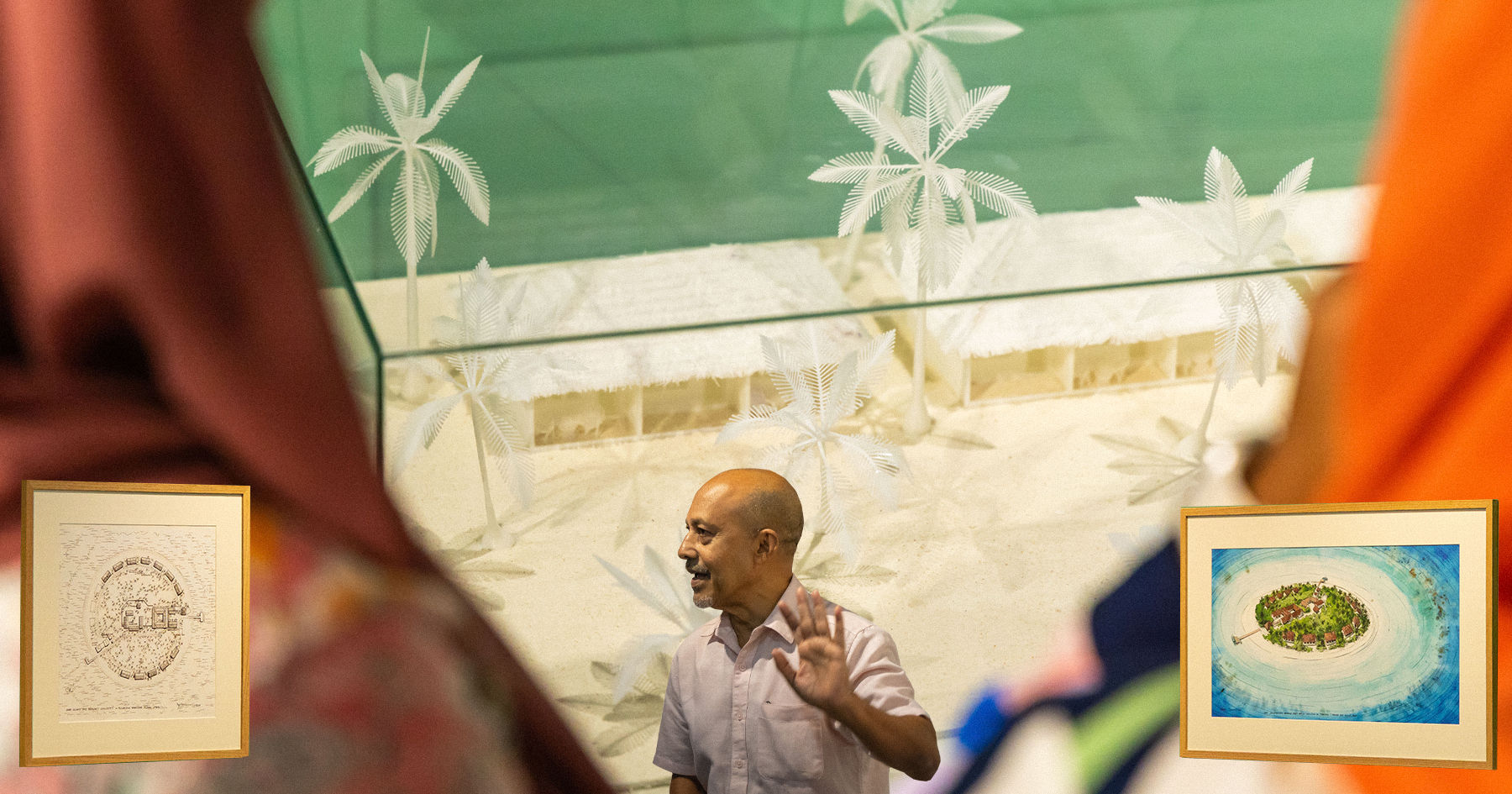
When I received the invitation to Mauroof Jameel’s latest exhibition, one detail immediately caught my eye. It was not merely his signature watercolour rendering of the guest room blocks at Kurumba Village – one of the Maldives’ first resorts. It was the title itself, ‘Maldivian Resort Architecture: Identity, Memory & Legacy’, written in a distinctive, slender script.
There was something intriguing about it, a quality that stood apart from the polished digital typefaces we encounter every day, and I found myself wondering about the story behind it.
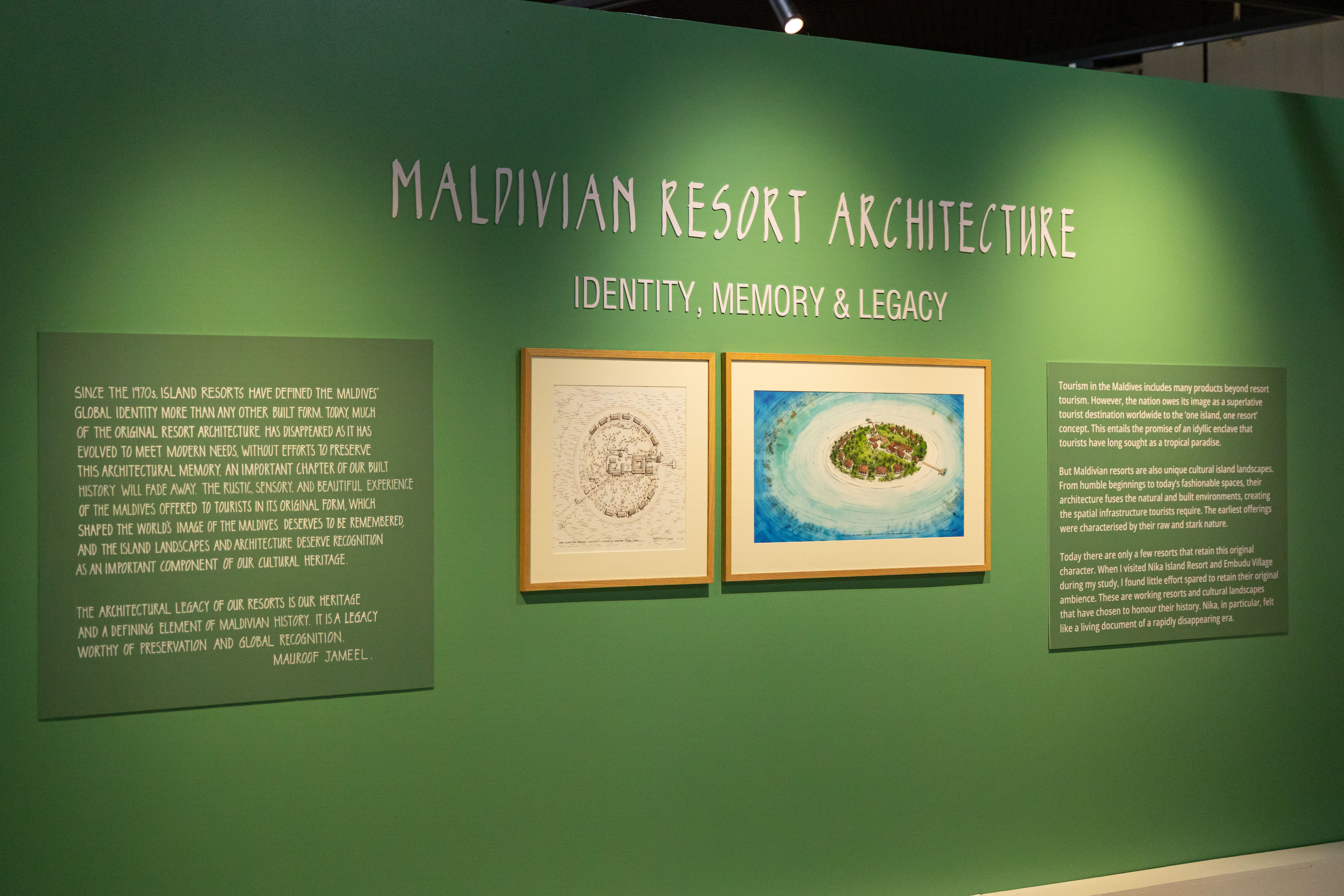
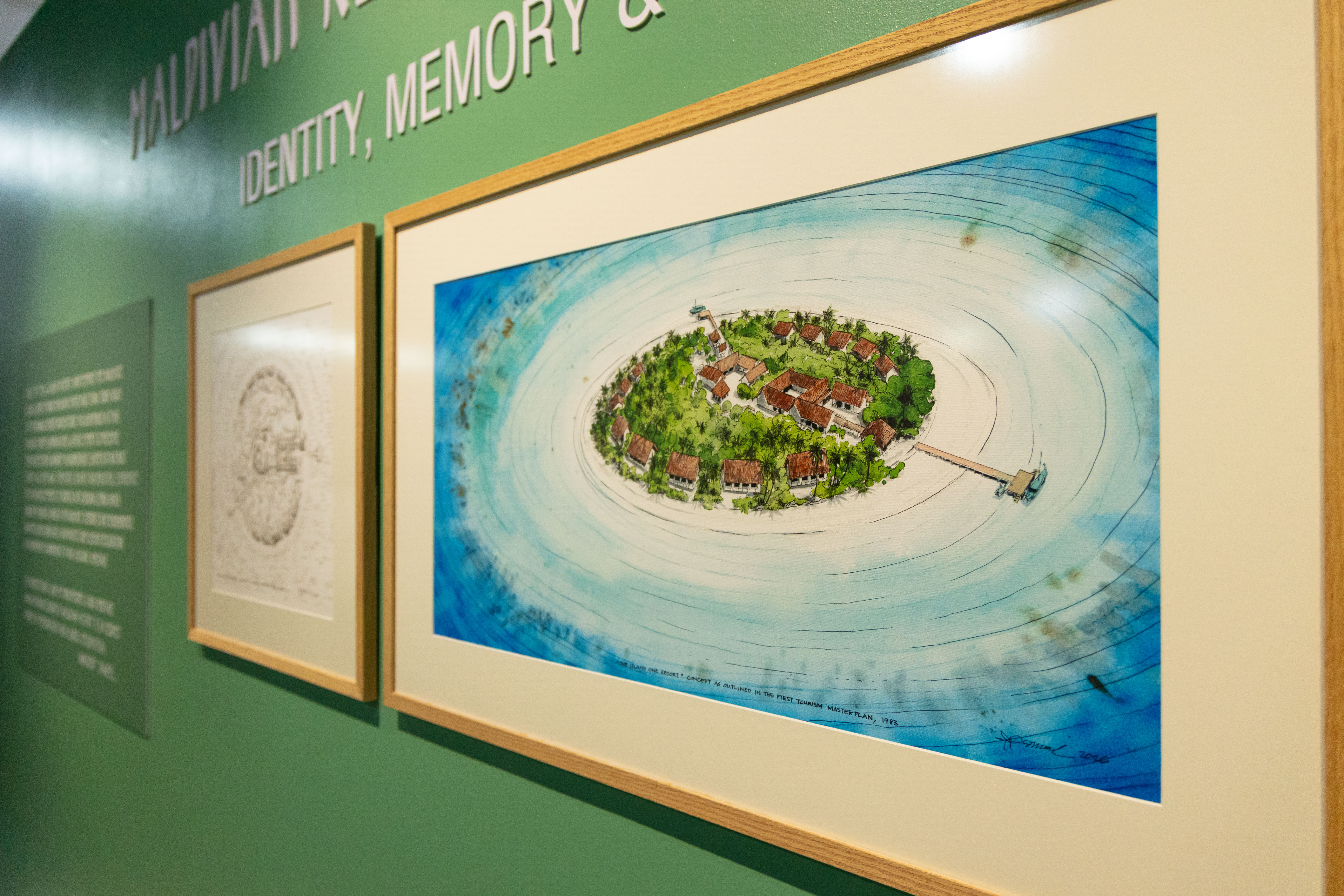
“That is my handwriting,” Mauroof soon explained with a gentle laugh. The same script appears throughout the exhibition – in the foreword, on technical drawings, and across the ink-and-watercolour architectural perspectives displayed on the gallery walls.
“As architects, we were trained to write a certain way,” he said. “Everything was drafted by hand – the drawings, the lettering, everything. Today it is rare, but back then it was an essential skill. When we worked in government, that was our bread and butter.”
Mauroof’s generation witnessed profound transformations in the Maldives – not only in architecture, but in the nation’s social, cultural and economic landscape. He has lived through the transition from manual draughtsmanship to digital design, and from the humble beginnings of tourism to the evolution of the luxury resort model that has come to define the Maldives on the global stage.
In many ways, the handwritten text threaded through the exhibition serves as a metaphor for its central theme: the importance of preserving what risks being lost. Just as drawing boards have given way to computer screens, many of the early resort structures have quietly disappeared, replaced by newer interpretations of paradise.
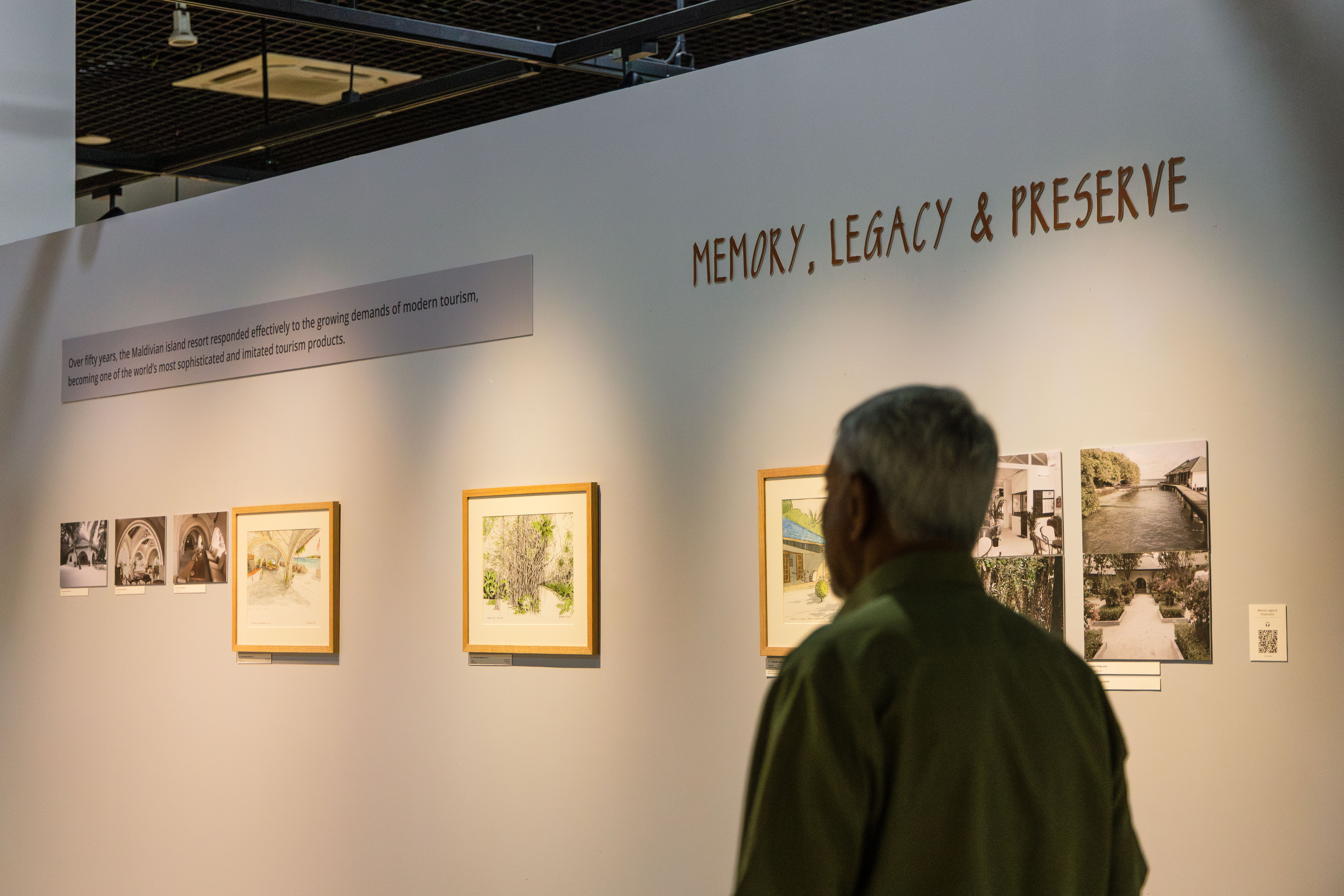
For Mauroof, these buildings are more than relics of a bygone era. They are part of the nation’s architectural memory – tangible records of how the Maldives first presented itself to the world and how a distinctly Maldivian design language emerged alongside a fledgling tourism industry.
An unexpected path
Before he became known as an architect, an advocate for Maldivian architectural heritage, a key figure in the development of Hulhumalé, or minister of construction during President Maumoon Abdul Gayoom’s administration, Mauroof Jameel was simply a young man with a passion for art and music.
Today, he remains well known for his watercolour paintings. What fewer people may know is that he is also an accomplished musician. In his younger years, he would often jam with Naashid and Mohoj of Zero Degree Atoll – a pastime he still enjoys with his friends whenever the opportunity arises.
Architecture was never part of the original plan, but with limited opportunities for further studies available at the time, a recommendation from Maizan Hussain Manik led him to work alongside architects such as Saleem, Riffath and Rafeeq. That experience eventually opened the door to a British Council scholarship to study architecture at the University of Manchester, where he later earned accreditation from the Royal Institute of British Architects.
Returning home, one of the first major projects he worked on while serving in government was Dharubaaruge. Over the years, his responsibilities expanded across a range of public-sector projects, from harbour development to the conceptual development of the Majlis building.
Between 1985 and 2005, Mauroof was directly involved in the design and development of many of the Maldives’ island resorts during some of the industry’s most formative years.
“In my resort architecture, I was exploring maritime themes,” he explained. “The first one I developed was Ari Beach Resort. I thought, why should we build water villas that look like houses? Why can’t they be boats?”
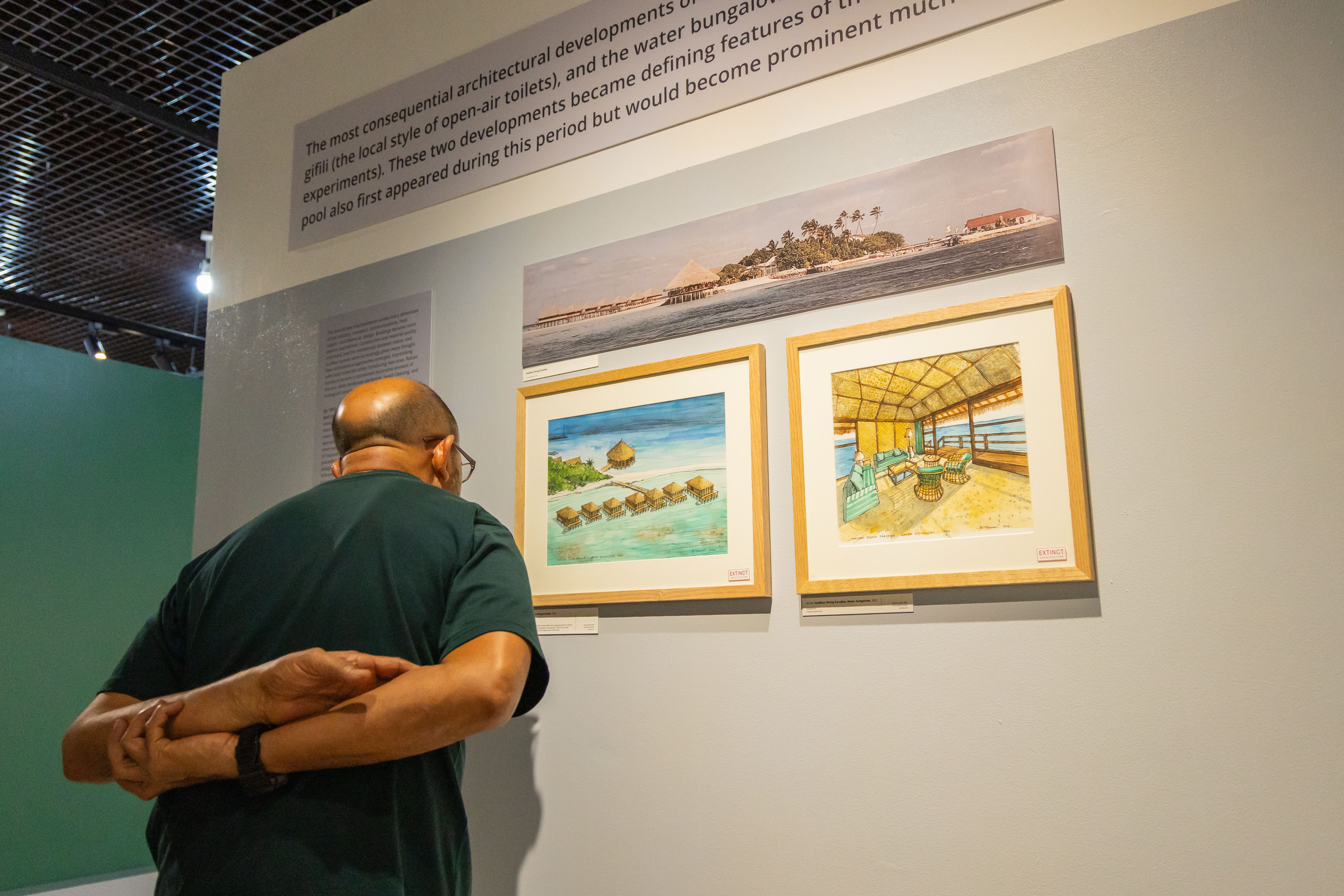
At Hakuraa Huraa, his explorations took a different direction. “It was all about sails. I was exploring fabric structures – a representation of maritime themes,” he said.
Not every experiment was a success, he admits with characteristic humility: “Some things worked very well, and others we’re too embarrassed to talk about,” he said with a chuckle. “But we probably learned more from those.”
Documenting a disappearing legacy
The exhibition currently on display at the National Art Gallery, and the accompanying publication, which shares the same title, represent the continuation of decades of research into Maldivian architectural history.
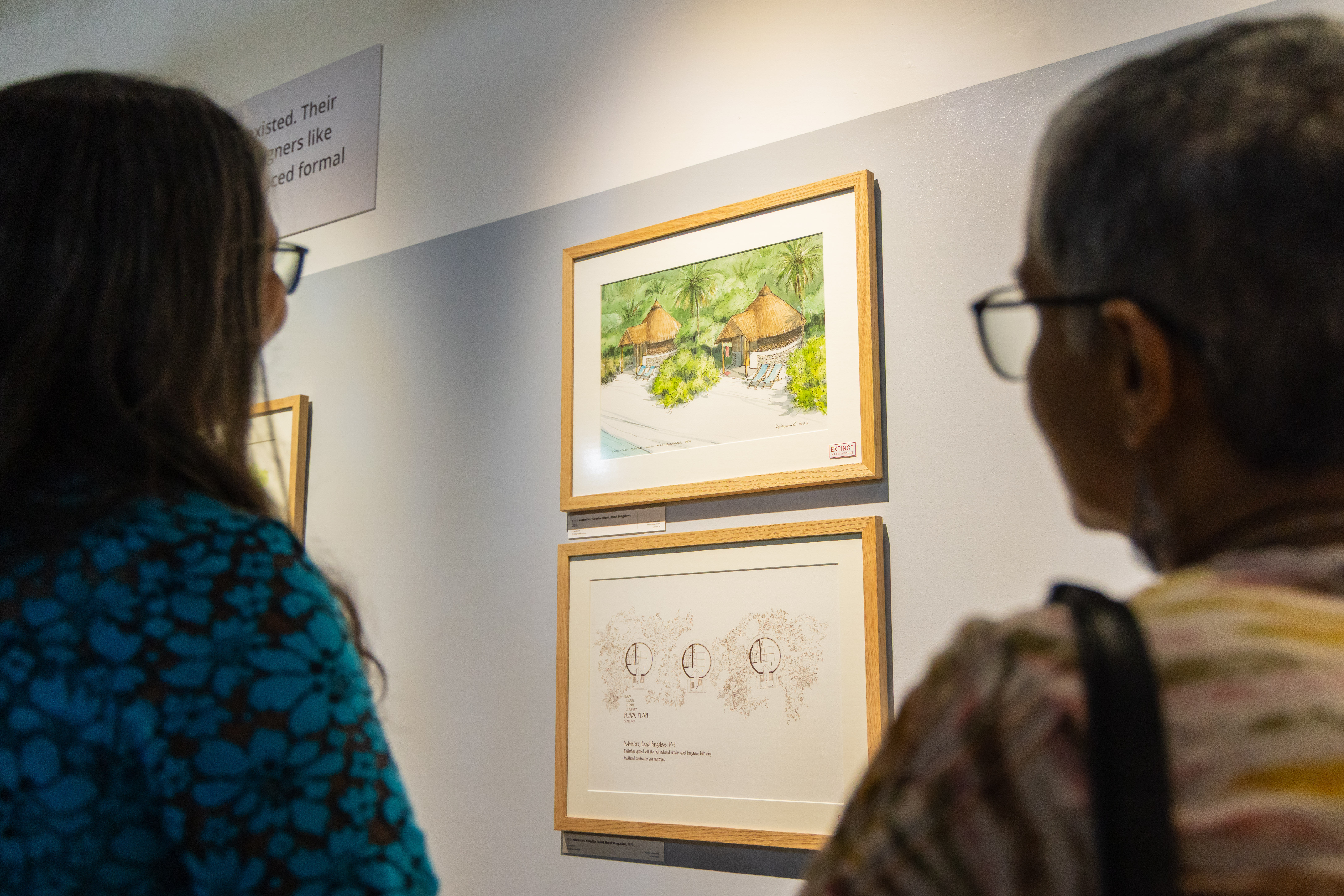
The project builds on Mauroof’s earlier publication, Maldivian Resort Architecture: 50 Years of Island Resorts, commissioned by the Maldives Association of Tourism Industry to commemorate half a century of resort tourism in the Maldives.
Together, the exhibition and book trace the evolution of resort architecture across five decades, examining how design philosophies, cultural influences and visitor expectations transformed over time.
Walking through the exhibition, I was struck by the depth of its research and curation. It is not only visually engaging but deeply educational. Every drawing, timeline and reconstruction reflects years of meticulous study, inviting visitors to reconsider a chapter of Maldivian history that has largely escaped public attention.
Mauroof divides the story of resort architecture into five distinct periods: Origin (1972–1981), Refinement (1982–1991), Ambition (1992–2001), Spectacle (2002–2011), and Glamour (2012–2021).
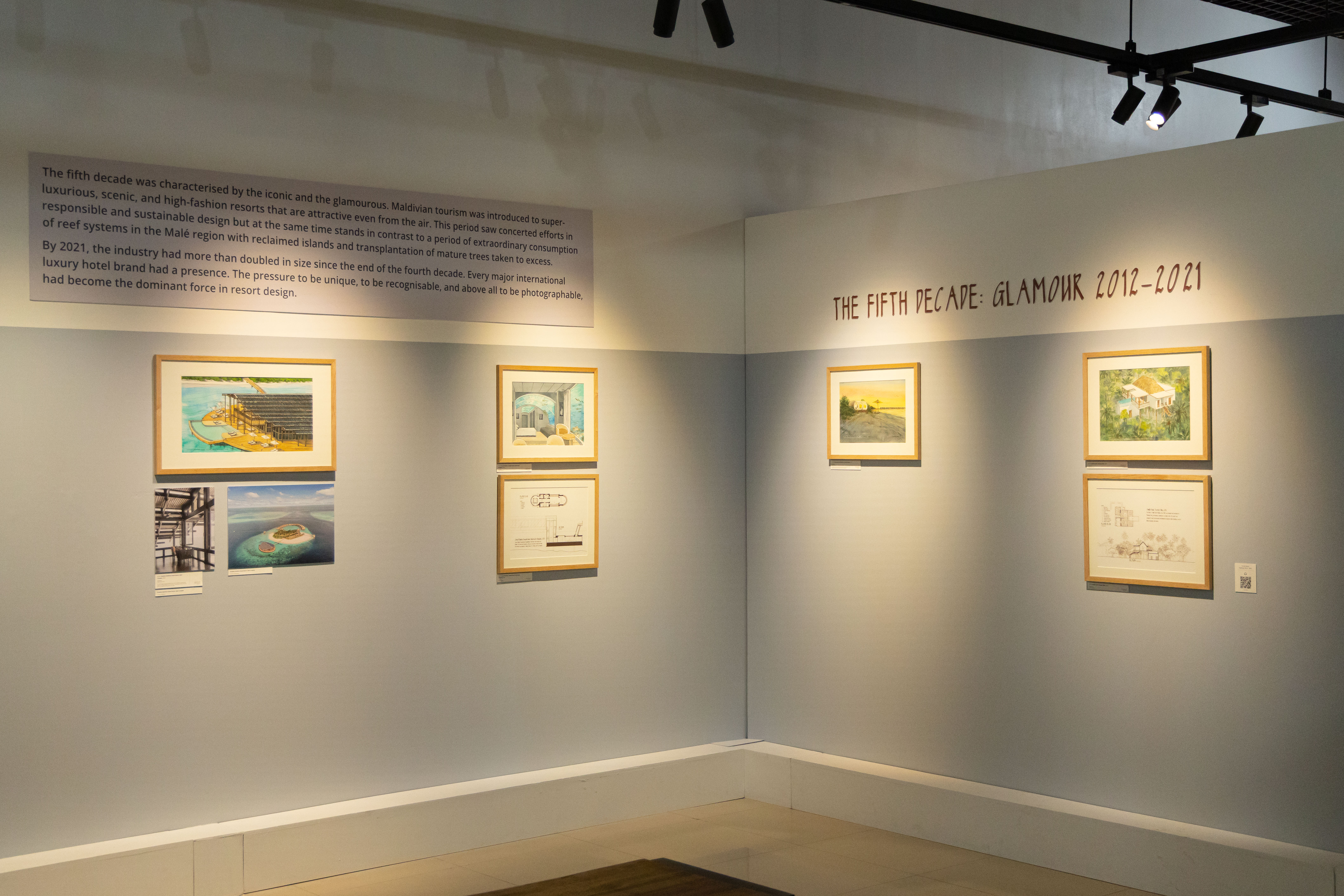
According to him, much of the architectural legacy of the first three decades has already disappeared. To reconstruct these lost spaces, Mauroof and his team at MaiDesign relied on interviews, surveys, site observations and archival photographs. In some cases, no visual records existed at all.
“There are projects where no photographs survive,” he explained. “The drawings are based entirely on information provided by the architects who designed them.”
For resorts such as Vabbinfaru, he was able to interview the original designers directly, gathering details about dimensions, materials and layouts before translating those recollections into drawings.
“As long as those memories still exist, it is important to document them,” he said.
For Mauroof, documentation is only one part of the process. Equally important is preserving the architectural memory of the Maldives’ pioneering resorts, particularly those that have survived largely in their original form.
While much of the resort architecture from the industry’s earliest decades has disappeared, Nika Island Resort remains a rare example of that era. Mauroof points to the resort as an important piece of modern Maldivian heritage that deserves greater recognition.
“Nika is 95 per cent intact today,” he said. “Two years ago, I produced a book to mark their 40th anniversary. I told them, ‘Look, this is a masterpiece in its own way. This has to come to public knowledge and be recognised. That place has the potential to become a UNESCO World Heritage Site.’”
Designed by Giovanni Borga, Nika introduced organic architectural forms that were unfamiliar to Maldivian building traditions at the time, while still drawing on local materials and construction techniques. For Mauroof, it represents a valuable record of a formative chapter in the country’s resort architecture.
Its survival reinforces one of the exhibition’s central arguments: that resort architecture should be regarded as more than tourism infrastructure. These buildings are repositories of cultural memory, offering insight into how a distinct architectural identity was developed alongside one of the world’s most recognisable tourism industries.
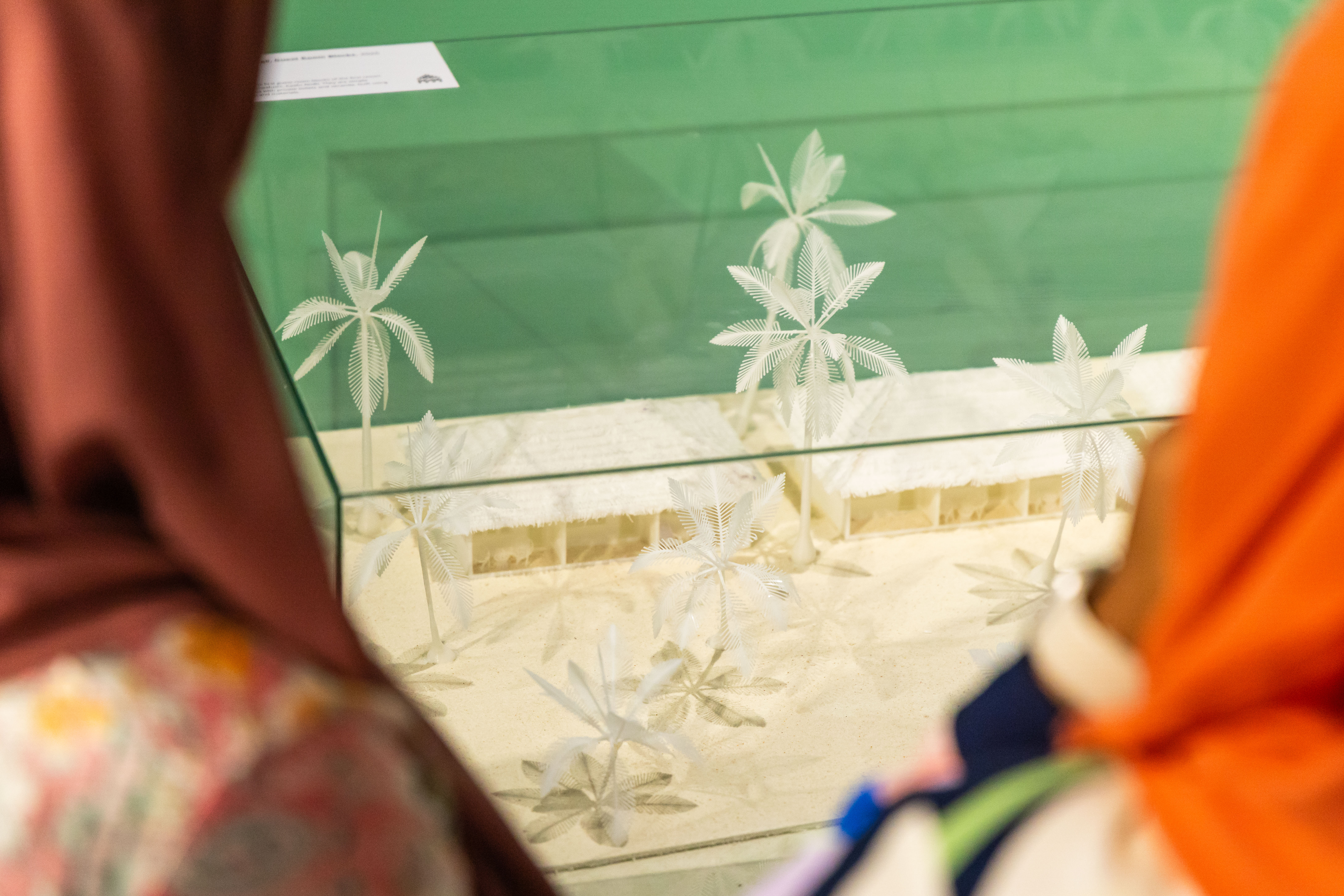
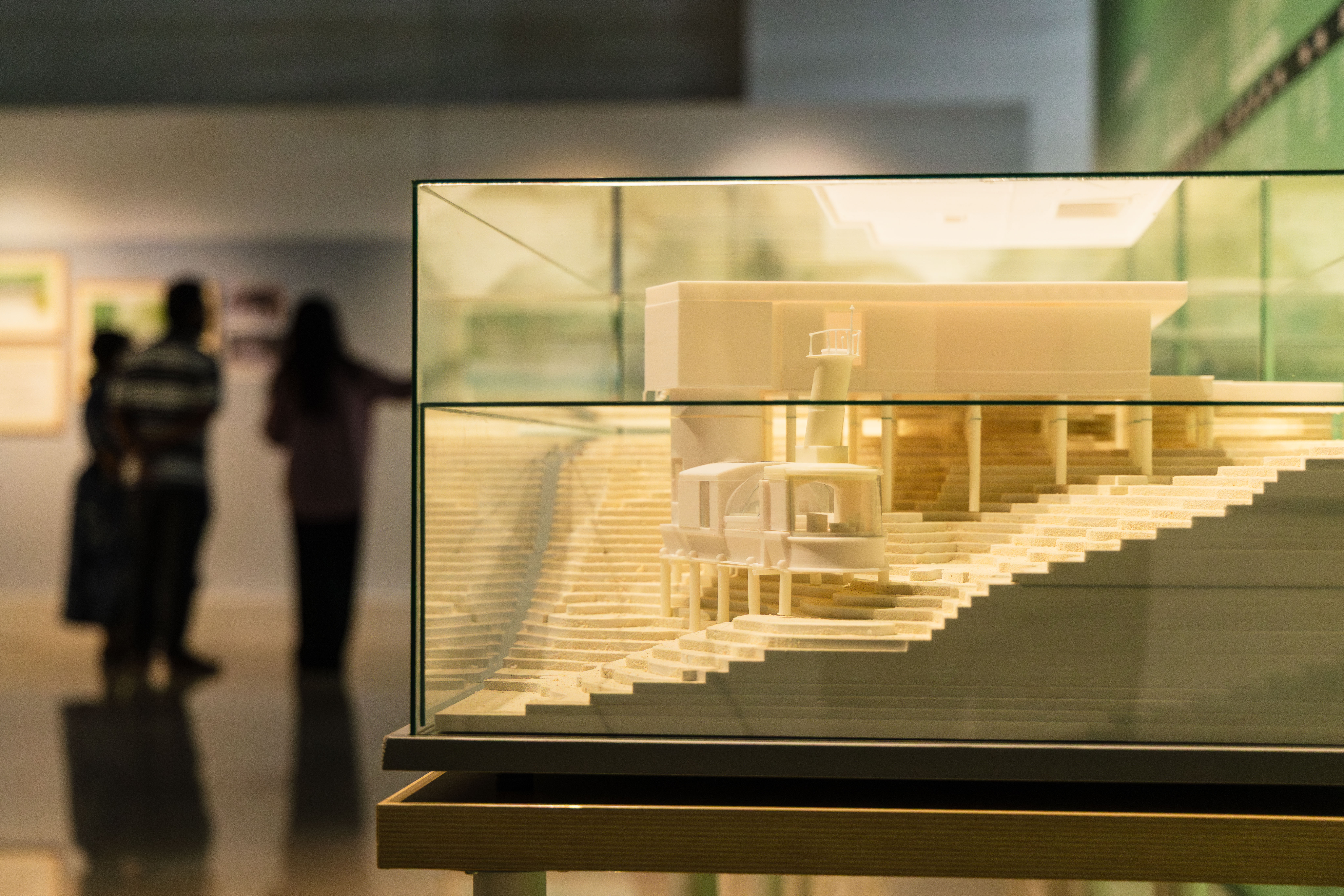
“One of the things that influenced our identity is tourism,” he said. “Who we are, and our whole economy, has been influenced by it.”
At a crossroads
Mauroof believes the industry now finds itself at a critical juncture. “On one hand, we are seeing good examples of sustainable development, using solar energy and other innovations,” he said. “On the other, we are consuming natural resources at unnecessary levels.”
He points to excessive reclamation, the transplantation of mature trees and increasingly large-scale developments as areas requiring greater restraint. “We have to do it right. Do not waste. Use what is necessary. The resources we have are not ours to abuse – they belong to future generations as well.”
Our conversation eventually turned beyond resorts and towards the broader built environment of the Maldives. “Everyone is focused on mega-projects now,” he observed. “It is the size that matters, not the necessity.”
He worries that, in the pursuit of spectacle and scale, society risks overlooking simpler and more meaningful values. “Just like the resorts, we are moving towards glamour and showing off.”
Mauroof is candid about what his generation failed to do. While much was built, not enough was documented. “We are the last generation who saw the past and how it evolved,” he reflected. “If we stop telling these stories, there won’t be anyone left with a first-hand account.”
It is this sense of responsibility that underpins his exhibition, which is an appeal to remember. As the Maldives continues to build, expand and reinvent itself, Mauroof’s work serves as a reminder that progress and preservation need not be opposing forces. The future, after all, is strongest when it understands the past.
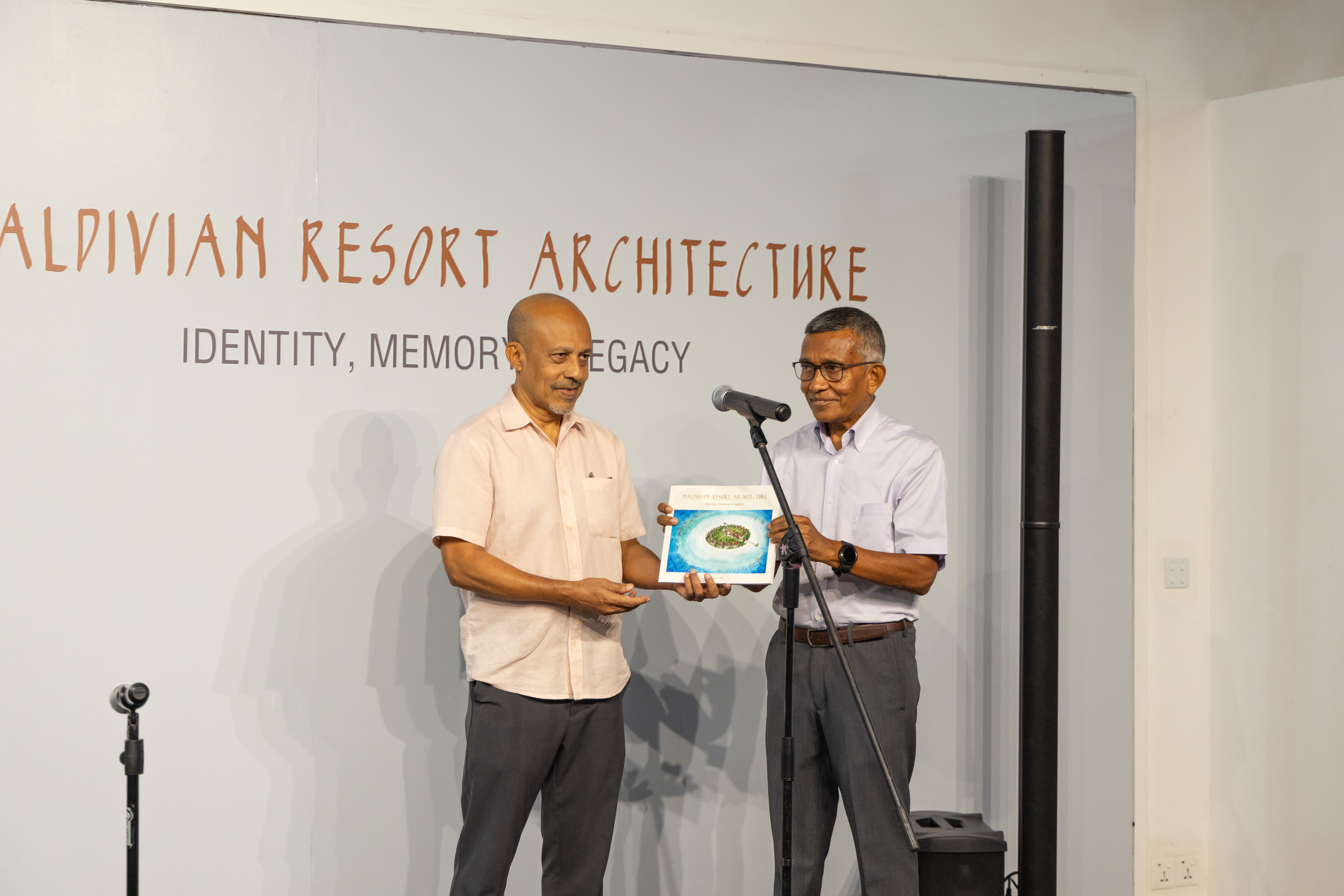
Maldivian Resort Architecture: Identity, Memory & Legacy is on display at the National Art Gallery until the 18th of this month.
Discussion
No comments yet. Be the first to share your thoughts!
No comments yet. Be the first to join the conversation!
Join the Conversation
Sign in to share your thoughts under an alias and take part in the discussion. Independent journalism thrives on open, respectful debate — your voice matters.
Support Independent Journalism
Help us keep the news free and fearless
Give once
$
or
Become a memberfrom $5/month