

In the midst of a thought: revisiting The Bird and the Flying Fish
Huda’s abstract work reaffirms the authority of the human hand in an age of AI.
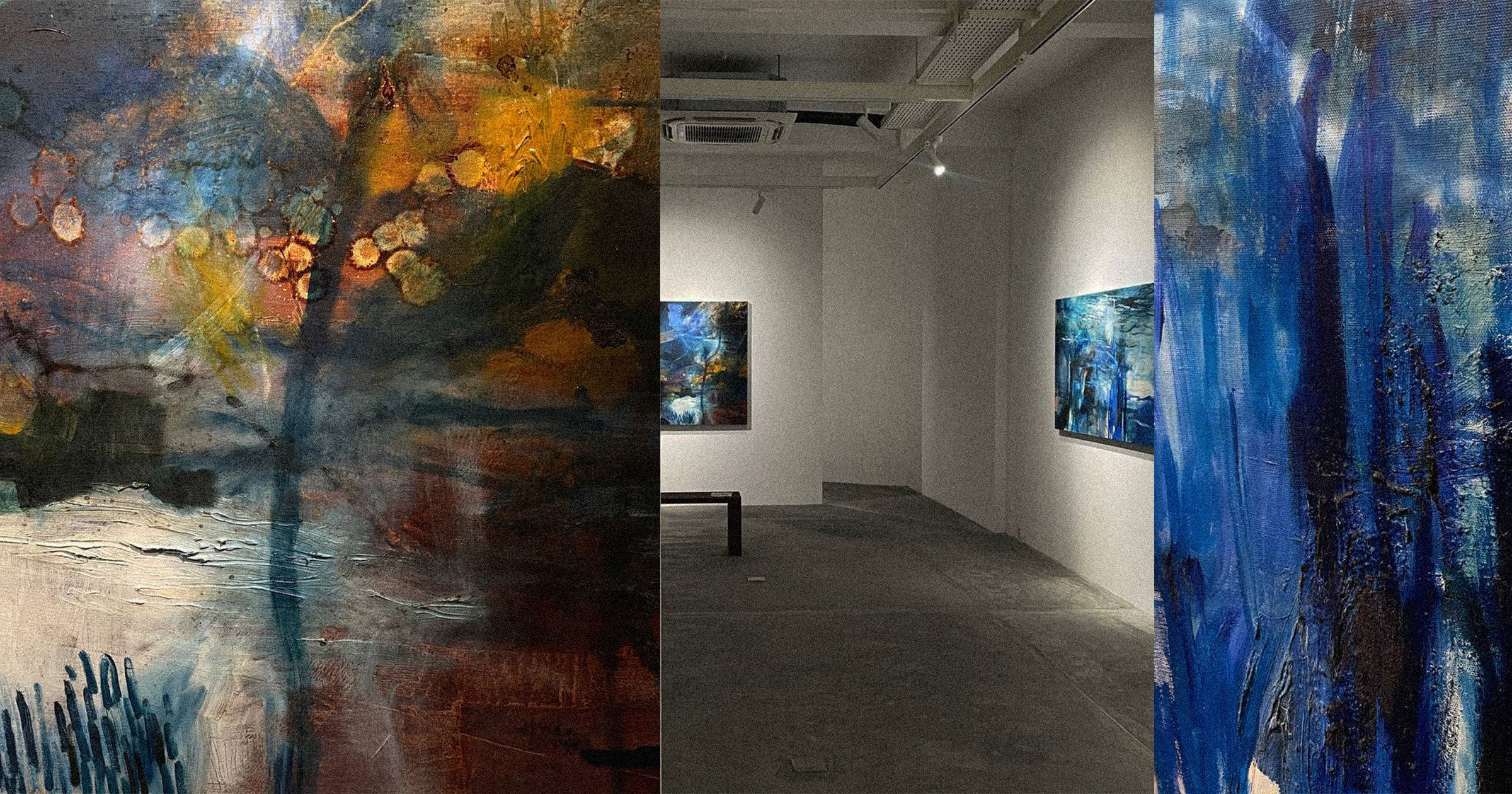
Artwork: Dosain
14 Feb, 18:12
I vividly recall my first encounter with The Bird and the Flying Fish in 2019 at the National Art Gallery. Huda had recently completed her BFA at the China Academy of Art in Huangzhou, and this marked one of her first major solo presentations at a national level. I had seen her work some ten years prior, when she balanced teaching with making and exhibiting wherever the opportunity allowed. Even then, her commitment to her practice was unmistakable. Yet, The Bird and the Flying Fish stood as a powerful testament to how far that dedication carried her.
Huda herself remained unchanged – humble, attentive, quietly sociable – but the work possessed a new assurance. It revealed an evolution not merely in technique, but in conviction: a deepening of thought, confidence and material exploration. The original exhibition was grand, though never ostentatious; it drew viewers in quietly rather than demanding attention. There was an unmistakable deliberation in the way the works inhabited the space, each piece seeming to converse with the next, cultivating an atmosphere that felt contemplative, almost meditative. It was also during this pivotal period that Huda co-founded Fine Art Maldives, marking an important chapter in both her own trajectory and the broader development of the local art landscape.
Revisiting this body of work six years later proved deeply stirring. The series has long remained one of my most treasured within her oeuvre, and encountering it again – this time within the more intimate confines of Gallery 350 – felt at once personal and newly revelatory. While the original exhibition in 2019 spanned only five days, the month-long showing at Gallery 350 offered the rare privilege of unhurried engagement. The extended duration allowed the works’ layered textures, restrained palettes, and emotive gestural brushstrokes to unfold gradually, revealing subtleties that might otherwise have passed unnoticed.
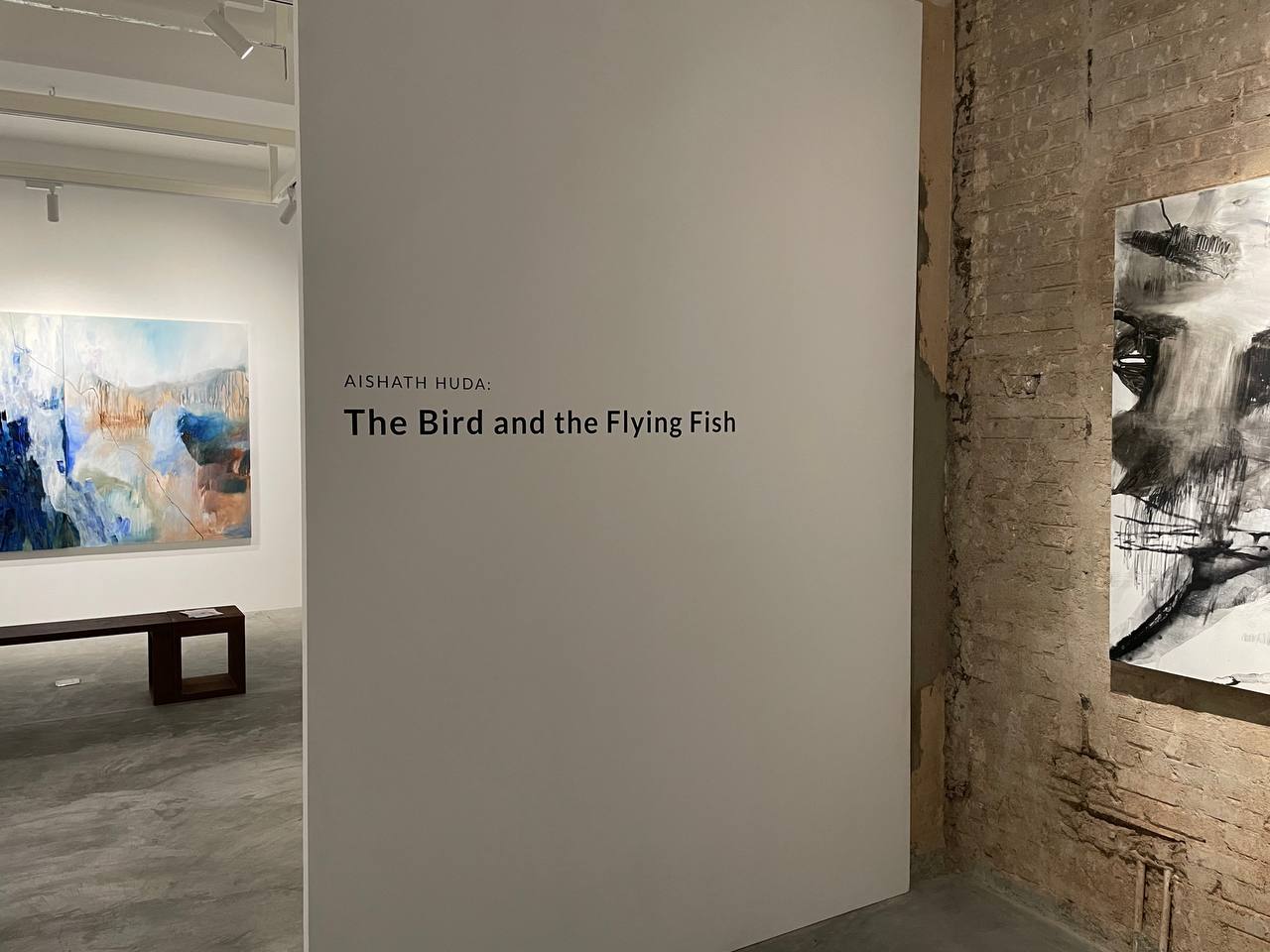
Entering The Bird and the Flying Fish does not feel like encountering a declaration. Rather, it feels as though one has stepped into the midst of a thought already in motion - something evolving quietly over time. Forms emerge, recede and seep through layered surfaces, animated by a life of their own.
At first glance, the canvases register as abstract fields of colour and gestural mark-making, resisting immediate classification. Huda has consciously refrained from confining her practice within a singular stylistic or generic framework; consequently, the works demand sustained looking. The longer one looks, the more the surfaces begin to yield - not in the form of fixed imagery, but as fleeting intimations of landscape. A rain-soaked forest seems to gather itself within the density of pigment; foliage appears bowed beneath the weight of a downpour; damp earth and bark are suggested through richly worked organic tones. In Night Flight, deep blues and earthen tones suggest shadowed trees, soaked ground and a brooding sky, rendered through blurred, almost squinting perception. The world appears as though glimpsed through moisture-laden air – mystical, shifting.
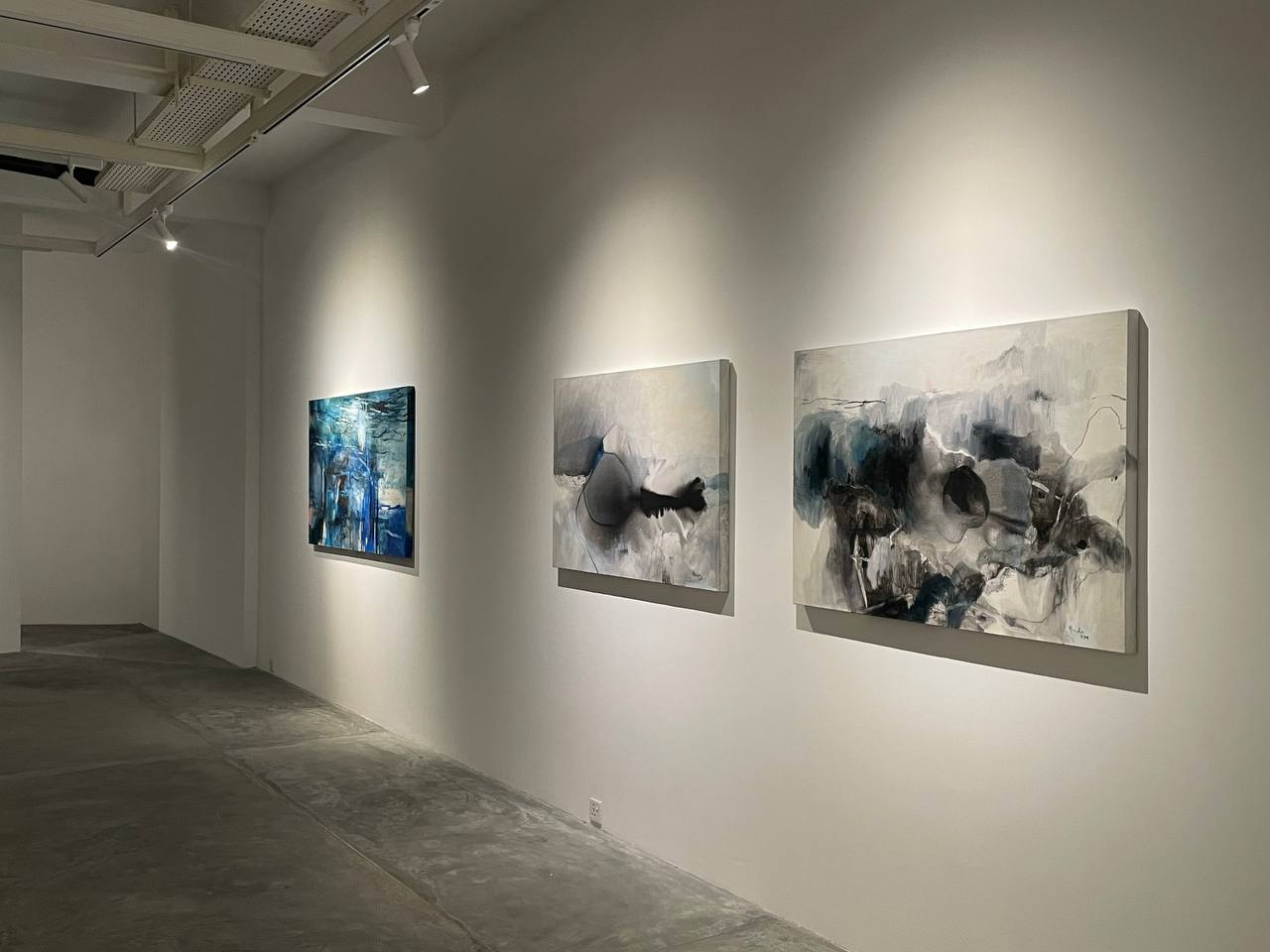
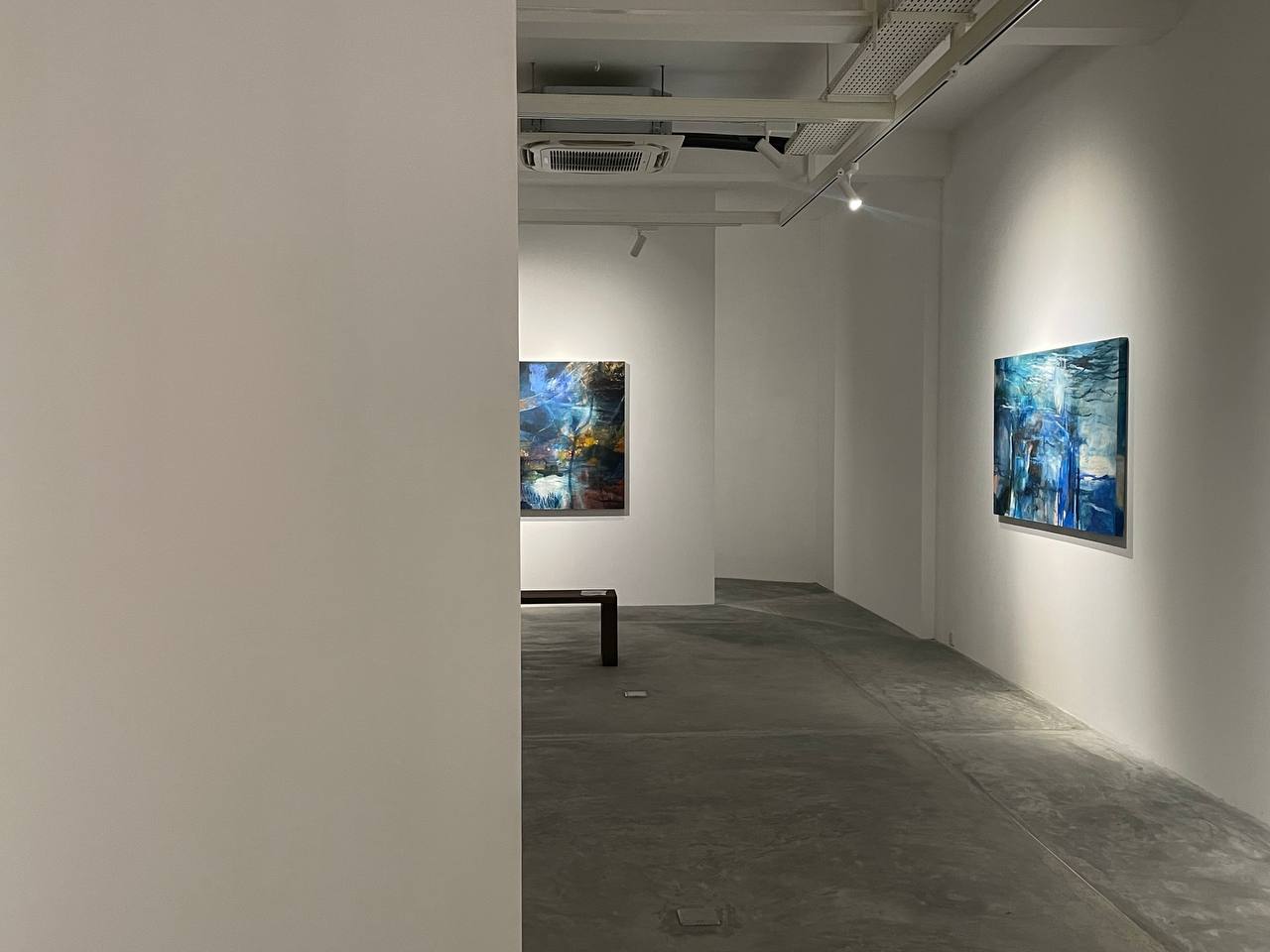
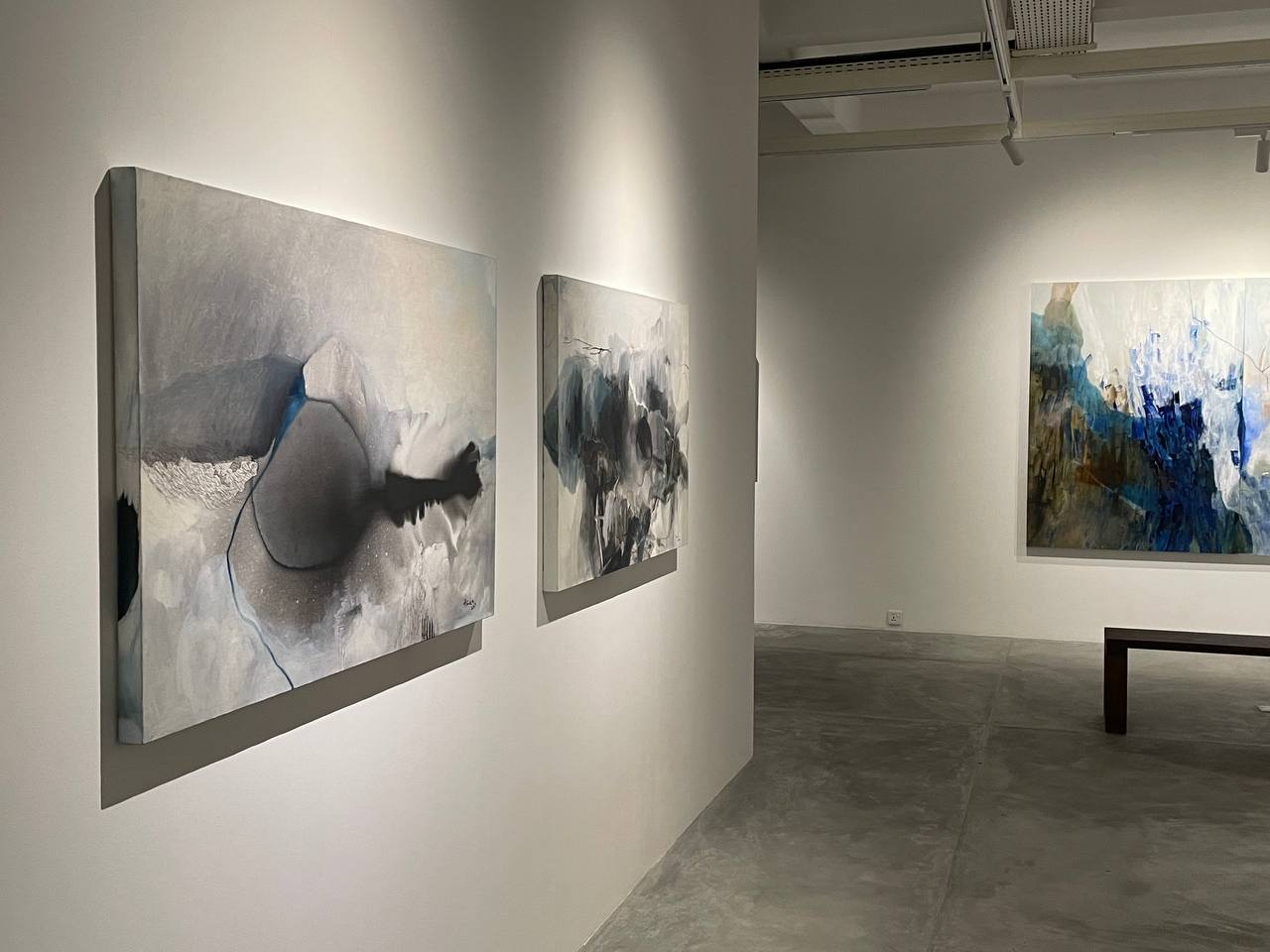
The Sound of Blackbirds through Thunderstorms introduces a heightened dynamism. Vapour-like wisps of paint are overtaken by denser, looming passages; darkness parts to reveal slivers of distant light. Perspective remains deliberately unsettled. Are we suspended above the storm, observing its movements from a great height, or inhabiting the sensory register of a migratory bird cutting through turbulent skies? During her artist’s talk, Huda reflected on the notion that perception is never universal; that colour, time and motion are experienced differently across species. This painting, the only work in the exhibition accompanied by a sonic element, layers oil with washes of Chinese ink in response to a thunderstorm she once witnessed. It operates less as representation than as translation – an attempt to render atmosphere, sound and embodied sensation into visual form.
In Consciously Floating and Sea Dance, the emphasis shifts towards suspension and immersion. Atmospheric depth emerges through a finely judged balance between instinctive gesture and compositional control. Deep blues, earthen browns and milky whites form soft chromatic harmonies that evoke the organic palette of our islands while transcending specific geography. These works are not concerned with literal depiction; rather, they evoke states of being – drifting, submerging or surfacing. As Huda has observed, when we speak of nature we often forget that we ourselves are part of it. The paintings gently unsettle that assumed separation. Are we glimpsing the world from the vantage point of a flying fish gliding between sea and air, or encountering a human consciousness attempting to dissolve into its surroundings? The ambiguity remains open, and productively so.
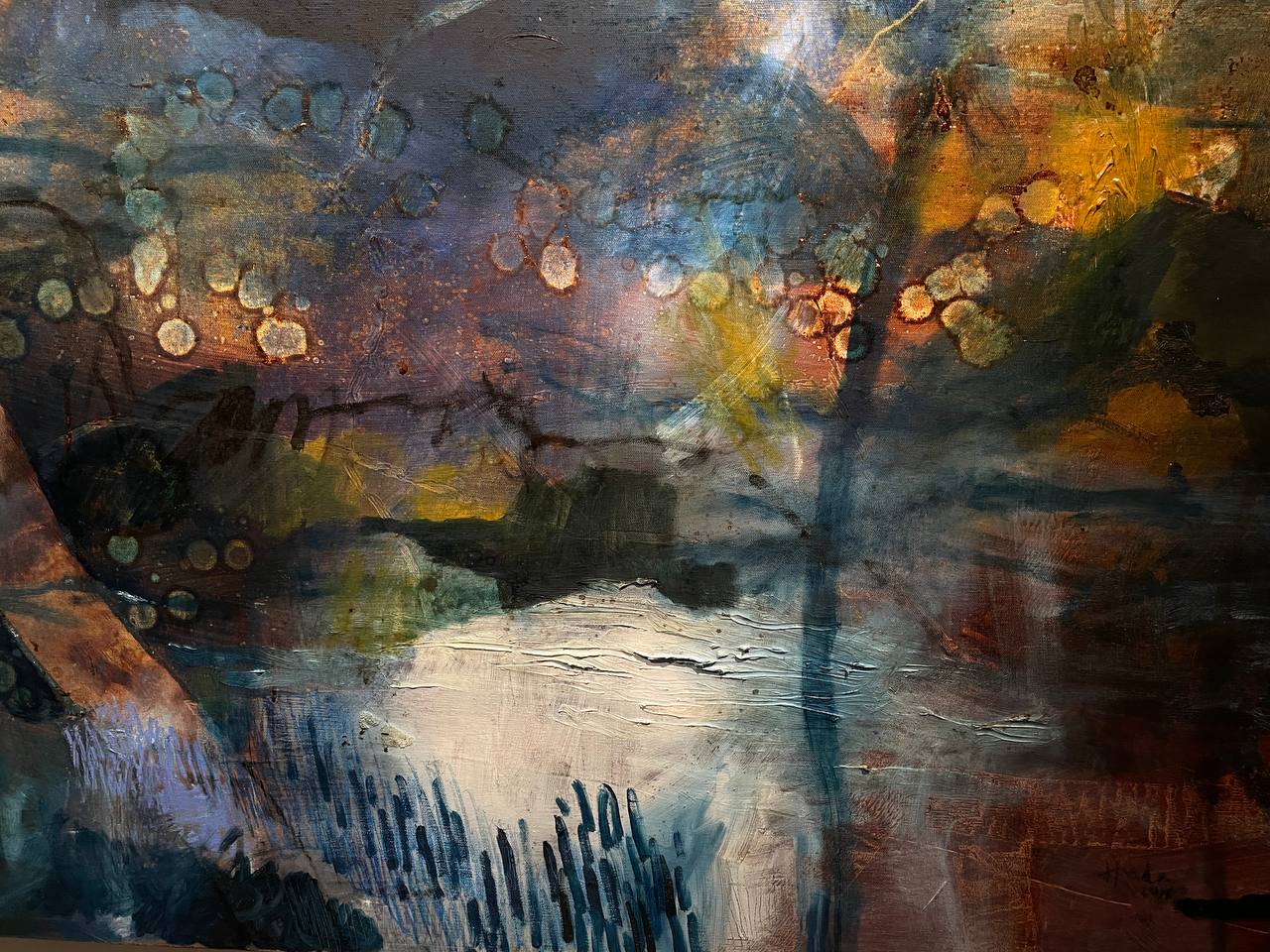
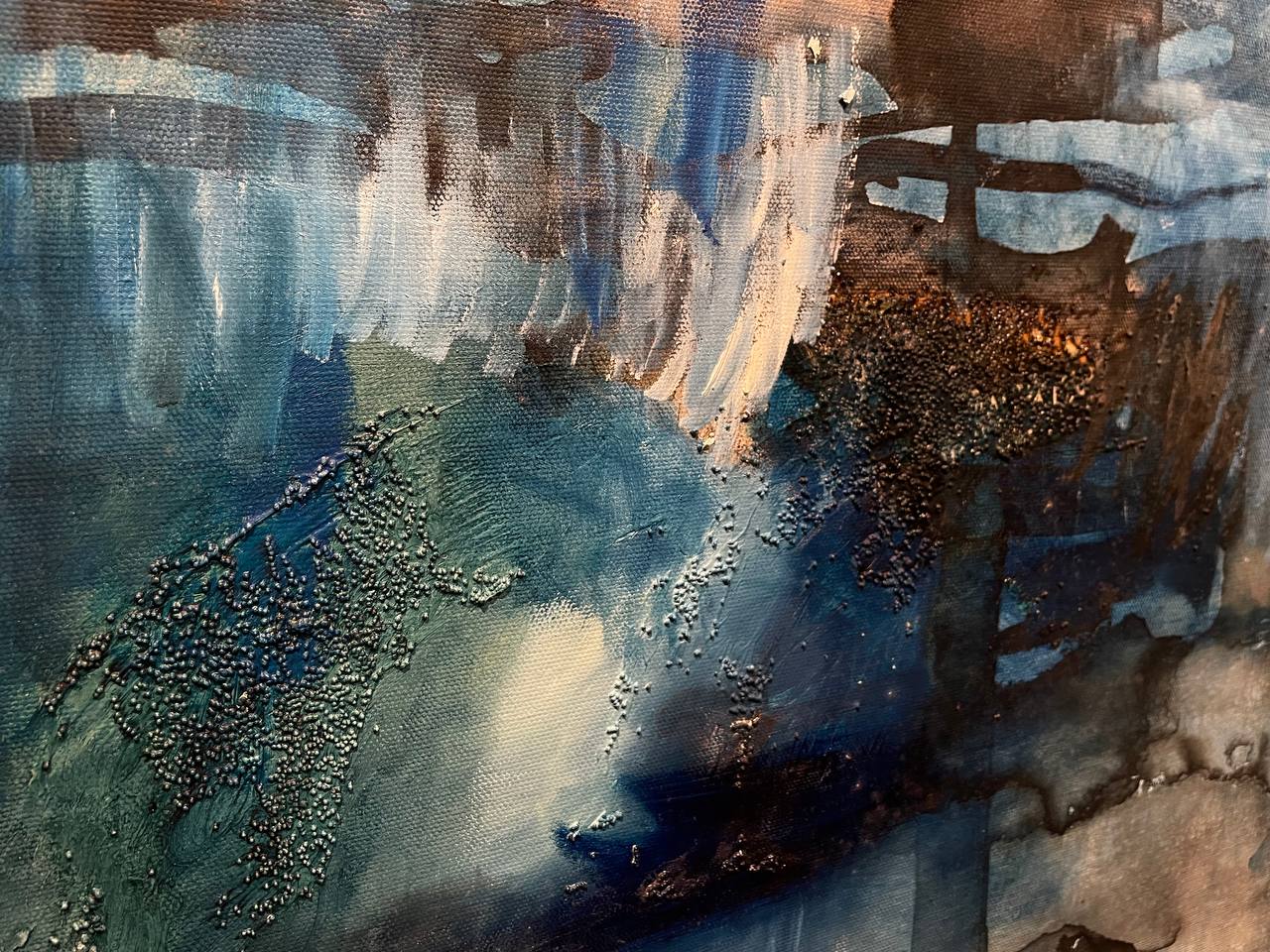
While much of the exhibition carries the blues and hues familiar to island life, Station to Station stands apart. Dominated by rich ochres and earthy tones, it evokes sandstone terrains, prehistoric landscapes or forests reduced to charred bark. A rich moss-green passage in the middle of the ochres and sandstone palette suggests an oasis within arid expanse - a moment of respite within desolation. The forms feel geological – referencing erosion, terrain and natural forces, yet the title hints at movement between constructed spaces. Huda has described the work as an amalgamation of her experiences in both natural and man-made environments. Certain textures recall cave interiors pierced by sunlight, or the shifting quality of light glimpsed during a train journey - the way early morning differs from late afternoon or dusk. Here, abstraction becomes a meditation on coexistence: humanity suspended between preservation and progress, between rootedness and acceleration.
Throughout the exhibition, Huda sustains a delicate equilibrium between compositional discipline and gestural freedom. The tension mirrors a broader human condition – our continual negotiation between the natural world and the structures we impose upon it.
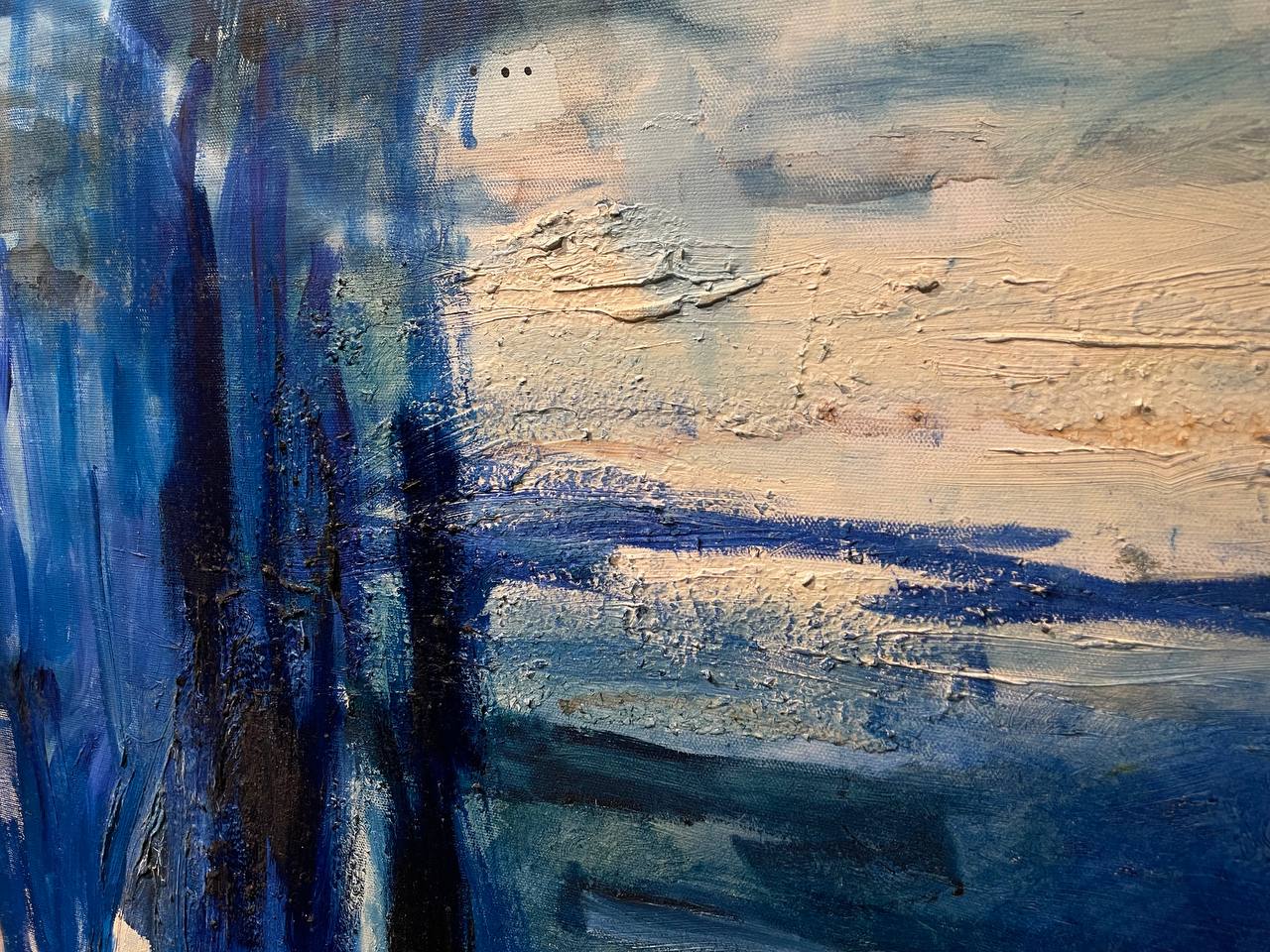
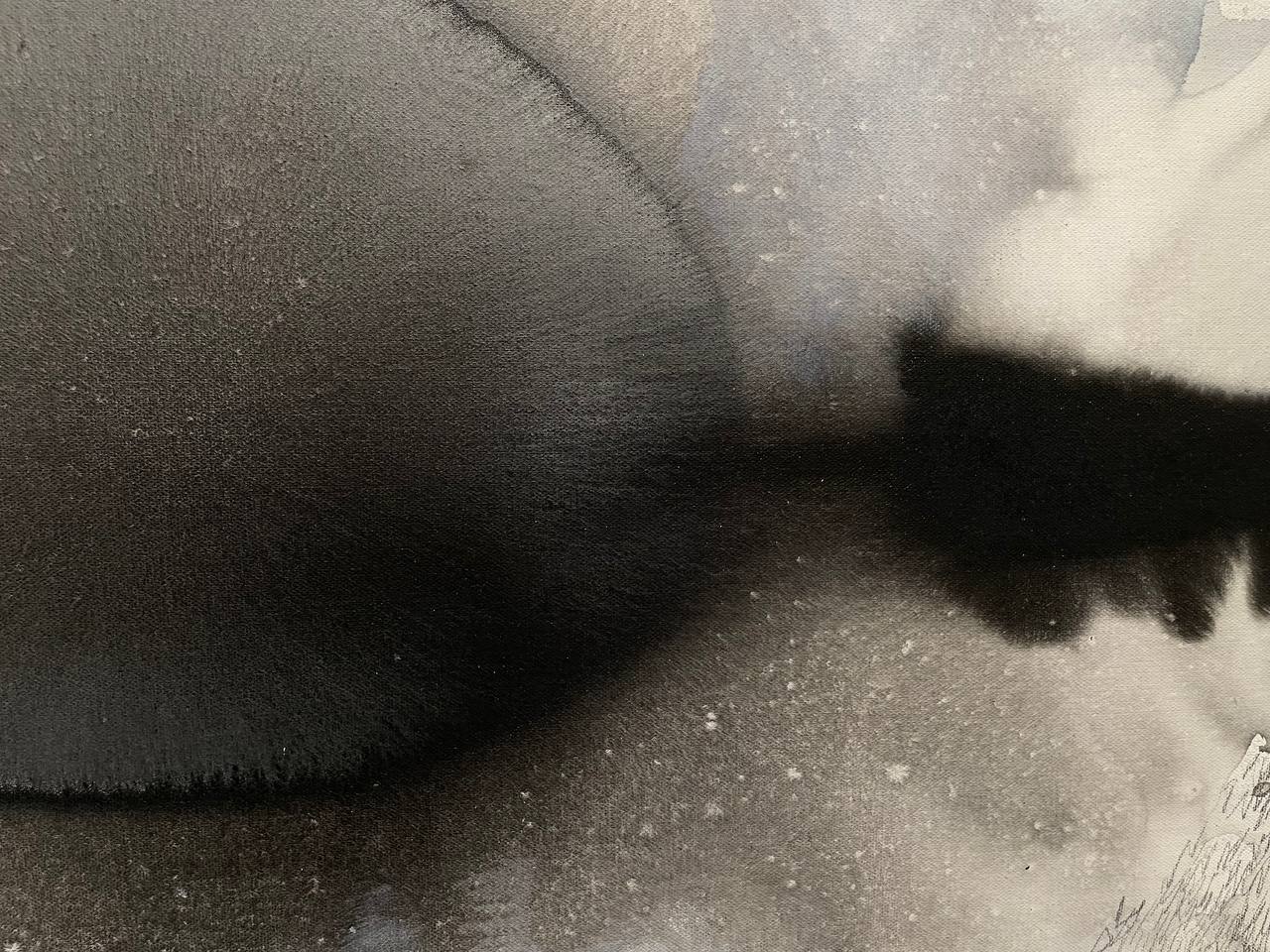
In an era increasingly saturated with AI-generated imagery, these works quietly reaffirm the authority of the human hand. No two surfaces are identical; each brushstroke carries the imprint of lived experiences, of decisions made and remade in real time. Like the stripes of a zebra, their singularity resists replication. It is perhaps this visible trace of touch – imperfect, searching, undeniably human - that draws us instinctively towards them, reminding us of what cannot be automated: presence, perception and the labour of feeling.
Discussion
No comments yet. Be the first to share your thoughts!
No comments yet. Be the first to join the conversation!
Join the Conversation
Sign in to share your thoughts under an alias and take part in the discussion. Independent journalism thrives on open, respectful debate — your voice matters.
Support Independent Journalism
Help us keep the news free and fearless
Give once
$
or
Become a memberfrom $5/month